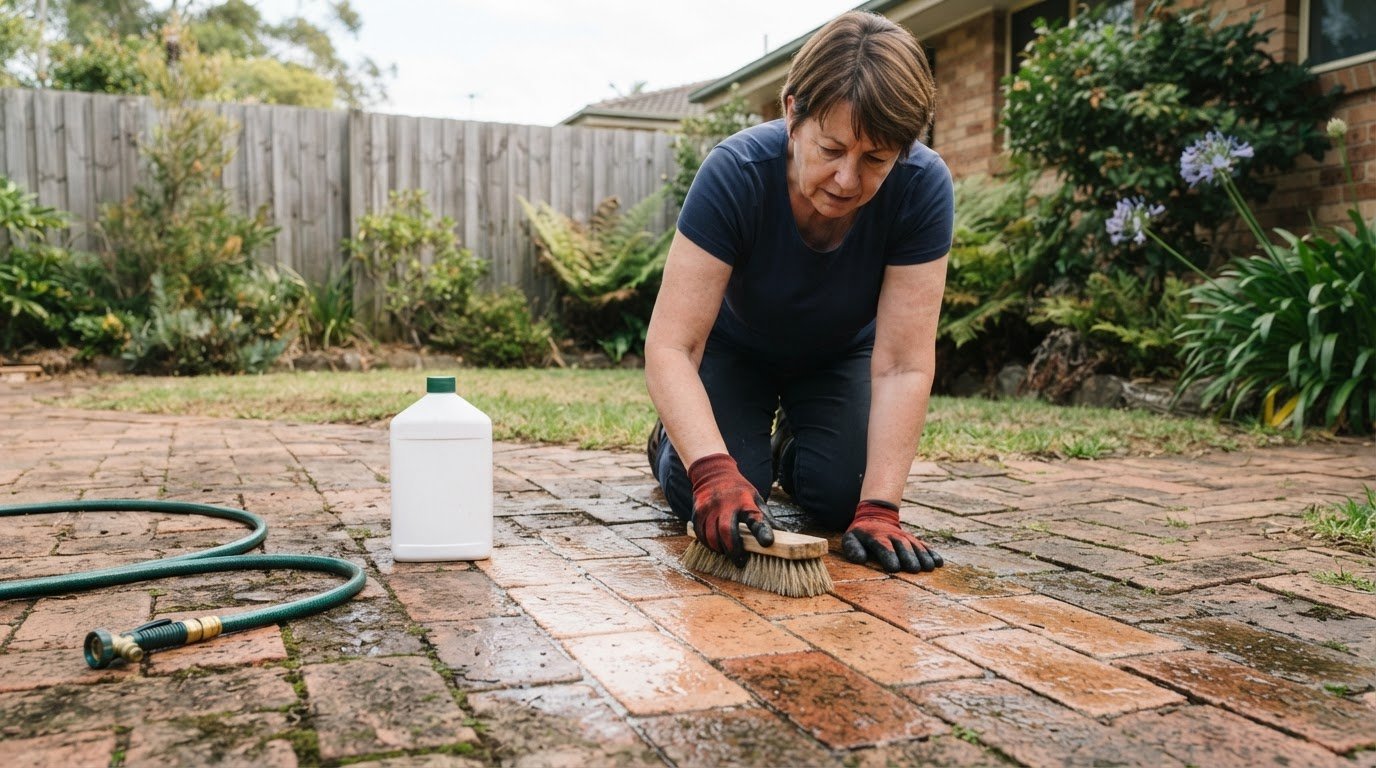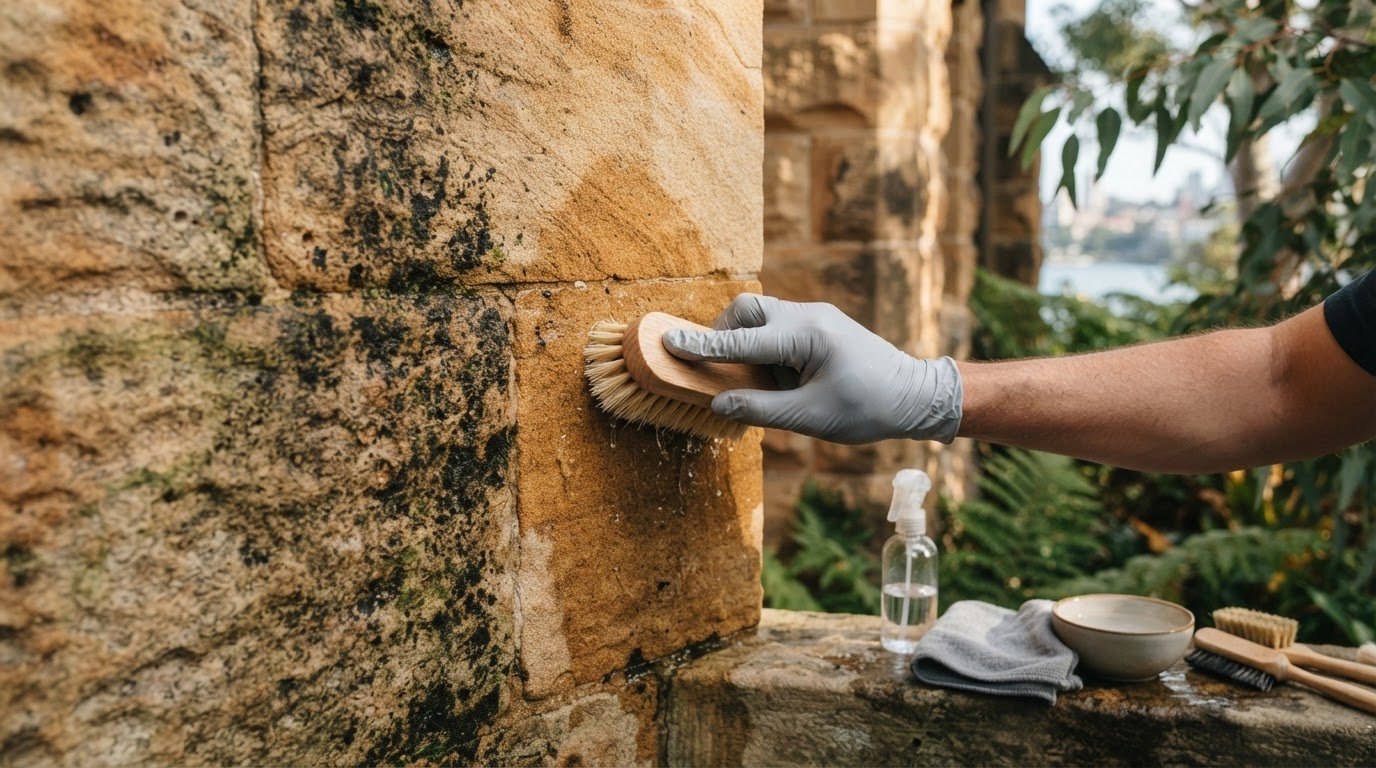
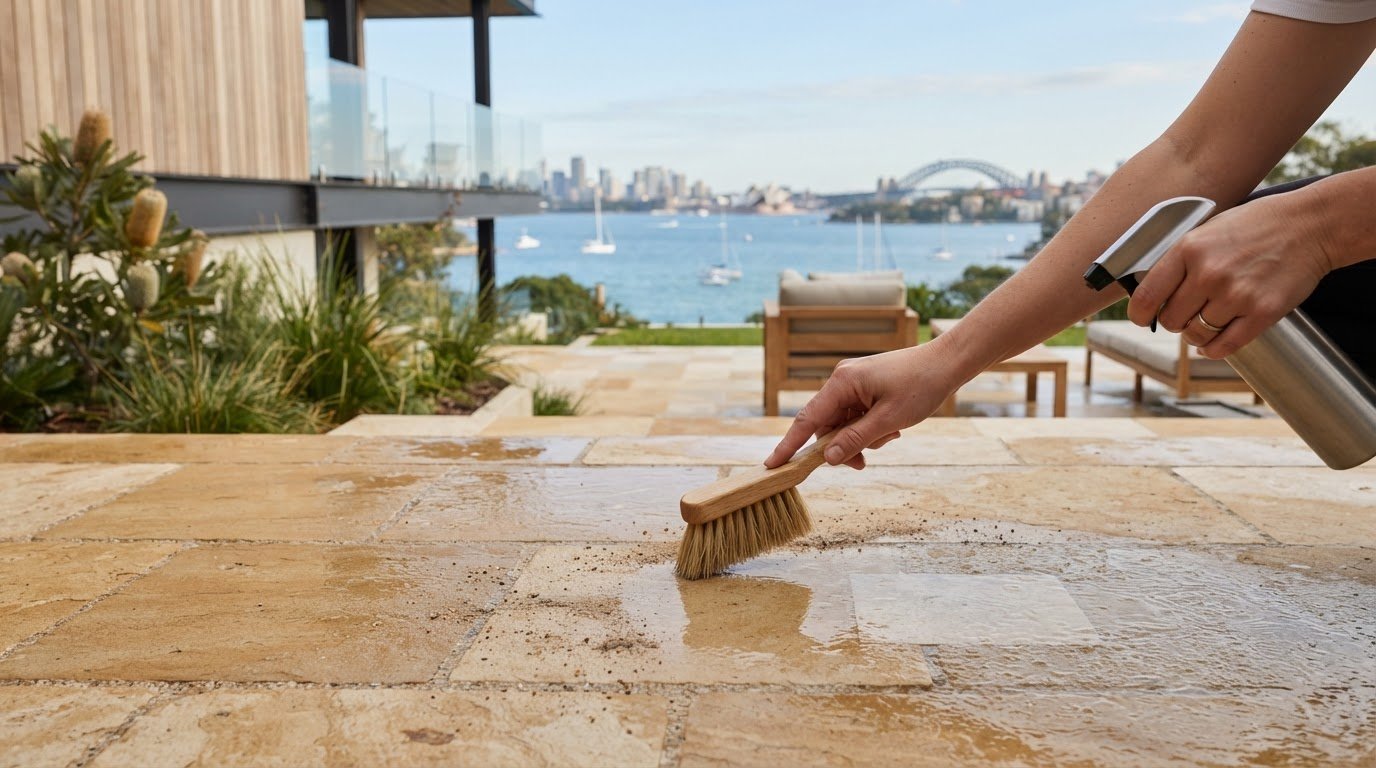
When dealing with Canberra Sandstone for your Sydney property, start with the gentlest practical method: brush away loose dirt with a soft brush, then rinse with clean water. Test any stone cleaner on a small, inconspicuous area first, and avoid abrasive scrubbing that can mark the surface. If staining remains, choose a cleaner suited to both the stain and the stone. If you have any questions or concerns, please Contact Patio Black Spot Removal Australia for any expert advice.
When sandstone looks dirty, a quick fix from trusted experts like Patio Black Spot Removal Australia can bring the colour up like new, reviving your patio back to like it was when it was first laid. The right approach depends on the surface and the type of mark. This guide covers gentle routine cleaning, how to assess stubborn stains and algae, and how to choose a targeted patio cleaner when basic washing is not enough.
Key Takeaways
- Identify the stone type and surface finish before choosing a cleaning approach, as methods suitable for one material may not suit another.
- Before planning sandstone work, find out whether the property’s location or heritage status affects the proposed changes.
- For persistent black spots or green algae, a targeted patio cleaner can be more appropriate than general surface cleaning.
- Learn how cleaning and prevention products can fit into a routine for keeping outdoor stone surfaces looking cared for.
Sandstone and other stone types
Sandstone is porous, so water and cleaning solutions can enter the surface. Its appearance and response to cleaning also vary with mineral content, grain size, weathering and finish. Canberra Sandstone used around Sydney may therefore respond differently from other sandstone, even when the surfaces look alike. Identify the stone and finish before choosing a method, and avoid anything that could scratch, etch or leave residue.
Compare sandstone with the surface you’re cleaning:
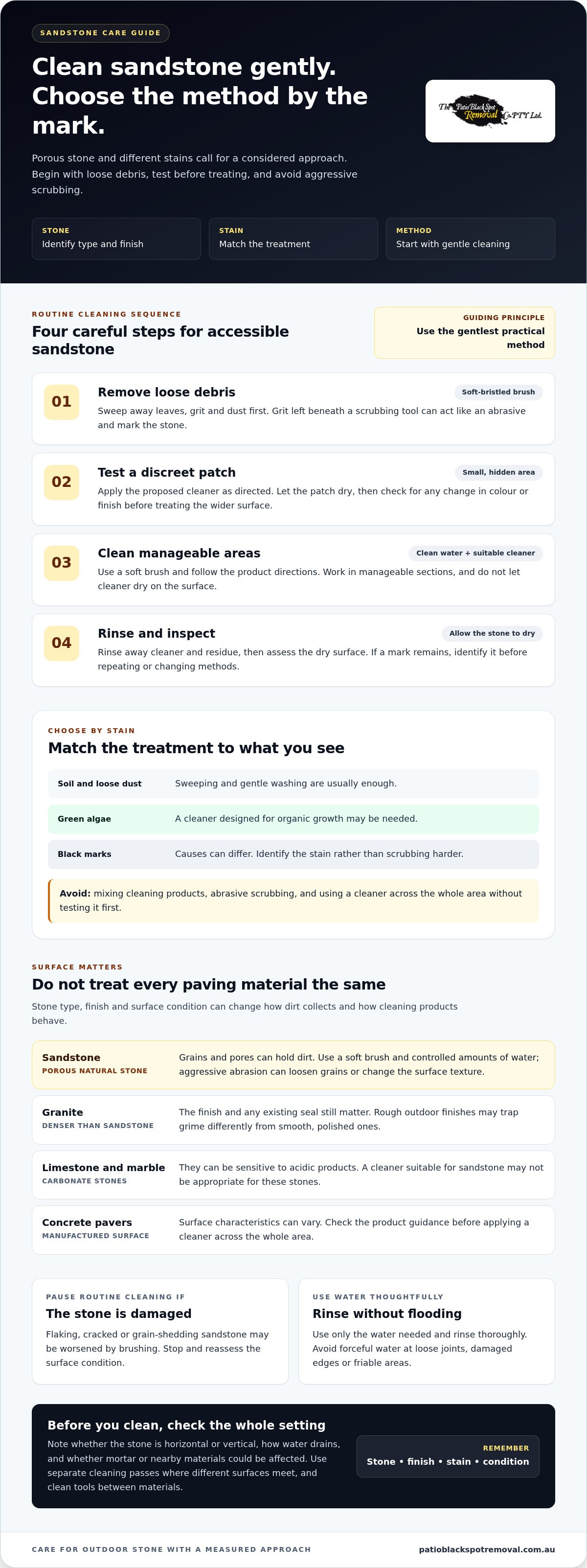
- Sandstone: Its grains and pores can hold dirt, so use a soft brush and controlled amounts of water. Avoid aggressive abrasion, which can loosen grains or change the surface texture.
- Granite: This is generally denser than sandstone, but its finish and any existing seal still matter. A rough outdoor finish may trap grime differently from a smooth, polished one.
- Limestone and marble: These are carbonate stones that can be sensitive to acidic products. Don’t assume a cleaner suitable for sandstone is appropriate for them.
- Concrete pavers: These are manufactured rather than natural stone, and their surface can vary. Check the product guidance before applying a cleaner across the whole area.
Sandstone is used for garden paths, retaining walls and building façades, and each setting collects different dirt. Paths often gather soil and leaf debris; walls may develop runoff marks or growth in shaded joints. Before cleaning, note whether the stone is horizontal or vertical, how water drains, and whether mortar or nearby materials could be affected.
For routine dirt on accessible sandstone, follow this sequence:
- Remove loose debris. Sweep leaves, grit and dust with a soft-bristled brush. Grit left under a scrubbing tool can act like an abrasive.
- Test a discreet patch. Apply the proposed cleaner as directed to a small, hidden area. Let the patch dry so you can assess any change in colour or finish.
- Clean in manageable areas. Apply clean water and a suitable stone cleaner with a soft brush. Follow the product directions, and don’t let cleaner dry on the surface.
- Rinse and inspect. Rinse away residue, then allow the stone to dry. If a mark remains, identify it before repeating or changing methods.
Match the treatment to the stain. Sweeping and gentle washing are usually enough for soil and loose dust. Green algae may need a cleaner designed for organic growth. Black marks can have different causes, so scrubbing harder without identifying the stain may damage the stone without removing it. Never mix cleaning products, and keep runoff away from plants when the product directions call for care.
Use water carefully. A steady rinse helps remove loosened dirt and cleaner, but flooding porous stone can carry residue deeper or spread grime. Test a small patch, use only the water needed, and rinse thoroughly. Avoid directing forceful water at loose joints, damaged edges or friable areas. If the sandstone is flaking, cracked or shedding grains, pause routine cleaning: even brushing may worsen the damage.
Consider the surrounding surfaces as well. A sandstone patio beside concrete pavers may need separate cleaning passes or different products. Clean tools between materials to avoid transferring grit or leftover cleaner. Choose the method for the stone, finish, stain and surface condition, not just its colour or name.
Are there planning, heritage, or building rules for using sandstone in Canberra?
For a sandstone project in Sydney, the property and the proposed work matter more than the stone type. Cleaning an existing path, repairing a wall, replacing masonry and building a new retaining wall are different activities, with planning or heritage considerations that can depend on the site and the work’s effects. Define the project before selecting materials or starting work.
Start with the property address and the relevant local council. Review the applicable planning information and heritage records, then describe the proposed work clearly: its location, purpose, materials, visible changes and whether existing fabric will be removed. Photographs and a simple marked-up plan can clarify the scope. Don’t assume an older-looking property is formally heritage-listed, or that a newer one has no relevant controls.
Distinguish routine care from alteration. Cleaning sandstone paving is different from rebuilding a wall, changing its height or replacing original masonry. Work that changes appearance, structure or the relationship between a building and its site needs closer consideration. Cleaning a façade, for example, is not the same as removing it and rebuilding it with replacement blocks. Describe the actual work rather than calling every project “repairs.”
For a heritage property in Sydney, document the existing stone’s colour, texture, block size, joint profile and pattern before work begins. If damaged material is to be replaced, photograph the affected areas and identify what needs removal. These details help show how the proposal could change the building’s appearance. A small, localised repair can affect heritage character very differently from replacing an entire façade.
For new construction or landscaping, look beyond the sandstone selection. A retaining wall can affect ground levels, drainage, boundaries and neighbouring land. A stone finish can also change a building’s street-facing appearance. Sketch the location, note nearby structures and explain how water will move around the work. A sample alone cannot answer these planning questions.
Use this sequence before ordering stone or starting work:
- Define the project. State whether it involves cleaning, repair, replacement, new construction or an exterior change.
- Gather site details. Record the address, affected area, existing materials and nearby features.
- Review local information. Look at the relevant council’s planning guidance and the property’s heritage context.
- Describe the outcome. Prepare photographs, a sketch, material details and the reason for the work.
- Resolve approval questions. Use the relevant council or planning process to understand what applies before work begins.
Keep a written record of the guidance considered, the project description and any later changes. If the scope shifts from cleaning to rebuilding, review the planning question again. For instance, cleaning existing paving differs from replacing it and changing its layout. Clear records also help owners, designers and builders work from the same proposal.
In Sydney, start by considering the site and the project’s effects on existing structures, appearance and land. Review these factors before specifying replacement stone or beginning structural work. A clear description helps you understand the relevant local process and plan the sandstone work responsibly.
Patio Black Spot Removal Australia: Patio Black Spot Remover
Patio Black Spot Removal Australia sells Patio Black Spot Remover for stubborn black lichen spots and green algae on natural stone. If gentle cleaning has not cleared these marks, this targeted product may suit the job. Follow the product directions and test an inconspicuous area first. Patio Black Spot Preventer helps address regrowth after treatment, while Patio Cleaners are available for other patio cleaning needs. The two-part system is formulated for natural stone and uses biodegradable, acid-free products. Choose according to the surface and staining rather than applying a stronger method indiscriminately. Explore the products to find a suitable option for your sandstone.
Make your next cleaning decision with confidence
Start your sandstone care with a practical record: note where marks return, how the surface changes after cleaning and which areas need attention first. Dated photos and brief notes can help distinguish recurring staining from a one-off spill, so you can avoid treating the entire surface unnecessarily. This is especially useful for Canberra Sandstone exposed to changing outdoor conditions.
Use those observations to decide what to do next. If black spots or algae remain the main concern, choose a product designed for that problem and follow its directions. If the surface condition or proposed work raises a planning question, address it separately before altering the stone. A measured approach helps you care for the surface without unnecessary changes.
Ready to discuss a suitable cleaning option for your patio? Contact Patio Black Spot Removal Australia and take the next step towards a cleaner, well-cared-for stone surface.