
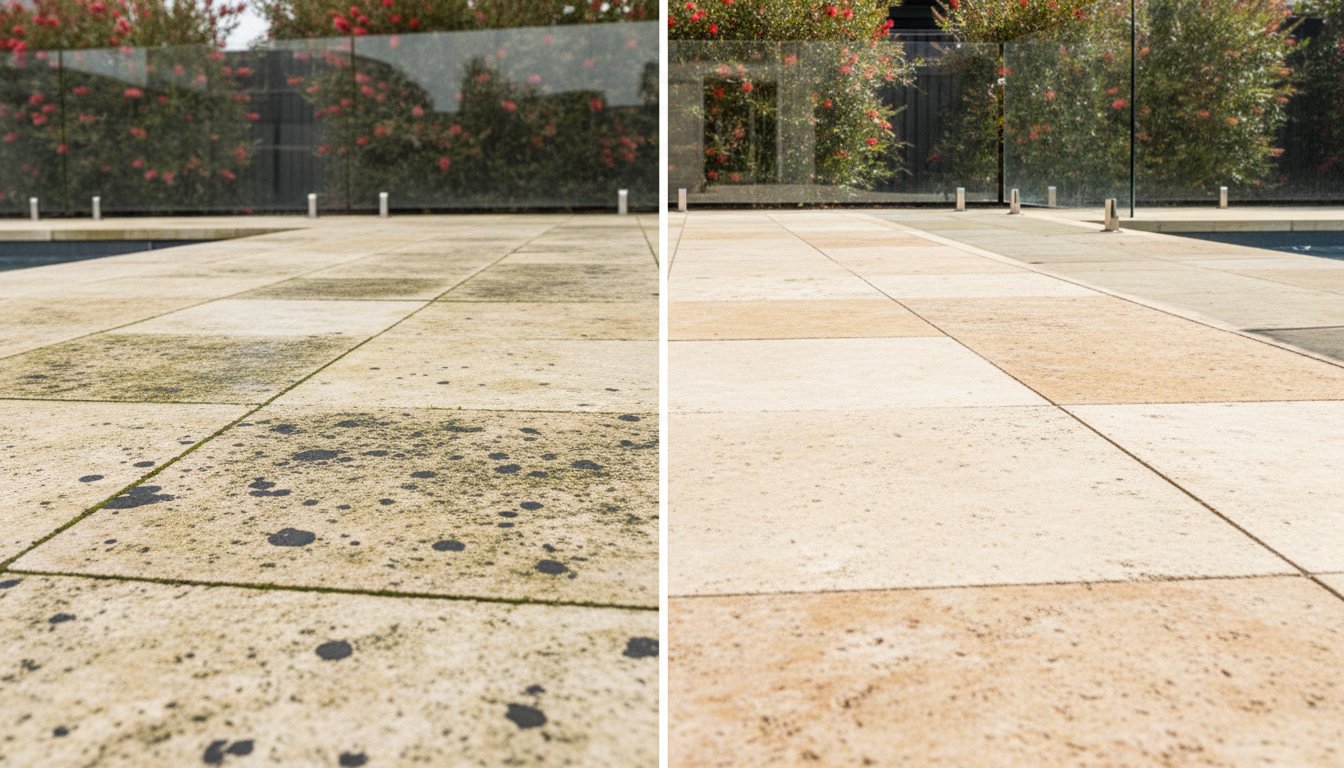
While it's tempting to blast away the grime on your patio with a high-pressure washer, this force often leaves behind the microscopic roots of the organisms causing the hazard. With outdoor surfaces contributing to over one million emergency room visits for slip-and-fall accidents annually, the safety of your family and guests isn't something to take lightly.
We understand you want a beautiful, high-grip outdoor area without the constant cycle of ineffective cleaning or the fear of damaging expensive natural stone. This guide will help you discover the hidden biological causes, such as slippery biofilms and lichen, that thrive in our local climate. You'll learn how to restore the aesthetic beauty of your stone and implement a maintenance routine that actually works. We'll show you how to move beyond temporary fixes to achieve a safe, restored surface that protects your loved ones and your investment.
Key Takeaways
- Identify how surface porosity and standing water combine to trap moisture and create a slick biological film on your outdoor spaces.
- Learn why Black Spot Lichen is more than just a stain, anchoring itself deep into stone pores where standard cleaning can't reach.
- Uncover why physical force often fails to answer the question, "Why is my patio so slippery," and how it can actually damage the face of your natural stone.
- Follow a professional restoration guide to safely clear organic growth and protect your garden borders during the process.
- Establish a preventative maintenance routine that keeps your surface sterile and slip-free throughout the entire year.
Identifying the Root Causes of a Slippery Patio
Many Sydney homeowners assume that a slick surface is just an unavoidable side effect of a rainy afternoon. However, the answer to the question "Why is my patio so slippery" usually lies much deeper than a few puddles. Natural stone, while beautiful, is inherently porous. These microscopic holes act like tiny reservoirs, trapping moisture, dust, and organic matter long after the sun comes out. When standing water mixes with seasonal debris like pollen or fine dust, it creates a slippery film that significantly reduces friction underfoot.
This isn't just a matter of surface dirt; it's a biological issue. Microorganisms thrive in these damp conditions, building complex structures known as biofilms. These are essentially a sticky, protective layer created by bacteria and algae that clings to the stone surface. This layer remains slippery even when the stone appears dry. Understanding the difference between temporary seasonal debris and established organic growth is the first step toward restoring safety. To see the science behind how these organisms interact with your stone, you can learn more about how it works on a microscopic level.
Common Organic Culprits: Algae, Moss, and Lichen
Green algae appears as a bright green slime, often almost immediately after a heavy downpour. While algae sits on the surface, moss acts like a living sponge, holding water against the stone and keeping the area permanently damp. Lichen, however, is often seen as stubborn black spots, and these organisms don't just sit on the stone; they anchor themselves into the pores. These spots are nearly impossible to remove with a standard garden hose or mild detergent.
Environmental Factors Unique to Sydney Patios
Sydney's weather can create good conditions for organic growth on outdoor surfaces. Humidity, rainfall and shaded areas can all increase the amount of time stone remains damp. Patios underneath trees, pergolas or near tall fences may receive less direct sunlight and therefore take longer to dry. Drainage is another factor. If water regularly pools in one section of the patio, that area is more likely to develop algae or other organic growth. These conditions can vary significantly within the same garden, which is why you may find some parts of your patio become slippery while others remain relatively clean.
The Hidden Danger: Why Black Spot Lichen is the Real Problem
When most homeowners see dark, circular marks on their sandstone or limestone, they assume it's just dirt or surface staining. This misconception is exactly why many cleaning attempts fail. These marks are often actually Black Spot Lichen, a complex symbiotic organism consisting of algae and fungi living together. Unlike surface grime, lichen doesn't just sit on top of your stone. It anchors itself deep into the microscopic pores using root-like structures called hyphae. This biological bond makes it impossible to remove with a simple garden hose or standard household cleaners.
This organism is the secret culprit behind the question, "Why is my patio so slippery?" When lichen and other organic growth become wet, they can add another layer between footwear and the stone surface.
For outdoor areas used regularly by family and guests, keeping the paving clean and free from excessive organic growth is an important part of general patio maintenance.
How Lichen Destroys Your Patio's Natural Grip
Lichen doesn't just make the surface slick; it actively degrades the stone's physical properties. Through a process known as biological weathering, the lichen's roots expand and contract within the pores, gradually smoothing out the natural grit that provides traction. Over time, this creates a biofilm that stays slippery long after the rain has stopped. If left untreated, the constant pressure from these roots can lead to 'spalling,' where the top layer of your expensive natural stone begins to flake or peel away entirely. This damage is permanent and can't be reversed, only stopped.
Understanding the Life Cycle of Patio Infestations
Infestations typically start with microscopic spores traveling through the Sydney air. These spores settle in the damp, porous crevices of your patio, where they begin to grow and spread. Because the organism is biologically bonded to the stone, you can't simply wash it away with water. Breaking the cycle requires a solution that penetrates the pores to kill the roots, rather than just blasting the surface visible to the eye. You can learn more about the science of stone restoration to understand how to eliminate these spots for good. If you're unsure about the state of your stone, you can speak with a specialist to assess the extent of the growth.
Pressure Washing vs. Chemical Treatment: Which is Better?
When you first ask, "Why is my patio so slippery," your immediate instinct is likely to reach for a high-pressure washer. It's a satisfying DIY project to watch years of grime disappear under a powerful jet of water. However, this approach relies on what professionals call the 'Blast Fallacy.' Physical force alone cannot kill the microscopic spores that cause the slip. While the surface might look clean for a few weeks, you've essentially just given the organic matter a haircut. The roots remain deep within the stone, ready to bloom again the moment the humidity rises.
Beyond being ineffective against regrowth, high pressure can be actively destructive to natural stone. Sandstone and limestone, which are staples in Sydney landscaping, have a delicate 'face' or top layer. Blasting this with thousands of PSI often strips away the natural grit that provides traction. This creates 'pitting,' or microscopic craters, in the surface. These new pockets act as perfect nurseries for algae and lichen to hide in. By trying to fix the problem with force, you might accidentally make your patio get dirty and dangerous even faster than before.
The Risks of High-Pressure Water on Natural Stone
The damage from pressure washing isn't always visible immediately. Over time, the erosion of the stone's texture means you lose the inherent grip of the material itself. You might also notice the mortar and pointing between your pavers starting to crumble or wash away. This compromises the structural integrity of your patio and allows water to pool underneath the slabs. This 'rebound effect' is the primary reason why a pressure-washed patio often looks worse just months after the initial cleaning than it did before you started.
The Targeted Chemical Advantage
The real answer to the question "Why is my patio so slippery" is biological, so the solution must be biological too. Chemical restoration focuses on 'killing' the organism rather than just 'moving' it. A specialized black spot remover penetrates deep into the pores to dissolve the lichen's anchor points. This process restores the original color and high-grip texture of the stone without the need for abrasive force. When applied correctly, these formulas are designed to be safe for your garden borders and family, ensuring the surface is sterile and slip-free for the long term.
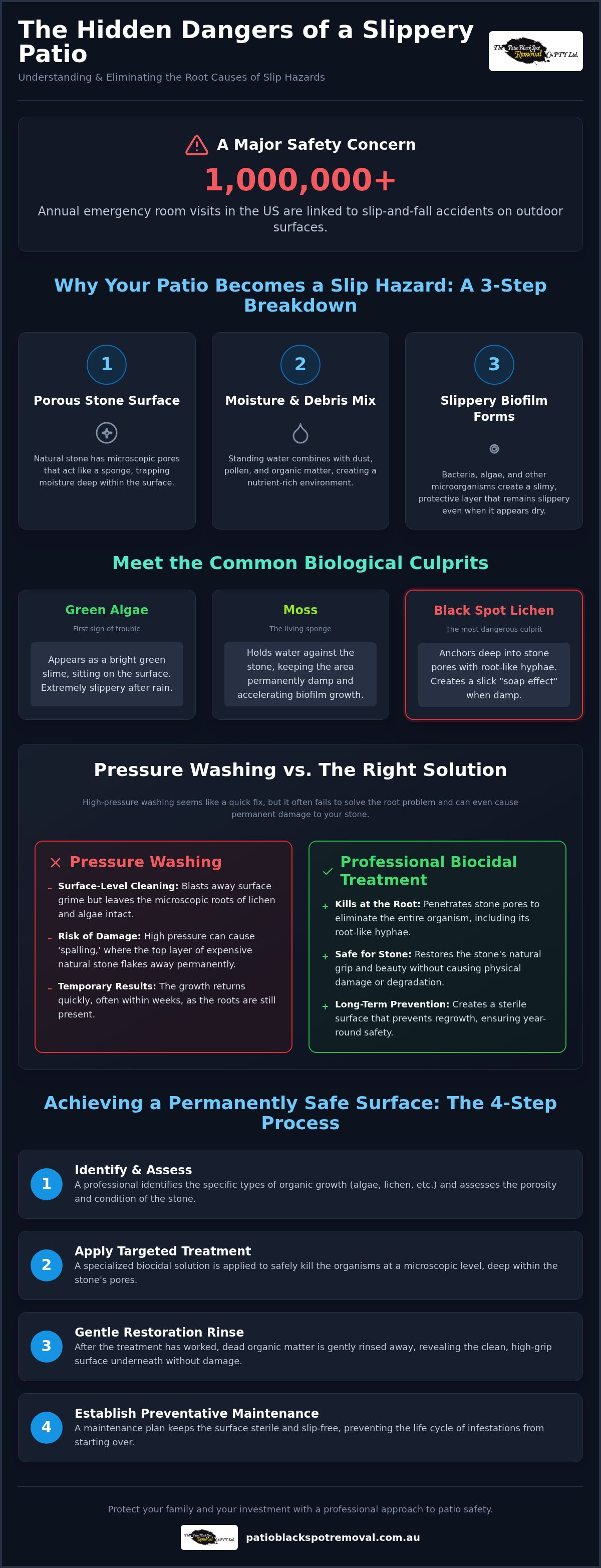
Step-by-Step Guide to Restoring a Safe, Slip-Free Surface
Restoring your patio requires a methodical approach that prioritizes the health of the stone over raw power. If you have spent months wondering, "Why is my patio so slippery," the first step is a thorough assessment. Different stone types react differently to organic infestations. Sandstone, common in many Sydney suburbs, is highly porous and tends to harbor deep-seated lichen. Limestone and slate, while slightly denser, often develop a surface biofilm that is incredibly slick. Identifying your stone type ensures you choose a treatment that removes the hazard without causing chemical etching or discoloration.
Preparation is the foundation of a successful restoration. Before applying any treatments, clear the area of furniture, pots, and debris. While specialized formulas are designed for stone, it is vital to protect your surrounding greenery. We recommend thoroughly soaking any adjacent garden borders or lawn areas with fresh water before you begin. This creates a protective barrier of moisture that prevents plants from absorbing the cleaning solution. Once the area is prepped, you can move on to the actual removal process.
Choosing the Right Product for Your Stone
A one-size-fits-all approach often leads to disappointing results or stone damage. For most natural surfaces, applying a remover for black spot provides the deep-pore cleaning required to eliminate the "living" cause of the slip. Effectiveness depends heavily on coverage and dwell time. You must apply enough product to keep the stone wet throughout the treatment period, allowing the formula to dissolve the lichen's anchor points. If the stone dries out too quickly, the chemical reaction stops, and the roots may survive.
Long-Term Prevention Strategies for Sydney Homeowners
Restoration is only half the battle. To keep your outdoor space safe year-round, you must address the environmental factors that encourage regrowth. Improving drainage is a critical first step. Ensure that water flows away from the house and doesn't pool in low spots, as standing water is a magnet for algae. Additionally, implementing a regular maintenance schedule with a preventative treatment will stop spores from germinating in the first place. This proactive approach saves you the effort of a full restoration every few seasons. If you need a professional assessment of your patio's condition, get in touch with our team for expert advice.
Ensuring Year-Round Safety with Professional Prevention
Cleaning your patio is only the first half of the solution. Even after a successful restoration, the environmental conditions in Sydney remain unchanged. Microscopic spores from neighboring gardens are constantly traveling through the air, looking for a damp, porous home. If the stone surface remains unprotected, these spores will settle into the pores of your sandstone or limestone within months. This is why many people find themselves asking "Why is my patio so slippery" again just one season after a heavy cleaning. A preventative barrier is necessary to keep the surface sterile and break the cycle of biological regrowth.
Using a specialized preventer ensures that any landing spores are neutralized before they can anchor. Unlike some generic sealers that can actually reduce the stone's natural grip, a dedicated preventer maintains the stone's breathability. This is a critical distinction. Applying a thick, film-forming sealer might hide stains, but it often creates a plastic-like layer that becomes an ice rink when wet. By focusing on biological prevention rather than just surface coating, you preserve the stone's original texture while ensuring long-term safety.
When you consider the cost-benefit of maintenance, restoration is always more economical than a complete patio replacement. Completely lifting and relaying a natural stone patio can cost thousands of dollars in labor and materials. In contrast, a simple annual application of a preventer keeps your investment in top condition. This is especially important as we approach the Sydney summer. You want your outdoor entertainment areas to be a place of relaxation, not a source of anxiety about guest safety during a backyard barbecue.
The Science of Prevention
Airborne lichen spores are incredibly resilient. In the humid Sydney climate, they can germinate quickly if the stone remains damp. Most patios benefit from an annual application of a preventer to maintain a high Coefficient of Friction (COF). This scientific measurement represents the grip of the surface. By keeping the stone free of biofilm and organic slime, you ensure the COF remains at a safe level for foot traffic, even during the wettest months of the year.
Conclusion: Take Back Your Outdoor Space
Taking back your outdoor space starts with understanding that a slippery patio is a living problem. By moving away from aggressive pressure washing and toward targeted biological treatments, you can restore the beauty and safety of your home. We have covered how surface porosity traps moisture and how lichen creates a dangerous biofilm that standard cleaning can't touch. The peace of mind that comes with a non-slip surface is invaluable for families with young children or elderly guests. If you're ready to transform your patio, contact us for expert stone restoration advice.
Revive Your Outdoor Sanctuary for a Safer Home
Your patio should be a place for relaxation, not a source of constant safety concerns. We have explored the biological reality behind the question, "Why is my patio so slippery," revealing that microscopic lichen and biofilms are the true culprits. While high-pressure washing might offer a temporary visual fix, it often damages the stone's surface and encourages faster regrowth. True restoration requires a targeted approach that kills the organism at the root. This ensures your natural stone remains both beautiful and high-grip for years to come.
By choosing specialist formulas designed specifically for Australian natural stone, you can achieve a total transformation. Our Sydney-based expertise ensures that your restoration project removes 100% of black spot lichen, protecting your investment and your family. Don't let a slick surface keep you indoors this season. You deserve an outdoor area that is as safe as it is stunning.
Restore your patio's safety today with professional-grade removers.
It's time to enjoy your outdoor space with the confidence that comes from a professionally maintained, slip-free surface.
Frequently Asked Questions
Why is my patio still slippery even after I've scrubbed it with soapy water?
Scrubbing with soap only addresses surface grime. It doesn't kill the underlying biofilm or the lichen roots that have anchored into the stone's pores. This invisible layer of microorganisms stays slick when wet, which is usually the reason you're still wondering "Why is my patio so slippery" after a hard day of cleaning. To fix it, you need a solution that penetrates the stone to kill the organic growth at its source.
Will pressure washing my patio damage the stone or make it more slippery?
Excessive pressure can definitely damage your stone. High-PSI water often strips the natural grit and texture from sandstone or limestone, leaving the surface smoother and more prone to slips. It also creates microscopic pits that act as reservoirs for water and new spores. This often causes the slippery biofilm to return faster than it would have otherwise.
How long does it take for a patio to become slippery again after cleaning?
In Sydney's humid environment, a patio can become slippery again in just a few months if the root causes aren't addressed. Without a preventative barrier, airborne spores quickly re-infest the stone. Using a dedicated preventer after your initial restoration can keep the surface safe and sterile for much longer, often preventing regrowth for an entire season or more.
Is the black spot remover safe to use around my garden and lawn?
Specialized stone restoration formulas are safe for your garden when you follow the correct preparation steps. You must thoroughly soak your lawn and garden borders with fresh water before starting. This saturates the plants' root systems so they don't absorb the cleaning solution. Once the treatment is finished, a final rinse further protects your greenery.
Can I use the same cleaning product on sandstone and concrete?
While many products are versatile, it's important to use a formula designed for your specific surface. Natural stone like sandstone is far more porous than concrete and can be sensitive to certain chemicals. Using a specialized natural stone remover ensures you don't cause discoloration or etching. Concrete is denser and can typically handle different concentrations, but the goal remains killing the lichen root.
What is the best time of year to treat a slippery patio in Sydney?
The best time to treat your patio is during the milder months of autumn or spring. Treating the surface before the heavy summer rains or the damp winter period prevents the build-up of dangerous biofilms. This timing ensures your outdoor space is ready for entertaining when the weather is at its best, providing a high-grip surface before the peak season.
Do I need to seal my patio to prevent it from becoming slippery?
You don't necessarily need a sealer, and in some cases, the wrong sealer can make the surface more dangerous. Many film-forming sealers create a plastic-like coating that becomes incredibly slick when wet. A better approach for safety is using a preventative treatment. This keeps the stone's natural grip while stopping the organic growth that causes the slip.
Why do black spots only seem to appear on certain parts of my patio?
Lichen and algae are highly sensitive to sunlight and moisture levels. You'll often find that the question "Why is my patio so slippery" applies mostly to shaded corners or areas where water pools due to poor drainage. These damp micro-climates provide the perfect conditions for spores to germinate and thrive, even if the rest of the patio stays relatively clean.