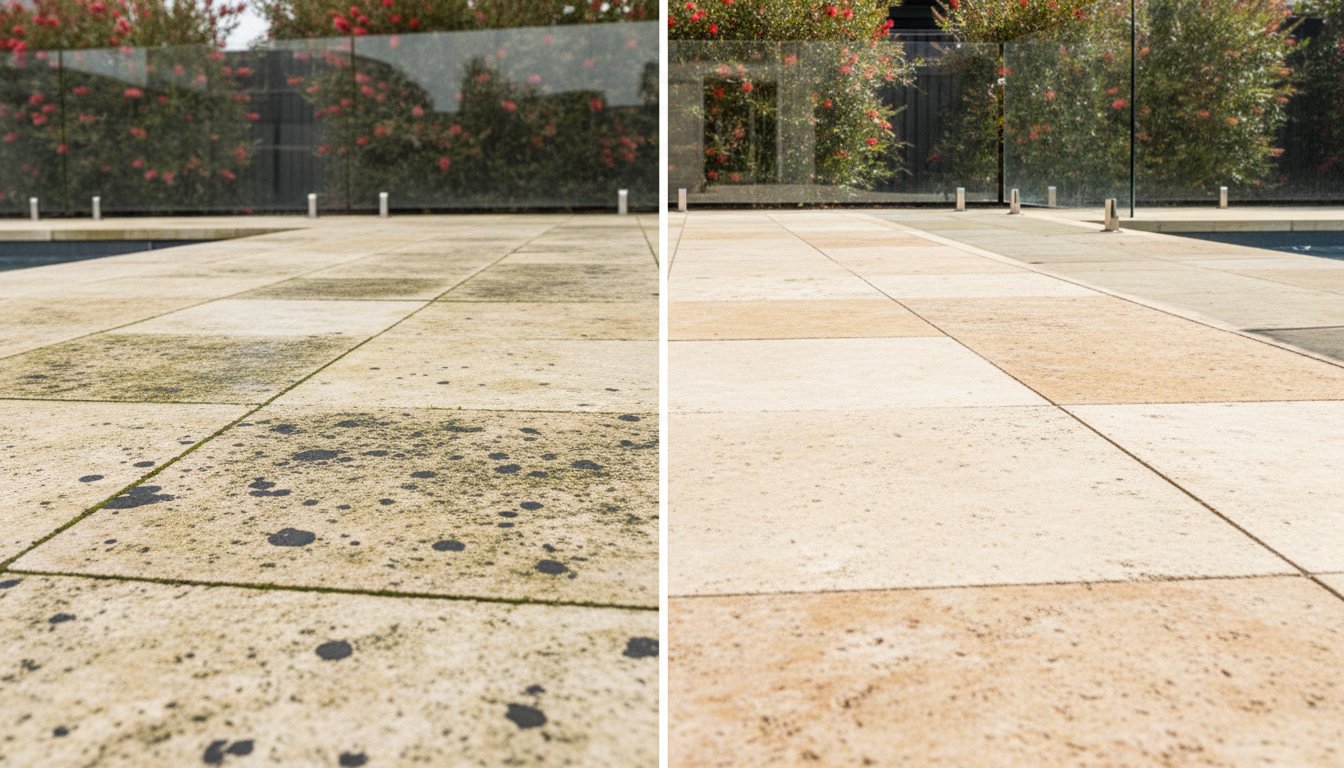

What if your weekend spent behind a high-pressure hose was actually making your outdoor space more vulnerable to grime? It's a frustrating cycle for many Sydney homeowners who find that no matter how hard they scrub, those stubborn black spots and slippery patches return within months. Learning how to stop patio from getting dirty isn't about working harder; it's about understanding why dirt and organic growth bond to your specific stone type in our unique climate.
We know how exhausting it is to battle recurring lichen and the safety risks of a slick surface during a humid Sydney summer. This guide shares professional secrets to help you shift from reactive scrubbing to proactive prevention, ensuring your stone stays pristine year-round. You'll discover the technical reasons behind surface bonding, the importance of managing biological spores, and a clear maintenance schedule to keep your outdoor area low-maintenance and beautiful.
Key Takeaways
- Identify why Sydney's high humidity turns environmental debris into living lichen and how to break the growth cycle before it starts.
- Master the "Dry First" rule as a fundamental step in how to stop patio from getting dirty by managing organic matter before it bonds to the surface.
- Learn why high-pressure washing can be counterproductive by creating micro-fissures that trap more dirt and biological spores over time.
- Distinguish between topical sealers that trap moisture and molecular preventers that protect the stone's integrity without causing delamination.
- Establish a "Zero Growth" baseline by applying professional prevention treatments during the critical autumn and spring maintenance windows.
Why Your Sydney Patio Gets Dirty So Fast: The Environmental Factors
Understanding patio soiling is the first step toward a cleaner home. It isn't just a layer of dust that can be swept away by a light breeze. Instead, it's a complex combination of environmental debris and biological growth that thrives in the local climate. When we examine What is a Patio?, we see a structure exposed to every element Sydney offers. Our high humidity levels, which often stay elevated throughout the summer months, create a perfect environment for mould and algae to flourish. These organisms don't just sit on top of the stone; they integrate with the surface, making it difficult to maintain a pristine look.
Living near the coast adds another layer of difficulty for homeowners. Salt air in suburbs like Coogee or Cronulla affects the integrity of your stone surfaces over time. Salt penetrates the pores and crystallises, which can lead to microscopic crumbling and a rougher texture that holds onto grime. Additionally, native flora like Eucalyptus trees contribute tannins and sap that leave deep, dark stains on the ground. If you're wondering how to stop patio from getting dirty, you must account for these local environmental factors that turn a simple cleaning task into a constant struggle against nature.
The Science of Stone Porosity
Stone porosity is the measure of void spaces within the material that allows water and contaminants to penetrate the surface. In Sydney, the choice of stone significantly dictates your maintenance routine. Sandstone is highly porous and absorbs water rapidly during heavy summer storms, while limestone has a different mineral structure that can trap moisture just below the surface. You might assume a smooth finish is easier to wipe down, but these surfaces can actually highlight dirt more clearly and provide a flat plane for algae to spread quickly across the area.
Biological Spores: The Invisible Enemy
Lichen spores are the primary cause of those stubborn black spots that ruin the look of natural stone. These spores are airborne and can land on your patio at any time, settling deep into the stone's microscopic pits. Dirt and organic matter provide the perfect nursery for these spores to grow and expand. This is why a simple sweep isn't enough to solve the problem. To see how the removal process works, you must understand that these organisms are alive. They anchor themselves into the stone, making them nearly impossible to remove with water alone. Knowing how to stop patio from getting dirty requires a strategy that targets these spores before they have a chance to mature and multiply.
Daily and Weekly Habits to Keep Dirt Off Your Outdoor Surfaces
Maintaining a spotless outdoor area doesn't require hours of back-breaking labor every weekend. Instead, success lies in small, consistent actions that prevent grime from anchoring to the stone. One of the most effective methods for how to stop patio from getting dirty is the "Dry First" rule. You should always aim to remove organic matter, such as leaves, twigs, and grass clippings, while they're still dry. Once these materials get wet, they release tannins and sugars that act like a dye, creating deep stains that are much harder to lift. Keeping the surface dry also limits the moisture needed for preventing algae and lichens from taking hold.
Strategic furniture placement plays a vital role in long-term cleanliness. Heavy outdoor sets often create "shadow dirt" zones where sunlight can't reach and airflow is restricted. These moisture traps become prime real estate for mould. Try to shift your furniture slightly every few weeks to allow the stone underneath to breathe and dry out. Similarly, ensure your drainage points are always clear. When water pools on a flat surface, it doesn't just leave a wet patch; it deposits fine silt and minerals that harden into a stubborn crust once the sun comes out. If you're struggling with persistent drainage issues or deep-set stains, it might be time to speak with a specialist about a professional assessment.
Don't overlook your pot plants. While they add greenery, they're often the source of circular mineral stains and soil runoff. Using "pot feet" to elevate your containers creates a crucial air gap. This prevents water from being trapped against the stone and stops the formation of those tell-tale white rings caused by salt and calcium leaching out of the ceramic or terracotta.
The 5-Minute Weekly Maintenance Routine
- Step 1: High-volume debris removal. Use a leaf blower or a stiff broom to clear the entire area. This removes the "nursery" of dirt that biological spores need to grow.
- Step 2: Check for moisture "hot spots." Look under rugs, furniture bases, and in corners. If a spot is still damp hours after the rain has stopped, it needs attention.
- Step 3: Immediate spot-cleaning. Address bird droppings or food spills immediately. These are acidic and can etch natural stone if left to sit in the Sydney sun.
Tools Every Sydney Homeowner Needs
The right tools make how to stop patio from getting dirty much easier. A stiff-bristled broom is far superior to a soft one for textured stone like sandstone or exfoliated granite. The rigid bristles reach into the microscopic pits of the stone to dislodge dirt that a soft broom would simply skim over. While a leaf blower is excellent for a quick clear, avoid using metal-edged shovels or scrapers for heavier debris. Metal can leave permanent scratches or, worse, tiny fragments that rust and leave orange streaks across your beautiful masonry.
Eliminating the 'Invisible' Dirt: How to Prevent Lichen and Mould
Many homeowners mistake the dark, circular marks on their stone for stubborn mud or oil spills. In reality, these "black spots" are lichen, a resilient living organism that anchors itself deep within the stone's structure. Traditional cleaning methods often fail because they only address the surface. While household bleach might turn the lichen white temporarily, it doesn't kill the root of the spore. This biological growth is the primary reason why simple sweeping isn't enough when you're looking for how to stop patio from getting dirty. Identifying the early signs, such as a slight green haze or tiny dark flecks that don't brush away, is essential for stopping the growth before it becomes a permanent fixture of your landscape.
Why Pressure Washing Can Make Patios Dirtier
Using excessive force is a common mistake when homeowners try to figure out how to stop patio from getting dirty. While a pressure washer provides instant gratification by blasting away surface grime, it often does more harm than good. High-pressure streams, particularly narrow needle jets, can cause "pitting" by stripping away the stone's natural protective layer. This creates thousands of microscopic craters and fissures. These new openings act as perfect reservoirs for water, dirt, and biological spores to settle in. Consequently, your patio actually becomes more susceptible to deep-seated staining than it was before you started cleaning. To avoid this, always use a wide fan setting and keep the nozzle at a consistent distance from the surface.
Breaking the Biological Cycle
To keep your outdoor space pristine, you must move beyond the annual "big scrub" and focus on neutralizing spores before they bond. This requires a shift toward seasonal treatments that maintain a hostile environment for lichen and mould. Using a specialised preventer every six months ensures that any airborne spores that land on your stone are neutralised before they can germinate.
It's also vital to prioritise pH-neutral cleaning solutions for your regular maintenance. Harsh acidic or alkaline cleaners can etch natural stone, making it more porous and prone to absorbing dirt. By understanding how the removal process works, you can see that professional-grade prevention targets the "root" of the biological problem. This proactive approach is significantly more effective for the long-term health of your stone than waiting for visible spots to appear and then attempting to blast them away with water.

Beyond Pressure Washing: Long-Term Surface Protection Strategies
Moving beyond basic cleaning involves choosing between topical sealers and molecular preventers. Traditional topical sealers create a film on the surface, acting like a layer of plastic wrap. While they look good initially, they often trap moisture within the stone. In Sydney's humid environment, this trapped water can cause delamination, where the top layer of stone begins to flake or peel away. A breathable protection layer is superior because it allows water vapour to escape while preventing liquid water and dirt from entering. This is a critical distinction when learning how to stop patio from getting dirty for the long term.
You can easily check the status of your protection with the "Water Bead Test." Pour a small amount of water onto various parts of your patio. If the water beads up and sits on the surface, your protection is active. If it soaks in and darkens the stone within seconds, the pores are open and vulnerable to staining and biological growth. This simple test helps you stay ahead of the maintenance cycle before permanent damage occurs.
Choosing the Right Protection for Your Stone Type
Different materials have unique requirements. Natural stones like sandstone, travertine, and slate are highly porous and require a solution that penetrates deep into the substrate without changing the appearance or slip resistance. Concrete and man-made pavers are denser but still benefit from a barrier against oil and organic stains. Using a Patio Black Spot Preventer for all stone types provides a versatile solution that works across these varied materials. It targets the microscopic level where dirt and spores typically bond, ensuring the stone remains easy to clean.
The ROI of Professional Prevention
Investing in prevention offers a much higher return than waiting for a restorative clean. Restorative cleaning often involves heavy chemicals and higher water usage, which can be costly and stressful for the stone. Biannual prevention treatments maintain the stone's integrity and protect the grout from eroding under the pressure of constant washing. Beyond aesthetics, there's a significant safety ROI. By stopping the growth of algae and lichen, you drastically reduce the risk of your patio becoming a slip hazard during Sydney's wet seasons. If you're unsure which treatment is right for your home, you can request a professional quote to establish a custom maintenance plan. This proactive approach is the most reliable way to understand how to stop patio from getting dirty while preserving your property value.
The Ultimate Prevention Plan: Professional Solutions for a Permanent Clean
Establishing a "Zero Growth" baseline is the foundation of any successful maintenance plan. You can't simply apply a protective layer over existing grime and expect it to work. If you're wondering how to stop patio from getting dirty, you must first clear the canvas entirely. This means removing every trace of lichen, algae, and atmospheric pollution. Once the stone is restored to its original condition, you can implement a 6-month prevention cycle. Autumn and Spring are the critical windows for this because they precede the periods of highest moisture and biological activity in Sydney. By treating your stone during these transition seasons, you stay ahead of the growth cycle before the humidity spikes.
The "Clean, Restore, Prevent" framework simplifies your outdoor chores. You start with a thorough clean, move to a professional restoration if needed, and finish with a molecular preventer. Integrating this into your home maintenance routine ensures your stone remains as vibrant as the day it was laid. It moves you away from the back-breaking effort of constant pressure washing and toward a system that works silently in the background to maintain your property's value.
Step 1: The Reset (Restoration)
Before you can protect your surface, you must achieve total removal of organic matter. Using Patio Black Spot Remover for Natural Stone allows you to lift those stubborn organisms that anchor into the stone's pores. You shouldn't apply a preventer over existing dirt or lichen because the preventer needs to reach the stone's substrate to be effective. If a layer of grime sits between the product and the stone, absorption is blocked and the treatment will fail. Prepare the surface by clearing all loose debris and ensuring the stone is clean, allowing for maximum product penetration during the application process.
Step 2: The Shield (Prevention)
Once your patio is restored, applying the shield is the final, essential step. A high-quality Patio Black Spot Preventer for all stone types works by killing spores on contact for up to 12 months. This chemical barrier ensures that even if airborne spores land on your stone during a humid Sydney summer, they cannot germinate or bond. For the best results, apply the treatment on a dry day when no rain is forecast for at least 24 hours. This gives the molecular bond enough time to set without being diluted by rainwater.
Follow this final checklist for a patio that stays clean through 2026:
- Complete a deep restoration to remove all existing black spots and "invisible" dirt.
- Apply a professional preventer every 6 to 12 months, ideally in Spring and Autumn.
- Maintain the "Dry First" rule for organic debris like leaves and grass clippings.
- Perform the "Water Bead Test" every quarter to monitor the protection levels of your stone.
By following this professional plan, you'll find that how to stop patio from getting dirty becomes a matter of simple, scheduled maintenance rather than an exhausting seasonal battle against the elements.
Take Control of Your Outdoor Maintenance Today
We've explored how Sydney's humidity and biological spores create a constant battle for homeowners. You now understand that simple pressure washing often does more harm than good by opening up stone pores to more grime. By implementing the "Dry First" rule and focusing on molecular prevention rather than just topical sealing, you've gained the professional secrets to a low-maintenance outdoor space. Mastering how to stop patio from getting dirty is ultimately about breaking the biological growth cycle before it begins.
As Sydney's leading specialists in lichen removal, we provide solutions that are safe for all natural stone types and guaranteed to last 12 months per application. It's time to stop the back-breaking scrubbing and start enjoying a pristine patio year-round. Shop the Professional Patio Prevention Range to secure your home's value and safety. Your stone deserves a proactive shield that stands up to the elements.
Frequently Asked Questions
How do I stop my patio from getting black spots?
Stopping black spots requires neutralizing the lichen spores before they can anchor into the stone's surface. You achieve this by applying a professional-grade preventer every 12 months, which creates a chemical barrier that kills airborne spores on contact. Regular sweeping of organic matter is also essential, as rotting leaves and dirt provide the nutrients these organisms need to grow and spread across your outdoor areas.
Can I use a pressure washer to stop my patio from getting dirty?
Pressure washing is a reactive cleaning method rather than a preventative one. While it removes surface grime, the high pressure can damage the stone by increasing its porosity and creating micro-fissures. This makes it easier for dirt and spores to settle deep within the material later. To truly understand how to stop patio from getting dirty, you should focus on low-pressure cleaning combined with a molecular protection layer.
Why does my patio get dirty again so quickly after cleaning?
Your patio likely gets dirty quickly because previous cleaning didn't address the microscopic spores living in the stone's pores. If you only remove surface dirt, the biological "roots" remain active and begin regrowing immediately. Sydney's high humidity levels further accelerate this process. Without a proper prevention treatment, the stone remains vulnerable, which is why learning how to stop patio from getting dirty involves targeting the biological source, not just the visible stain.
Is there a way to prevent moss and algae on north-facing patios?
North-facing patios in Sydney receive the most sunlight, but they can still develop moss and algae in shaded corners or where water pools. To prevent growth, ensure your patio has a slight fall for drainage so water doesn't sit after rain. Applying a preventer even in sunny spots is vital, as it stops spores from taking hold during humid summer months when biological growth accelerates regardless of direct sun exposure.
What is the best sealer to stop dirt bonding to sandstone?
The most effective solution for sandstone is a breathable, molecular preventer rather than a traditional topical sealer. Sandstone is naturally very porous and needs to breathe to avoid moisture being trapped underneath. A molecular preventer bonds with the stone at a microscopic level, repelling water and dirt while allowing vapour to escape. This prevents the delamination and salt damage often seen with cheap hardware store sealers that form a plastic-like film.
How often should I apply a patio preventer in Sydney's climate?
In Sydney's humid environment, you should apply a preventer every 6 to 12 months for the best results. Autumn and Spring are the ideal windows for application, as they prepare the stone for the wet and humid seasons ahead. One application generally provides full protection for a year, but areas under heavy tree cover or near the coast might benefit from a more frequent 6-month maintenance schedule to keep the surface pristine.
Does 'wet and forget' really stop dirt from coming back?
Biocidal cleaners like Wet & Forget are effective at killing existing growth over time, but they don't always provide the long-term molecular barrier found in professional preventers. While they help manage biological dirt, they may require more frequent re-application to maintain a completely clean surface. For a more permanent solution, it's better to use a dedicated preventer that is specifically formulated for the high porosity of natural stone and concrete.
Are patio prevention chemicals safe for pets and plants?
Most professional patio prevention products are safe for pets and plants once they have completely dried on the stone. During application, it's best to move potted plants away and keep pets indoors to avoid direct contact with the wet product. Once the liquid has been absorbed and the surface is dry to the touch, there is no risk of transfer. Always follow the specific safety instructions on the product label to ensure the best results.