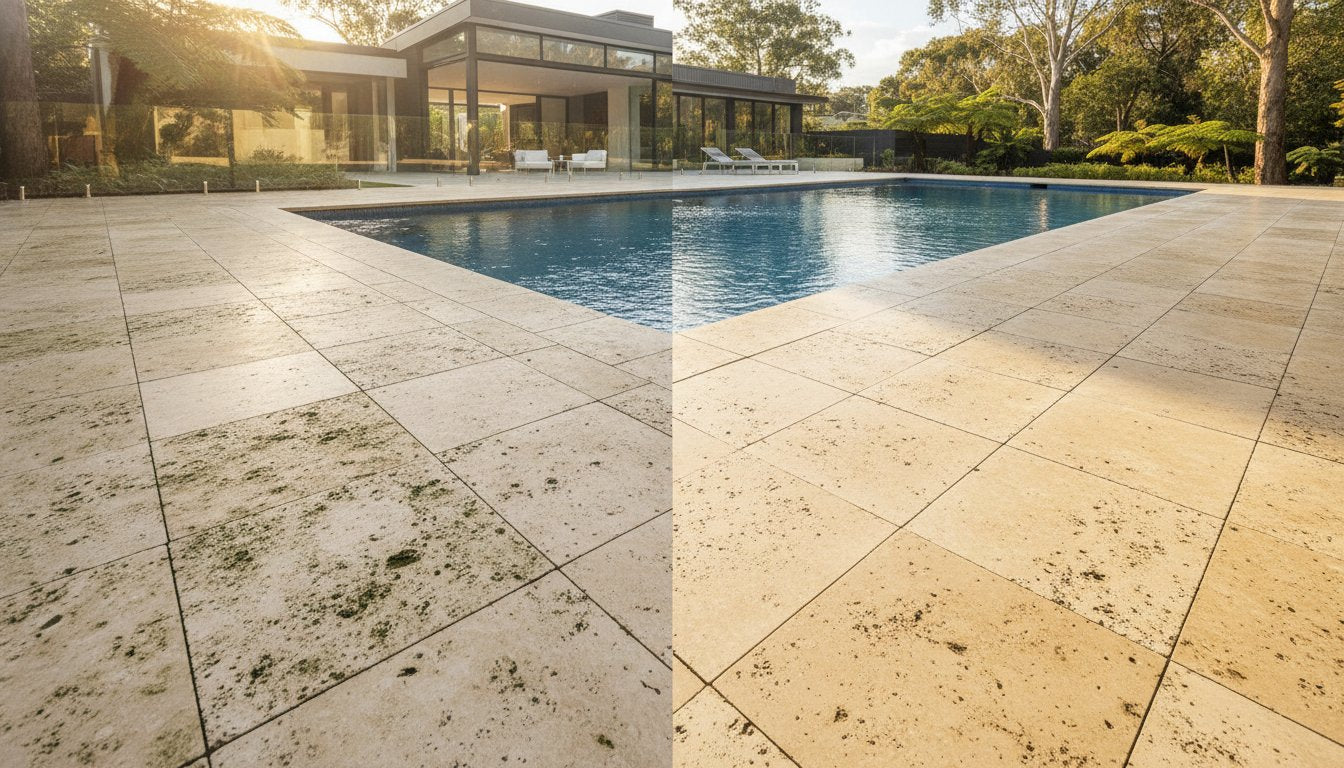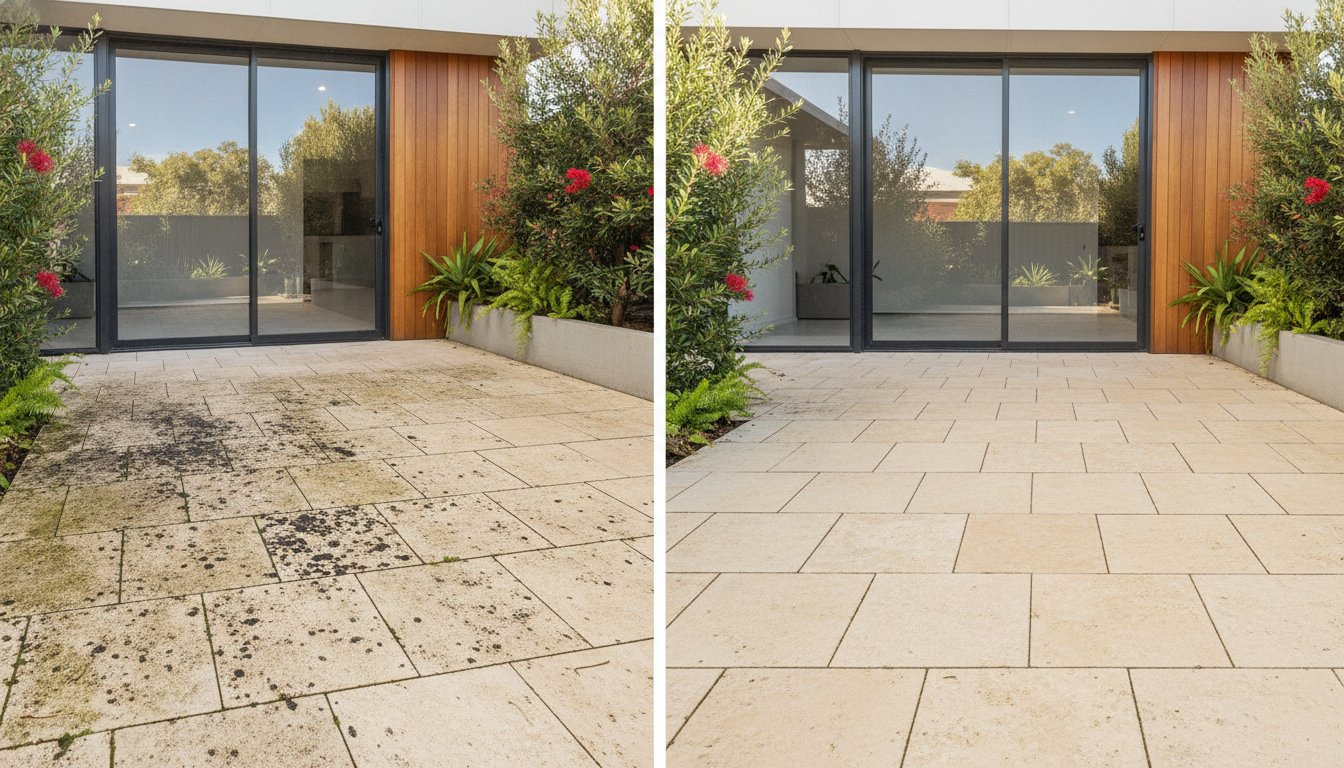
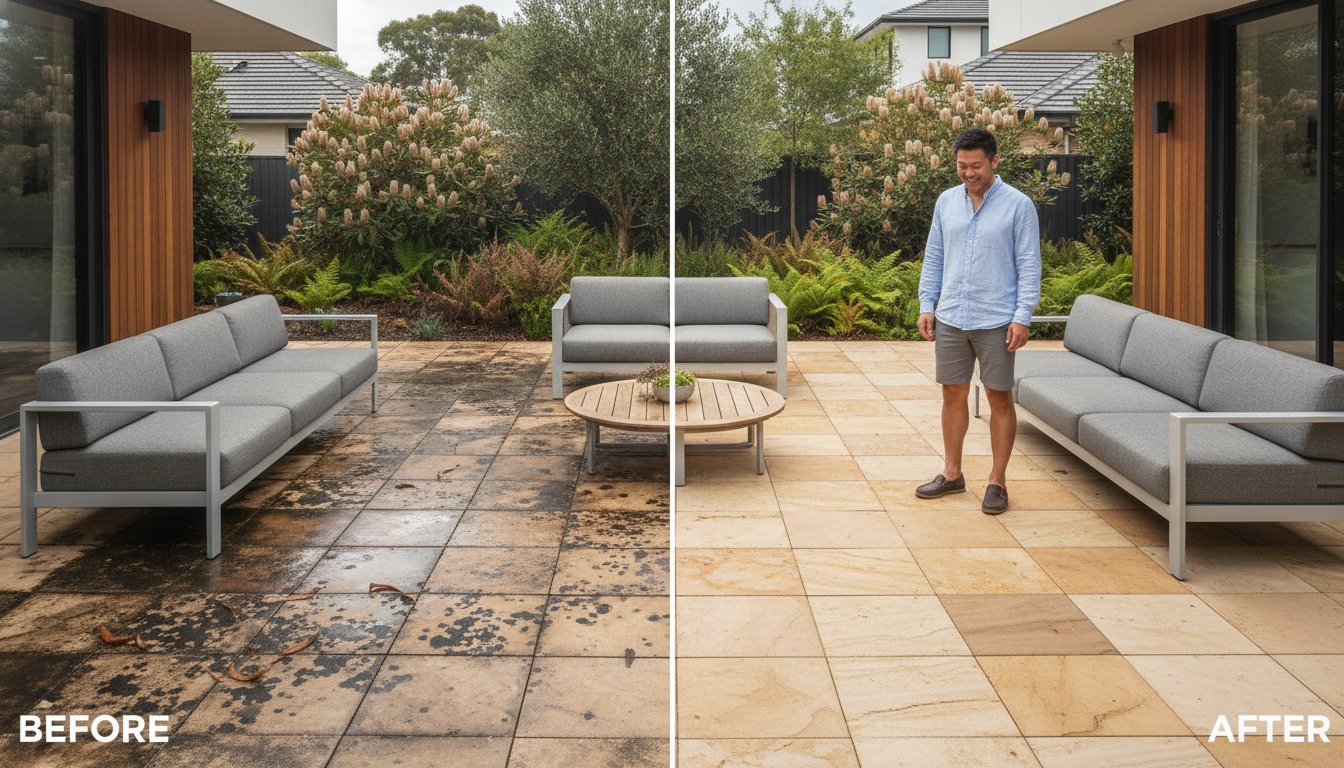
What if your high-pressure washer is actually the worst tool for cleaning your pavers? Most Australian homeowners spend an entire Saturday blasting their outdoor areas, only to find those stubborn, ink-like marks haven't budged. If you're wondering what removes black spots from patio stone without the back-breaking labour, you're not alone. It's exhausting to watch your beautiful sandstone or limestone lose its character to these persistent growths, especially when you're worried that harsh chemicals might damage the surface or harm your garden.
We understand the frustration of seeing "clean" stone stay grey and spotted. This 2026 guide promises a better way. You'll learn how a professional-grade, two-part system can safely kill the lichen roots and restore your patio's natural colour in less than two hours. We'll explain why pressure washing fails to solve the biological problem and show you how to achieve a showroom finish using biodegradable, acid-free solutions. It's time to stop scrubbing and start enjoying your outdoor living space again.
Key Takeaways
- Identify why black lichen acts as a biological "anchor" in stone pores, explaining why pressure washing alone cannot provide a permanent solution.
- Discover exactly what removes black spots from patio stone using a professional two-part system that restores original colour in under two hours.
- Learn how to safely treat delicate Australian sandstone and limestone with biodegradable, acid-free formulas that won't harm your pets or garden.
- Master the maintenance cycle by using a preventative treatment to stop spores from re-establishing in humid or shaded areas.
What Are the Black Spots on Your Patio? (It’s Not Just Dirt)
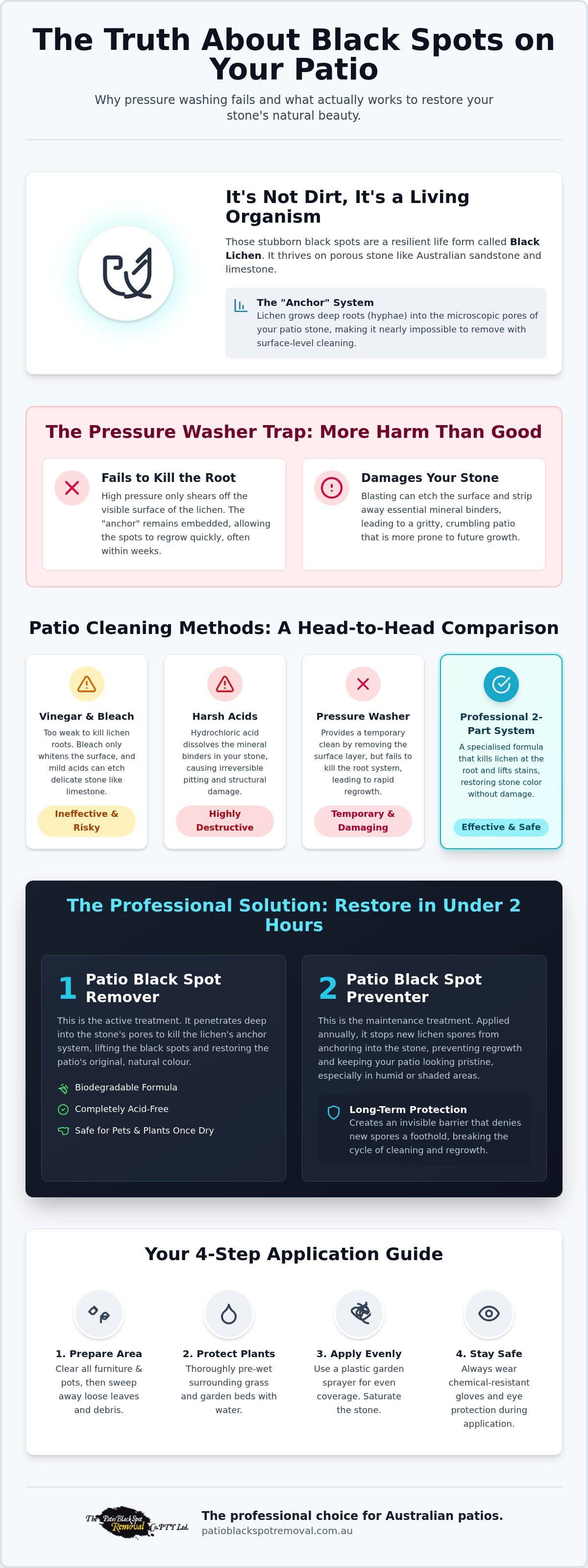
Those stubborn marks aren't just garden grime or spilled ink. They're actually a living organism called Black Lichen (Xanthoria parietina). This complex life form is a symbiotic partnership between fungi and algae that thrives on the porous surfaces of Australian sandstone and limestone. Unlike common dust, lichen develops a sophisticated "anchor" system. It grows deep into the microscopic pores of your stone, making it nearly impossible to dislodge with standard cleaning.
The reason these spots look like permanent ink splatters is a survival tactic. The lichen produces a dark pigment to shield itself from Australia’s intense UV radiation. When you're searching for what removes black spots from patio areas, don't fall into the "Pressure Washer Trap." Pressure washing only shears off the surface of the organism. Because the anchors remain embedded, the spots will simply regrow as soon as the next rain arrives.
Why Pressure Washing Can Damage Your Stone
Using high-PSI equipment often does more harm than good. Blasting natural stone can etch the surface, creating even more tiny crevices for future lichen to colonise. In natural sandstone, pressure washing can strip away the "fines," which are the essential mineral binders that hold the stone together. This leads to a gritty, crumbling surface that loses its structural integrity over time.
Identifying Organic Growth vs. Mineral Staining
- The Wet Test: Pour some water on the area. If the spots show a subtle green hue when wet, they're organic.
- Mineral Signs: Rust-coloured streaks or orange patches usually indicate iron oxidation rather than lichen.
Black lichen is a resilient, living organism that requires a specific chemical reset rather than aggressive physical scrubbing to achieve a permanent result.
Comparing Cleaning Methods: What Actually Removes Black Spots?
Finding what removes black spots from patio surfaces often leads to a choice between supermarket "hacks" and industrial chemicals. Household bleach is a common first attempt. While it has a high pH, it lacks the specialised surfactants required to break the surface tension of natural stone. It might bleach the surface, but the lichen's deep-rooted anchors stay alive. Conversely, acid-based cleaners like hydrochloric acid are dangerous. They don't just target the lichen; they physically dissolve the mineral binders in sandstone, leaving your patio permanently pitted.
The Pros and Cons of Common DIY Hacks
Vinegar and lemon juice are often cited as eco-friendly alternatives. Unfortunately, they're completely ineffective against the hardy structure of black lichen. Their mild acidity can also cause "etching," leaving dull white marks on limestone pavers. Sodium Hypochlorite is the active agent that actually kills the organism, but supermarket concentrations are far too low. Professional solutions use a concentrated, stabilised version that penetrates the stone without the destructive side effects of raw acids.
Why Professional Chemicals Are Safer for Australian Gardens
Australia's humid climate and unique garden ecosystems require a delicate touch. Using a biodegradable, acid-free system ensures your restoration doesn't harm local waterways or your lawn. You can see how our acid-free system works to lift stains in under two hours while remaining safe for pets and plants. This two-part philosophy is simple: kill the lichen at the root today, then apply a Patio Black Spot Preventer annually to stop new spores from anchoring. If you're unsure about your stone's condition, contact our local experts for advice tailored to the Australian climate.
The Step-by-Step Guide to Using a Professional Remover
Success starts before you open the bottle. Clear the area of pots and furniture, then sweep away loose debris. Pre-wetting surrounding grass and garden beds is a vital step. This creates a protective water barrier that prevents your plants from absorbing any accidental overspray. When homeowners ask what removes black spots from patio stone effectively, they often overlook that the application process is just as critical as the chemical itself.
Essential Tools for a DIY Restoration
Use a pump-up garden sprayer for application rather than a brush or a metal canister. Metal components can corrode when they come into contact with oxidising agents, and a sprayer provides the even coverage needed to saturate the stone. Don't skip the safety gear. Wear chemical-resistant gloves and eye protection to stay safe while you work. A plastic sprayer allows the solution to pool slightly on the spots, ensuring the chemical stays in contact with the organism.
Once applied, let the solution sit for two hours. This dwell time is the magic number for Sydney's common stone types. It gives the surfactants enough time to penetrate deep into the pores and dissolve the lichen into a dark "sludge." Finally, rinse the area thoroughly with a garden hose or give the area a light pressure wash. This simple rinse reveals the stone's original, vibrant colour without the need for aggressive scrubbing or high-pressure water.
Optimising Results for Different Stone Types
Different stones require slightly different approaches. Sandstone is highly porous and often needs a more generous application to reach deep-seated spots. Limestone and slate are denser, so focus on achieving a perfectly even coat to avoid patchy results. You can browse Patio Black Spot Remover to find the specific formula for your pavers. If you're dealing with a particularly stubborn area, get in touch with our team for expert advice on your restoration project.
Preventing the Return: Maintenance for the Australian Climate
Australia's climate is a double-edged sword for homeowners. While we enjoy the outdoor lifestyle, high humidity and coastal moisture turn shaded garden corners into perfect incubators for lichen. Even after you've successfully used a professional treatment, the battle isn't over if you leave the surface unprotected. If you're still wondering what removes black spots from patio areas permanently, the answer lies in a proactive defense rather than just reactive cleaning.
The "Preventer" phase of the system is designed to kill airborne spores before they can establish a new colony. By applying this solution, you're essentially creating a biological barrier. A quick 15-minute maintenance spray once a year can save you five hours of heavy cleaning later. It's an investment in the original colour of your stone, protecting the thousands of dollars spent on your landscaping from the inevitable return of organic growth.
The Annual Maintenance Schedule
Timing is everything when it comes to prevention. In Australia, the best time to apply your preventer is late Autumn or early Winter. This prepares the stone for the damp, cooler months when lichen and algae are most active. You can shop the Patio Black Spot Preventer to ensure your pavers stay clear year-round without the need for aggressive pressure washing.
Reclaim Your Stunning Outdoor Space
Your patio should be a place for relaxation, not a source of constant frustration. We've explored how black lichen creates deep biological anchors that mechanical cleaning simply cannot reach. By choosing a professional two-part system, you move beyond temporary fixes to a permanent restoration. Understanding what removes black spots from patio stone is the first step toward reclaiming your garden's original beauty. Our acid-free and biodegradable formulas are manufactured in Sydney specifically for Australian conditions, ensuring your sandstone or limestone remains safe.
You don't need to spend days scrubbing. Our specialised system delivers visible results in less than 2 hours, making it easier than ever to maintain a pristine finish. If you're ready to stop the cycle of regrowth and protect your investment, we're here to help. Your perfect patio is just a few hours away, and we can't wait to help you achieve it.
Frequently Asked Questions
Will patio black spot remover kill my grass or garden plants?
Our biodegradable, acid-free formula is safe for surrounding vegetation when used according to the instructions. You must pre-wet your lawn and garden beds with fresh water before you begin. This creates a protective water barrier that prevents plants from absorbing the solution. If any accidental overspray hits your foliage, simply rinse it off immediately. It's designed to be gentle on your garden while remaining tough on lichen anchors.
How long does it take for black spots to return after treatment?
Black spots can return within a single humid Sydney season if you don't apply a preventative treatment. While the remover kills the existing lichen, airborne spores are constantly looking for new porous surfaces to inhabit. Using a Patio Black Spot Preventer once a year stops these spores from anchoring. This proactive approach keeps your pavers clear for years, saving you from seeing those ink-like marks reappear every spring.
Can I use a pressure washer in combination with the chemical remover?
You can use a pressure washer for the final rinse, but it's not strictly necessary for the process. When considering what removes black spots from patio surfaces, remember that the chemical does the heavy lifting by dissolving the lichen roots. If you use a washer, keep it on a low-pressure setting to avoid etching the stone. A standard garden hose is usually sufficient to wash away the organic sludge.
Is the black spot remover safe for my dogs and cats to walk on?
The treated area is completely safe for pets once the product has been thoroughly rinsed and the stone is dry. Our Sydney-manufactured formula is acid-free and biodegradable, meaning it doesn't leave harmful residues behind for your furry friends. We recommend keeping dogs and cats off the surface during the two-hour application and dwell process. Once you've finished the final rinse, they can safely return to their favourite sunny spot.
Why didn't my hardware store patio cleaner work on these black spots?
Most hardware store cleaners are generic detergents that lack the specialised surfactants needed to penetrate deep stone pores. They might remove surface green algae, but they can't reach the biological roots of black lichen. To understand what removes black spots from patio stone effectively, you need a professional-grade oxidising agent. Our system is specifically formulated for the resilient lichen species found in the Australian climate, providing a deeper clean.