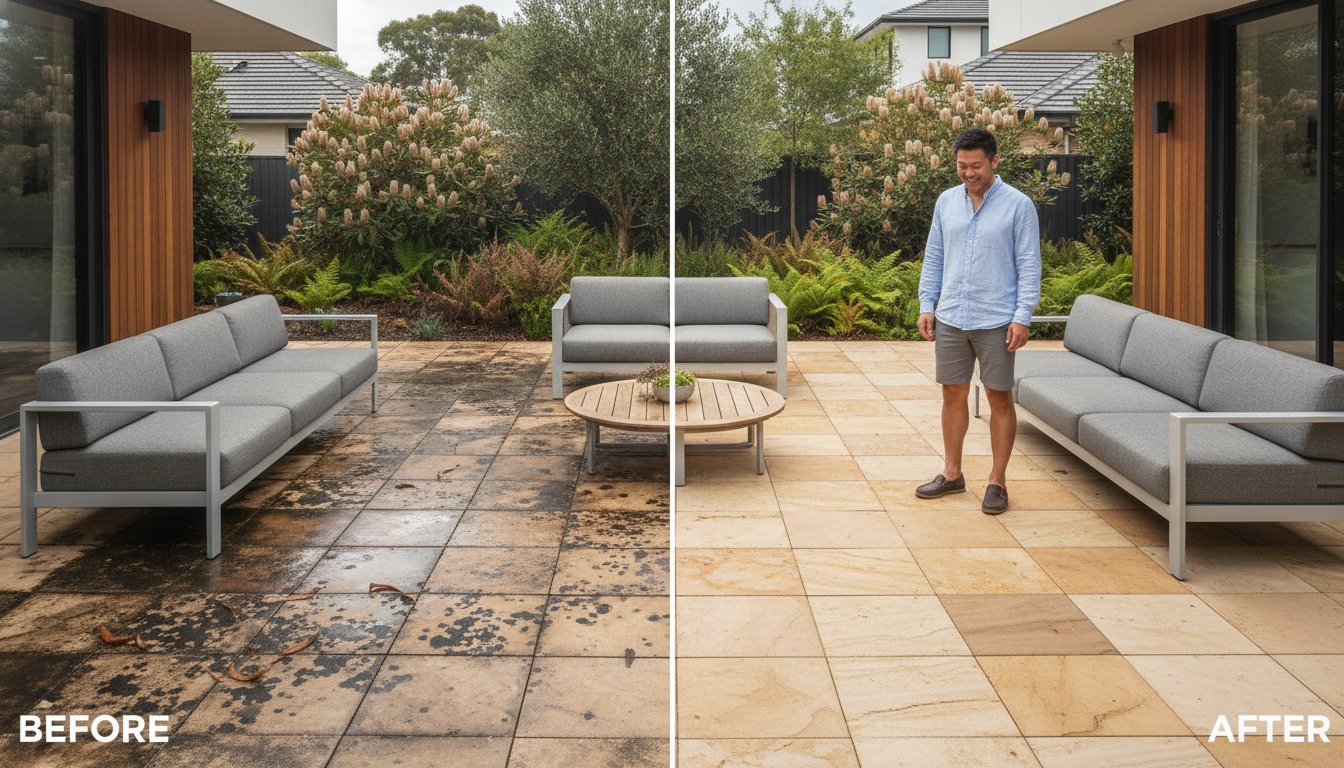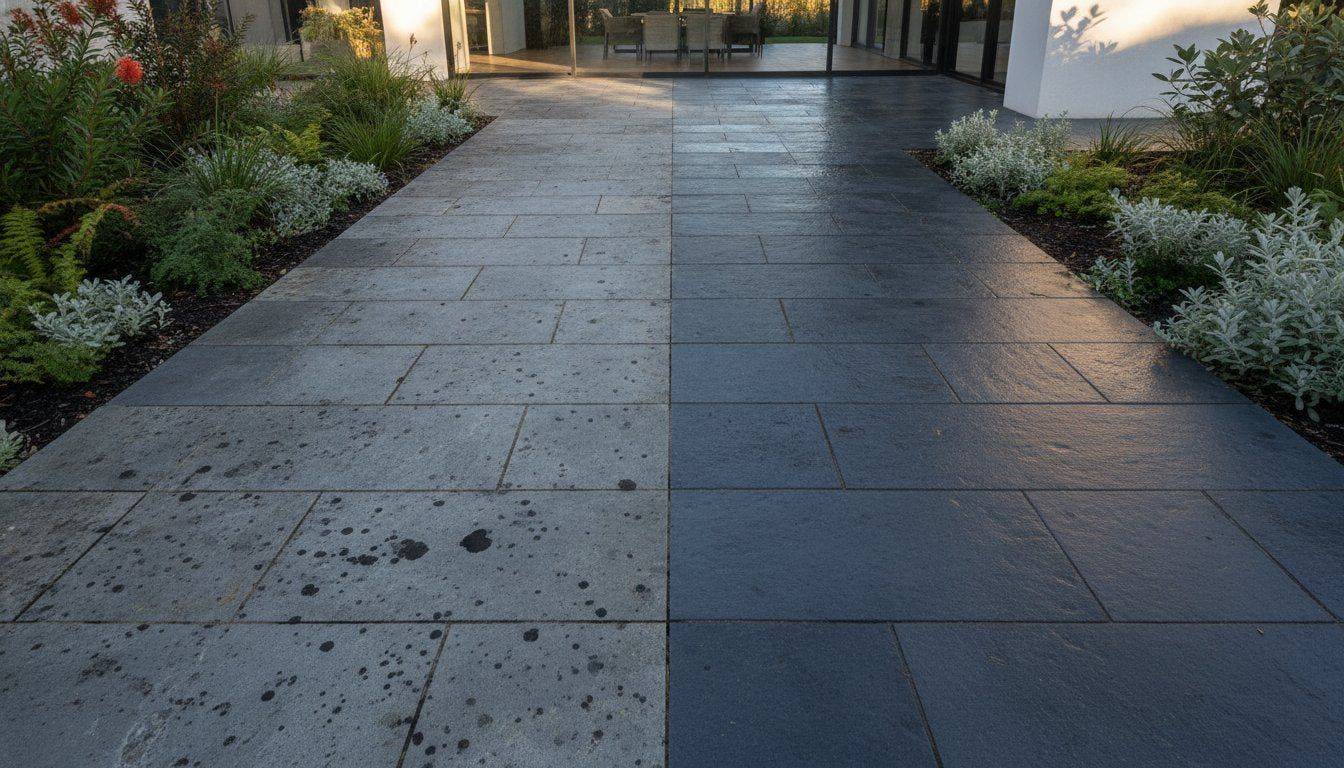
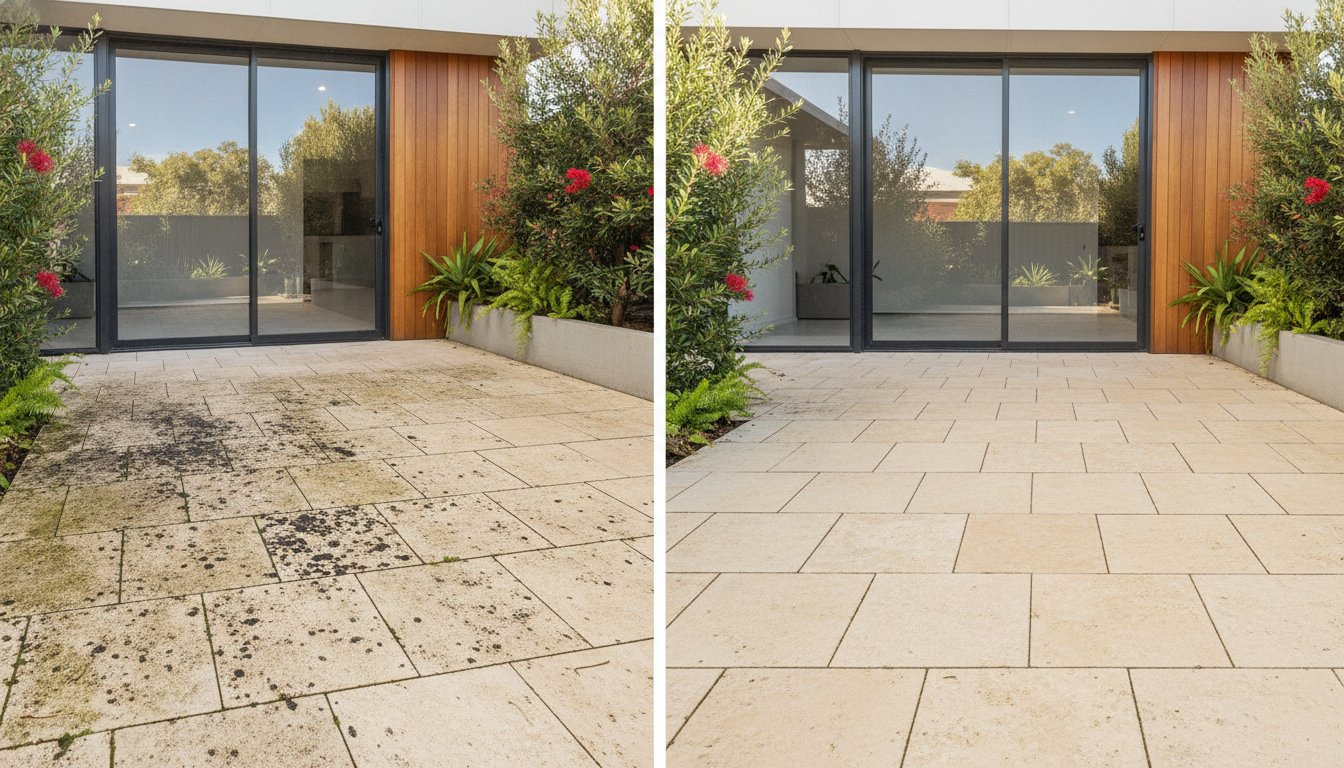
What if the "dirt" on your patio isn't actually dirt at all, but a living organism that's literally anchored into your stone? Most homeowners reach for a high-pressure hose to blast away those unsightly marks, but for soft, porous limestone, this mechanical force often causes more harm than good. It's incredibly frustrating when you spend hours scrubbing only to find those stubborn black spots remain, or worse, you notice the surface of your expensive pavers starting to erode. You want your outdoor area to return to its original, creamy natural colour, but the fear of chemical runoff killing your prize-winning garden is a very real concern.
This guide provides a professional, DIY-friendly solution to restore your stone safely. You'll discover the secrets to using an effective limestone paver cleaner Australia-wide, designed to permanently remove lichen and algae without using harsh acids. We'll show you how to achieve a complete restoration in just a few hours, ensuring your patio looks brand new while keeping your pets and plants perfectly safe.
Key Takeaways
- Understand why limestone's high porosity makes it a magnet for organic spores and how to treat it without causing surface erosion.
- Discover why choosing a specialized limestone paver cleaner australia trusts is essential for removing deep-seated lichen roots that pressure washers cannot reach.
- Master a professional restoration process using acid-free, biodegradable formulas that return your stone to its original colour in under two hours.
- Learn how to implement a simple annual prevention strategy to stop black spots from returning during damp Australian winters.
The Unique Challenges of Limestone Pavers in Australia
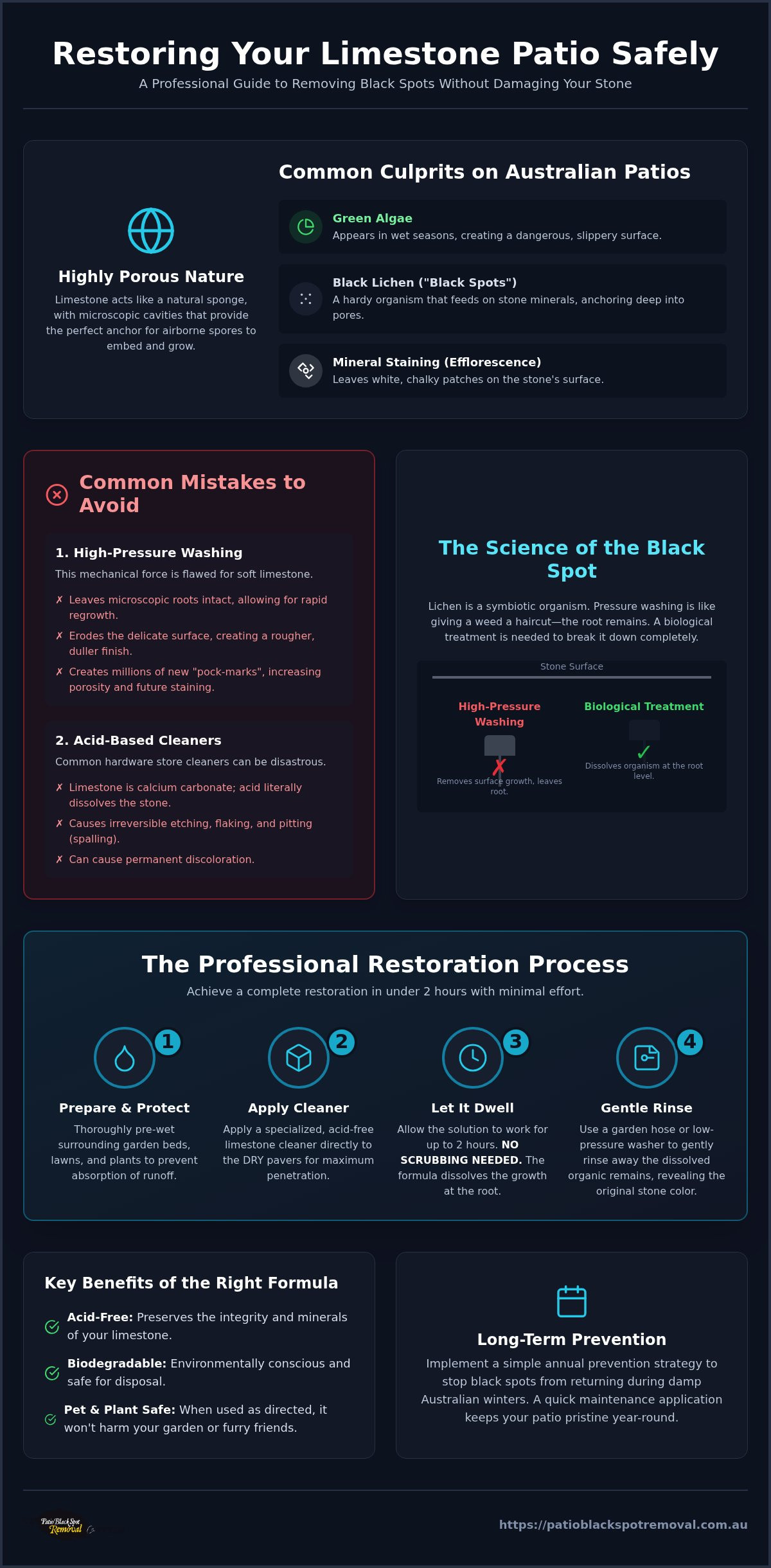
Limestone is a natural, sedimentary rock primarily composed of calcium carbonate and compressed marine fossils. Its aesthetic appeal is undeniable, but its physical structure presents a unique set of maintenance hurdles for homeowners. Unlike denser stones like granite, limestone is exceptionally porous, meaning it acts like a sponge. Because limestone is a highly porous material, its microscopic cavities provide the perfect anchor points for airborne lichen spores to embed themselves and thrive.
In the Australian landscape, three main culprits usually ruin the look of your patio. Green algae often appears first during the wet season, creating a dangerous, slippery surface. Next comes the notorious black lichen, or "black spots", which are hardy organisms that feed on the minerals within the stone. Finally, mineral staining or efflorescence can mar the surface with white, chalky patches. To restore the stone's original creamy hue, you need a limestone paver cleaner Australian conditions won't outpace, specifically one designed to reach deep into those pores without causing damage.
Why Sydney Patios Struggle More
Patios in Sydney are particularly vulnerable due to extreme weather shifts. Heavy rainfall saturates the stone, followed by intense UV exposure that effectively bakes organic matter into the pores. In coastal areas, salt air can also interact poorly with generic, acidic cleaning products. This interaction often causes the stone to flake or pit, a process known as spalling. Using an acid-free, professional-grade system is essential in this region to prevent the stone from becoming even more vulnerable to the elements over time.
Why Pressure Washing Alone Fails Limestone
Many homeowners assume a high-pressure blast is the quickest way to clean their patio. This mechanical approach is fundamentally flawed when dealing with limestone. While water pressure might strip away loose surface dirt, it fails to address the biological reality of organic growth. Lichen and algae aren't just sitting on top; they're physically anchored into the stone's pores. Blasting them with water often leaves the microscopic "roots" intact, allowing them to regrow almost immediately.
High-pressure washing also creates a "danger zone" for soft sedimentary rock. Intense water streams can "pock-mark" the surface, creating millions of new tiny cavities. This increased surface area makes your pavers even more like a sponge, trapping dirt and spores faster than before. If you've noticed your stone looks duller or feels rougher after a wash, you've likely eroded the delicate finish. Finding a specialized limestone paver cleaner Australian homeowners can trust is the first step toward a permanent solution without causing structural harm.
Instead of mechanical force, you need a biological solution. Most common cleaners found in big-box hardware stores rely on harsh acids. Because limestone is primarily calcium carbonate, these acids will literally dissolve the fossils and minerals that hold the stone together. Using an acid-free, biodegradable formula ensures the stone stays intact while the organic matter is dissolved in under two hours. This prevents etching and permanent discolouration that no amount of scrubbing can fix.
The Science of the Black Spot
Lichen is a resilient, symbiotic organism composed of fungi and algae. The fungus provides the structure and anchors itself deep into the stone, while the algae provides food through photosynthesis. Simply washing the surface is like giving a weed a haircut; the root remains healthy underground. To achieve a true restoration, you must use a biological treatment to chemically break down the organism at the root level. You can speak with our team to find the right approach for your specific patio layout.
Step-by-Step Guide: How to Clean Limestone Pavers
Cleaning limestone doesn't have to be a back-breaking chore. By shifting from a mechanical mindset to a biological one, you can restore your patio with minimal effort. First, clear all furniture. Pre-wet your garden beds and lawn thoroughly. This saturation prevents the soil from absorbing the cleaner, keeping your plants hydrated and safe. It's a simple step that protects your landscaping from any accidental runoff.
Apply Patio Black Spot Remover directly to the dry pavers. This professional-grade limestone paver cleaner Australian homeowners rely on is designed to penetrate deep into the stone's pores. Instead of scrubbing, allow the solution to dwell. Within two hours, the formula dissolves the lichen and algae at the root level. Finally, perform a gentle rinse with a garden hose to wash away the organic remains. Your stone will return to its natural colour without the need for aggressive agitation. For older or more heavily affected stone, additional treatments may be needed to fully restore your pavers.
Essential Tools for the Job
You don't need expensive machinery for this process. A garden pump-up sprayer is ideal for even application. Avoid metal containers, as they can react with the formula. For safety, always wear basic personal protective equipment, including rubber gloves, eye protection, and enclosed footwear. If you have questions about your specific stone type, contact our team for expert advice.
Maximising Results on Aged Stone
If your limestone hasn't been cleaned in over five years, the transformation will be significant. You'll know the stone is fully restored when its original creamy or natural hue reappears, replacing the dull grey cast of lichen. For extremely neglected areas, ensure the stone remains wet with the product for the full dwell time to guarantee the roots are completely eradicated. This process effectively resets the stone's appearance without the surface damage caused by high-pressure blasting.
Maintenance: Preventing the Return of Black Spots
Once you've restored your patio using a quality limestone paver cleaner, the goal shifts to long-term preservation. Many homeowners rush to apply "topical" sealers to protect their investment, but these often create a non-breathable, plastic-like film. Because limestone is a sedimentary rock, it must be allowed to breathe to release moisture. Trapped water within the stone can lead to spalling or internal structural rot, especially during the damp, cold winters common in Melbourne and parts of Tasmania.
A more effective alternative is the "Annual Preventer" strategy. Using Patio Black Spot Preventer once every twelve months kills airborne spores before they can anchor into the stone's pores. This proactive approach keeps the limestone's natural colour vibrant without changing its texture or slip resistance. Consistent annual maintenance is far more cost-effective and less damaging to the stone's structure than waiting for heavy infestations to trigger a reactive, deep-cleaning cycle.
Seasonal Care for Australian Patios
Australian weather requires a strategic maintenance schedule to combat local conditions. During autumn, you should clear fallen leaves and organic debris from the surface as soon as possible. If left to decay on damp limestone, these materials can leave deep tannin stains that mar the stone's appearance. In spring, a quick refresh using our specialized maintenance system ensures that rising humidity doesn't trigger a new wave of algae growth. This Sydney-manufactured system is biodegradable and acid-free, providing the safest way to maintain your outdoor living area throughout the year.
Reclaim Your Outdoor Living Space Today
Restoring the natural elegance of your limestone doesn't require aggressive scrubbing or damaging high-pressure water. By understanding the biological nature of black spots and lichen, you can treat your patio with the care it deserves. The most effective limestone paver cleaner Australian homeowners can use is one that targets the roots while preserving the stone's delicate calcium structure. Remember that an acid-free, biodegradable approach protects your garden and pets while delivering visible results in under 2 hours.
With our Sydney-based support team ready to assist, professional-grade restoration is now a simple DIY task. Stop struggling with standard cleaners that only scratch the surface and start a maintenance routine that keeps your stone breathing and beautiful year-round. If you're ready to see your patio's original colour again, Get a Professional Quote for Your Limestone Restoration Needs. You've invested in quality stone; it's time to give it the specialist care it needs to shine under the Australian sun.
Frequently Asked Questions
Is limestone paver cleaner safe for my dogs and cats?
Yes, the treatment is safe for dogs and cats once the surface is completely dry after the final rinse. Our biodegradable, acid-free formula ensures that no toxic residues remain to harm your pets. It is best practice to keep animals inside during the application and the dwell time. This prevents them from walking through the wet solution before it is washed away.
Can I use bleach or pool chlorine to clean my limestone?
No, you should not use pool chlorine or generic bleach as a substitute for professional products. These harsh chemicals often cause yellowing or leave white salt residues that are difficult to remove from porous stone. While they might clear surface greening, they don't have the surfactants needed to reach deep lichen roots. This leads to a cycle of frequent cleaning that eventually damages the limestone's surface.
How often do I need to clean my limestone pavers in Melbourne?
You should aim for a deep clean every three to five years, but annual maintenance is better for Melbourne's climate. The high humidity and damp winters in Victoria create a breeding ground for spores. By using a preventer once a year, you stop organic growth from anchoring into the stone. This keeps your patio looking pristine without the need for intensive restoration every season.
Will this cleaner change the colour of my natural stone?
No, a specialized limestone paver cleaner australia residents use will only reveal the stone's original natural colour. It works by dissolving the dark organic film that makes limestone look grey or dirty over time. Because the formula is acid-free, it doesn't bleach the stone or react with its mineral composition. You'll see the authentic creamy tones of your pavers return as soon as the organic matter is rinsed away.
Do I need to seal my limestone after using a black spot remover?
Sealing is an optional step, but it is not a requirement if you follow a consistent prevention schedule. Many homeowners find that using a breathable preventer is more effective than applying topical sealers that can trap moisture. If you decide to seal, ensure you use a high-quality, penetrating product that allows the stone to breathe. This prevents the internal pressure and flaking often caused by non-breathable coatings.