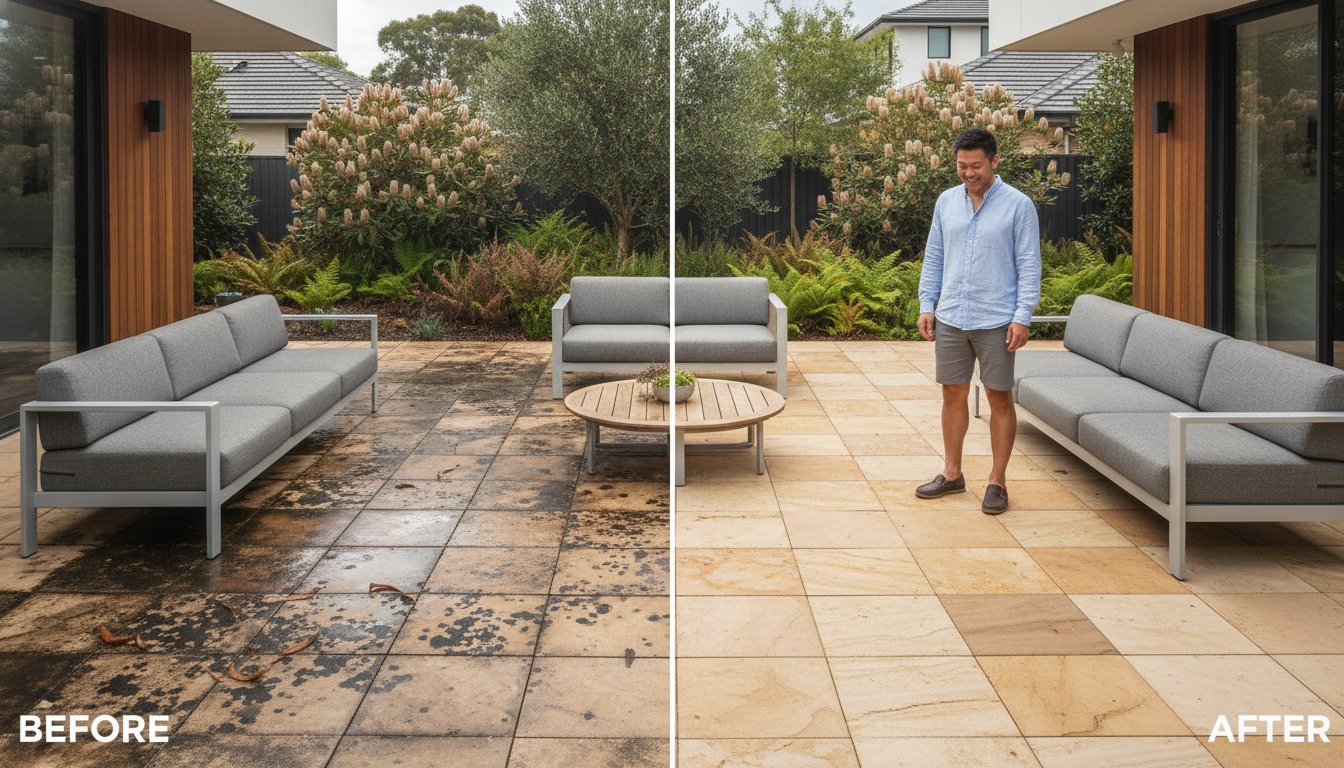
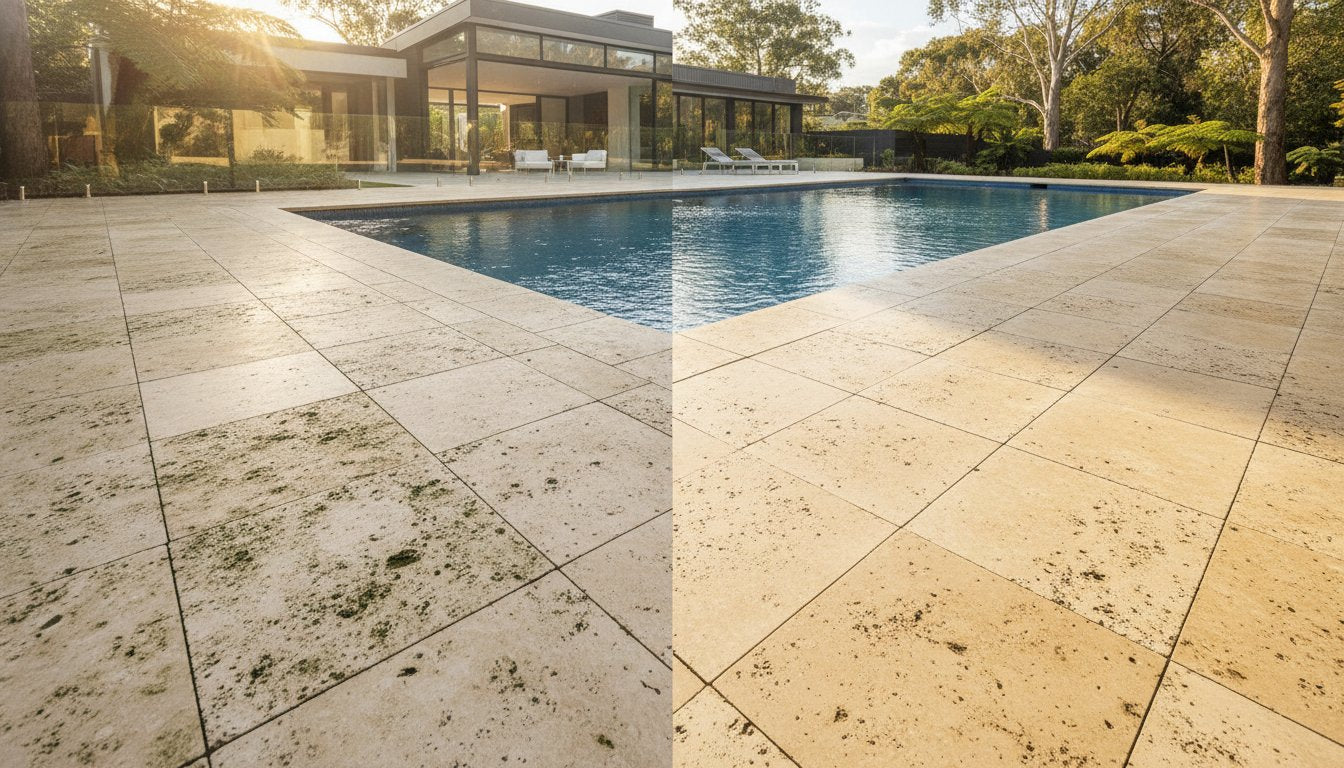
That high-pressure washer you’re using might actually be making your travertine problems worse. While it’s tempting to blast away surface dirt and staining, even high pressure washing often fails to reach the biological roots of lichen and algae. Following a proper travertine pavers maintenance guide can make all the difference when it comes to keeping your patio looking its best. The right cleaning and preventative treatments can help tackle organic growth and keep your travertine looking cleaner for longer.
We understand the concern that using the wrong products or harsh chemicals could damage your natural stone. That’s why we’ve created this guide to help you choose the right cleaning methods and treatments, so you can achieve great results without compromising the surface. You’ll discover how to restore the original, vibrant colour of your pavers using acid-free, biodegradable solutions that work in less than two hours. We will walk you through a safe, DIY-friendly system to eliminate organic growth and provide long-term protection, helping you keep your outdoor space looking its best without it becoming a constant chore.
Key Takeaways
- Understand why travertine’s porous structure requires a biological treatment rather than high-pressure force to eliminate deep-seated lichen roots.
- Learn how to safely restore your stone’s original colour in just a few hours using acid-free solutions.
- Discover why standard sealers alone cannot stop organic growth and how to implement a prevention strategy that keeps algae at bay.
- Master seasonal maintenance techniques specific to the Australian climate to protect your pavers from salt crystallisation and peak humidity.
Why Travertine Pavers Require a Specialised Maintenance Approach
Travertine is a stunning addition to any Australian home, but its geological makeup makes it uniquely vulnerable to the elements. To understand how to care for Travertine, it helps to understand its natural characteristics. Formed around mineral springs, travertine is a porous stone with a distinctive textured surface. While this gives it its unique and timeless appearance, its porous nature means it can absorb moisture and be more susceptible to staining and organic growth. This is why using the right travertine pavers maintenance guide is important for keeping your patio looking its best.
The Porosity Problem
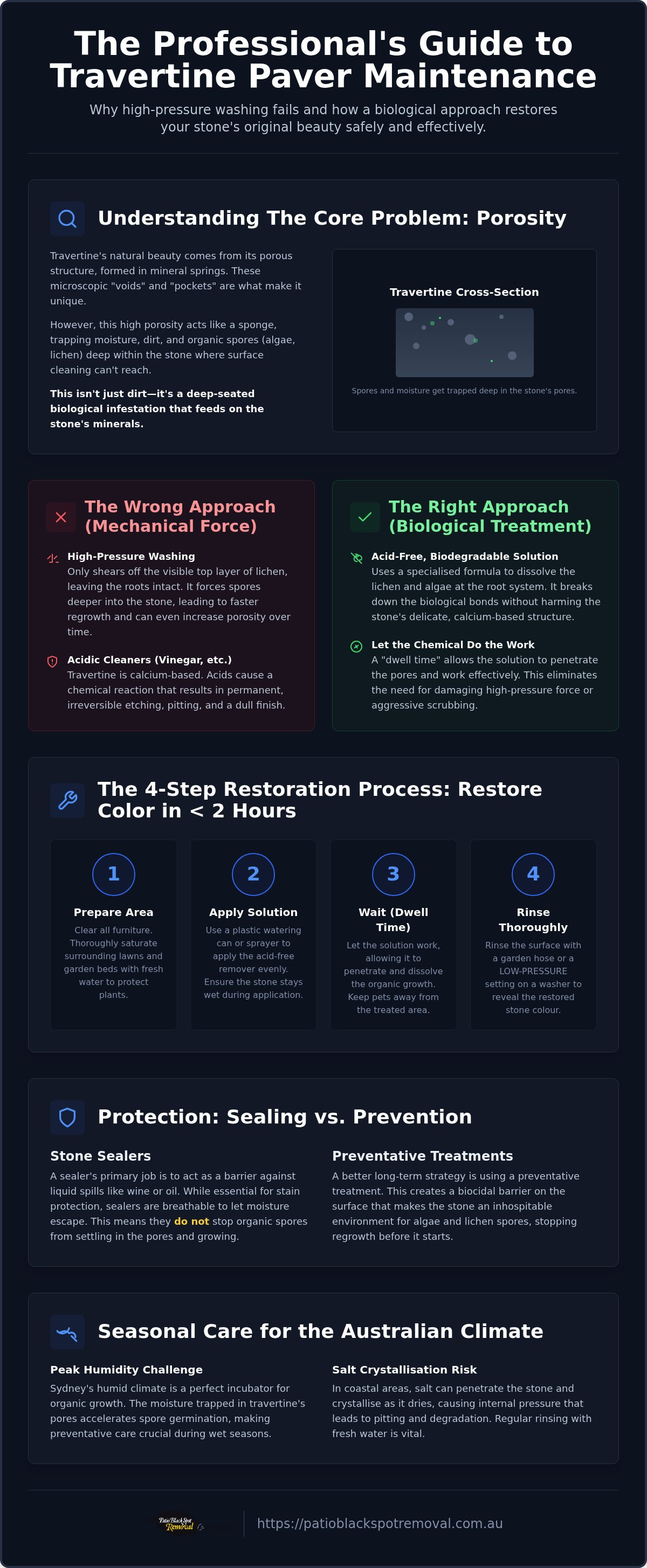
The "voids" and "pores" that give travertine its character are also its greatest maintenance challenge. These microscopic pockets trap wind-blown organic spores, moisture, and dirt, allowing them to settle deep beneath the surface where standard cleaning products can't reach. Travertine porosity is the ratio of open spaces within the stone to its total volume; this high ratio means that organic infestations like algae can anchor themselves firmly within the stone's structure.
Identifying Black Lichen vs. General Dirt
Many homeowners mistake black lichen for standard garden dirt or charcoal dust. However, if those dark patches don't budge with a garden hose, you're likely dealing with a biological infestation. Black lichen is a hardy organism that feeds on the minerals in your stone. Attempting to blast it away with high-pressure water is a common mistake. This often only shears off the top layer while forcing the microscopic spores deeper into the pores, causing the infestation to return even faster and potentially causing permanent damage to your stone.
Sydney’s humid climate only accelerates this growth, as the moisture trapped in the stone’s pores provides a perfect incubator for spores. Using acidic cleaners like vinegar or lemon juice to fix this is dangerous. Travertine is calcium-based, so using acids cause a chemical reaction that results in permanent etching and a dull, pitted finish. For a safe restoration, you need an acid-free solution like the Patio Black Spot Remover for Natural Stone to dissolve the lichen at the root without damaging the stone’s integrity.
How to Deep Clean Travertine Pavers Without Damage
Many guides suggest high-pressure washing as the default solution for dirty stone. However, aggressive force actually increases stone porosity, creating larger pores that trap dirt and lichen spores faster. The best way to clean travertine pavers is to tackle organic growth at its source using a specialist treatment, rather than trying to force staining away with excessive pressure or scrubbing. It's vital to saturate surrounding garden beds and lawns with fresh water first. This simple step protects your plants by reducing the amount of cleaning solution that plants may absorb if accidental contact occurs. However, care should still be taken to avoid spraying the product directly onto plants.
The Two-Part Restoration System
For deep-seated lichen, use a professional-grade, acid-free restorer. The Patio Black Spot Remover for Natural Stone is specifically formulated to target the root of organic growth. Unlike acidic cleaners that etch the surface, this biodegradable formula dissolves the black spots without harming the stone's finish. Apply the product evenly using a sprayer, ensuring the stone stays wet throughout the application. This treatment is designed to restore the original colour of your pavers in two hours.
Safety for Pets and Plants
Letting the chemical do the work is more effective than aggressive scrubbing. A dwell time allows the solution to break down the biological bonds of algae and lichen. During this time, keep pets away from the treated area. Once the time has passed, rinse the surface with a garden hose or a low-pressure setting on a power washer. Once the area has been throughly rinsed, it is instantly safe for pets to walk on again.
If you were to spray the product directly onto the plants or grass, it would scorch them, it will not kill them. However, if you spray the product directly onto the stone, it can then be washed off over the lawn and into the beds without causing any detrimental effect. Once diluted it breaks down easily therefore will not affect surrounding foliage.
Sealing vs. Prevention: Choosing the Right Protection Strategy
Choosing between sealing and prevention is a critical step in any effective travertine pavers maintenance guide. While both methods aim to protect your investment, they solve entirely different problems. A sealer is primarily designed to act as a barrier against liquid absorption, such as red wine spills or oil from a BBQ. However, because natural stone sealers must remain breathable to allow moisture to escape, they still leave microscopic gaps where biological spores can settle and grow.
The Limits of Stone Sealing
Sealers are excellent for creating surface tension, but they don't possess the chemical properties needed to kill organic life. Simply put, "sealed" does not mean "maintenance-free". If you rely solely on a sealer in a damp or shaded area, you'll still see green algae and black spots appearing on top of or even within the stone over time.
How Preventers Work
This is where a specialised prevention treatment becomes essential for long-term care. Applied annually, the Patio Black Spot Preventer kills green algae within a few dats and creates an environment where lichen spores cannot germinate for 12 months. This prevents the need for deep restoration every few years and keeps the stone's original colour vibrant.
While a proper sealing treatment can last up to 15 years in terms of liquid protection, it doesn't address the biological growth that thrives in humid climates. Sealing every few years is a significant investment, but applying an annual preventer is a much faster, DIY-friendly alternative that stops lichen from ever returning. This strategic combination saves you from the physical toll of frequent pressure washing. If you need help determining which protection plan fits your patio’s exposure levels, get in touch with our team for a tailored recommendation.
Seasonal Care: Keeping Travertine Pristine in the Australian Climate
Australia's climate varies considerably from region to region, so your travertine can benefit from a little seasonal maintenance. Spring is a great time to give your patio some attention, starting with a thorough sweep to remove leaves, dirt and other organic debris that may have accumulated over the cooler months.
Removing this build-up before the warmer, wetter weather arrives can help reduce the conditions that encourage algae, lichen and other organic growth. It can also make any existing staining easier to treat before it becomes more established.
Spring is also a good time to refresh your travertine with our Patio Black Spot Remover if staining has returned, or apply your annual Preventer treatment. This gives you a clean, well-maintained surface ready to enjoy throughout the warmer months.
Poolside Travertine Maintenance
Travertine is a favourite for pool surrounds, but saltwater and chlorine present unique challenges. When pool water evaporates on the stone, it leaves behind salt crystals. If left unchecked, these crystals can expand within the stone's pores, causing surface spalling or "pitting" over time. Always rinse pool areas with fresh water after heavy use to wash away these minerals. It's critical to use pH-neutral cleaning methods here; acidic cleaners will etch the surface, while harsh chemicals can degrade the stone's integrity and affect your pool's water chemistry.
A Simple Maintenance Calendar
Maintaining your patio shouldn't be a full-time job. Following a quarterly checklist keeps the stone healthy and vibrant throughout the year:
- Autumn: Clear fallen leaves immediately. Leaf litter contains tannins that can leave stubborn brown stains on porous travertine if left to rot in the rain.
- Winter: Inspect for drainage issues. Pooling water is the primary cause of green algae growth during the cooler, wetter months.
- Spring: Apply a 12-month top-up of Patio Black Spot Preventer. This annual application effectively "vaccinates" the stone against new lichen growth.
- Summer: Focus on fresh-water rinsing of pool splash-out and managing salt crystallisation on the stone surface.
To see the full restoration cycle in action, check out the How It Works page for visual guidance. By staying ahead of the seasons and applying a preventer once a year, you ensure your stone remains a stunning feature rather than a maintenance burden.
Enjoy a Pristine Patio Year-Round
Maintaining your travertine doesn't have to be a source of constant physical strain or worry about damaging your stone. By moving away from high-pressure force and embracing a specialist treatment method, you can keep your outdoor space looking brand new without the risk of etching or pitting. This travertine pavers maintenance guide has shown that the secret lies in addressing organic growth at the root and following a simple annual prevention schedule.
Our acid-free solutions are manufactured right here in Sydney for Australian conditions. They're biodegradable and safe for your plants and pets, yet powerful enough to remove stubborn black spots in under two hours. If you're ready to see your stone's original colour again, restore your travertine today with our professional-grade, acid-free stone restorer. Your patio is an investment that deserves the best care; with the right method and products, you can keep it looking beautiful for decades to come.
Frequently Asked Questions
Can I use a pressure washer on my travertine pavers?
You can use a pressure washer, but you shouldn't use high settings. Intense pressure often increases the stone's porosity by opening up the natural pores, making it easier for dirt and spores to settle in the future. It also doesn't kill the roots of lichen. A low-pressure rinse after using the right chemical treatment is a much safer way to follow a travertine pavers maintenance guide without causing surface erosion.
Will travertine cleaners kill my grass or garden plants?
Our professional-grade cleaners are biodegradable and acid-free, making them safe for surrounding lawns and garden beds when used correctly. You should always saturate your plants and grass with fresh water before and after the application. This ensures the vegetation doesn't absorb the cleaning solution. Because the formula breaks down quickly, it won't leave harmful residues in your soil, protecting your Sydney garden while you restore your stone's original colour.
How often should I seal my travertine pavers?
A high-quality penetrating sealer can last up to 15 years, depending on the specific product and environmental exposure. However, sealing only prevents liquid stains like oil or wine. It doesn't stop biological growth. For a complete travertine pavers maintenance guide, we recommend applying a preventer annually. This yearly top-up kills spores on contact and keeps your stone free from green algae and black lichen between major sealing treatments.
Is it possible to remove black spots (lichen) from travertine?
Yes, it's entirely possible to remove stubborn black lichen using a specialized restoration system. Standard soaps and pressure washing typically fail because they don't kill the roots embedded deep within the stone's pores. Our acid-free Patio Black Spot Remover is designed to dissolve these spots in under two hours. This professional-grade DIY alternative restores the stone's original beauty without the need for aggressive scrubbing or expensive professional cleaning crews.
Can I use household bleach or vinegar to clean travertine?
You shouldn't use vinegar or lemon juice because they are highly acidic. Since travertine is a calcium-based stone, acids cause a chemical reaction that leads to permanent etching and dullness. While household bleach might lighten surface stains, it often fails to eliminate the biological roots of lichen and can be harsh on surrounding plants. Stick to acid-free, stone-specific cleaners that are formulated to be safe for natural stone surfaces and the environment.