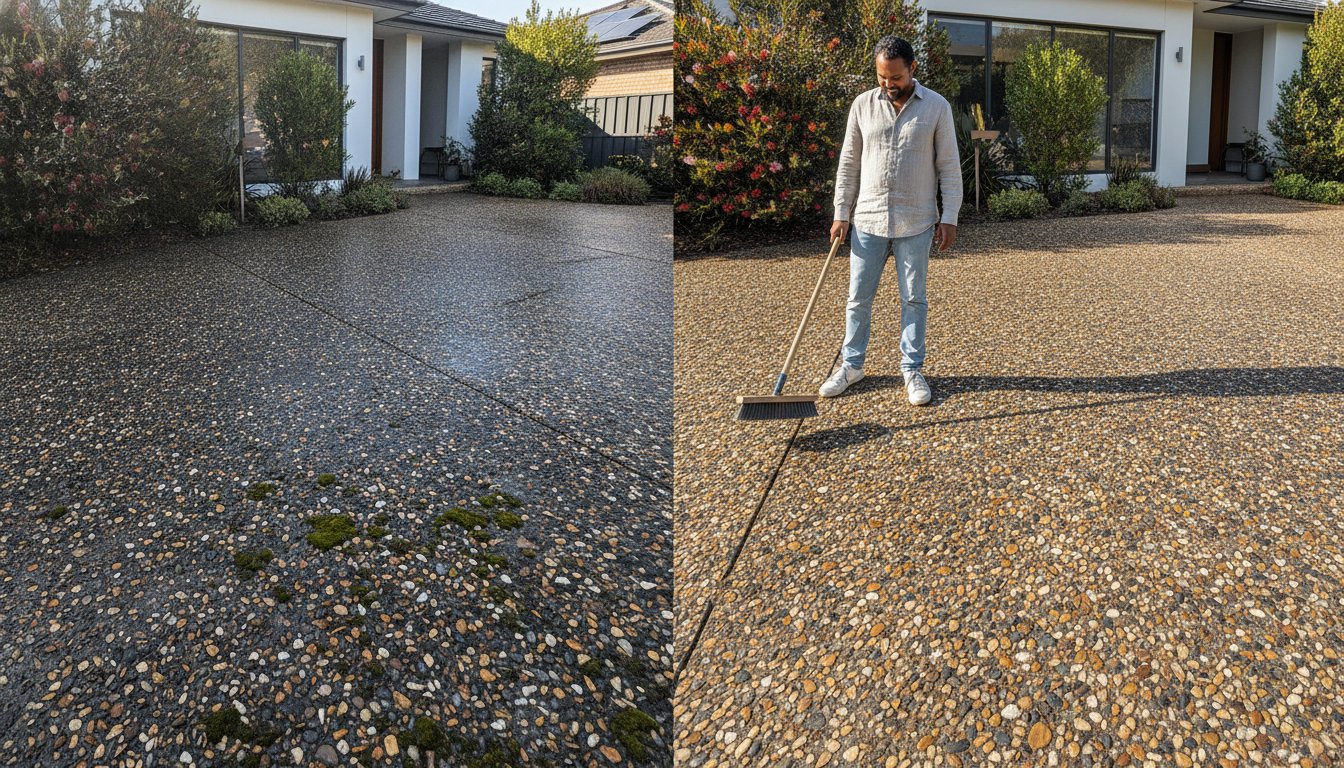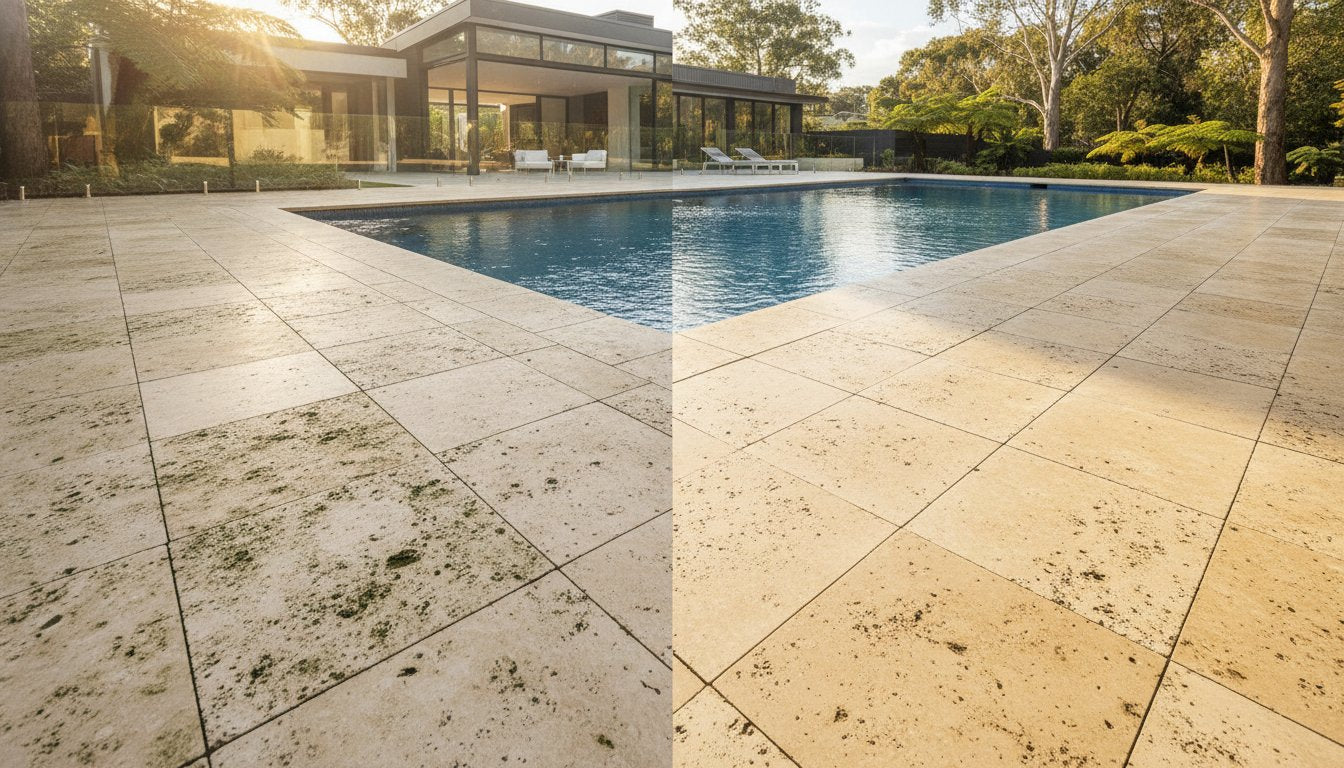
Have you ever spent an entire Saturday morning pressure washing your driveway, only to find those stubborn black marks haven't budged an inch? It's incredibly frustrating to watch your expensive natural stone or block paving look aged and neglected despite your best efforts. You're likely dealing with black lichen, a living organism that "roots" itself into the stone rather than just sitting on top. This guide explains how to remove black spots from driveway surfaces using a method that actually kills the organic growth at the root, instead of just blasting the surface.
We understand the fear of damaging your investment with harsh chemicals or high-pressure water. That's why we'll show you a professional, damage-free approach that's safe for your stone. You'll discover how to restore your driveway's original look in two hours using biodegradable, acid-free Patio Black Spot Remover designed for the Australian climate. We'll also cover how to use Patio Black Spot Preventer so you can stop these spots from returning next year, ensuring your home keeps its curb appeal without the back-breaking labor.
Key Takeaways
- Identify if those stubborn marks are actually "Lichen Anthracinus" and why their deep roots prevent them from being washed away like regular dirt.
- Learn why pressure washing alone often fails and how it can unintentionally etch your stone or spread microscopic spores.
- Master the professional, DIY-friendly process for how to remove black spots from your driveway using a safe, acid-free restoration system.
- Establish a simple annual maintenance routine to permanently break the cycle of lichen growth and protect your driveway's original color.
Identifying Driveway Stains: Is it Dirt, Oil, or Black Lichen?
Many homeowners assume the dark patches on their driveway are just stubborn dirt or oil leaks. However, if your cleaning efforts haven't worked, you're likely looking at Lichen Anthracinus. This isn't just a surface stain; black lichen is a symbiotic fungus and algae that feeds on minerals in your driveway stone. Unlike dirt, these spots are circular, hard to the touch, and won't smudge when you rub them.
In Australia, our climate plays a major role in this problem. High humidity levels, particularly in coastal regions like Sydney, create the perfect breeding ground for these organisms. They thrive in damp, shaded areas, spreading quickly across porous surfaces. Understanding this biological nature is the first step in learning how to remove black spots from driveway surfaces effectively.
The 'Oil Stain' Misconception
It's easy to mistake lichen for oil. To check, perform a simple "water bead" test. Pour a small amount of water over the spot. If the water beads up, it's likely oil or grease. If the water soaks in and the spot remains unchanged, it's organic growth. Traditional degreasers have zero effect on biological black spots because they can't kill the living spores anchored deep within the stone.
Why Natural Stone is More Susceptible
Natural stones like Australian sandstone are much more porous than standard concrete pavers. These tiny pores act like anchors for the lichen's roots, known as hyphae. These hyphae penetrate the surface to create a strong bond, making it impossible to simply scrub them away. This deep penetration is why your driveway looks old and neglected despite regular cleaning.
The Pressure Washer Trap: Why Blasting Fails
While it's tempting to reach for a high-pressure hose, aggressive blasting is often the worst thing you can do for your driveway. High PSI water actually etches the surface of natural stone and concrete, creating microscopic "pitting." This gives lichen a stronger grip and traps moisture, which accelerates regrowth. When you're researching how to remove black spots from driveway surfaces, it's vital to understand that pressure washing only removes the visible "head" of the lichen, leaving the roots intact.
There's also the "spore dispersal" problem. Blasting these organisms sends millions of microscopic seeds into your garden beds and paving joints. Instead of cleaning, you're effectively planting next year's crop. Additionally, the force often blows out essential jointing sand; this can lead to structural instability and shifting pavers over time.
Hidden Damage to Driveway Integrity
Aggressive cleaning often leads to expensive repair bills. Once the jointing sand is gone, you'll need to invest in re-sanding and sealing to prevent the pavers from moving. Because the stone is now more porous due to "pitting," it will re-infest much faster than before. Using a professional cleaning solution is far superior as it targets the biology without physical force.
The Myth of Household Bleach
Many DIY guides suggest using supermarket bleach, but it's simply too weak to fully penetrate and kill the lichen. While it might turn the spots gray temporarily, the root system remains alive. Some homeowners escalate to high-concentration pool chlorine, which is devastating for Australian garden soil and native plants. These harsh chemicals can permanently alter the pH of your soil, killing the flora you've worked hard to maintain.
How to Safely Remove Black Spots from Your Driveway
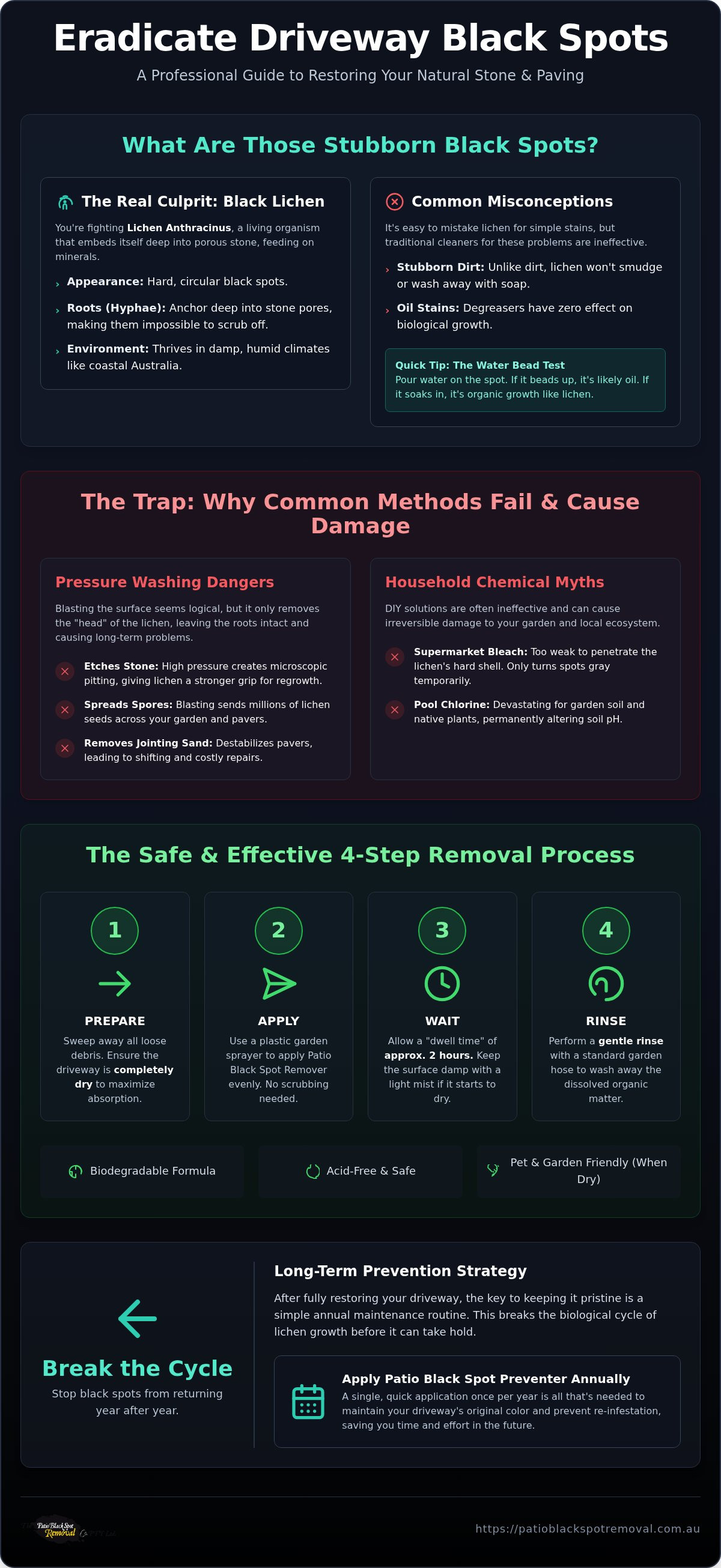
Removing lichen requires a strategic approach rather than brute force. First, clear all loose debris, leaves, and dirt with a stiff broom. It's essential that the surface is completely dry before you begin. A dry stone acts like a sponge, ensuring maximum absorption of the treatment into the pores where the lichen roots reside. This is the most effective way to understand how to remove black spots from driveway surfaces without causing damage.
Using a garden sprayer, apply the Patio Black Spot Remover evenly across the area. You don't need to scrub; the chemical does the heavy lifting. Once applied, leave the product to work for two hours. Ensure the surface remains damp during this period; if it starts to dry, applying a small amount of additional product will keep the reaction active. Finally, thoroughly rinse with a garden hose or low pressure washer to wash away any residue and surface dirt.
Safety for Your Sydney Garden
Our formulas are biodegradable and acid-free, making them safe for pets and local wildlife once rinsed. To protect your garden, pre-wet any surrounding lawn or garden beds with fresh water. Avoid spraying the product directly onto plants, and keep pets off the surface whilst the product is neat. Any run off whilst rinsing the product is harmless to your garden, and once rinsed, the surface is instantly safe for animals to walk on again.
Optimal Conditions for Application
The harsh Australian sun can cause the remover to evaporate too quickly. Avoid application during the midday heat; instead, aim for early morning or late afternoon when the stone is cooler. Temperature influences the chemical reaction speed, so applying on a mild day allows the remover to work to its full potential. If you have questions about specific weather conditions, contact our experts for advice.
Long-Term Prevention: Stopping the Spots from Returning
Once you've successfully restored your stone, the focus shifts to maintaining that clarity. Many homeowners make the mistake of stopping after the initial clean, only to see the lichen return within months. We recommend a "clean then protect" philosophy. By using a Patio Black Spot Preventer annually, you kill microscopic spores before they have the chance to anchor into the stone pores. Understanding how to remove black spots from driveway areas is only half the battle; preventing them is the real secret to long-term success. You can learn more about how our two-part system works to keep your driveway looking brand new without the need for aggressive pressure washing for the next five to ten years.
The Annual Maintenance Routine
Prevention doesn't have to be a chore. A simple "spray and leave" application once a year is usually all it takes to keep the surface clear. It's a small investment of time that preserves the aesthetic and structural integrity of your natural stone.
Improving Driveway Drainage
Standing water is the primary fuel for organic growth, especially during Sydney's humid summer months. If water pools on your driveway, it creates a microclimate where lichen thrives. Consider simple landscaping tweaks, such as clearing blocked drains or slightly regrading nearby soil, to ensure water runs off the surface quickly. Unlike topical sealers that can trap moisture and promote mold underneath the coating, a preventative treatment keeps the stone's breathability intact, without affecting the natural look of the stone. Keeping the stone as dry as possible makes it a hostile environment for spores, ensuring your driveway remains spot-free for years to come.
Take the First Step Toward a Spotless Driveway
Restoring your home's exterior doesn't have to involve hours of back-breaking labor or the risk of damaging your expensive paving. By understanding that those stubborn marks are actually living organisms, you've already taken the most important step in learning how to remove black spots from driveway surfaces effectively. Stop the cycle of aggressive pressure washing that damages your stone and instead choose a solution that targets the biological root of the problem.
Our acid-free and biodegradable formulas are designed specifically for the Australian climate, delivering visible results in under two hours while remaining safe for your stone. With Sydney-based support and nationwide delivery, you have everything you need to achieve professional results at home. Restore your driveway today with our professional Black Spot Remover and enjoy a spot-free finish that lasts. Your driveway can look brand new again with the right approach.
Frequently Asked Questions
Will driveway black spot remover kill my lawn or garden edges?
No, provided you follow the essential pre-wetting procedure. Pre-wetting saturates the root systems of grass and plants, preventing them from absorbing any chemical runoff. Our formula is biodegradable and acid-free, designed to be gentle on surrounding flora once diluted. It's a key part of learning how to remove black spots from driveway areas without ruining your landscaping or damaging the delicate Australian garden ecosystems.
How long does it take to see results after applying the treatment?
You'll typically see a full restoration of the stone's original color in under two hours. The specialized chemical reaction begins immediately upon contact with the lichen, breaking down the biological "anchor" that holds the spots in place. Unlike traditional scrubbing or pressure washing, this professional-grade method provides rapid, visible results that last, making it the most efficient way to handle stubborn organic stains on natural stone.
Can I use this on a bitumen or asphalt driveway?
No, our Patio Black Spot Remover is specifically formulated for natural stone and block paving. Applying these chemicals to bitumen or asphalt can cause surface damage or degradation of the binder, as these surfaces are chemically different from sandstone or concrete. We focus on restoring porous stone surfaces where lichen roots deeply. Always test a small, inconspicuous area if you're unsure about your driveway's specific material composition.
Do I need to scrub the driveway after applying the chemical?
No manual scrubbing is required when using our specialized restoration system. The chemical formula is designed to dissolve the lichen's root system during the dwell time. Once the treatment has finished working, you simply perform a gentle rinse with a garden hose to wash away the dead organic matter. This hands-off approach is a major benefit for those wondering how to remove black spots from driveway surfaces without physical exhaustion.
Is it safe to let my dog walk on the driveway after cleaning?
Yes, the driveway is perfectly safe for pets once the surface is completely dry and has been rinsed. Our formulas are acid-free and biodegradable, specifically chosen to ensure safety for Australian fauna. We recommend keeping dogs and other pets away from the area during the two-hour application and dwell period. Once you've rinsed the area and the stone is dry, your pets can return to the space without any risk.