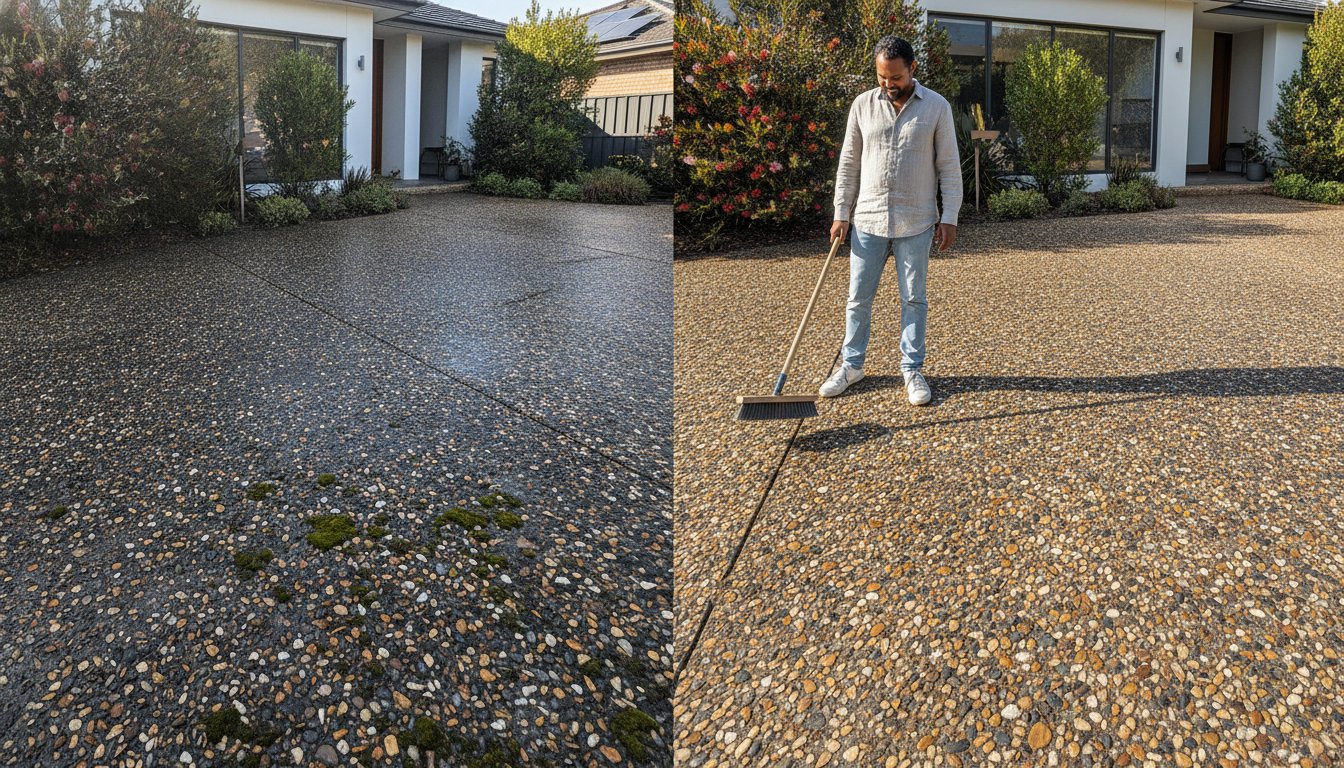
Blasting your driveway with a high-pressure hose might seem like the ultimate solution; however, it's often the quickest way to damage your decorative stone without actually killing the root of the problem. If you've spent hours scrubbing only to see those stubborn black lichen spots remain, you aren't alone. Many homeowners find that slippery green algae and deep-set grime make their outdoor spaces look neglected and feel dangerous underfoot.
The good news is that cleaning exposed aggregate doesn't require industrial machinery or corrosive hydrochloric acid. This guide will show you how to restore your driveway or patio to its original glory using professional-grade, biodegradable techniques that are safe for your pets and plants. You'll discover how to remove organic growth in less than two hours while ensuring the vibrant colours of your stone shine through once again. We'll cover everything from deep restoration using specialized cleaners to long-term prevention strategies that keep your home looking its best throughout 2026 and beyond.
Key Takeaways
- Learn how to distinguish between simple surface grime and the deep-rooted lichen spots that require specialized restoration techniques.
- Discover the safest method for cleaning exposed aggregate concrete using acid-free, biodegradable solutions that protect your plants and pets.
- Understand why excessive pressure washing can permanently damage your decorative stone and why targeting the organic "roots" is a better alternative.
- Find out how to implement an annual maintenance plan to prevent algae regrowth and keep your driveway looking pristine year-round.
Why Exposed Aggregate Concrete Gets Dirty: Dirt vs. Organic Growth
Maintaining a pristine driveway starts with understanding what you're fighting. While exposed aggregate concrete is prized for its durability and texture, those very same crevices act as traps for debris. Surface grime like dust, motor oil, and tannins from fallen leaves often dull the finish. However, the most frustrating "dirt" isn't dirt at all. It's living organic growth that thrives in the porous cement between the stones.
In the Australian climate, high humidity and shaded areas provide the ideal breeding ground for these spores. The notorious "black spot" is actually lichen, a hardy organism that anchors itself deep into the concrete. Unlike surface dust, you can't simply sweep this away; it requires a targeted approach to break the biological bond.
- Black Spots: Hard, flat, ink-like splatters that don't wash off with a standard hose.
- Green Algae: A slippery, moss-like coating that appears in damp or shaded zones.
- Tannin Stains: Brownish discolouration often caused by decomposing leaves or organic mulch.
Recognising Lichen and Algae on Aggregate
Black lichen is a complex, symbiotic organism that physically bonds to the stone surface, requiring specialized chemical treatment for removal rather than just water pressure alone. You can identify it by looking for flat, black "ink" spots that won't budge even under high pressure. In contrast, green algae often appears as a fuzzy or slimy film. These organisms don't just look bad; they destroy the slip-resistance of your paths. When cleaning exposed aggregate concrete, removing these biological hazards is essential for making your home safe during wet weather. Understanding how it works when treating these organisms ensures you don't waste time on ineffective methods.
Step-by-Step Guide: Cleaning Exposed Aggregate Without Damage
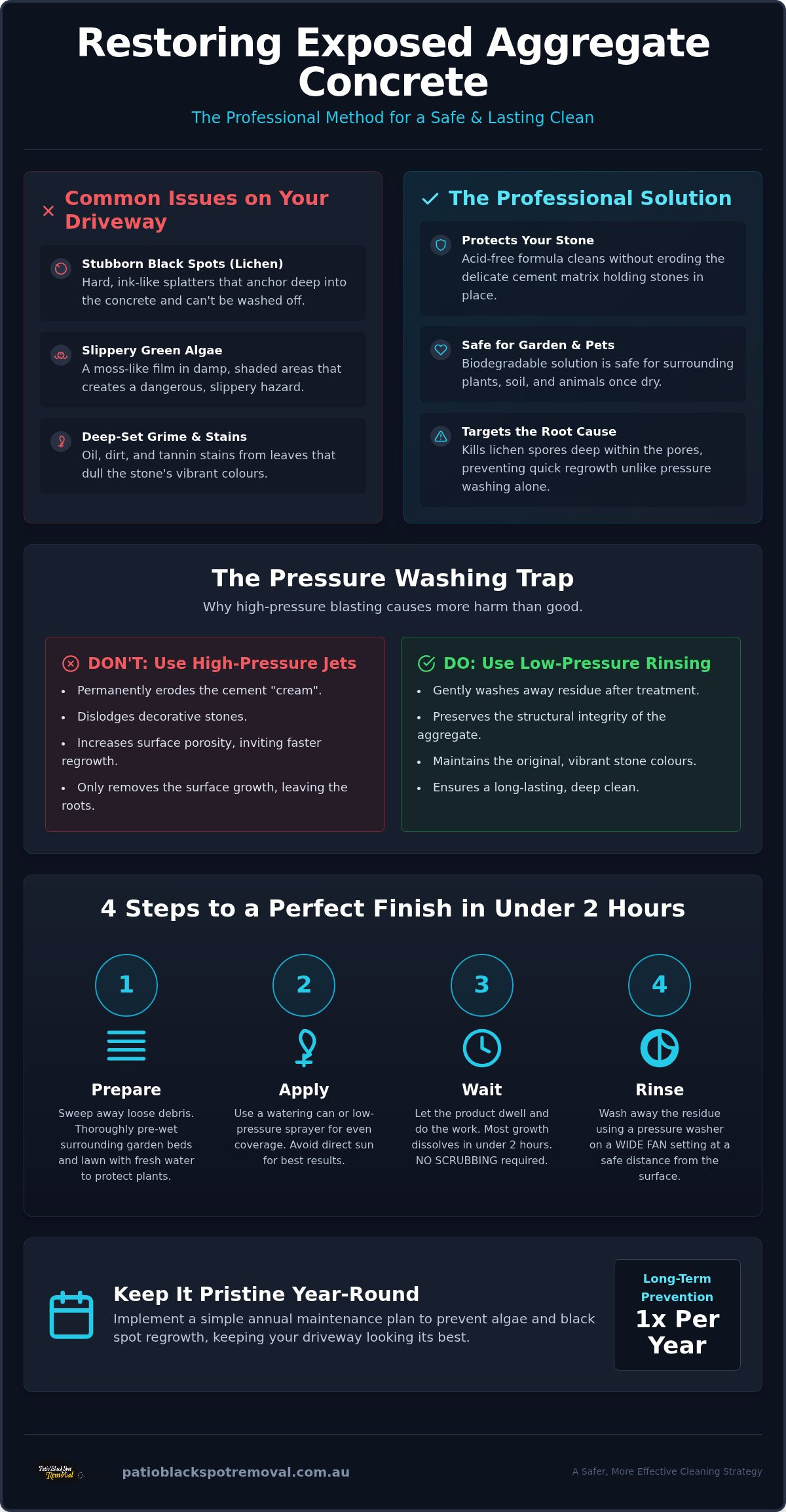
Cleaning exposed aggregate concrete requires a balance between chemical effectiveness and physical care. Before applying any treatment, sweep away loose debris and leaf litter. It's vital to pre-wet or cover surrounding garden beds and lawn edges that may come into contact with the neat chemical. This creates a safety barrier for your plants, ensuring the biodegradable formula only targets the stone. By saturating the soil, you prevent the roots of your garden from absorbing the cleaning solution.
Applying the Restoration Treatment
To achieve professional results, apply Patio Black Spot Remover for Natural Stone using a plastic watering can or a low-pressure garden sprayer. Ensure even coverage across the aggregate texture. Avoid working in the direct midday Australian sun; high temperatures cause the product to evaporate too quickly, reducing its ability to dissolve lichen roots. Instead, aim for early morning or late afternoon when the surface is cool. Letting the product dwell for two hours is the secret to success. Most organic growth disappears in under two hours without any back-breaking scrubbing.
The Rinsing Process: Low Pressure vs. High Blasting
Once the dwell time is complete, the technique for cleaning concrete shifts from chemical action to physical removal. Many DIYers make the mistake of using a narrow "pencil" jet, which can easily dislodge the decorative pebbles from the cement matrix. Set your pressure washer to a wide fan spray and maintain a consistent distance from the surface to avoid too much pressure on the stone. Work systematically in overlapping passes to ensure all residue is flushed away. This method restores the original stone colour without compromising the structural integrity of the driveway. You can learn more about how the system works to see the transformation in detail. If you have a particularly large area or unique stone type, feel free to reach out for expert guidance.
The Pressure Washing Trap: Why Heavy Blasting Isn't the Answer
Many homeowners believe that high-pressure water is the only solution for stubborn stains. While it provides an immediate visual change, relying solely on heavy blasting is a risky strategy. High PSI levels can easily erode the delicate cement "cream" that binds your decorative stones together. This damage is permanent. Once the matrix is compromised, the surface becomes more porous, actually making it easier for dirt and organic spores to take hold in the future.
Pressure washing alone also fails to address the biological reality of lichen and algae. These organisms anchor themselves deep within the concrete pores using microscopic roots. Water pressure simply shears off the surface growth, leaving the living roots behind to regenerate. This creates a frustrating "Clean Today, Green Tomorrow" cycle where your driveway looks pristine for a week before the green film returns. Using a biodegradable, acid-free restorer ensures you kill the roots without the corrosive risks of hydrochloric acid.
Protecting the Concrete Matrix
The structural integrity of your path relies on the strong bond between the aggregate and the cement base. When cleaning exposed aggregate concrete, you must watch for signs of over-cleaning. If you notice sharp edges on the stones or find loose pebbles after washing, you've used too much pressure. Professional-grade restoration chemicals do the heavy lifting so you don't have to risk your driveway's lifespan. By avoiding harsh acids and excessive force, you preserve the smooth finish and vibrant colour of the stone. If you're unsure about the current state of your driveway, contact our team for expert advice on the best restoration path for your home.
Maintaining Your Aggregate: Preventing Black Spots and Algae
Once the hard work of cleaning exposed aggregate concrete is complete, the focus shifts to preservation. High-quality sealers are useful for repelling oil spills and protecting against harsh Australian UV rays, but they aren't a complete shield against nature. Organic matter like grass clippings and decomposing leaves can still accumulate in the textured surface of the stone. If left to rot, these materials provide the perfect food source for lichen and moss. Regular sweeping keeps these crevices clear and prevents tannin stains from setting into the cement. You should also ensure your garden beds don't drain directly onto your paths. Proper drainage prevents the standing water that turns aggregate into a slippery hazard during the wetter months.
The Annual Maintenance Routine
Even the most thorough deep clean leaves the surface vulnerable to new airborne spores that land and settle in the concrete's pores. Applying Patio Black Spot Preventer once a year is the most effective way to break the cycle of infestation. This acid-free formula works by neutralizing spores on contact, providing a protective layer that stops regrowth for 12 months. In Sydney and coastal areas, where salt air and high humidity are common, scheduling this maintenance for early spring ensures your driveway stays clear through the peak growing season. These solutions are specifically designed to handle the unique challenges of the local climate.
This proactive approach takes far less time than a full restoration and uses a much lower concentration of product. It's a low-effort way to ensure your decorative stone remains a highlight of your home's exterior rather than a maintenance burden. You can find more details on how the system works to keep your outdoor spaces healthy and safe for your family and pets year-round.
Revitalise Your Home's Kerb Appeal Today
Restoring your driveway doesn't have to be a multi-day ordeal of back-breaking scrubbing or dangerous acids. By moving away from the heavy blasting trap and focusing on the biological roots of lichen and algae, you can achieve a finish that looks brand new. Effective cleaning of exposed aggregate concrete is about using the right tools for the job. Our Sydney-made, biodegradable, and acid-free formulas are designed specifically for the Australian climate. They deliver professional-grade results in just two hours without risking the health of your stone.
Now that you understand how to identify organic growth and protect your concrete matrix, it's time to take action. You can easily maintain this pristine look year-round with a simple annual prevention routine. Don't let stubborn black spots or slippery algae diminish your home's value or safety. Restore your exposed aggregate today with our professional-grade remover and enjoy a cleaner, safer outdoor space. Your driveway is the first thing visitors see; make sure it leaves a lasting impression.
Frequently Asked Questions
Can I use a pressure washer on exposed aggregate concrete?
Yes, you can use a pressure washer, but you must avoid high-pressure "pencil" jets that can dislodge the decorative stones from the cement matrix. Set your machine to a wide fan spray and maintain a consistent distance from the surface. This technique ensures you flush away debris without causing structural damage. When cleaning exposed aggregate concrete, the goal is to rinse the surface rather than blast it.
Will cleaning chemicals kill the plants next to my driveway?
Our professional-grade cleaners are biodegradable and acid-free, making them safe for your garden when used correctly. Before you begin, thoroughly saturate the surrounding soil and foliage with fresh water. This creates a protective barrier that prevents plant roots from absorbing the cleaning solution. Once you've finished rinsing the driveway, give the plants another quick spray with fresh water to ensure any stray splashes are diluted and washed away.
How do I remove black spots from my aggregate patio?
Black spots are actually living lichen that bonds to the stone. To remove them, apply Patio Black Spot Remover and allow it to dwell for up to two hours. This specialized formula dissolves the microscopic roots that standard pressure washing leaves behind. Because it's a chemical restoration process, you don't need to scrub the surface. Simply rinse the area with a wide fan spray to reveal the original stone colour.
Is it necessary to seal exposed aggregate after cleaning?
Sealing is often recommended after a deep clean to protect the porous concrete from oil stains and UV damage. While cleaning exposed aggregate concrete removes existing organic growth, a sealer provides an additional layer of protection against future spills. However, a sealer alone won't stop lichen from returning. You should apply a preventer annually to kill airborne spores before they have a chance to anchor themselves into the stone.
How long does it take to clean a standard aggregate driveway?
A standard residential driveway can typically be restored in just a few hours using our professional-grade system. This timeframe includes the application of the remover and the necessary dwell time for the formula to dissolve organic growth, as well as rinsing off the chemical. Unlike traditional methods that require hours of intensive scrubbing or multiple passes with a pressure washer, this chemical restoration process does the heavy lifting for you. It's the most efficient way to achieve a professional finish.