Choosing the right stone for your outdoor space involves more than simply picking a colour you like. Different types of natural stone have different levels of porosity, heat retention, durability and maintenance requirements, so it's worth considering how a material will perform in your particular climate.
Since the July 2024 ban on engineered stone, there's been a massive shift back to authentic materials. Understanding the popular types of stone in Australia for homeowners is now more critical than ever, especially if you want to avoid materials that stain easily or become too hot to walk on during a Sydney summer.
From sandstone and bluestone to travertine, limestone and granite, here's what to consider before choosing stone for your patio, pool area or garden.
Key Takeaways
- Learn why natural stone has become the gold standard for property value following the 2024 ban on engineered alternatives and how to choose materials that fit current architectural trends.
- Identify the most popular types of stone in Australia for homeowners, including bluestone and sandstone, and how they perform in different local microclimates.
- Discover the "Barefoot Test" to ensure your chosen pavers remain comfortable to walk on even during the peak of a 40-degree Australian summer.
- Understand why "black spot" is actually a biological infection that requires specialised chemical treatment rather than aggressive pressure washing which can damage the stone surface.
- Master a professional three-step restoration process to clean, remove, and prevent lichen growth, ideally timed during the autumn months for long-term protection.
The Rise of Natural Stone in Australian Home Design
Since the total ban on engineered stone took effect on July 1, 2024, the market has pivoted decisively toward authentic, raw materials. For many, natural stone remains the gold standard for property value in 2026. It's no longer just about a quick aesthetic upgrade; it's a lifestyle investment focused on 20-year durability. Modern Sydney suburbs are moving away from cold, industrial concrete in favour of organic textures like earthy ochres and cool greys that blend seamlessly into the native environment.
Choosing the right material depends heavily on local geology and availability. While Sydney is famous for its golden sandstone, Victorian and South Australian designs often lean on Australian bluestone varieties for their sleek, dark appeal. These are among the most popular types of stone in Australia for homeowners because they bridge the gap between heritage charm and contemporary minimalism. Balancing the initial cost with longevity is key. While natural stone may require a higher upfront spend, its ability to withstand the elements without warping or degrading makes it the more economical choice over decades.
Sydney’s Architectural Love Affair with Sandstone
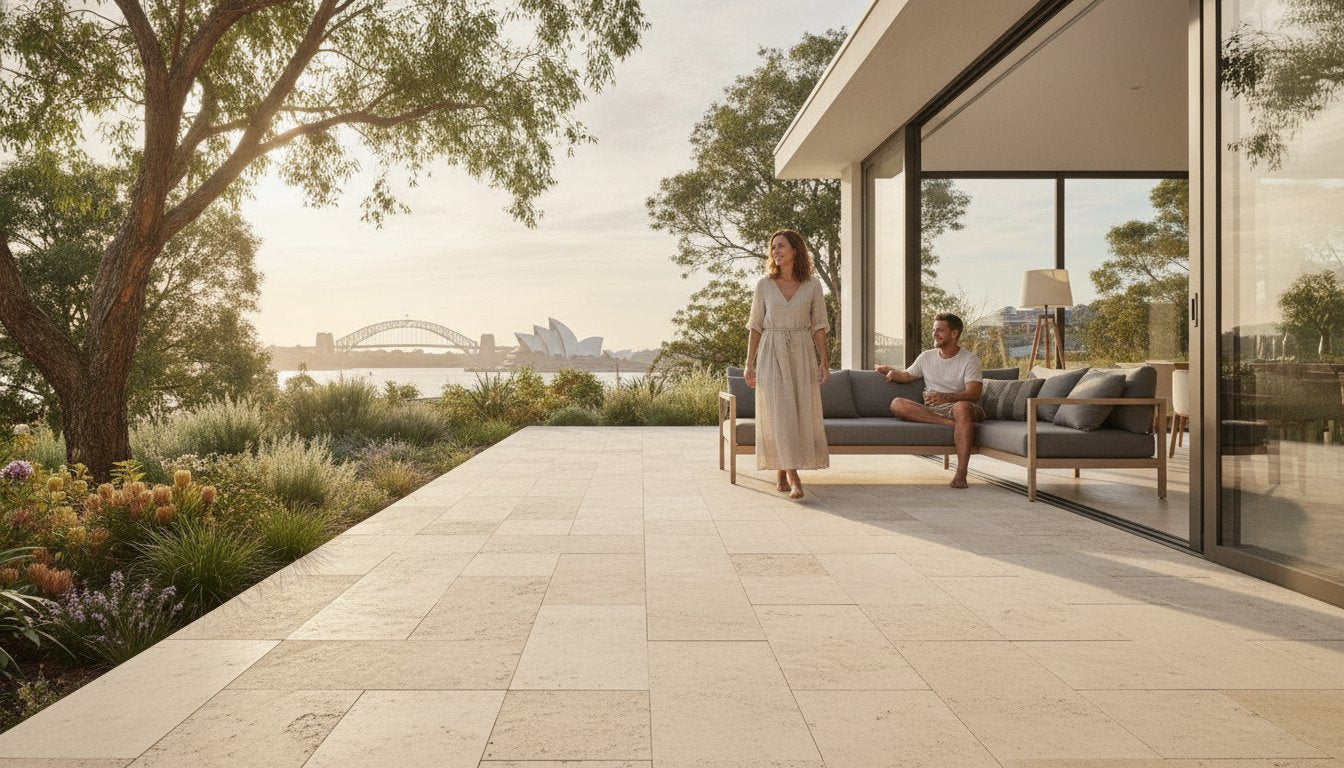
Sydney sandstone has a strong connection with the city's architecture and landscape. Its warm colour and natural texture make it a popular choice for patios, paving, retaining walls and other outdoor features.
More contemporary designs often use thinner sandstone pavers while retaining the natural variation and texture of the material.
Sandstone is relatively porous, however, so it can absorb moisture and may require more regular maintenance than some denser stone types. In areas with high humidity or frequent rainfall, keeping organic growth under control is particularly important.
The Environmental Benefits of Choosing Stone
Natural stone is a great durable option for the Australian climate. Its high thermal mass helps regulate temperatures in outdoor living areas, keeping your patio significantly cooler than synthetic alternatives during a summer heatwave. Additionally, the natural permeability and drainage properties of stone make it superior for stormwater management, which is vital in regions prone to heavy seasonal rain. By choosing a material that lasts a lifetime, you avoid the waste of frequent replacement cycles, effectively reducing your home's long-term environmental impact and carbon footprint.
The 'Big Five': Most Popular Stone Varieties for Australian Patios
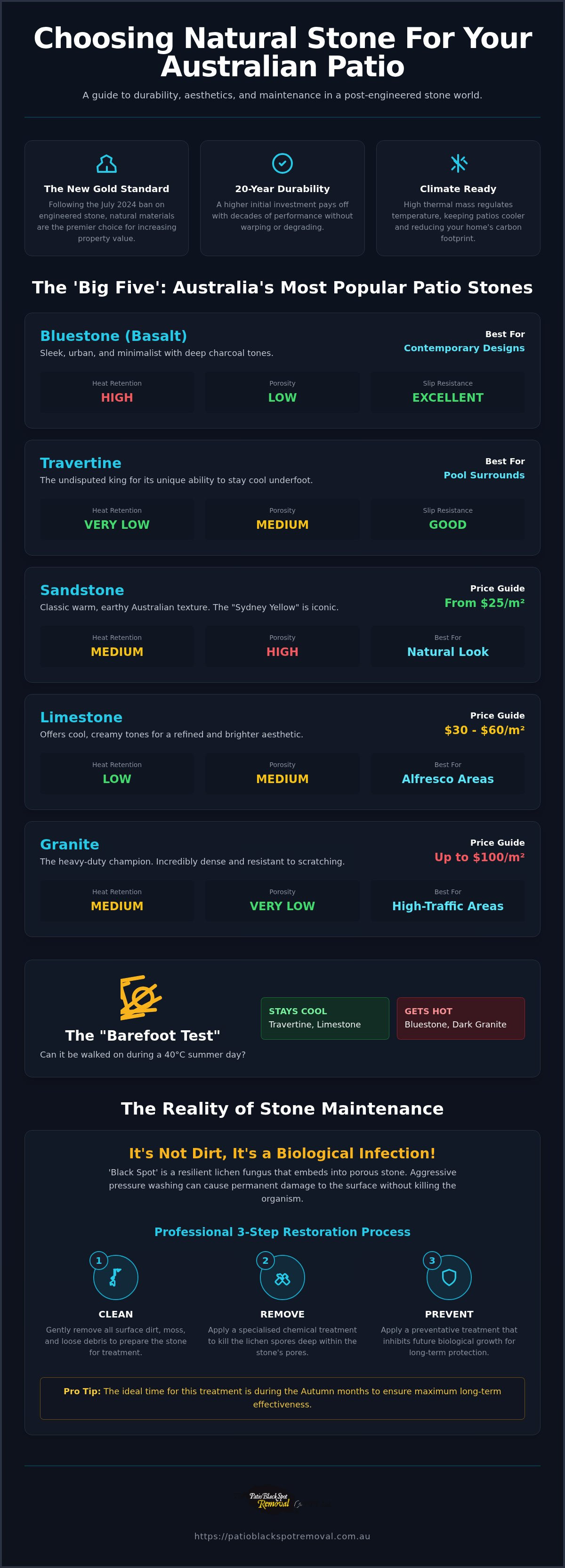
Selecting the right material for your outdoor space involves balancing aesthetics with the Australian climate. While there are dozens of options, five specific materials dominate the current market. These popular stone varieties in Australia provide the foundation for most modern landscape designs. Bluestone, or Basalt, has become the definitive choice for minimalist Melbourne and Sydney designs due to its deep charcoal tones and clean lines. It offers a sophisticated, urban look that hides marks well, though its dark colour can retain significant heat in direct sunlight.
For pool surrounds and alfresco areas, Travertine remains the top choice. Its unique ability to stay cool underfoot makes it a practical luxury for the suburbs. If you prefer a brighter aesthetic, the choice often comes down to Limestone versus Sandstone. Limestone offers cool, creamy tones and a refined finish, with prices typically ranging from $30 to $60 per square metre. Sandstone provides that classic, warm Australian texture and is highly accessible, starting from approximately $25 per square metre. For high-traffic entertaining hubs or driveways, Granite is the heavy-duty champion. It is incredibly dense and resistant to scratching, though costs can reach $100 per square metre for rarer varieties.
Aesthetic and Functional Comparison Matrix
| Stone Type | Aesthetic Vibe | Heat Retention | Slip Resistance | Porosity |
|---|---|---|---|---|
| Bluestone | Modern / Urban | High | Excellent | Low |
| Travertine | Mediterranean | Low | Good (Tumbled) | High |
| Sandstone | Coastal / Rustic | Medium | Excellent | Very High |
| Limestone | Sophisticated | Medium | Moderate | High |
| Granite | Contemporary | High | Excellent | Very Low |
Understanding these popular types of stone in Australia for homeowners is the first step toward a successful build.
Regional Availability and Sourcing
The cost and availability of these stones vary significantly across the country. Australian-quarried stone often carries a premium due to local labour and transport costs, but it generally offers superior durability for our specific UV conditions. In Western Australia, local limestone is abundant and affordable, whereas NSW homeowners often find sandstone more cost-effective due to proximity to local quarries.
Be wary of "fakes" in the current market. With the 2024 ban on engineered stone, some suppliers may attempt to sell high-silica composites or ceramic-based "stone-look" products as natural stone. Genuine natural stone will have unique variations in every slab; if every paver looks identical, it's likely a manufactured product. Always ask for a silica risk control plan and origin certification to ensure you're investing in authentic, compliant materials that will stand the test of time.
Selecting Stone for the Australian Climate: Heat, Durability, and Porosity
Choosing between the popular types of stone in Australia for homeowners involves considering more than appearance.
Australian outdoor areas can experience strong sunlight, high temperatures, rainfall and, in coastal locations, salt exposure. The right choice will depend on the conditions around your home and how the space will be used.
For pool surrounds and other areas that become wet, slip resistance is particularly important. Always check the relevant slip-resistance information for the specific product you're buying rather than assuming all versions of a particular stone will perform in the same way.
The Thermal Performance of Dark vs. Light Stones
Color choice significantly impacts how much you'll enjoy your outdoor space in mid-summer. Darker stones like bluestone or charcoal granites act as thermal sinks, absorbing and radiating heat long after the sun goes down. While these look stunning in minimalist designs, they can become very hot without adequate shading or regular misting. Conversely, light-coloured limestone and travertine reflect a higher percentage of solar radiation, keeping the surface temperature manageable for north-facing patios. Higher stone density typically leads to greater heat retention because the material lacks the air pockets found in more porous varieties.
Porosity and the 'Sponge Effect'
Porosity determines how a stone breathes, but it also creates a "sponge effect" that can lead to rapid degradation. Highly porous stones like sandstone are prone to trapping moisture and microscopic organic spores deep within their structure. During Sydney’s heavy East Coast Low rain events, unsealed stone becomes saturated, providing the perfect home for biological infections. This is why sealing isn't a one-time fix. The harsh Australian sun breaks down topical sealers quickly, meaning you need a long-term strategy to understand how professional-grade protection works to keep your investment from becoming a host for lichen and black spots.
The Reality of Stone Maintenance: Preventing the Dreaded 'Black Spot'
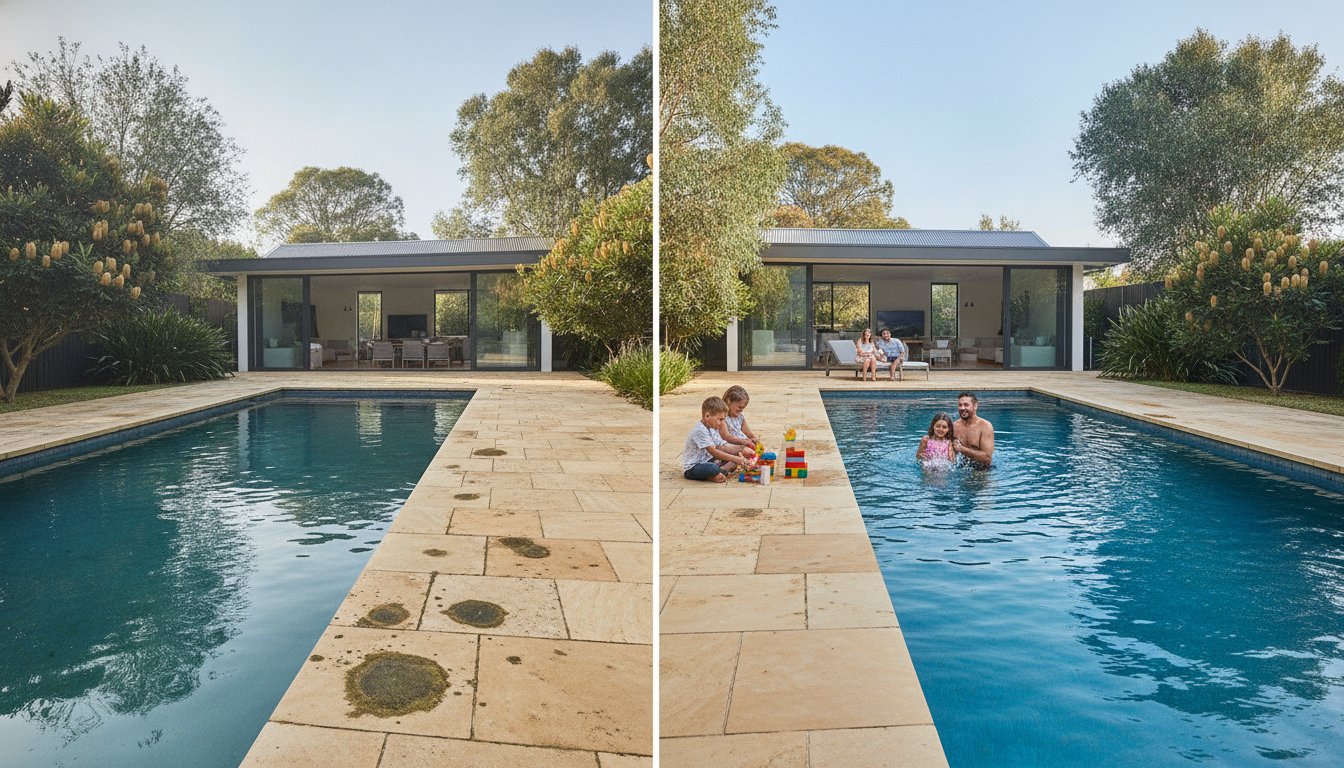
Investing in the most popular types of stone in Australia for homeowners is only half the battle. The true challenge begins once the pavers are laid and exposed to the elements. Many people mistake the dark, circular marks on their sandstone for simple dirt or mud. In reality, these are "black spots," a resilient type of lichen that thrives in the humid conditions of the Australian coast. Unlike surface mould or slick green algae, lichen is a biological infection that anchors itself deep into the stone's mineral structure. Once these invisible spores take hold, they grow into permanent stains that resist standard household cleaners.
Mould usually appears as a fuzzy or slimy film, while algae creates a slippery green coating. Lichen, however, manifests as hard, black, ink-like spots that seem to become part of the stone itself. If left untreated, these organisms continue to expand their root systems, making the stone more porous and susceptible to further damage. Understanding this lifecycle is the first step toward moving beyond temporary fixes and toward genuine restoration.
Why Traditional Cleaning Methods Fail
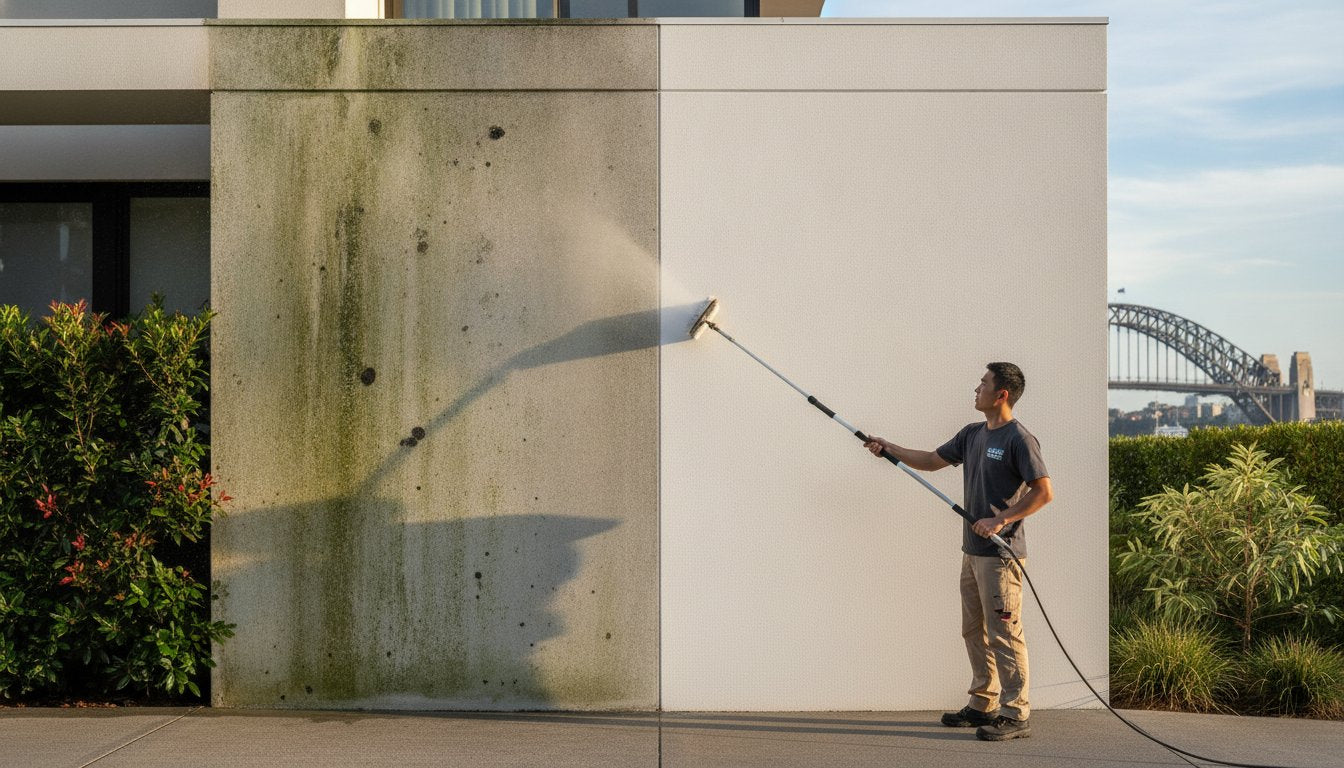
The most common mistake homeowners make is reaching for a high-pressure washer. While a blast of water might remove surface grime, it often makes the underlying problem worse. High pressure can "etch" or pit the surface of softer stones like sandstone and limestone, creating even more tiny crevices for spores to hide in. Because water alone cannot kill the lichen's root system, the spots usually return within months, often more aggressively than before.
Targeted Solutions for Natural Stone
To truly restore your outdoor space, you need a solution that addresses the chemistry of the stone. Using a specialised Patio Black Spot Remover for Natural Stone is essential because it breaks the bond between the lichen and the minerals. These professional-grade formulas are designed to lift the infection out of the pores without the need for destructive pressure. It's particularly important to use pH-neutral care for delicate materials like marble or limestone, as acidic cleaners can cause irreversible "burning" or dulling of the finish. If you're dealing with stubborn staining on your investment, it's time to consult with a specialist about a targeted restoration plan that actually kills the infection.
Expert Tips for Restoring and Protecting Your Outdoor Stone Investment
Maintaining the popular types of stone in Australia for homeowners doesn't need to involve constant deep cleaning. A simple routine of cleaning, treating existing growth and preventing it from returning can make ongoing maintenance easier.
The timing of maintenance will depend on your climate and the conditions around your property. Autumn can be a useful time to inspect your paving and deal with leaves, organic debris and any early signs of lichen before wetter weather arrives.
A simple annual maintenance plan could include:
- Autumn (March to May): Clear leaves and organic debris and consider applying a preventative treatment.
- Winter (June to August): Check drainage and look for areas where water is regularly pooling.
- Spring (September to November): Inspect the stone for new organic growth, staining or signs of surface damage.
- Summer (December to February): Check how hot the stone becomes in direct sunlight and look for any issues with grout or joints.
Stopping the Return of Organic Growth
The biggest frustration for homeowners is seeing black spots return just weeks after a heavy pressure wash. This happens because the microscopic "roots" of the lichen remain alive within the stone's pores. Using a Patio Black Spot Preventer is the only way to break this cycle. Unlike traditional sealers that can trap moisture and cause stone to suffocate or discolour, chemical preventers target the biological source of the problem. Think of the Preventer as an invisible shield that stops biological recolonisation before it can damage your pavers. Annual "top-up" treatments are far more effective than relying on five-year "permanent" sealers that often fail under the intense Australian UV sun.
The 'How It Works' Framework
Stone restoration doesn't necessarily require aggressive cleaning. Choosing a treatment designed for the type of organic growth and stone you're dealing with can help reduce the need for heavy scrubbing or high-pressure washing.
Before the next season, it's worth checking:
- Is the stone clean and reasonably consistent in colour?
- Are there any new black spots or areas of organic growth?
- Does the surface remain suitable for its intended use?
- Is water draining properly rather than sitting on the paving?
Regular checks like these can help you spot problems before they become more difficult to deal with.
Protecting Your Legacy in Stone
Choosing between the popular types of stone in Australia for homeowners is only the first step in creating a lasting outdoor sanctuary. Whether you've selected the rugged charm of Sydney sandstone or the sleek finish of bluestone, your investment's longevity depends on a proactive defense against the elements. We've seen how traditional pressure washing fails to address the biological roots of lichen and how the right seasonal maintenance plan can save you thousands in the long run.
The Patio Black Spot Removal Company provides formulas specifically designed for the unique porosities of Australian sandstone and limestone. Our products are trusted by thousands of customers to deliver results where standard cleaning fails. Don't let stubborn black spots or organic growth diminish the value of your property. It's time to move beyond temporary fixes and embrace a professional restoration strategy that actually works.
Restore your patio's natural beauty with our specialized stone care range and reclaim your outdoor space today.
Frequently Asked Questions
What is the best type of stone for a pool surround in Sydney?
Travertine is widely considered the best choice for Sydney pool surrounds due to its low heat retention and natural slip resistance. It stays significantly cooler than darker stones, making it comfortable for bare feet during a 40-degree summer. While sandstone is also a popular choice, it requires more intensive maintenance to prevent organic growth in Sydney's humid coastal air.
Why is my sandstone turning black even after I pressure wash it?
The black spots are a biological infection of lichen, not just surface dirt. Pressure washing only removes the visible top layer while leaving the roots or spores embedded deep within the stone's pores. Because the organism remains alive, it quickly regrows. The high-pressure water can even damage the stone surface, creating more crevices for spores to hide in.
Is natural stone too hot to walk on barefoot in the Australian summer?
Heat retention depends on the density and colour of the material. Darker stones like bluestone or granite absorb more solar radiation and can become uncomfortably hot. Light-coloured, porous stones like limestone and travertine reflect more heat and are among the most popular types of stone in Australia for homeowners who prioritise comfort in north-facing outdoor areas.
How often should I seal my outdoor natural stone pavers?
Most professionals recommend resealing every 2 to 5 years, depending on the sealer type and foot traffic. However, topical sealers often break down quickly under harsh Australian UV levels. A more effective strategy involves using a preventative chemical treatment annually. This stops biological growth at the source rather than relying solely on a physical barrier that can trap moisture.
Can I use household bleach to clean my limestone patio?
No, you should never use household bleach or acidic cleaners on limestone. Limestone is a calcium-based stone that is highly sensitive to harsh chemicals; bleach can cause irreversible dulling or burning of the surface. Always use pH-neutral cleaners or specialised formulas designed for the specific porosity of natural stone to avoid permanent structural or aesthetic damage.
What is the difference between bluestone and basalt for Australian homes?
In the Australian market, "bluestone" is a trade name that usually refers to basalt, a volcanic rock. While they are essentially the same material, the term bluestone is commonly used for the specific varieties quarried in Victoria. It is one of the popular types of stone in Australia for homeowners seeking a durable, dark grey aesthetic for contemporary garden designs.
Will Patio Black Spot Remover damage my garden or lawn?
When used according to the instructions, the treatment is safe for surrounding greenery. You should thoroughly saturate any adjacent grass or plants with plain water before and after the application. This creates a protective barrier and dilutes any accidental runoff. The formula is designed to target the biological bond of lichen on stone without leaving harmful long-term residues in your soil.
How long does a natural stone restoration treatment last?
A full restoration treatment removes existing lichen and black spots immediately, but its longevity depends on your maintenance cycle. In humid coastal areas, spores can recolonise within months if the stone is left unprotected. Using a dedicated preventer annually ensures the stone remains clear of biological infections, keeping your patio looking newly restored for many years to come.