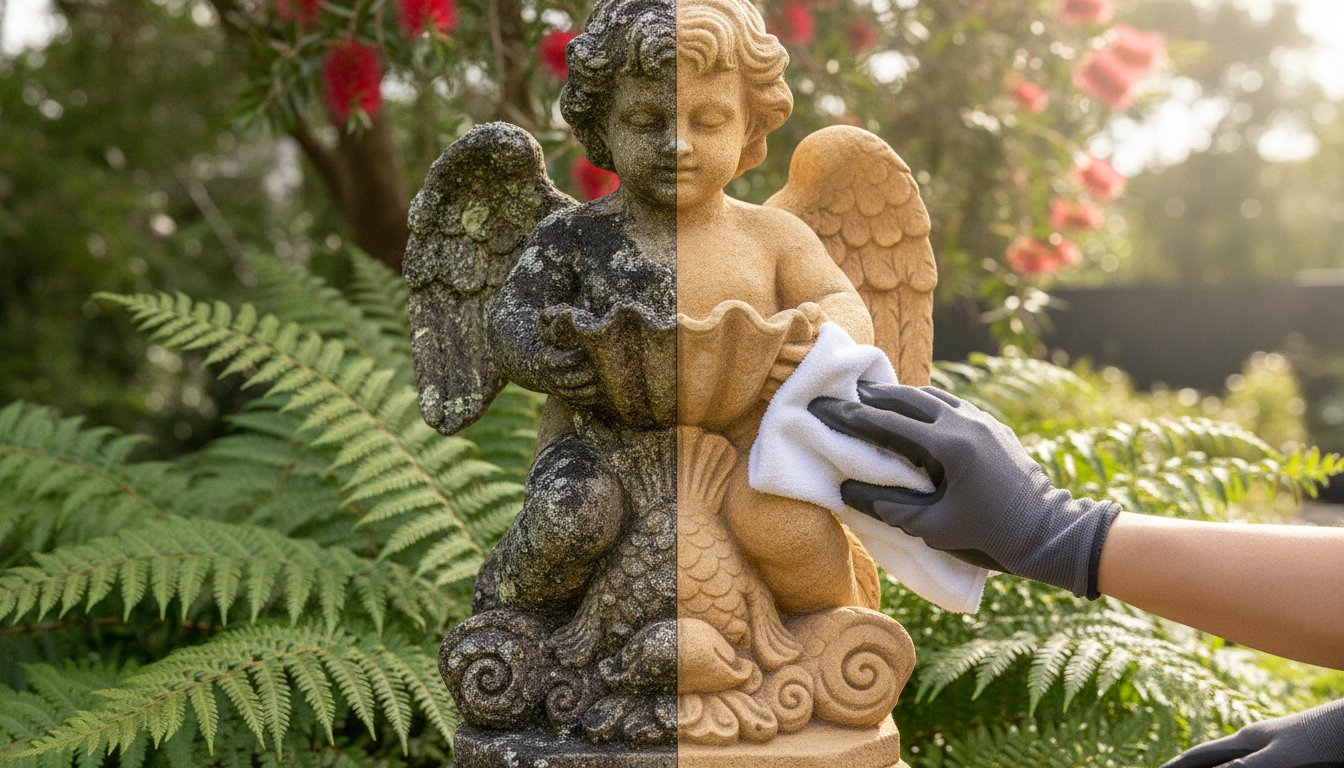
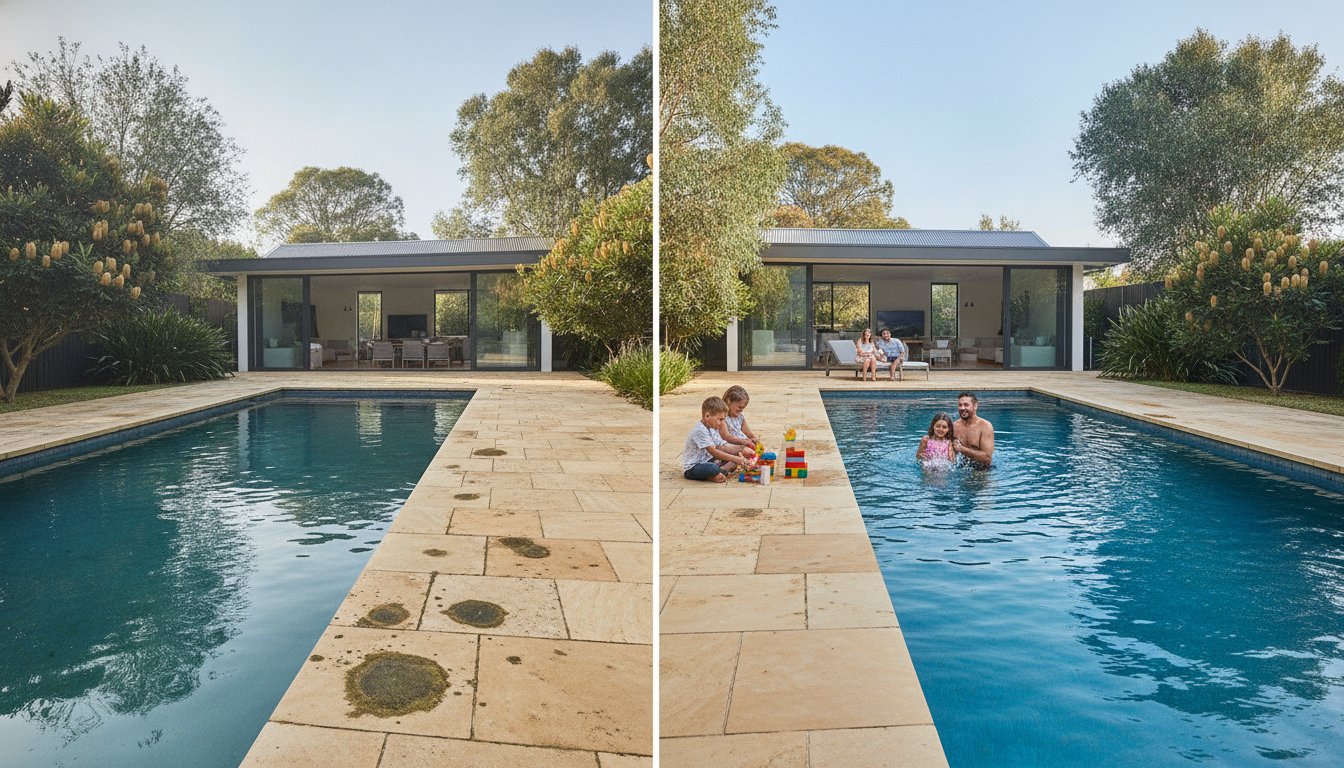
Swimming pool surrounds can become marked with black spots, green algae, dirt and other organic growth over time. Because poolside pavers are regularly exposed to water, moisture, salt and chlorine, keeping them clean can be more difficult than it first appears.
It's incredibly frustrating when you spend your entire Saturday pressure washing only to see those stubborn black spots remain and the slippery green algae return just a few weeks later. You likely worry about harsh chemicals spiking your pool's pH or harming the kids and pets playing nearby.
We understand that you want a beautiful, safe outdoor space without the back-breaking labor or the fear of damaging your stone. This guide will show you exactly how to clean swimming pool surround surfaces safely and effectively. You'll discover how to remove organic growth and restore your stone's original colour in just a few hours without damaging your pavers or your pool water balance. We are going to walk through the professional steps to achieve a slip-free finish that lasts, ensuring your backyard oasis remains a safe environment for the whole family.
Key Takeaways
- Stop relying on high-pressure washing, which often damages the stone's surface and fails to remove the deep-seated roots of black spot lichen.
- Master how to clean swimming pool surround pavers using a specialized two-part system that delivers professional results in less than two hours.
- Protect your investment by using biodegradable and acid-free restoration products that won't harm your pool's pH balance, pets, or surrounding plants.
- Learn to identify the specific types of organic growth, like slippery green algae and stubborn black spots, that compromise your family's safety.
- Shift from reactive cleaning to proactive care by using a preventer to stop lichen from returning, keeping your poolside pristine year-round.
Understanding Why Pool Surrounds Lose Their Shine
Pool surrounds are exposed to a combination of water, sunlight, foot traffic and the chemicals used around swimming pools. Natural stone such as sandstone and travertine is also porous, which means moisture can be absorbed into the surface.
The splash zone around a pool can therefore provide suitable conditions for organic growth such as lichen and algae. Regular moisture combined with warm weather can make these problems more noticeable, particularly in areas that don't dry out quickly.
There is an important difference between surface dirt and organic growth. Surface grime may be removed with a garden hose or basic cleaning, while lichen can become established in the pores of natural stone. A pool deck can therefore look relatively clean while still having algae or other organic growth on the surface.
The Impact of Pool Splash-Zone Moisture
Salt and chlorine aren't just for the water; they penetrate the stone's surface, breaking down its internal structure over time. This process makes the stone even more porous, allowing organic spores to anchor themselves deep within the pores. You'll notice this most around the coping. What starts as a faint green film eventually evolves into hardy black spots. These aren't just unappealing to look at; they are biological infestations that physically bond to the stone. Even if the surface looks clear, microscopic spores remain and eventually turn into more unsightly black spots.
Why Traditional Cleaning Methods Often Fail
Most people assume that a bucket of soapy water or a standard deck cleaner will do the trick. Unfortunately, these household detergents are designed for surface grime, not deep-seated organic growth. They lack the potency to kill the root system of the lichen. When researching how to clean swimming pool surround areas, you'll find that "quick fix" chemicals often contain acids that can etch the stone or phosphates that actually feed future algae blooms. You can learn more about how it works when you target the root cause rather than just the surface.
Because pool surrounds are subject to constant chemical exposure and high foot traffic, they require a specialized restoration approach that targets the root of the problem without compromising the delicate balance of your pool water.
Identifying the Enemy: Organic Growth vs. Surface Grime
Before you dive into the process of how to clean swimming pool surround areas, you need to identify exactly what you're fighting. Black lichen can sometimes be mistaken for dirt, BBQ residue or other staining. If a dark patch remains after normal cleaning, it may be organic growth rather than surface dirt.
Stains such as oil or tannins from leaves can have less defined edges and generally remain a similar colour when the stone becomes wet. Organic growth can have more defined edges and may become more noticeable when wet.
A simple water test can also give you an indication of how porous the stone is. Pour a small amount of water onto a dry area of the pavers. If the water beads on the surface, the stone is likely sealed. If it sinks in instantly, the stone is porous and highly vulnerable to infestations. This porosity is exactly why organic growth takes hold so quickly in Sydney and Brisbane backyards. To get your stone back to its original state, you'll need a professional-grade Patio Black Spot Remover for Natural Stone that penetrates these pores to kill the growth at its source.
What is Black Lichen and Why is it on my Pool Deck?
Black lichen is a complex organism. It's a combination of algae and fungus. The fungus provides the structure and anchors itself deep into the pores of your sandstone or travertine, while the algae provides the food through photosynthesis. Because it roots itself within the stone, it's impossible to remove with standard household cleaners. Over time, the lichen produces acids that dissolve the minerals in your stone. This leads to permanent pitting and a "honeycomb" texture that ruins the stone's finish and makes the surface even more difficult to keep clean in the future.
The Safety Risks of Algae Around Swimming Pools
While black spots are an aesthetic nightmare, green algae is a physical danger. Microscopic algae layers can form in less than 48 hours in humid conditions. This "slime" creates an invisible barrier that reduces friction to near zero. Following CDC pool safety guidelines involves more than just balancing water chemistry; it requires keeping the surrounding surfaces free of biofilms. Removing the visible green is only half the battle. You have to eliminate the food source and the microscopic spores to stop the cycle. If you aren't sure which type of growth has taken over your patio, you can always reach out for expert advice on your specific stone type.
Why Pressure Washing Isn’t Enough for Pool Pavers
Many Australian homeowners believe that a high-PSI blast is the definitive answer for a dirty patio. In reality, relying solely on a pressure washer often does more harm than good. High-pressure water only shears off the surface "head" of the lichen or algae. It may improve the look of your pool surround, but this leaves the root system, or the anchor, safely embedded within the stone's pores. Because you've just provided those roots with a massive dose of hydration, the black spots often return faster and more aggressively than before.
Blasting the coping can weaken the bond between the stone and the pool shell, leading to loose tiles and expensive repairs. It's also a massive waste of water and electricity, often taking six to eight hours to achieve a result that a professional chemical treatment can do in a fraction of the time.
The Mechanical vs. Chemical Restoration Debate
Chemical restoration is the superior choice because it uses science rather than brute force. Instead of trying to "blast" the organism out, a specialized treatment like Patio Black Spot Remover works by dissolving the biological bond between the lichen and the stone. This process kills the spores within two hours, ensuring the growth doesn't just come back next month. This protects the structural integrity of your pool area by leaving the grout and the stone's surface completely intact.
Hidden Dangers of DIY Pressure Washing
One of the most significant risks of DIY pressure washing is "etching." Using a pressure washer too close to natural stone can damage the surface. On softer or more porous stone, excessive pressure can contribute to pitting or surface wear.
It can also force water and debris further into the stone or disturb jointing materials between pavers.
When considering how to clean swimming pool surrond surfaces, using an appropriate cleaning product and a controlled application can be a gentler alternative to simply increasing the water pressure.
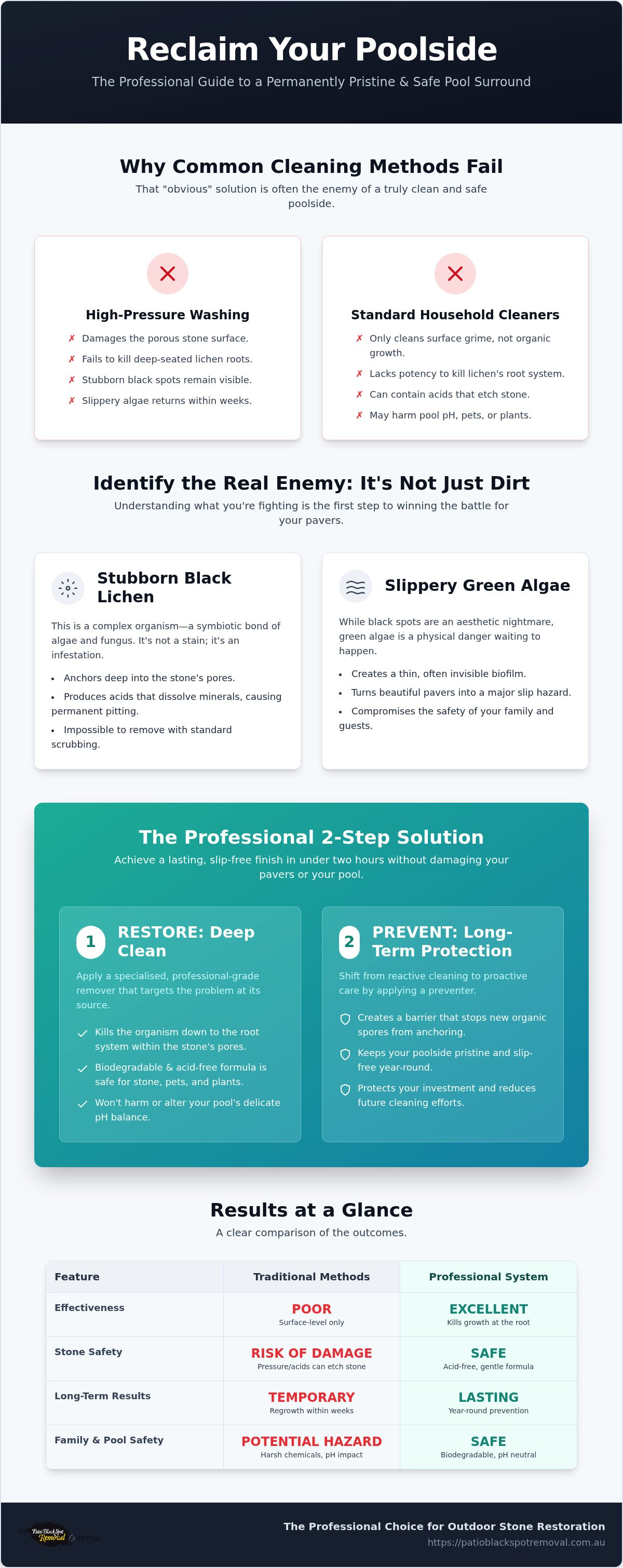
How to Safely Restore Your Pool Area in Under Two Hours
Restoring your swimming pool surround shouldn't have to take an entire weekend. While some products require you to wait for months for rain to wash away the grime, our approach focuses on immediate results. When you're learning how to clean swimming pool surround areas effectively, the goal is a total transformation that allows you to use the area as normal immediately after treatment.
With the right preparation and products, the process can be relatively straightforward. Start by removing pool furniture, pot plants, toys and other items from the area. Sweep the pavers to remove loose leaves and debris so the cleaning solution can make good contact with the surface.
A two-part approach can be useful: first treating existing organic growth and then using a preventative treatment to help reduce future growth.
The Step-by-Step Application Process
To begin the restoration, apply Patio Black Spot Remover for Natural Stone using a low-pressure garden sprayer. It's vital to keep the stone saturated with product during the entire treatment period. Reapply the product when needed, and aim to carry out the treatment in the morning or evening, avoiding the harsh midday sun. Dwell time is where the magic happens. The solution needs time to penetrate the pores and kill the lichen roots. When handling the "splash zone" near the pool edge, apply the product carefully with a brush to minimize any runoff into the water. If a small amount does enter the pool, it won't affect your pH or filtration system, but it's always best to keep the application controlled.
Protecting Your Garden and Pool Chemistry
If your pool surround is close to grass, flower beds or other plants, pre-wet the surrounding vegetation with fresh water before applying the product. Tie back or cover any surrounding foliage where possible. Choosing a biodegradable, acid-free product can also help reduce the risk of damage to natural stone and surrounding areas when used as directed.
Understanding how it works ensures you can clean with confidence, knowing your garden and pets are safe. Once the dwell time is complete, a simple rinse with a low pressure washer or garden hose is all it takes to reveal the stone's original, vibrant colour.
If you have specific questions about your stone type or need help calculating how much product your pool area requires, contact our expert team today for personalized advice.
Long-Term Maintenance: Keeping Your Pool Surround Pristine
Once you've successfully restored your stone, the last thing you want is to repeat that heavy-duty restoration every year. Maintaining a pool deck in the Australian climate requires a proactive strategy. While some local suppliers suggest expensive re-sealing every 12 to 24 months, these coatings can often trap moisture within the stone, leading to spalling or internal damage. A more effective approach focuses on biological control. By mastering how to clean swimming pool surrond pavers, you've already done the hard work. Now, you just need to keep the biological "slate" clean. Annual prevention is significantly more cost-effective than total restoration, saving you both time and money over the lifespan of your home.
The Power of Annual Prevention
Using a specialized treatment like Patio Black Spot Preventer serves as a simple and ideal maintenance routine for your stone. This formula kills microscopic spores on contact before they can anchor into the pores of your sandstone or travertine. It's a simple "spray and leave" maintenance schedule that you can complete in minutes. Most homeowners find that a single application every 12 months is enough to stop the return of lichen and algae. This preventative layer ensures that the vibrant, original colours of your stone remain visible year-round, regardless of how much rain or humidity the season brings.
Creating a Safe, Beautiful Pool Environment
A pristine pool surround does more than just look good; it protects your property value and ensures a safe, slip-free zone for your family. As you prepare for the summer season, follow this final checklist to maintain your DIY momentum:
- Sweep away organic debris like leaves and grass clippings weekly, as these provide the nutrients lichen needs to thrive.
- Gently rinse off salt and chlorine splashes with fresh water after heavy pool use to prevent mineral buildup.
- Apply your annual preventer to stop the biological cycle in its tracks before the humid months arrive.
- Inspect the area for any loose grout or shifting coping tiles that might require structural attention.
Maintaining a beautiful poolside shouldn't be a chore. When you understand how to clean swimming pool surround surfaces effectively, you can enjoy a professional finish without the professional price tag.
Frequently Asked Questions
Is it safe to use patio cleaners right next to my swimming pool?
Yes, it's perfectly safe as long as you choose an acid-free, professional-grade solution. Many generic cleaners contain harsh acids that can etch stone or damage pool liners. Our biodegradable formulas are designed to work effectively in the "splash zone" without compromising the integrity of your pool's structure or surrounding materials. Always apply carefully near the edge to minimize direct runoff into the water.
Will the cleaning chemicals change the pH balance of my pool water?
Any impact on your pool's pH balance from accidental minor runoff is typically negligible. While you shouldn't intentionally pour the product into the water, the small amount that might enter during a standard rinse won't disrupt your filtration system or chemical levels. It's a much safer alternative to using high-pressure water alone, which can blast debris and old organic matter directly into your pool.
How do I remove black spots from sandstone pool pavers?
The only effective way to remove these spots is by using a specialized treatment like Patio Black Spot Remover. Sandstone is highly porous, allowing lichen to anchor deep within the stone. Standard washing only removes the surface, but this professional formula penetrates the pores to kill the roots. This is the most reliable method for anyone looking at how to clean swimming pool surrond areas without causing permanent stone damage.
Do I need to scrub the stone after applying the remover?
You don't need to perform heavy manual scrubbing because the chemical restoration does the hard work for you. For areas with particularly dense growth, a light agitation with a stiff broom can help the product penetrate more effectively. Most homeowners find that the black spots simply dissolve during the dwell time. A final rinse with a garden hose is usually enough to reveal the stone's original colour.
How long do I need to wait before the kids can swim after cleaning the surround?
Your family can return to the pool as soon as the surround has been thoroughly rinsed and allowed to dry. Because the restoration process typically takes less than two hours from start to finish, you won't lose a whole day of swimming. The biodegradable nature of the product means there are no lingering toxic residues on the stone once it's clean and dry.
Can I use these products on travertine and limestone pool tiles?
Yes, our formulas are specifically designed to be safe for all natural stone types, including travertine and limestone. These stones are particularly sensitive to acid-based cleaners, which can cause dulling or surface damage. Using an acid-free restoration system ensures you remove organic growth without risking the structural integrity or the aesthetic finish of your premium pool tiles.
Will the runoff from the cleaner kill my poolside hibiscus or palms?
The formula is biodegradable and safe for your garden when used as directed. To provide extra protection for sensitive plants like hibiscus or palms, we recommend pre-wetting the surrounding soil and foliage with fresh water. This prevents the plants from absorbing the cleaning solution. Once you've finished the application and rinsed the area, the diluted runoff won't harm your landscaping.
How often should I clean my pool surround to prevent black spots from returning?
We recommend an annual maintenance schedule to keep your stone looking pristine. While the initial restoration removes existing growth, new spores can land at any time. Applying Patio Black Spot Preventer once every 12 months stops these spores from anchoring. This proactive approach is the best way to manage how to clean swimming pool surrond surfaces while avoiding the need for a major restoration in the future.