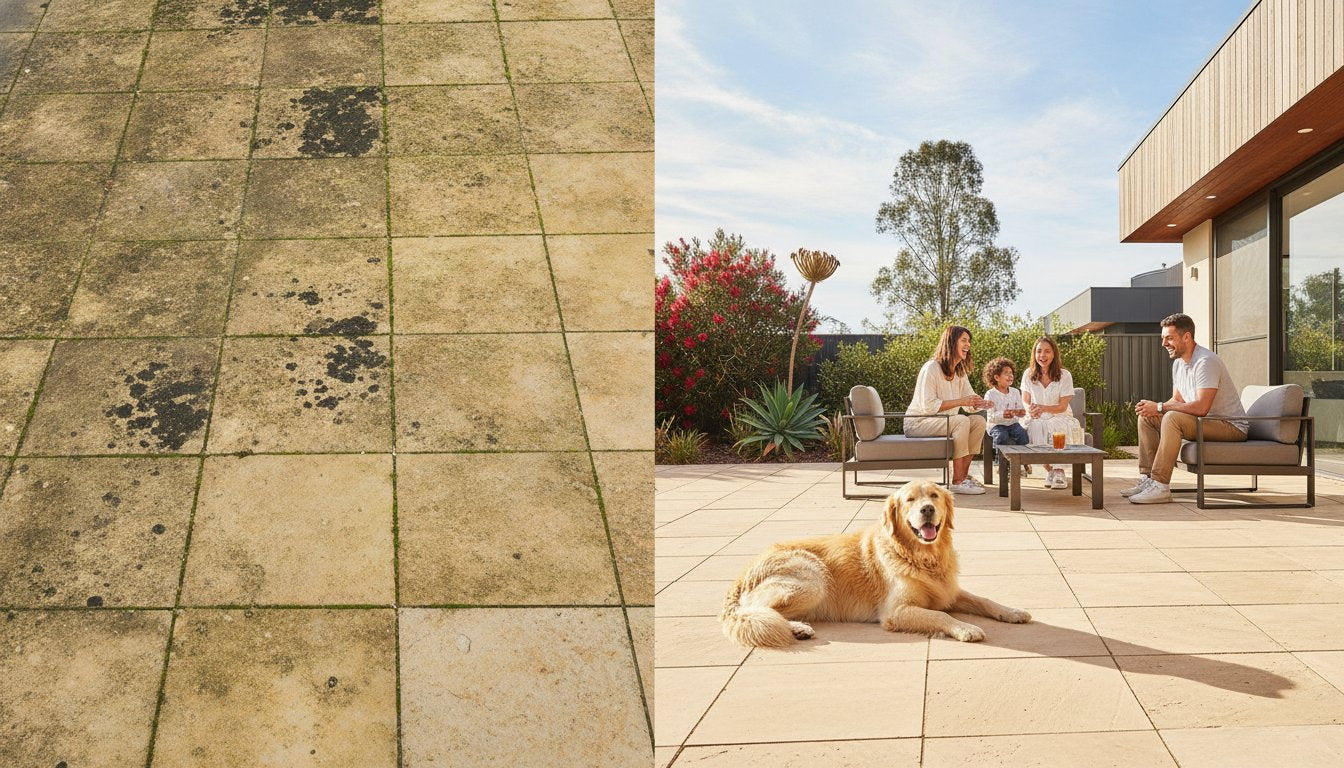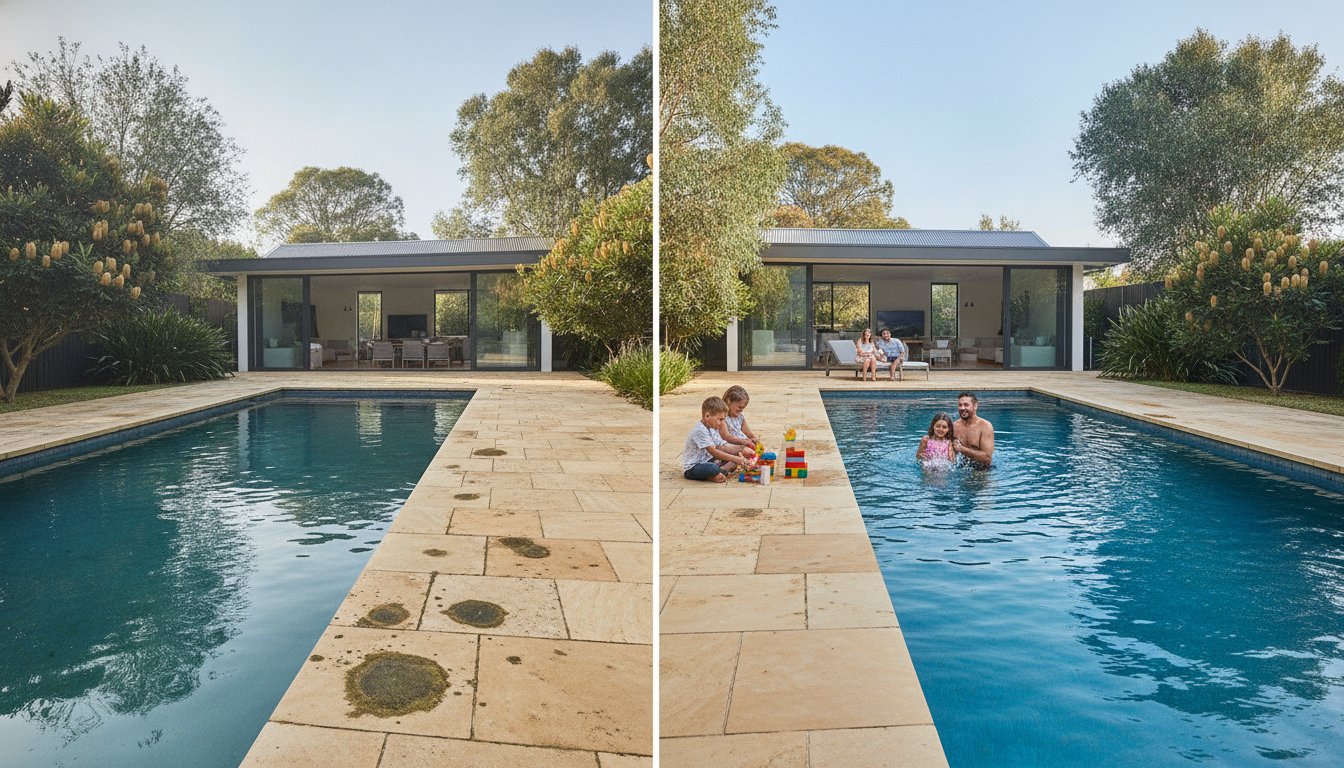
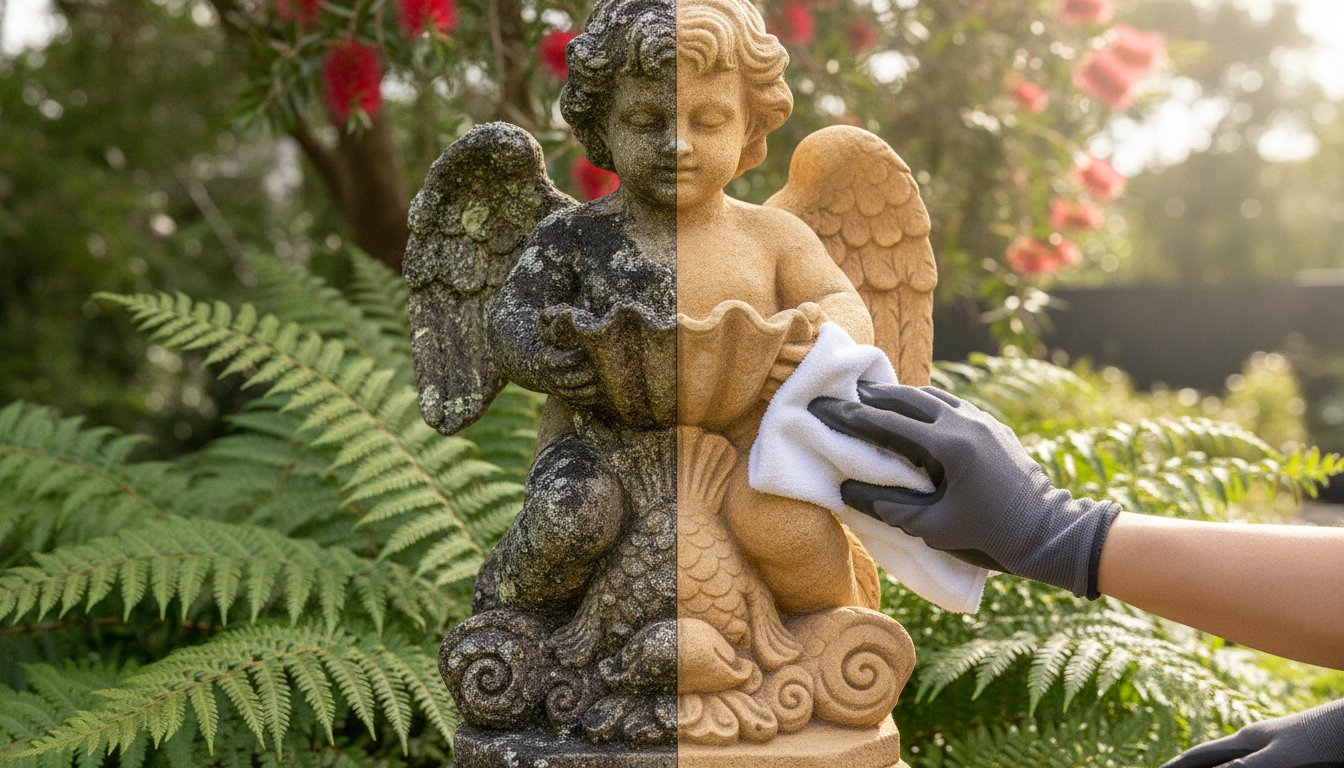
The harder you scrub your stone garden ornaments, the faster you're actually destroying them. Many Australians believe that a stiff wire brush and a bit of pressure are the only ways to tackle those unsightly dark patches. However, aggressive scrubbing often erodes the intricate details of sandstone and limestone; this leaves the stone porous and even more vulnerable to future growth. If you've been wondering how to clean stone garden ornaments without causing permanent damage, you aren't alone.
In this 2026 restoration guide, we'll show you the professional, acid-free solution to lifting those black spots and staining without damaging the stone. We'll cover everything from restoring the original colour of your ornaments to applying long-term protection that keeps organic growth at bay for years. You're about to discover how a targeted, biodegradable approach can deliver professional results right in your own backyard.
Key Takeaways
- Understand why the Sydney climate accelerates black lichen growth and why traditional scrubbing fails to reach the deep-seated roots.
- Learn exactly how to clean stone garden ornaments using acid-free, biodegradable restorers that protect delicate carvings from chemical burns.
- Discover why common DIY methods like high-pressure washing can permanently damage the surface of sandstone and limestone ornaments.
- Achieve professional-grade results in under two hours with a simple application process that is safe for your garden beds and pets.
- Shift from reactive cleaning to proactive care with an annual no-scrub maintenance routine that prevents the return of organic growth.
Why Stone Garden Ornaments Develop Stubborn Black Spots and Stains
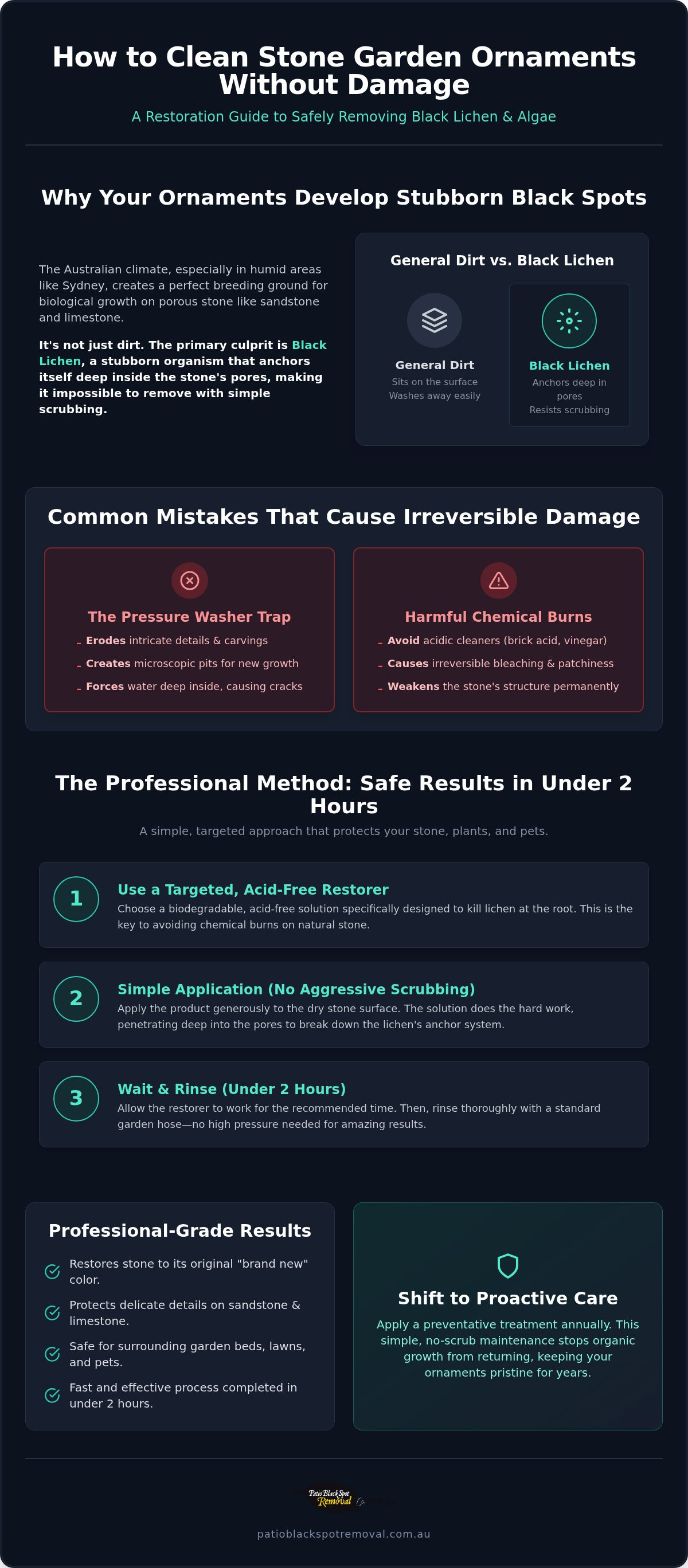
Many homeowners find that their beautiful garden statues eventually develop a mottled, dark appearance. It's easy to assume this is just dirt or pollution, but for most Australian gardens, the cause is biological. Black lichen, green algae, and atmospheric soot are the primary culprits. In regions like Sydney, where humidity remains high and coastal breezes carry moisture, these organisms thrive. Unlike general dust that sits on the surface, black lichen is a complex life form. It doesn't just rest on your ornament; it anchors itself deep into the microscopic pores of the stone.
When researching how to clean stone garden ornaments, you'll likely find advice suggesting a simple bucket of soapy water. This fails because it ignores the biological reality of the infestation. If you only scrub the surface, the roots remain protected inside the stone, ready to regrow as soon as the next rain shower arrives. To see why a chemical approach is required to reach these depths, you can learn more about how it works.
Identifying Black Lichen vs. General Dirt
Black lichen appears as small, dark spots that won't budge with standard household detergents or a garden hose. They gravitate toward shaded areas of an ornament where moisture lingers longest. If your statue has deep crevices or sits under a canopy, it's at higher risk for this type of infestation. Identifying the difference between a surface stain and a living infestation is the first step toward a successful restoration.
The Vulnerability of Natural Stone
Natural stone such as sandstone and limestone is commonly used for garden ornaments because of its appearance and texture. However, some types of natural stone are porous and can absorb moisture. This can provide places for lichen, algae and fungi to develop, particularly when ornaments are kept in shaded or damp areas. Older ornaments with detailed carvings can also require extra care when cleaning. Using too much pressure or an abrasive tool can wear away some of the finer details.
In 2026, garden trends heavily favour natural stone. While the 2024 ban on engineered stone in Australia didn't strictly apply to finished ornaments, it sparked a massive shift in consumer preference toward authentic sandstone and limestone. This shift makes learning how to clean stone garden ornaments correctly more essential than ever. Deep-seated organic growth can lead to micro-fractures as the organisms expand and contract with moisture levels, eventually blurring the fine details of your carvings.
Common Cleaning Mistakes That Can Damage Your Garden Stonework
When a stone ornament has built-up dirt or black spots, it can be tempting to use a strong cleaner or scrub it as hard as possible.
However, aggressive cleaning can damage natural stone. Before deciding how to clean stone garden ornaments, it's worth considering the condition and type of stone and choosing a suitable cleaning method.
The Pressure Washer Trap
High-pressure washing is perhaps the most common mistake. While the instant results look satisfying, the excessive PSI levels often erode the fine details of delicate carvings. Using high pressure can force water deep into the stone, causing internal structural damage. This creates an "etching" effect, where the smooth surface is replaced by microscopic pits. These new pits act as perfect anchors for algae and fungi to take hold. For most statues, a standard garden hose or low pressure washer provides enough pressure and avoids damage, when paired with the right restoration chemicals.
Chemical Hazards to Avoid
Some cleaning chemicals can damage natural stone, particularly acidic products. Acidic cleaners, like brick acid or harsh vinegar solutions, react violently with the calcium carbonate found in many natural stones. This reaction can leave your ornament looking bleached, patchy, or structurally weakened. Even common household "quick fixes" like pool chlorine carry significant risks. It's also important to consider the physical tools you use. Using wire brushes on soft Australian sandstone will leave permanent scratch marks that ruin the aesthetic and invite moisture penetration.
- Efflorescence: Bleach-based products often leave behind white, powdery salt deposits known as efflorescence.
- Environmental Impact: Chemical runoff from harsh cleaners can damage Sydney's native garden plants and pose a threat to local wildlife and pets.
- Surface Degradation: Acidic solutions can dissolve the binding agents in the stone, leading to crumbling over time.
Maintaining the pH balance of natural stone is essential for its longevity. If you're unsure about the material of your ornament or the safety of a specific method, it's always best to speak with a restoration expert before proceeding. Avoiding these common pitfalls ensures your garden features remain a highlight of your landscape for decades.
Step-by-Step Guide: How to Safely Clean Stone Statues and Birdbaths
Restoring a weathered statue doesn't have to be a weekend-long ordeal. The professional approach focuses on efficiency and keeping your stone healthy. Before you start, remove any loose dirt, leaves and debris from the ornament. Move nearby furniture or other items out of the way so you can treat the whole surface. If the ornament is next to a lawn or garden bed, wet the surrounding plants and soil with water before applying the cleaning product. This can help dilute any accidental runoff.
Choosing the right product is the most critical decision in the process. You need a formula that is specifically designed for natural stone, meaning it must be acid-free and pH-balanced. Using a specialized product like Patio Black Spot Remover allows you to achieve results in less than two hours without the need for aggressive scrubbing or high pressure washing.
Applying the Restoration Solution
For the best results, use a low-pressure garden sprayer to apply the solution. Start at the top of the ornament and work downwards, ensuring the liquid saturates every intricate carving and crevice. This ensures the solution penetrates the "roots" of the black lichen anchored deep within the stone pores. While the formula is safe for the stone, always wear basic personal protective equipment (PPE) such as gloves and eye protection. Keep the surface wet during the entire dwell time; if it starts to dry out in the sun, lightly re-apply a small amount of the solution.
Rinsing and Final Touches
After the chemistry has had time to work, it's time to reveal the results. Rinse the ornament thoroughly with a standard garden hose or very low pressure wash. Do not use a high-pressure setting, as this can splash organic spores onto nearby surfaces or damage the delicate sandstone. You'll see the black spots and green algae simply slide off, revealing the original "brand new" colour of the stone underneath. Once rinsed, allow the statue to dry completely. As the moisture evaporates, the stone will brighten significantly, often looking as good as the day it was first carved. You can find more details on how it works to ensure a perfect finish every time.
Preserving the Finish: Tips for Long-Term Maintenance in the Australian Climate
Restoring your statue to its original glory is a satisfying achievement, but in the harsh Australian climate, cleaning is only half the battle. If you've spent time learning how to clean stone garden ornaments, the last thing you want is to see those familiar green tinges or black spots returning just a few months later. Sydney's high humidity and frequent summer storms provide the ideal conditions for spores to settle and thrive. Without a proactive strategy, the biological cycle begins again almost immediately after the stone dries.
A "no-scrub" maintenance routine is the most effective way to protect your investment in 2026. This approach shifts the focus from aggressive restoration to simple, annual preservation. By treating the stone once a year, you eliminate the need for the heavy-duty cleaning process described in previous sections. It's a faster, cheaper, and safer way to manage natural stone that avoids the long-term wear caused by repeated deep cleans.
The Role of Annual Preventers
Preventative treatments are designed to kill microscopic organic spores on contact before they can anchor into the stone's pores. This is far more cost-effective than waiting for a full-blown infestation that requires more intensive chemical intervention. Patio Black Spot Preventer stops regrowth for up to 12 months by maintaining a surface environment where lichen and fungi simply cannot survive. Applying this clear, biodegradable solution once a year ensures your ornaments remain in "brand new" condition without ever needing a brush or a pressure washer again.
Environmental Adjustments
While chemistry provides the primary shield, you can also make small environmental changes to discourage organic growth. Lichen and algae flourish in damp, stagnant areas. By improving the conditions around your statues, you naturally extend the time between maintenance treatments.
- Increase Sunlight: Prune overhanging branches to allow more UV light to reach the ornament, as direct sun is a natural deterrent for many fungi.
- Improve Airflow: Ensure there's enough space around the statue for air to circulate, which helps the stone dry quickly after rain.
- Manage Drainage: Check that the base of the ornament or its plinth isn't sitting in a permanent puddle. Using a layer of decorative gravel can help water drain away from the stone's foundation.
Keep a close eye on your garden features after a particularly wet Sydney summer. If you spot a faint green film, it's a sign that the local spore count is high and a maintenance top-up is due. For personalized advice on creating a long-term care plan for your heritage or natural stone features, feel free to contact our team for expert guidance.
Professional Results at Home: The Patio Black Spot Restoration System
Achieving professional results doesn't require hiring an expensive contractor or investing in heavy industrial machinery. By using a system specifically engineered for the unique challenges of the Australian environment, you can transform your garden features yourself. Mastering how to clean stone garden ornaments is about choosing the right chemistry for the job. Our two-part system moves away from the "brute force" methods of the past and focuses on targeted, biological restoration. It's the same technology used to preserve Sydney's heritage stonework, where the integrity of the material is just as important as the final appearance.
By treating the stone with Patio Black Spot Remover, you're not just cleaning the surface; you're resettting the stone to its original state by eradicating the living organisms that cause discolouration.
The Patio Black Spot Advantage
The biggest advantage of this system is its speed and safety profile. While traditional industrial cleaners often rely on harsh acids that can "burn" the stone or kill nearby flora, our formulas are biodegradable and acid-free. They're safe to use in gardens where pets and children play, provided the area is rinsed as directed. You'll see your ornament's true, vibrant colour return in under two hours. This fast-acting nature means you can restore an entire collection of statues or a large birdbath in a single morning. You can learn more about the technology on our How It Works page.
Bring Your Garden Statues Back to Life
Restoring the original beauty of your outdoor features doesn't have to be a labor-intensive chore. We've explored why biological growth like black lichen is so persistent and why avoiding aggressive pressure washing is essential for preserving delicate ornaments. By shifting your focus from brute force to smart, targeted chemistry, you can protect the integrity of your sandstone and limestone for years to come. Understanding how to clean stone garden ornaments correctly ensures that you won't accidentally cause permanent damage and keeping them looking their best.
Patio Black Spot Remover is specifically designed for the Australian climate. These biodegradable and acid-free formulas work to restore original stone colour in under 2 hours, making professional results achievable for any DIY enthusiast. This two-part system not only removes existing stains but also prevents their return. Your garden focal points deserve a treatment that is as gentle as it is effective, ensuring the fine details of your stonework remain sharp and clear.
With a proactive approach and the right restoration system, you can ensure your statues remain a stunning highlight of your landscape throughout 2026 and beyond.
Frequently Asked Questions
Is it safe to clean stone ornaments near my flower beds?
It's safe to clean ornaments near garden beds if you use biodegradable, acid-free formulas. Before applying any product, thoroughly saturate the surrounding soil and plants with water. This pre-wetting ensures that any runoff is diluted and won't be absorbed by the root systems of your flowers. Once you've finished rinsing the ornament, give the garden bed another quick soak to ensure the area remains balanced and healthy.
Can I use a pressure washer on my old garden statues?
You should avoid using a pressure washer on old garden statues. High-pressure water can easily "blow out" the soft parts of natural stone or erode delicate carvings. This process creates new microscopic pits that actually make it easier for algae and lichen to return. Instead of force, rely on professional-grade chemistry to dissolve stains. A standard garden hose is all you need to rinse away the debris after the remover has done its work.
How do I remove black spots from sandstone specifically?
To remove black spots from sandstone, you must use a specialized restorer that kills the lichen's roots. Because sandstone is highly porous, these organisms anchor themselves deep within the material. When learning how to clean stone garden ornaments, it's vital to choose an acid-free product like Patio Black Spot Remover. This formula penetrates the stone to dissolve the biological bond, allowing the spots to be rinsed away without damaging the sandstone's natural texture.
Will cleaning my birdbath harm the birds that use it?
Cleaning your birdbath is safe for birds as long as you use a biodegradable formula and rinse the surface thoroughly. Acid-free restorers don't leave behind the harsh, toxic residues found in industrial bleaches or brick acids. After the dwell time is complete, wash the birdbath with plenty of fresh water until all traces of the cleaner are gone. Once dry, you can safely refill it, providing a clean and healthy environment for local wildlife.
How often should I apply a stone preventer to my garden ornaments?
You should apply a stone preventer once every 12 months to maintain a "brand new" appearance. In the humid Australian climate, organic spores are constantly landing on your ornaments. An annual application of Patio Black Spot Preventer creates an invisible shield that kills these spores on contact. This simple, no-scrub routine is far more cost-effective than waiting for a full-blown infestation that requires a more intensive restoration process every few years.
What is the difference between green algae and black lichen on stone?
Green algae is typically a slippery, surface-level growth that appears in damp, shaded areas. It's relatively easy to wash away compared to black lichen. Lichen appears as hard, circular black spots that anchor themselves deep into the stone's pores. While algae might just look unsightly, lichen can eventually cause micro-fractures in the stone. Both require a targeted chemical approach to ensure the biological "roots" are completely eradicated from the ornament.
Do I need to scrub the stone after applying a professional remover?
No, you don't need to scrub the stone when using a high-quality restoration system. The chemistry is designed to dissolve the organic matter and its attachment to the stone in under two hours. Laborious scrubbing with wire brushes often does more harm than good by scratching the stone's surface. Simply apply the solution, let it dwell for the recommended time, and then rinse the ornament with a garden hose to reveal the original color.
Can I clean limestone ornaments with the same products as sandstone?
Yes, you can clean limestone ornaments with the same products used for sandstone, provided they are pH-balanced and acid-free. Both materials are natural, porous stones that are sensitive to acidic "burns." Using a specialized, Sydney-made restorer ensures that the delicate surface of the limestone isn't etched or bleached. This makes it much easier to maintain a consistent look across different types of garden features without needing a dozen different cleaning chemicals.