Choosing between sandstone and limestone is an important decision when planning a new patio or updating an existing outdoor area. Both are popular natural stone options, but they have different appearances, levels of porosity and maintenance requirements.
If you're comparing a sandstone vs limestone patio, it's worth considering how each material will work in your particular environment. Factors such as heat, moisture, slip resistance, staining and ongoing cleaning can all affect your choice.
We'll show you how to pick a stone that stays cool underfoot during a 40-degree January day while ensuring it meets the P4 or P5 slip resistance standards required for safety. You'll learn which material resists the dreaded black spot lichen best and how to establish a maintenance routine that doesn't require constant, expensive pressure washing. By the end, you'll know exactly which stone delivers a lifetime of style without the stress.
Key Takeaways
- Understand how the geological composition of these stones affects their long-term durability and resistance to staining in damp Australian environments.
- Compare how different materials handle 40°C heat and meet P4 or P5 slip ratings when deciding on a sandstone vs limestone patio australia.
- Identify why black lichen anchors itself inside porous stone and how to remove these spots in less than two hours without using harsh acids.
- Follow a step-by-step framework to choose the right material based on your specific coastal location or your appetite for DIY maintenance.
Aesthetics and Durability: Comparing Sandstone and Limestone
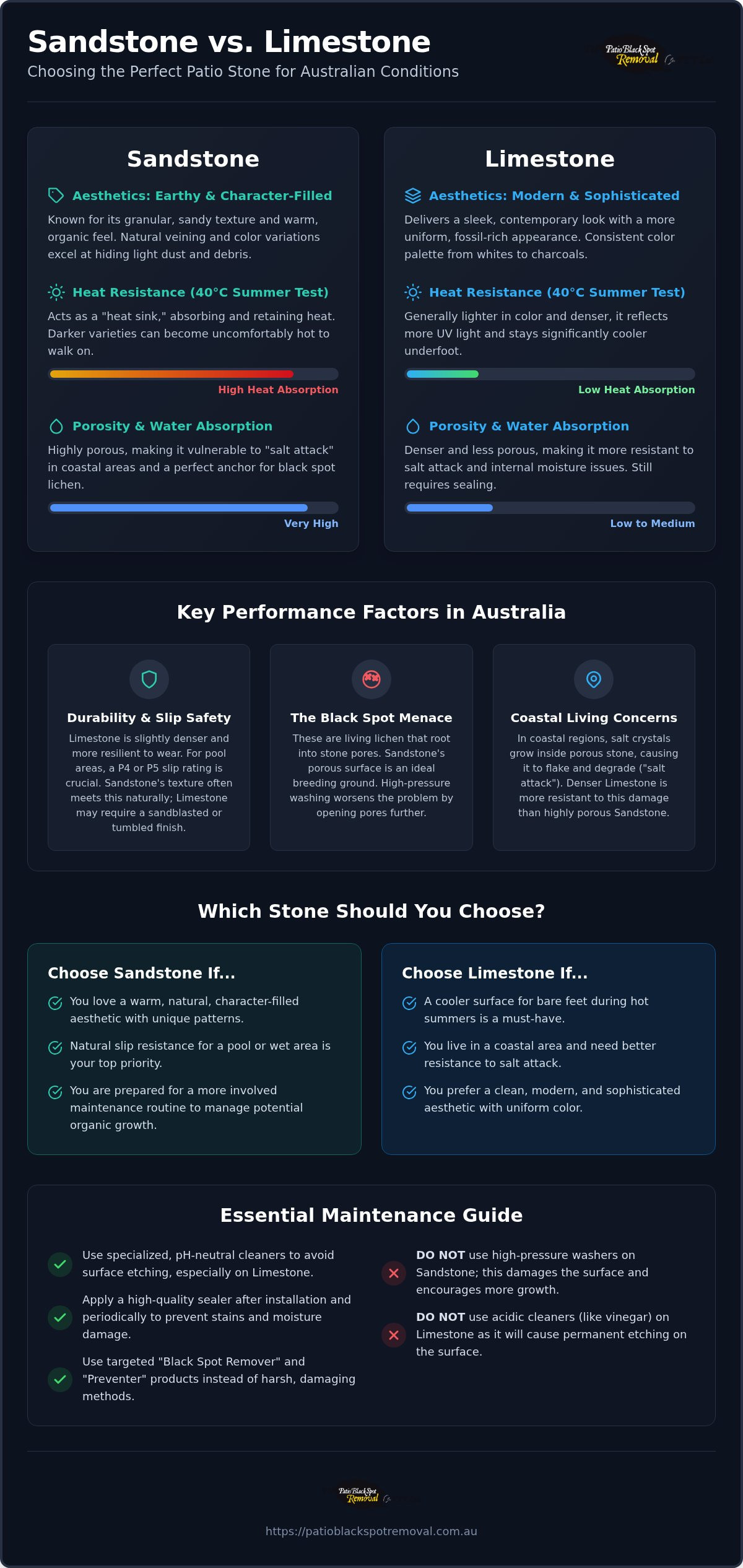
Choosing between a sandstone vs limestone patio often comes down to the balance between visual appearance and structural durability. Sandstone is renowned for its granular, sandy texture, while limestone offers a more uniform, fossil-rich appearance. A key differentiator lies in the geological properties of sandstone; it's composed of sand-sized grains, making it naturally more porous than most limestone varieties.
Both stones are durable enough to handle heavy foot traffic and bulky Australian outdoor furniture. However, limestone is generally denser, making it slightly more resilient against physical wear. Regarding UV exposure, natural sandstone holds its colour remarkably well under the harsh Australian sun, whereas some darker limestones may lighten slightly over several years of intense exposure.
The Sandstone Aesthetic: Earthy and Character-Filled
Popular Australian choices like Himalayan and Mint sandstone provide a warm, organic feel. These varieties feature natural veining and distinct colour variations that are excellent for hiding light debris and dust. Because sandstone is highly porous, it's the perfect anchor for organic growth, making a product like Patio Black Spot Remover an essential part of your long-term maintenance toolkit.
The Limestone Aesthetic: Modern and Sophisticated
Limestone delivers a sleek, contemporary look with finishes like tumbled or honed surfaces. It typically features a more consistent colour palette, ranging from crisp whites and creams to deep charcoal tones. While it's denser than sandstone, it's more sensitive to acidic spills, so you'll need to choose pH-neutral cleaners to protect its sophisticated finish and prevent surface etching.
Performance in the Australian Climate: Heat, Slip, and Porosity
Australia's climate is an important consideration when choosing outdoor stone. Patios can be exposed to high temperatures, strong sunlight and periods of heavy rain, so it's worth considering how the material will perform in these conditions. Slip resistance is particularly important; for pool surrounds and outdoor wet areas, the industry benchmark is a P4 or P5 rating under Australian Standard AS 4586. Sandstone’s naturally granular surface often hits these ratings easily, while limestone may require a tumbled or sandblasted finish to ensure safety when wet.
Density also plays a role in structural considerations. While both are heavy, limestone’s higher density means thinner slabs can sometimes offer the same strength as thicker sandstone. This can be a vital distinction if you're working with weight limits.
Surviving the Australian Summer Foot-Test
The colour and density of the stone can affect how warm it becomes in direct sunlight.
Lighter-coloured limestone may feel cooler underfoot than darker stone on a hot day because it reflects more sunlight. Darker sandstone can become quite warm during periods of high summer temperatures.
If your patio gets direct sunlight for most of the day, consider both the colour of the stone and how much shade the area receives.
Coastal Living: Salt Attack and Moisture Management
Porosity is the silent enemy in coastal regions. Sandstone’s high water absorption rate makes it vulnerable to salt attack, where salt crystals grow inside the pores and cause the stone to flake. Limestone is denser and less prone to this internal pressure, but it still requires high-quality sealing to prevent erosion from salt spray. Water absorption also leads to efflorescence, that unsightly white salty powder that rises to the surface.
The Maintenance Reality: Managing Black Spots and Organic Growth
Maintenance is another factor to consider when comparing a sandstone vs limestone patio.
Porous and textured surfaces can provide more places for organic growth such as algae and lichen to develop. Sandstone's texture and porosity can make it particularly prone to black spots.
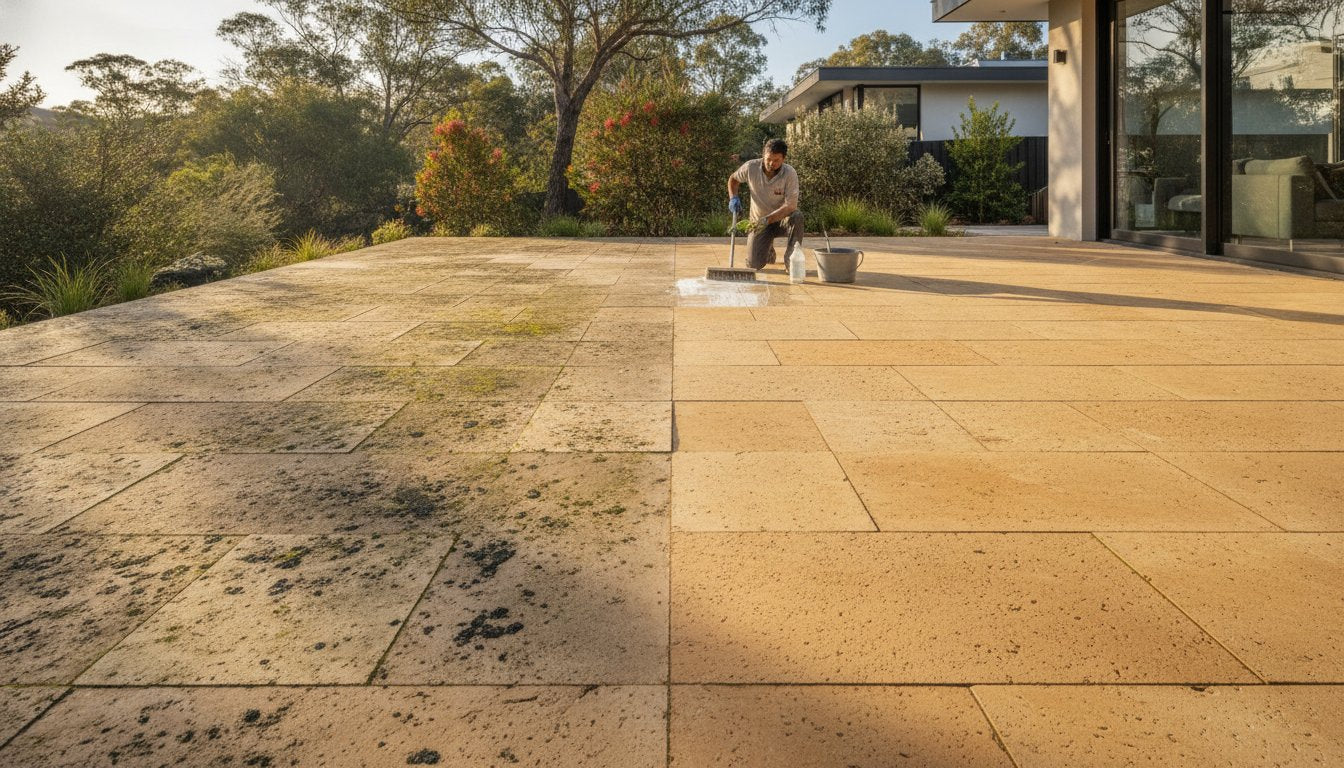
Black lichen can grow into the pores of natural stone, which means ordinary surface cleaning may not completely remove established growth.
High-pressure washing is a common way to clean patios, but excessive pressure can damage some natural stone surfaces and the pointing between paving slabs. A gentler cleaning method can help reduce the risk of unnecessary damage.
Limestone also needs some care because acidic cleaning products can affect the surface and cause etching.
Why Sandstone Patios Develop Black Spots
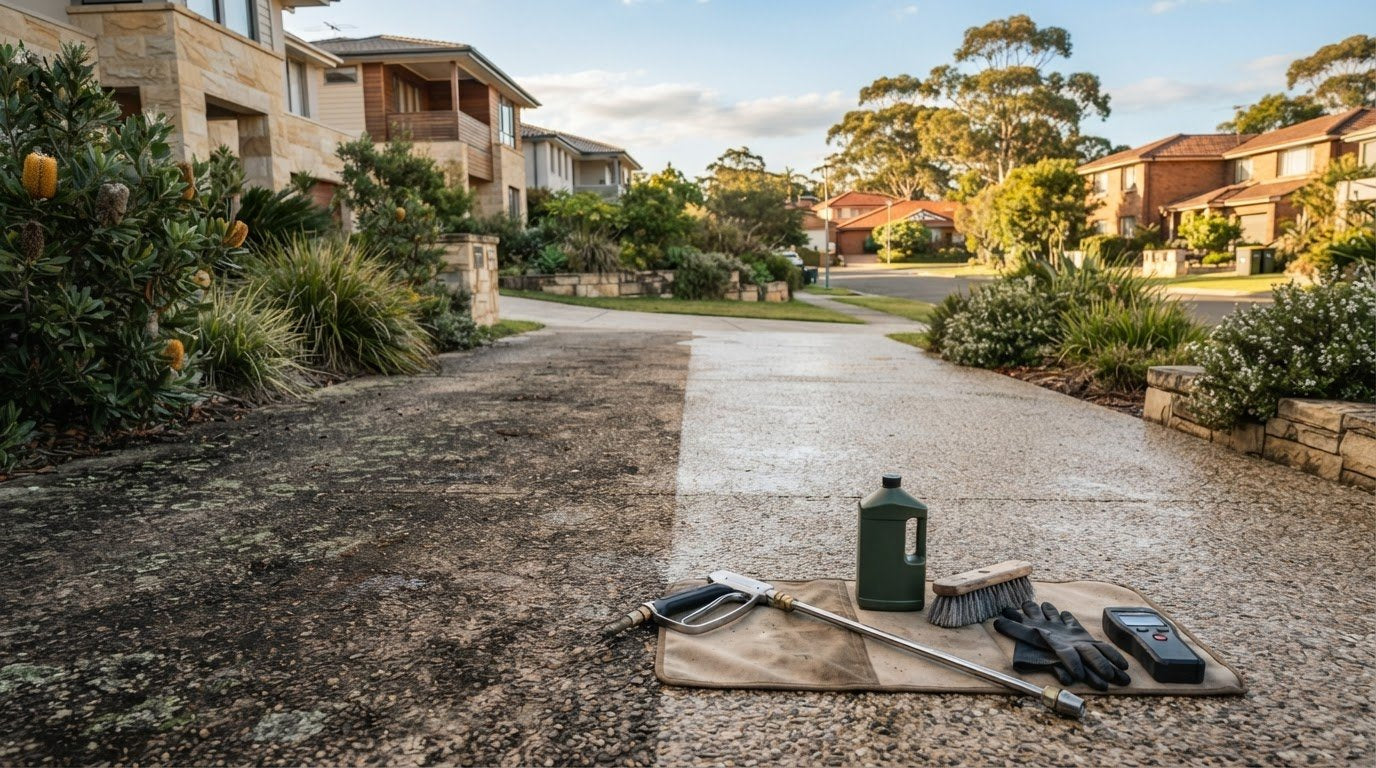
In humid regions like New South Wales and Queensland, the biological lifecycle of lichen thrives. Standard supermarket mould killers only treat the surface, leaving the roots intact to regrow within weeks. To truly clear the stone, you need a specialized Patio Black Spot Remover for Natural Stone. This biodegradable, acid-free formula dissolves the root system in less than two hours, restoring the stone's original colour without damaging its structure or harming nearby Australian native plants.
Preventative Care for Long-Term Beauty
The most efficient way to manage a patio is to stop growth before it starts. Applying an annual treatment is far safer for your stone than frequent, intensive pressure washing. Understanding how the restoration process works helps you move away from the "pressure washer cycle" and toward a low-effort maintenance routine.
Once black spots and other organic growth have been removed, regular maintenance can help keep the patio looking cleaner. An annual application of Patio Black Spot Preventer can help prevent new organic growth from becoming established.
Decision Framework: Which Stone Should You Choose?
Finalising your choice for a sandstone vs limestone patio australia involves a realistic look at your lifestyle and local environment. It's not just about the look today; it's about how the material responds to your specific suburb's conditions over the next decade. If you're restoring an older space or laying a new one, consider these four steps to ensure your investment adds lasting property value.
- Assess your location: High-humidity zones or coastal blocks face constant salt and moisture. This impacts porous stones differently, often leading to faster organic growth or salt attack.
- Define your maintenance appetite: Decide if you're happy to perform a DIY restoration using a specialised remover once every few years or if you prefer an annual preventative approach.
- Match architectural style: Ensure the stone's texture complements your home's facade, whether it's a heritage cottage or a glass-heavy modern build.
- Safety first: Always choose biodegradable, acid-free treatments that won't harm your pets or your prized Australian native plants that border the patio.
The Case for Sandstone
Sandstone can be a good option if you want a more natural, varied appearance. Its earthy colours and natural texture work well with traditional homes, gardens and outdoor spaces.
Its porosity does mean that it can be more prone to organic growth, so regular cleaning and preventative treatment can be useful.
Using a Patio Black Spot Preventer can help reduce the amount of lichen and other organic growth that develops between deeper cleans.
The Case for Limestone
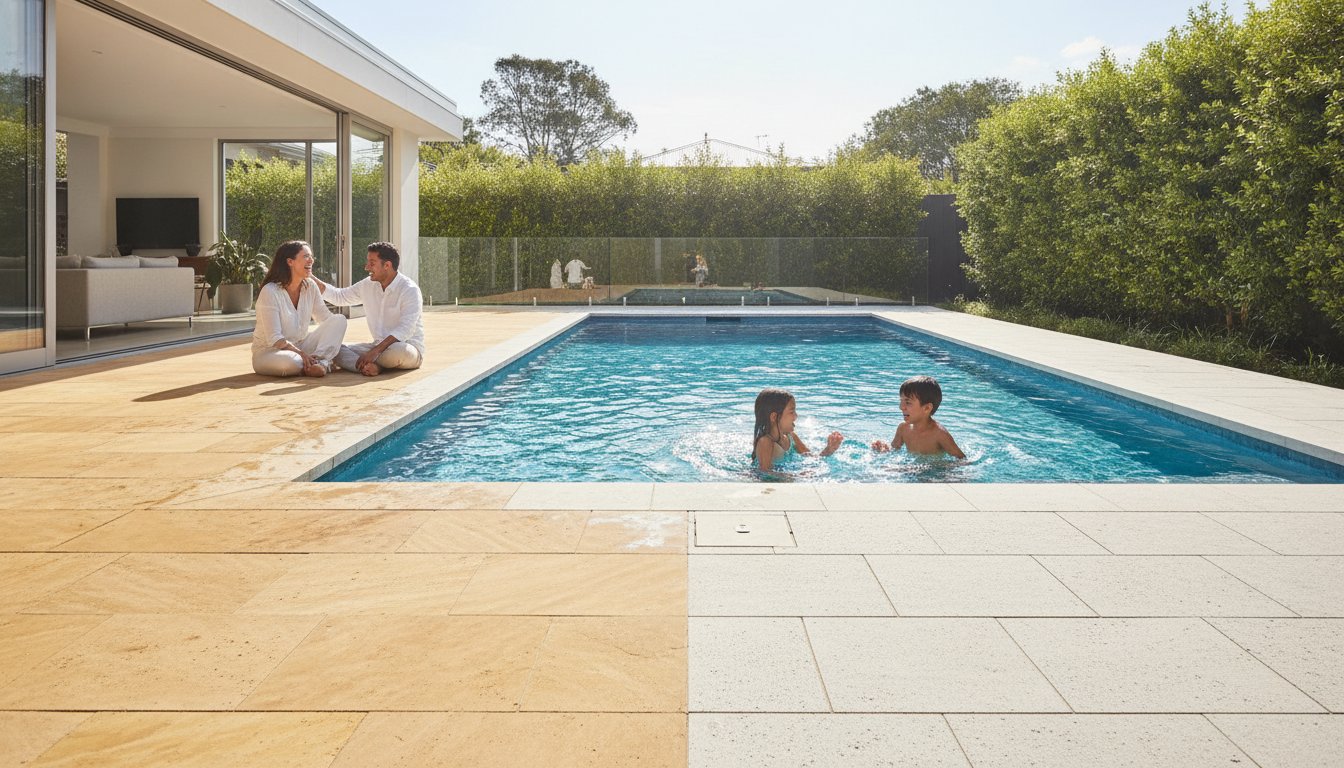
Limestone offers a more consistent appearance and can suit modern patios, pool areas and alfresco spaces.
Lighter-coloured limestone can also be a practical choice for areas that receive a lot of direct sunlight, as it may stay cooler than darker paving.
However, limestone can be sensitive to acidic substances, so choosing an appropriate cleaning product is important.
Enjoying a Pristine Outdoor Space Year-Round
There isn't one answer that suits every sandstone vs limestone patio Australia project. Both materials have different characteristics that may make them suitable for different homes and outdoor areas.
Sandstone offers natural variation and texture, while limestone provides a more consistent appearance. The right choice will depend on the look you want, the conditions around your home and how much maintenance you're prepared to do.
Whichever stone you choose, using suitable cleaning products and avoiding unnecessarily aggressive cleaning methods can help keep the surface in good condition.
Acid-free and biodegradable products are designed to help Australian homeowners manage black spots and organic growth on natural stone.
With the right material and a simple preventative routine, your dream patio is well within reach.
Frequently Asked Questions
Is sandstone or limestone harder to keep clean in Australia?
Porous sandstone is generally more difficult to keep clean because its high porosity allows organic growth to root deeply. Limestone is denser and smoother. This makes surface cleaning easier; however, it remains highly sensitive to acidic spills. In humid Sydney conditions, sandstone’s granular texture acts as a magnet for spores. You will likely spend more time managing lichen and algae on sandstone than you would on a limestone surface.
Can I use the same cleaner for both sandstone and limestone?
You can use the same cleaner only if it is specifically formulated to be acid-free. Many standard patio cleaners contain harsh acids. These will instantly etch and damage limestone. Our Patio Black Spot Remover is biodegradable and safe for both types of stone. Using a professional-grade solution ensures you restore the original colour without risking permanent surface damage to your Sydney paving or surrounding native plants.
Does sealing natural stone prevent black spots from appearing?
Sealing reduces water absorption but doesn't completely stop black lichen from appearing. Spores can still settle on the surface. They find microscopic gaps in the sealer to begin growing. The best way to keep your stone clear is by applying an annual Patio Black Spot Preventer. This treatment kills spores on contact. It stops the biological lifecycle of lichen, which is more effective than relying on a physical barrier alone.
Why does my sandstone patio have black dots that won’t wash off?
Those dots are living lichen that have anchored themselves deep within the stone's pores. Standard washing won't work. It only removes surface growth while leaving the root system intact. This is a primary frustration when comparing a sandstone vs limestone patio australia. You need a specialized treatment to dissolve the roots. Our Sydney-manufactured remover clears these stubborn spots in less than two hours without damaging the stone's structure.
Which stone is more slip-resistant for a pool area in Sydney?
Choosing sandstone provides natural slip resistance because of its granular texture. It typically achieves the P4 or P5 ratings required for Sydney pool surrounds right out of the crate. Limestone can also be used safely. However, it usually requires a specific tumbled or sandblasted finish to prevent it from becoming a hazard when wet. When deciding on a sandstone vs limestone patio australia, sandstone's natural grip makes it a safer choice.