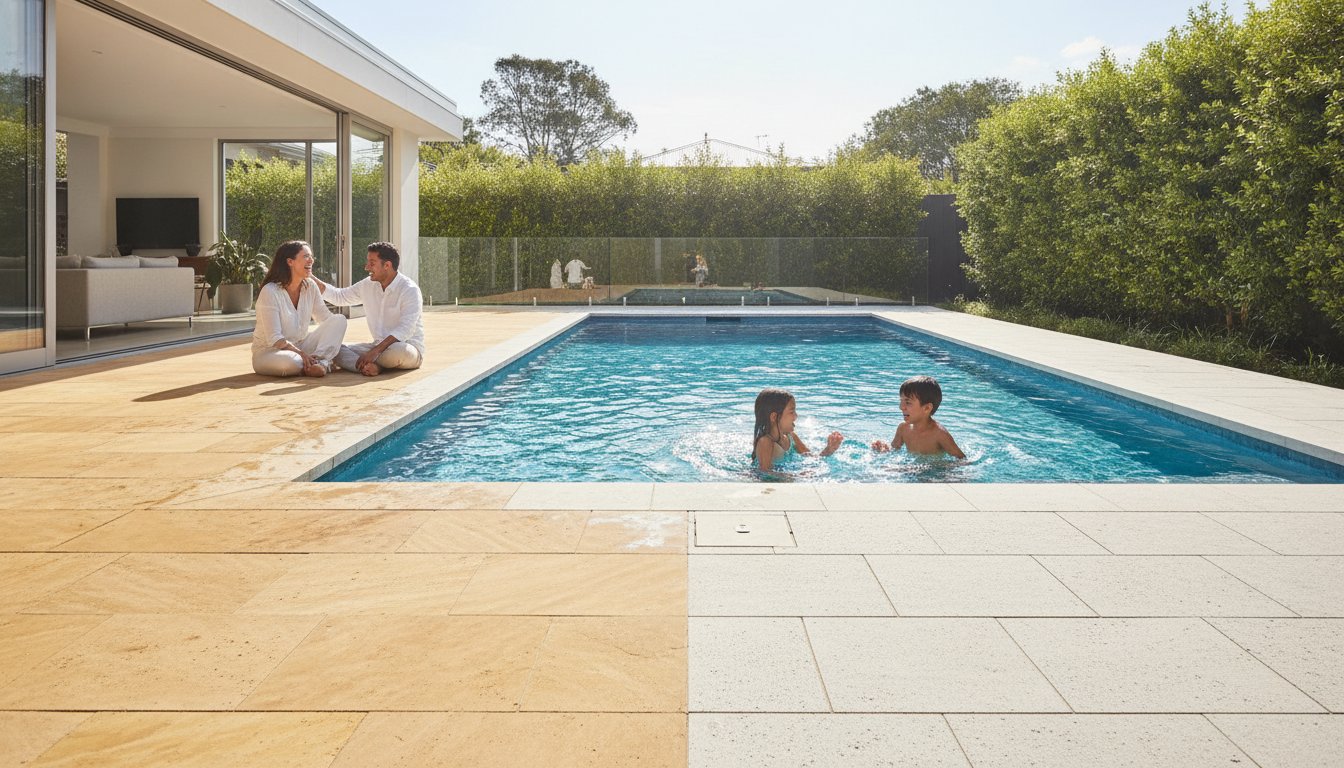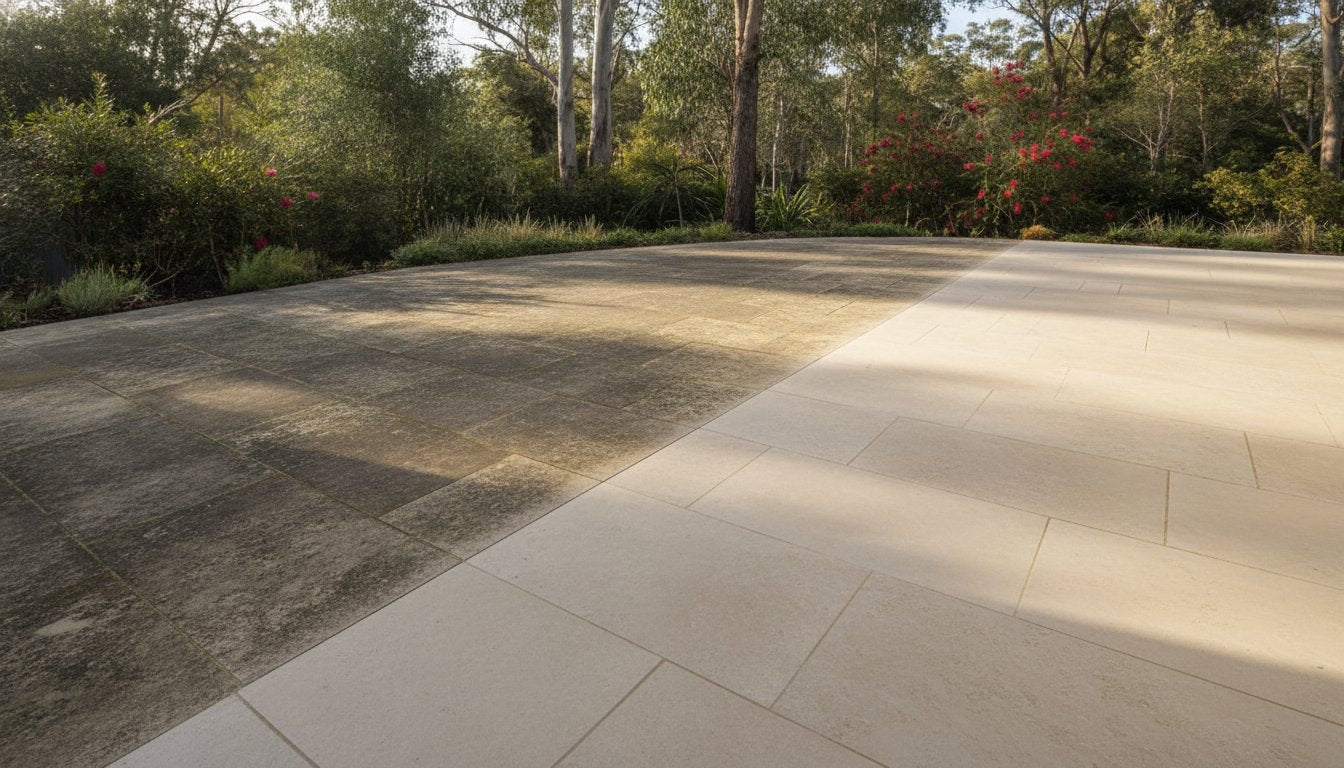
If you're struggling to restore your patio and remove stubborn black spots, learning how to clean and maintain Harvey Stone correctly is the best way to protect the surface and keep it looking its best. You've likely spent hours scrubbing or blasting the stone, only to worry that you're eroding the delicate natural substrate without actually removing the deep-seated organic growth. Black lichen and green algae can build up over time, particularly in areas that stay damp or receive little sunlight.
Regular cleaning can help remove this growth and keep your patio looking cleaner for longer. However, it's important to use a suitable cleaning method that won't damage the stone.
This guide reveals the professional secrets to restoring your outdoor spaces to their original colour. We'll provide a comprehensive look at how to clean and maintain Harvey Stone using acid-free solutions that are safe for your plants and pets once dry. We'll show you why restoration is a chemical process rather than a mechanical one. By the end of this article, you'll have an understanding of how to remove black spots, why high-pressure washing may not be suitable for natural stone, and how regular maintenance can help prevent organic growth from returning.
Key Takeaways
- Understand why the high porosity of Harvey Stone attracts organic growth and how to treat the root system of lichen rather than just the surface.
- Discover why traditional high-pressure washing can permanently damage your stone's surface and lead to faster algae build-up.
- Master the professional DIY process of how to clean and maintain Harvey Stone using acid-free restoration treatments.
- Establish an easy annual maintenance routine that kills spores before they anchor, ensuring your stone stays pristine throughout the Australian seasons.
Understanding Harvey Stone and Why it Attracts Black Spots
Harvey Stone is a premium natural stone frequently chosen for Australian patios and outdoor areas. While its honey-toned hues and textured finish offer timeless appeal, the stone's physical structure is remarkably porous. This means it functions like a sponge, absorbing moisture and trapping microscopic organic spores within its tiny cavities. Over time, this can lead to black spots, green algae and other types of growth appearing on the surface. These can be more noticeable in areas that are regularly exposed to moisture.
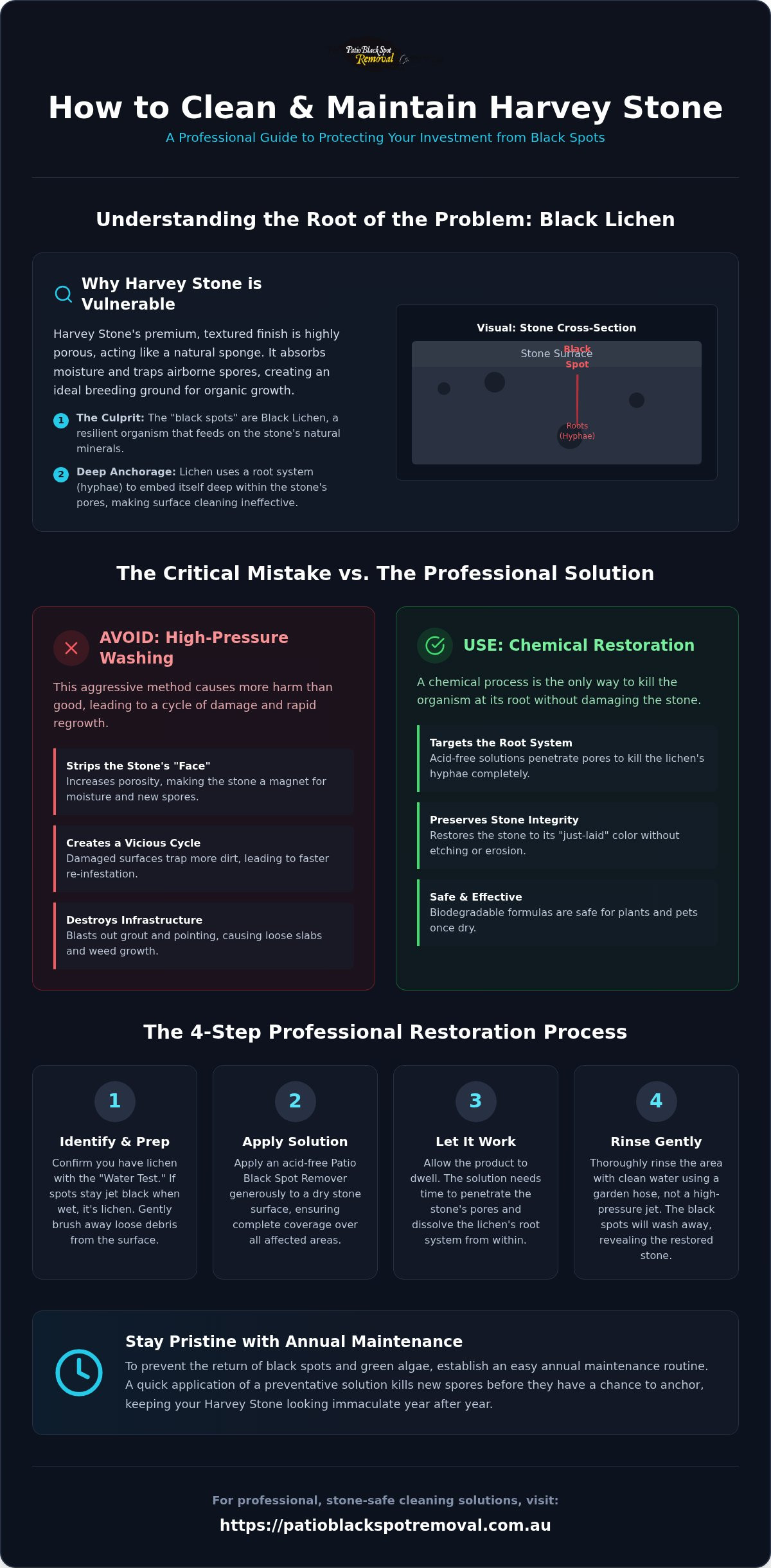
These spots are actually a resilient organism known as Black Lichen (Aspicilia calcarea). Unlike surface dirt, this lichen survives by feeding on the minerals found naturally within the stone substrate. It anchors itself using a complex root system called hyphae, which grows deep into the pores of the Harvey Stone. Because the lichen is physically part of the stone's internal structure, simply washing the surface won't solve the problem. Effective methods for how to clean and maintain Harvey Stone must target these deep-seated roots.
The Role of the Australian Climate
Sydney's unique combination of high humidity and sporadic, heavy rainfall provides an ideal breeding ground for biological growth. Areas of Harvey Stone that sit in the shade or under garden foliage often stay damp for days. This constant moisture leads to the development of slippery green algae, often called "green slime," which provides the nutrients lichen needs to thrive. Keeping the patio clean and removing organic growth when you notice it can help keep the surface in better condition.
Identifying Lichen vs. General Dirt
Black lichen can sometimes be mistaken for general dirt or other marks on the stone. One simple way to check is to scrub the affected area with water. If the black spots remain after cleaning, they may be lichen rather than ordinary surface dirt. General household detergents or soaps lack the chemical ability to penetrate the stone and kill the black spot lichen. This is why a specialized Patio Black Spot Remover is required for a true restoration. Mastering how to clean and maintain Harvey Stone means moving beyond basic cleaning and using professional-grade solutions.
The Dangers of Pressure Washing Harvey Stone
Pressure washing is a popular way to clean outdoor surfaces, but it isn't always the best option for natural stone. In reality, blasting Harvey Stone with high-pressure water strips away the stones surface and opens up deeper pores. The newly roughened surface catches spores more easily, leading to faster re-infestation of black spots. Dirt and algae is also more likely to build up as it becomes trapped in the uneven surface.
You should also avoid generic acid-based cleaners like Hydrochloric acid. These chemicals often react with the iron content in natural stone, resulting in permanent orange "rust" staining that is nearly impossible to remove.
For these reasons, it's worth considering a gentler cleaning method when learning how to clean and maintain Harvey Stone.
Surface Etching and Structural Integrity
High-pressure water does not just damage the stones surface; it also affects the infrastructure. Too much pressure can easily blast out the pointing or grouting between your Harvey Stone pavers, leading to loose slabs and weed growth. While a pressure washer might feel like a cheap and simple solution, the long-term cost of re-pointing and stone replacement far outweighs the price of professional chemical restoration. Protecting the stones integrity and quality is the only way to ensure your patio lasts for decades.
Chemical Safety for Natural Stone
When cleaning natural stone, it's important to choose a product that is suitable for the surface. Acid-based cleaners can damage some types of natural stone and may cause staining.
To protect your patio, use acid-free, pH-neutral-leaning restorers. The Patio Black Spot Remover for Natural Stone is specifically engineered to dissolve organic growth without damaging the stone's internal structure. If you have questions about your specific stone type, you can always reach out for expert advice to ensure you're using the right approach for how to clean and maintain Harvey Stone.
Step-by-Step Restoration Guide for Harvey Stone
Before starting, remove furniture, pots and other items from the patio so you can treat the whole surface.
It's also a good idea to wet or cover any nearby lawns and garden beds before applying the product. This helps protect plants if they come into contact with any spray, but you should always avoid spraying the neat chemical onto any plants or beds where possible.
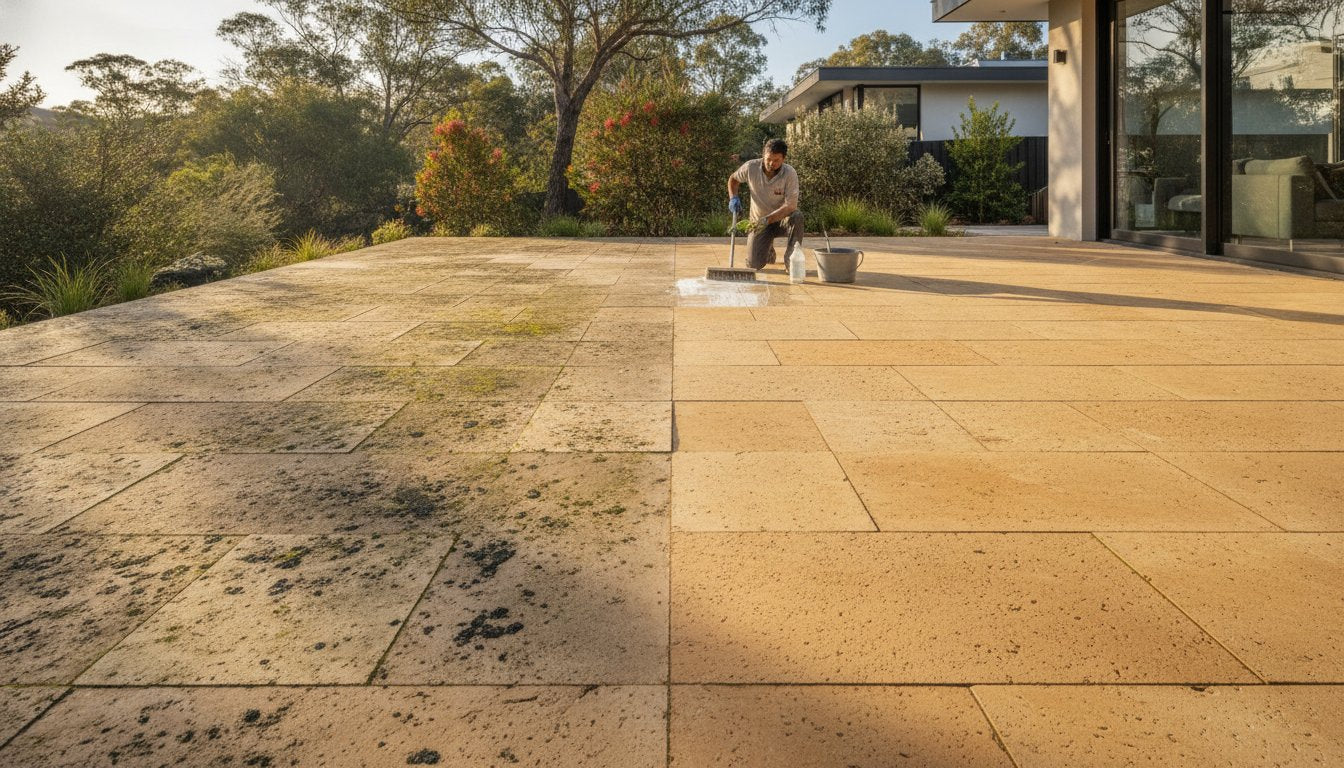
Apply the Patio Black Spot Remover evenly across the stone using a pump-up plastic garden sprayer. Make sure the affected areas are covered thoroughly.
Leave the product to work for approximately two hours, then rinse the patio thoroughly with a low-pressure washer or garden hose.
You'll see the original stone colour return as the biological debris washes away. This method is the professional standard for how to clean and maintain Harvey Stone while preserving its structural integrity.
Maximizing Results on Stubborn Spots
f your patio has particularly heavy or established growth, you may need more than one application.
Follow the product instructions and allow the recommended dwell time between applications. Avoid applying the product in direct, strong sunlight, as this can cause it to dry out too quickly and reduce the time it has to work.
Safety for Pets and Plants
Our product is biodegradable and acid-free. When using any patio cleaning product, follow the application instructions and take care around plants, lawns and pets.
Wet surrounding plants and garden areas before and after treatment if required, and make sure the patio has been thoroughly rinsed and allowed to dry before pets use the area.
Annual Maintenance: Preventing the Return of Lichen
Once you've removed the existing black spots, regular maintenance can help keep them from building up again.
Lichen, algae and other organic growth can return over time, particularly on patios that are exposed to regular moisture. Checking the patio regularly means you can deal with any new growth before it becomes more established.
Central to this routine is the Patio Black Spot Preventer. Unlike standard soaps that simply wash the surface, this solution kills microscopic spores before they can anchor and develop into lichen. It provides a professional-grade solution for how to clean and maintain Harvey Stone without needing to repeat the deep restoration process every season.
The "Spray and Leave" Method
This maintenance step is incredibly simple and efficient. You simply apply the Preventer once every 12 months using a garden sprayer and leave it to dry. There's no need for scrubbing or rinsing. The Preventer stays active within the stone's pores, neutralizing new spores on contact. It's the easiest part of learning how to clean and maintain Harvey Stone while keeping the surface free from biological growth.
General Care Tips for Harvey Stone
Beyond chemical treatments, simple daily habits make a big difference. Remove leaves and other organic debris regularly rather than allowing them to sit on the stone for long periods. As they break down, they can leave marks and staining on the surface.It's also worth taking care when moving heavy garden furniture across the patio. Dragging furniture can scratch or mark some natural stone surfaces.
Small amounts of regular maintenance can make it easier to keep the patio clean and reduce the need for more intensive cleaning later on.
Restore Your Outdoor Space to Its Former Glory
Knowing how to clean and maintain Harvey Stone doesn't have to be complicated. You now understand that high-pressure washing often causes more harm than good by stripping the stone's face and inviting faster organic growth. By choosing a chemical restoration process instead, you target deep-seated lichen roots without compromising the stone.
Our acid-free and biodegradable products ensure your stone is restored efficiently while remaining safe for your garden. Stop settling for stubborn black spots and slippery algae. Restore your Harvey Stone today with our professional-grade Natural Stone Remover.
Frequently Asked Questions
Is Harvey Stone the same as sandstone?
Harvey Stone is a premium supplier of natural stone, which typically includes porous materials like limestone or sandstone. These surfaces share a high porosity that makes them prone to organic infestation. Identifying your specific stone type is important for determining the correct application process. Our acid-free solutions are formulated to treat these delicate substrates safely, ensuring your patio remains beautiful without risking chemical damage.
Will the black spot remover kill my lawn or garden plants?
The Patio Black Spot Remover is biodegradable and acid-free. However, care should still be taken around lawns, plants and garden beds when applying any cleaning product.
Wet surrounding areas with water before treatment and rinse them again afterwards if necessary. Tie back or cover any plants or lawns that may come into contact with the treatment, as the neat chemical can scorch surrounding foliage. Always follow the product instructions and avoid unnecessary overspray.
Once the patio has been thoroughly rinsed and allowed to dry, pets can return to the area.
How often do I need to clean my Harvey Stone patio?
The frequency of cleaning will depend on the condition of your patio and how quickly organic growth returns.
Once established black spots have been removed, using the Patio Black Spot Preventer once every 12 months can help reduce the return of lichen and other organic growth.
Regularly removing leaves and debris can also help keep the patio looking cleaner between treatments.
Can I use a pressure washer after applying the remover?
We recommend avoiding high-pressure washing on natural stone, as excessive pressure can damage the surface or the pointing between paving slabs.
After the remover has had time to work, a low-pressure garden hose or pressure washing on a low setting can be used to rinse the patio and remove the loosened organic growth and dirt.
This is a gentler approach to how to clean and maintain Harvey Stone and can help reduce the risk of damaging the stone.
Does the black spot remover work on green algae too?
Yes. The Patio Black Spot Remover can also be used to treat green algae on natural stone.
Algae is more likely to develop in areas that remain damp or receive limited sunlight. Treating the growth and keeping the patio maintained can help improve both its appearance and the condition of the surface.