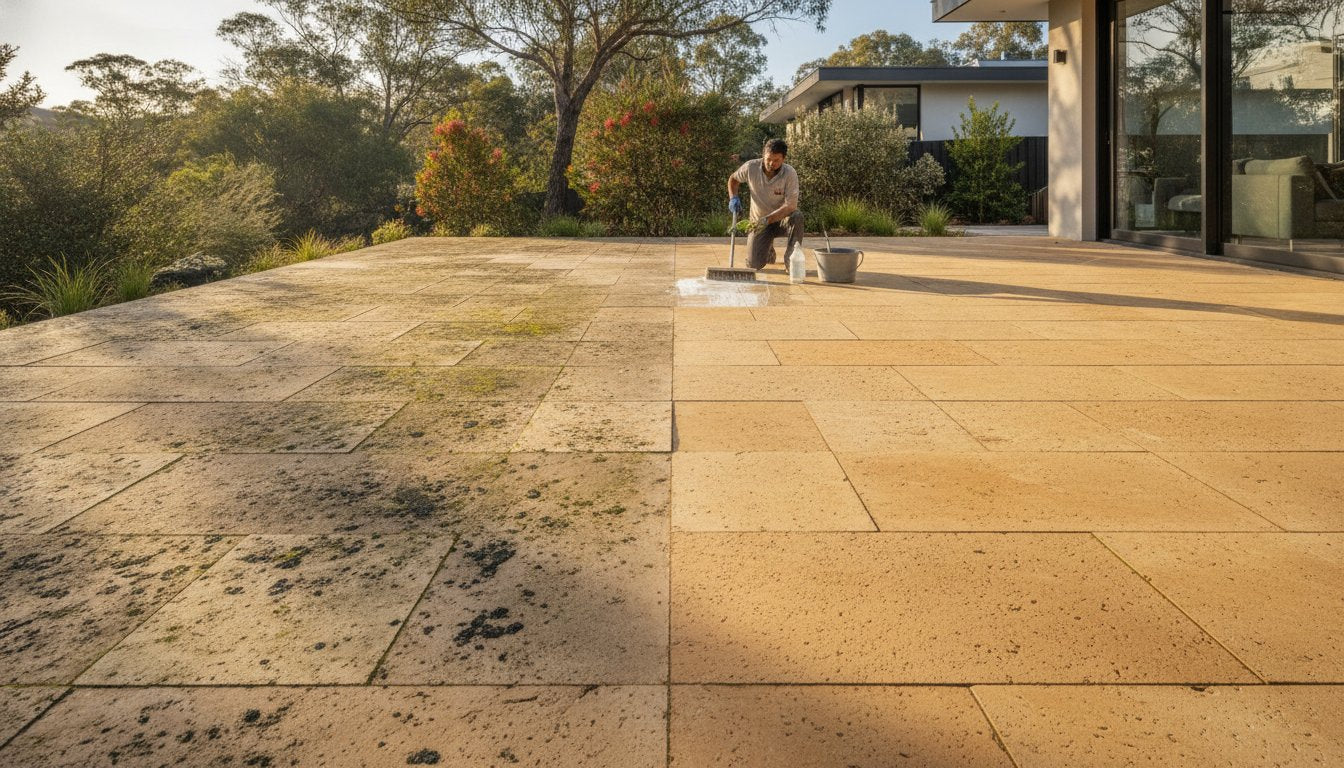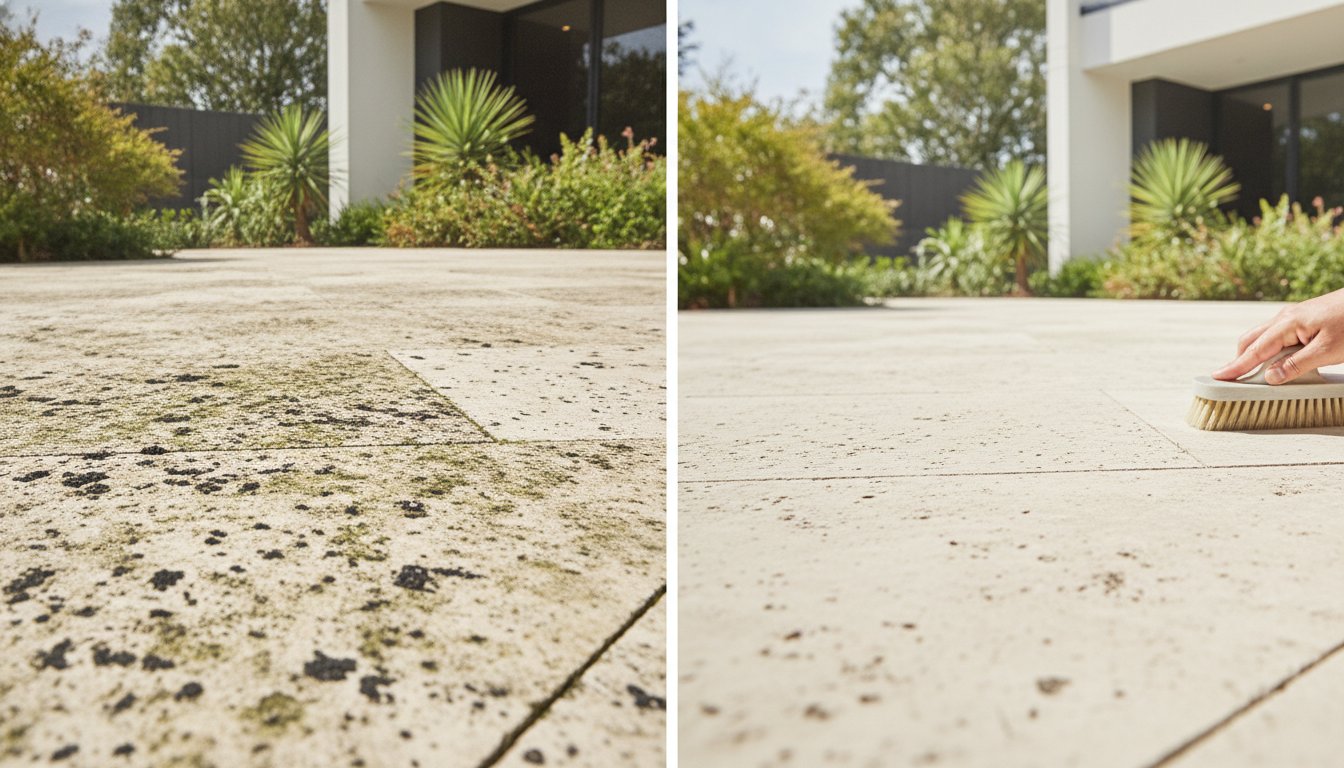
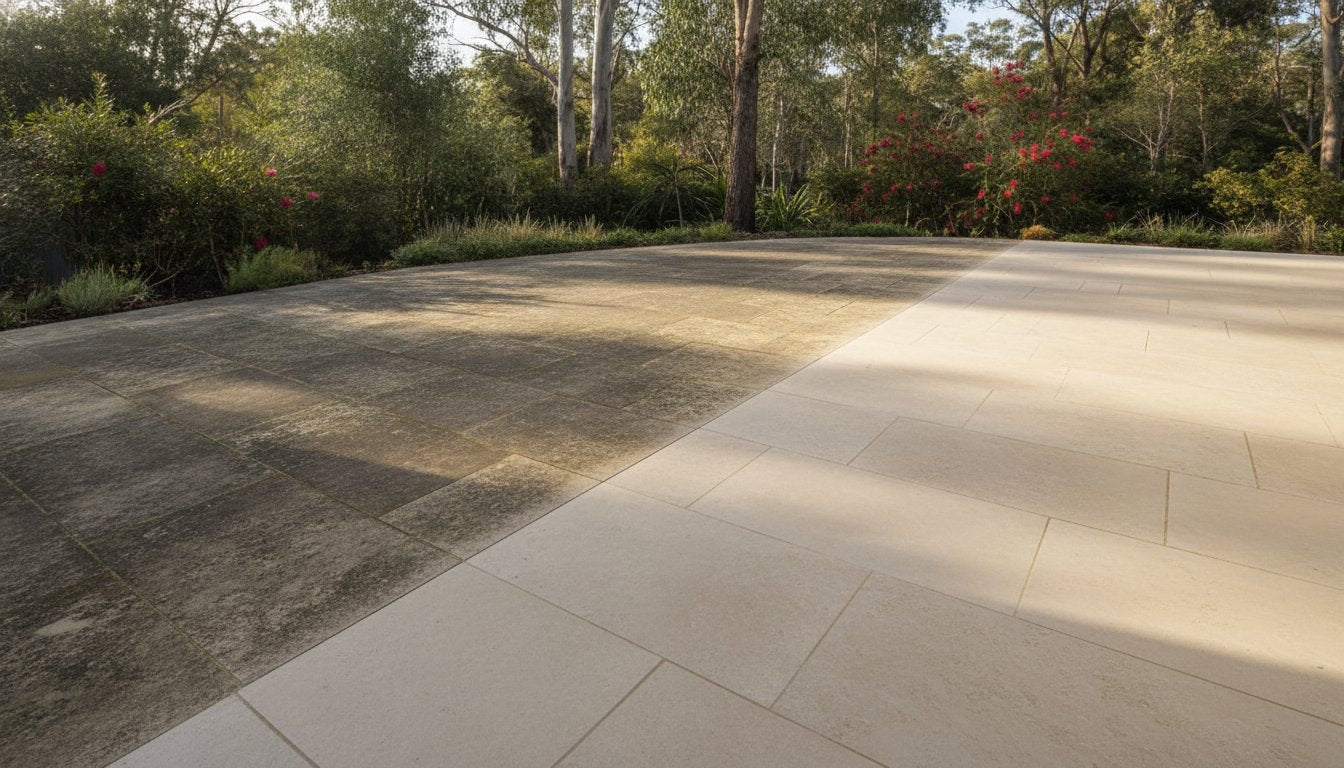
What if the very tool you use to clean your Donnybrook stone is actually inviting the dirt back? Most homeowners reach for the pressure washer when they see green algae, but this mechanical approach often ignores the biological reality of stone decay. If you are wondering how to stop patio from getting dirty, you have to stop fighting the dust and start fighting the spores. It's incredibly draining to watch those recurring black spots return just weeks after a back-breaking cleaning session, especially when the stone starts to lose its original lustre.
You deserve a patio that stays pristine without the physical toll of frequent scrubbing. This guide reveals the professional secrets to keeping your natural stone spotless by targeting the root cause of organic stains. We'll show you how to restore that "new" stone look and implement a maintenance routine that takes just than two hours. By moving to a smart system of restoration and prevention, your outdoor space can stay clean for 12 months or longer.
Key Takeaways
- Identify why microscopic spores, not just dust, are responsible for the recurring black spots that ruin your patio's appearance.
- Learn how to stop patio from getting dirty so you don't have to rely on back-breaking pressure washing every few months.
- Discover the professional secret to using acid-free, biodegradable formulas that protect your garden while keeping stone surfaces pristine.
- Follow a seasonal Australian maintenance calendar to protect your stone from humidity and debris before they have a chance to settle.
Understanding Why Patios Get Dirty (It’s Not Just Dust)
Most homeowners view patio maintenance as a battle against mud and dust. If you're investigating how to stop a patio from getting dirty, it's vital to realise that the real enemy is biological, not mineral. In Australia, the combination of high humidity and warm temperatures acts as a catalyst for organic growth. This is why a patio can look grey and weathered even if it isn't "dirty" in the traditional sense.
The Role of Porosity in Stone Staining
Natural materials like Sandstone, Limestone, and Slate are prized for their texture, but that very texture comes from a porous structure. Donnybrook stone, a popular Western Australian sandstone, is particularly susceptible. These pores act like tiny reservoirs, trapping water and organic spores deep within the stone. Even if the surface feels smooth to the touch, the internal network of voids can harbour enough moisture to support life. This porosity is why surface cleaning often fails; the stain isn't on the stone, it's inside it.
Organic Growth: The Silent Stainer
There's a significant difference between common green algae and the dreaded "Black Spot". While algae creates a slippery green film that's easy to spot, black lichen is a fossilised organism that physically anchors itself into the stone's pores. These spores are airborne, meaning they constantly settle on your stonework regardless of how often you sweep. Many people turn to pressure washing to clear the mess, but this mechanical force often leaves the biological "roots" intact. To truly master how to stop patio from getting dirty, you must address these living organisms at a cellular level rather than just scrubbing the surface. You can learn more about this biological process on our how it works page.
The Pressure Washing Trap: Why It Makes Patios Get Dirty Faster
Reaching for a pressure washer feels like the logical first step when your stone looks dull. However, this mechanical approach often does more harm than good. High-pressure water strips away the natural "crust" of the stone, leaving the surface raw and vulnerable. If you're searching for how to stop patio from getting dirty, you must realise that aggressive blasting actually creates more space for grime to accumulate.
We call this the "Pore Expansion" effect. The intense force of the water opens up the stone's microscopic network, making it much easier for organic spores to settle even deeper than they did before. While the patio looks clean for a few days, you've essentially created a series of tiny, protected reservoirs for new growth. High pressure washing only shears off the visible "leaf" of the lichen, while the "root" remains anchored safely inside the stone.
Mechanical Damage to Stone and Pointing
High PSI levels don't just affect the stone surface. They frequently degrade mortar and sand joints, leading to loose pavers and structural instability over time. The long-term cost of repairing damaged pointing and replacing cracked stone far outweighs the investment in gentle, preventative care. Excessive water use is also an environmental concern, especially when compared to targeted, biodegradable treatments that require minimal rinsing.
The "Clean Today, Green Tomorrow" Cycle
When you blast the stone, you leave behind a damp, roughened environment that's perfect for algae. The rebound effect occurs when organic growth returns with increased vigour on a surface that's been physically compromised by high pressure. To break this cycle, you need a solution that kills the spores rather than just moving them around. If you're unsure which method is best for your specific garden, you can reach out for expert advice on how to stop your patio from getting dirty without causing lasting damage.
The Science of Prevention: How to Stop the Cycle
Breaking the cycle of organic growth requires more than just water; it requires a fundamental shift in the stone's environment. While most homeowners focus on cleaning what they can see, the real secret lies in managing what they can't. If you're wondering how to stop your patio from getting black spots, the answer involves using a specialized "Preventer" that kills microscopic spores on contact. This proactive method is the only reliable way to maintain the "as-new" look of your Donnybrook stone year-round.
Step 1: Total Restoration
To effectively implement a long-term solution, you must start with a completely clean slate. Any leftover lichen roots or algae spores will simply multiply under your new treatment if they aren't neutralised first. Our Patio Black Spot Remover is specifically formulated to dissolve these stubborn organic anchors. These chemicals deliver results in under two hours without the need for harsh acids. Because our formulas are biodegradable, they're safe for your garden beds and pets, reflecting the high standards that made us an RHS Chelsea Finalist in 2023.
Step 2: Creating a Spore-Inhospitable Environment
Once the stone is restored, the focus shifts to long-term maintenance. This is the core of how to stop patio from getting dirty for 12 months or longer. Applying the Patio Black Spot Preventer annually creates a surface where organic life cannot take hold. This treatment breaks the biological lifecycle by neutralising airborne spores the moment they land on your stonework. This preventative layer ensures that dirt and grime don't have the biological "glue" they need to stick to your pavers. If you want a tailored maintenance plan for your specific stone type, contact our team for professional advice.
The Australian Patio Maintenance Calendar
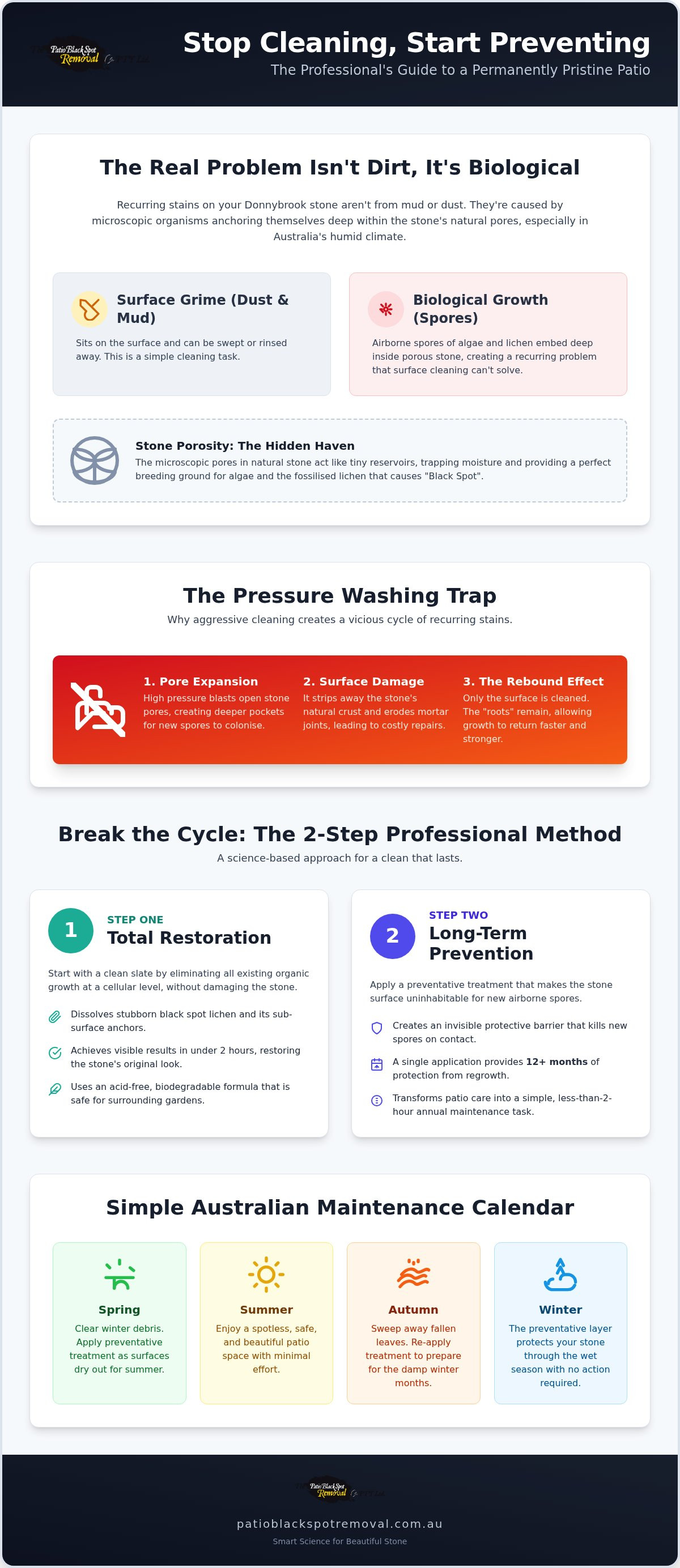
Managing natural stone in Australia requires a strategy that shifts with our distinct seasons. If you're looking for how to stop patios from getting dirty, understanding the biological calendar is half the battle. Organic growth doesn't happen at a constant rate; it peaks when environmental conditions are just right.
Spring is the most critical window for stone care. This is the ideal time to apply a preventer before the summer humidity triggers a massive bloom of organic spores. During Summer, focus on managing runoff and organic debris from overhanging trees. Intense heat combined with afternoon storms creates a greenhouse effect on your pavers, accelerating decay. Autumn brings the risk of leaf tannins. These organic compounds can leach into porous stone and leave permanent brown stains if leaves are left to rot on the surface. Finally, Winter requires monitoring damp, shaded corners. These areas stay wet longer, providing a perfect nursery for green algae to thrive in the absence of direct sunlight.
Seasonal Checklist for Natural Stone
Sydney homeowners face unique challenges, including coastal salt spray and intense humidity. Salt can crystallise in the stone's pores, causing surface spalling over time. Regular rinsing with fresh water helps, but a professional-grade cleaner is necessary to remove deep-set grime. When performing your seasonal clean, ensure you're using acid-free formulas to protect surrounding Australian native plants. Our products are biodegradable and won't harm your Grevilleas or Banksias when used as directed.
Maintenance Without the Hard Labour
You don't need heavy machinery to keep your stone pristine. By using a standard garden sprayer, you can apply our maintenance products quickly and easily. This "apply and leave" method is the most efficient way to maintain a spore-inhospitable environment. For a detailed guide on application techniques and coverage, visit our How It Works page. This simple annual routine is the definitive answer to how to stop patio from getting dirty without the back-breaking labour of traditional scrubbing.
Take Control of Your Patio Maintenance
Maintaining a beautiful outdoor space shouldn't be a cycle of endless scrubbing and disappointment. By shifting your focus from mechanical cleaning to biological prevention, you can keep your stone surfaces looking brand new with minimal effort. Understanding how to stop patio from getting dirty starts with using the right chemistry to neutralise spores before they take root. Our team provides professional-grade, acid-free formulas that are safe for your family and pets while delivering visible results in under two hours. Whether you're dealing with stubborn black spots or seasonal algae, our two-part system offers a permanent solution to the "clean today, green tomorrow" trap. It's time to reclaim your weekends and enjoy a pristine garden year-round. Restore your patio’s natural beauty with our professional-grade system and experience the difference of quality. Your Donnybrook stone is an investment; protect it with the care it deserves.
Frequently Asked Questions
How often should I clean my patio to prevent it from getting dirty?
You should apply a preventative treatment once every 12 months to maintain a pristine surface. This annual routine is the most effective way to manage how to stop patio from getting dirty without requiring heavy scrubbing. By using a professional-grade preventer, you neutralise spores before they can colonise the stone. This proactive approach ensures your Sydney garden remains a clean, welcoming space throughout the changing Australian seasons.
Is it possible to stop black spots from ever coming back?
Yes, you can permanently break the cycle of organic growth by using a two-part restoration and prevention system. First, use a specialized remover to dissolve existing lichen roots, then apply a preventer annually. This method creates an inhospitable environment for airborne spores. Our Sydney-manufactured products are designed to deliver these results in under two hours, ensuring those stubborn black spots don't have the opportunity to reappear on your pavers.
Will patio cleaners kill my lawn or garden plants?
Our professional-grade patio cleaners are biodegradable and acid-free, making them safe for surrounding lawns and garden plants when used as directed. We understand that Sydney homeowners take great pride in their native landscaping. That's why our formulas were developed to be pet-friendly and plant-safe. This commitment to environmental safety is a key reason our products earned a pedigree as an RHS Chelsea Finalist in 2023.
Why does my sandstone patio turn green so quickly after rain?
Sandstone is highly porous and acts like a sponge, trapping moisture that allows green algae to bloom almost instantly after rain. This is especially common in shaded areas of Sydney gardens where the stone stays damp for longer periods. To address this, you need a treatment that kills the algae at the root rather than just washing the surface. Using a preventer annually is the best strategy for how to stop patio from getting dirty with slippery growth.
Can I use bleach to stop my patio from getting dirty?
While household bleach might provide a temporary surface clean, it is not a professional solution and can actually damage certain stone types. Bleach lacks the surfactants needed to penetrate deep into the stone's pores where organic roots reside. Instead, use a specialized, acid-free remover and preventer system. Our Sydney-based facility manufactures targeted chemicals that restore the stone's original colour safely and effectively without the risks associated with generic household cleaners.