Using acid to clean your limestone isn't a maintenance task; it's a form of controlled chemical destruction. This is exactly why you should avoid using acidic based patio cleaners on limestone, as they trigger an irreversible reaction that dissolves the stone's very foundation. It's frustrating when those stubborn black lichen spots won't budge, and conflicting advice from hardware stores often leads you toward harsh chemicals that promise quick results. You want your Mount Gambier limestone to look its best, but the fear of ruining that beautiful finish is a real concern.
You'll discover the chemical reality of how acid destroys calcium carbonate and learn the safe, professional way to restore your patio without causing permanent etching or relying on damaging high-pressure washing. We will break down why pH-neutral, biodegradable solutions like Patio Black Spot Remover are the only way to protect your investment and maintain that stunning natural look for years to come.
Key Takeaways
- Understand the chemical reaction between acid and calcium carbonate that causes limestone to physically dissolve and lose its structural integrity.
- Discover why you should avoid using acidic based patio cleaners on limestone to prevent permanent bleaching and the development of rough, sandy surface textures.
- Learn how to safely restore your stone's original colour in under two hours using acid-free, biodegradable solutions like Patio Black Spot Remover.
- Identify how a preventative maintenance strategy using Patio Black Spot Preventer can stop lichen spores from regrowing and protect your garden beds.
The Science of Stone: Why Limestone and Acid Are a Dangerous Mix
Limestone is a beautiful sedimentary rock, but its chemical makeup makes it incredibly vulnerable to common cleaning agents. Understanding the composition of limestone is the first step in proper stone care. It's primarily made of calcium carbonate (CaCO3), a substance that reacts violently when it comes into contact with low-pH substances. Unlike granite or slate, limestone is soft and chemically reactive.
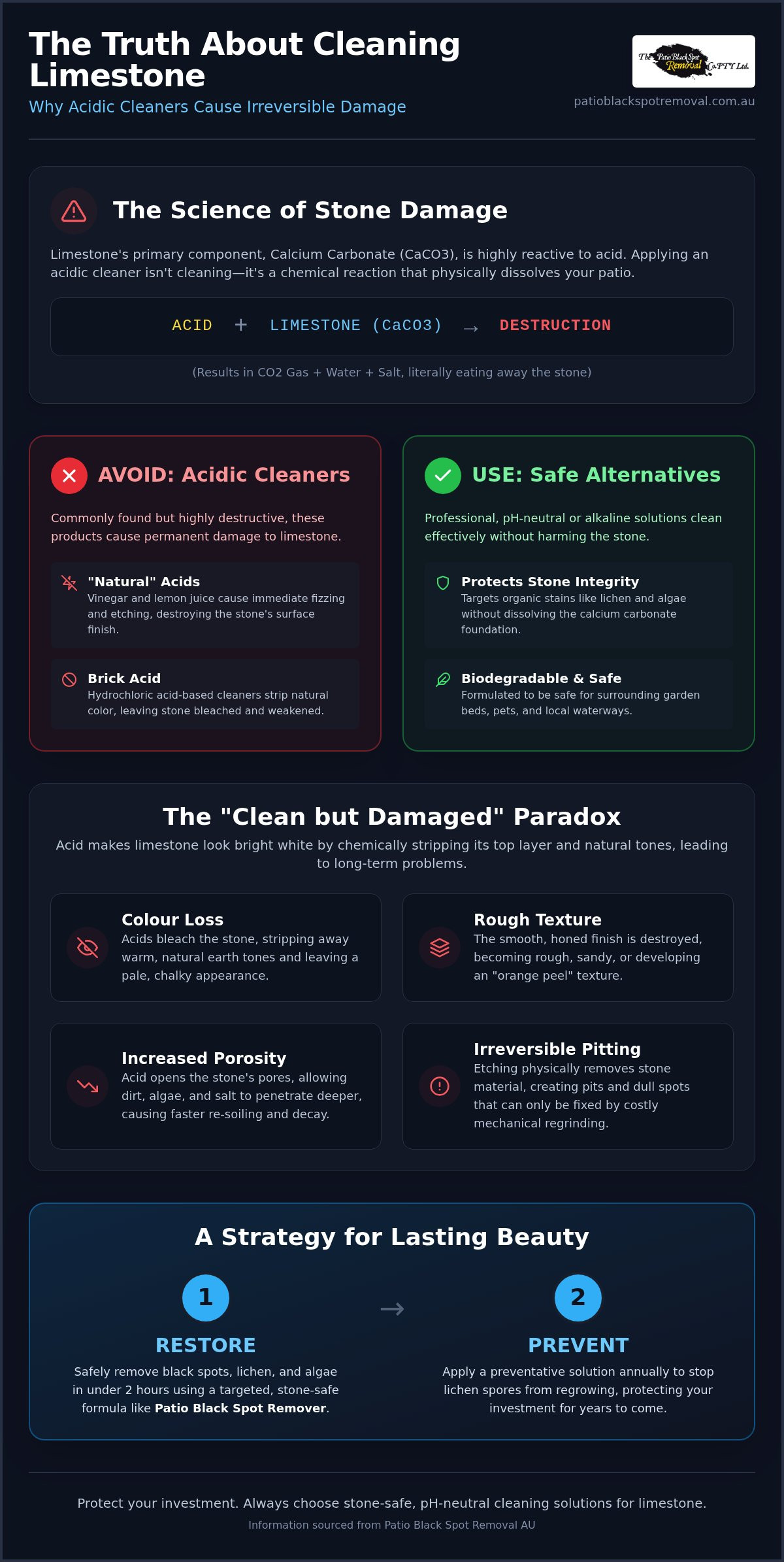
When you apply an acidic solution, a specific chemical reaction occurs: Acid + Calcium Carbonate = CO2 gas + Water + Salt. During this process, the stone literally dissolves. This chemical reality is why you should avoid using acidic based patio cleaners on limestone. The damage isn't just a surface stain; it's "etching", which is the permanent physical erosion of the stone's surface layer. Even weak acids create microscopic pits that trap more dirt and organic growth over time, making future maintenance significantly more difficult.
The Myth of 'Natural' Acids: Vinegar and Lemon Juice
Many homeowners turn to "green" alternatives like white vinegar or lemon juice, believing they're safer for the environment and their patio. On limestone, they're often the worst offenders. You'll see an immediate fizzing reaction as the acid eats into the finish. This reaction is the sound of your patio's polished or honed surface being destroyed in real-time, leaving behind dull, white marks that no amount of scrubbing can fix.
Brick Acid and Hydrochloric Solutions
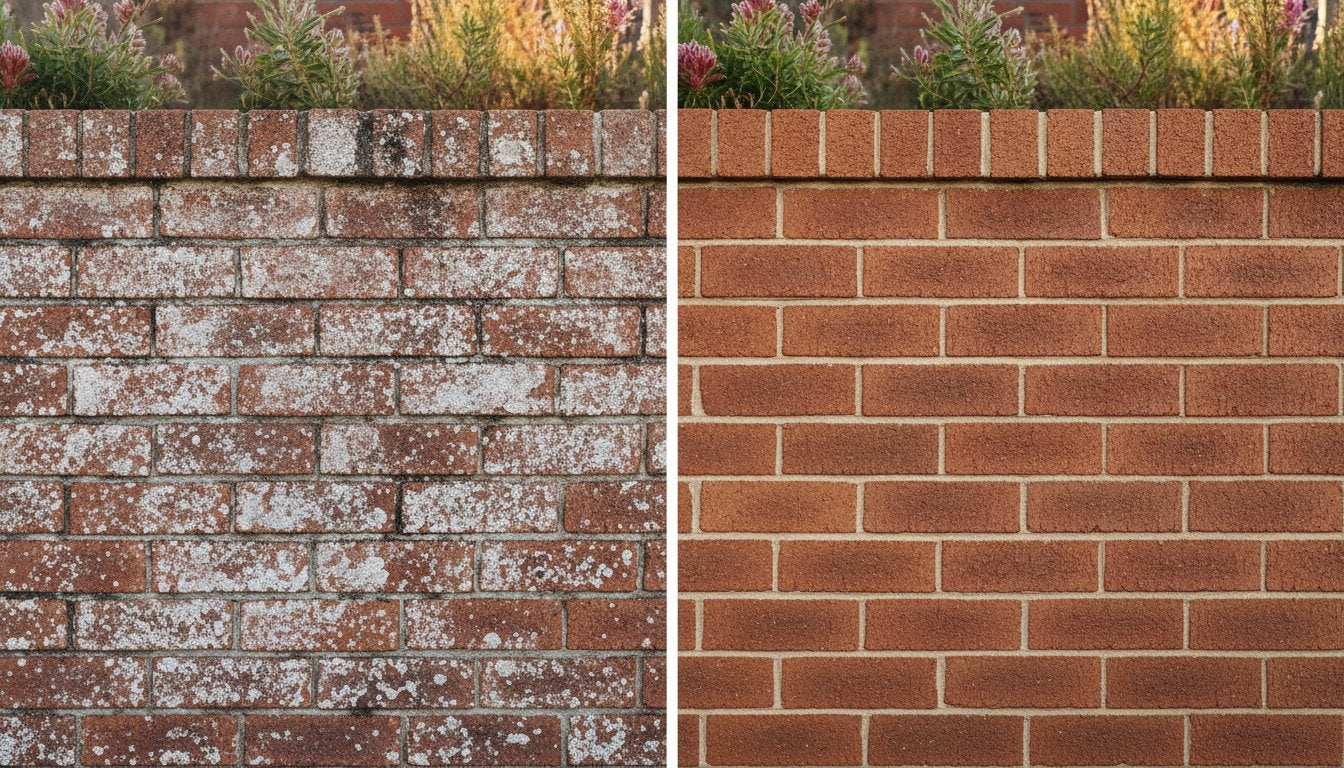
Standard patio cleaners found in local hardware stores often contain hydrochloric acid, commonly known as "brick acid." These products are formulated for dense clay bricks, which can withstand high acidity. Natural stones like limestone and travertine are far more porous and chemically sensitive. Using these harsh solutions will strip the stone's natural earth tones and leave it looking bleached, lifeless, and structurally weakened.
Visible Damage: How Acidic Cleaners Ruin Your Patio's Appearance
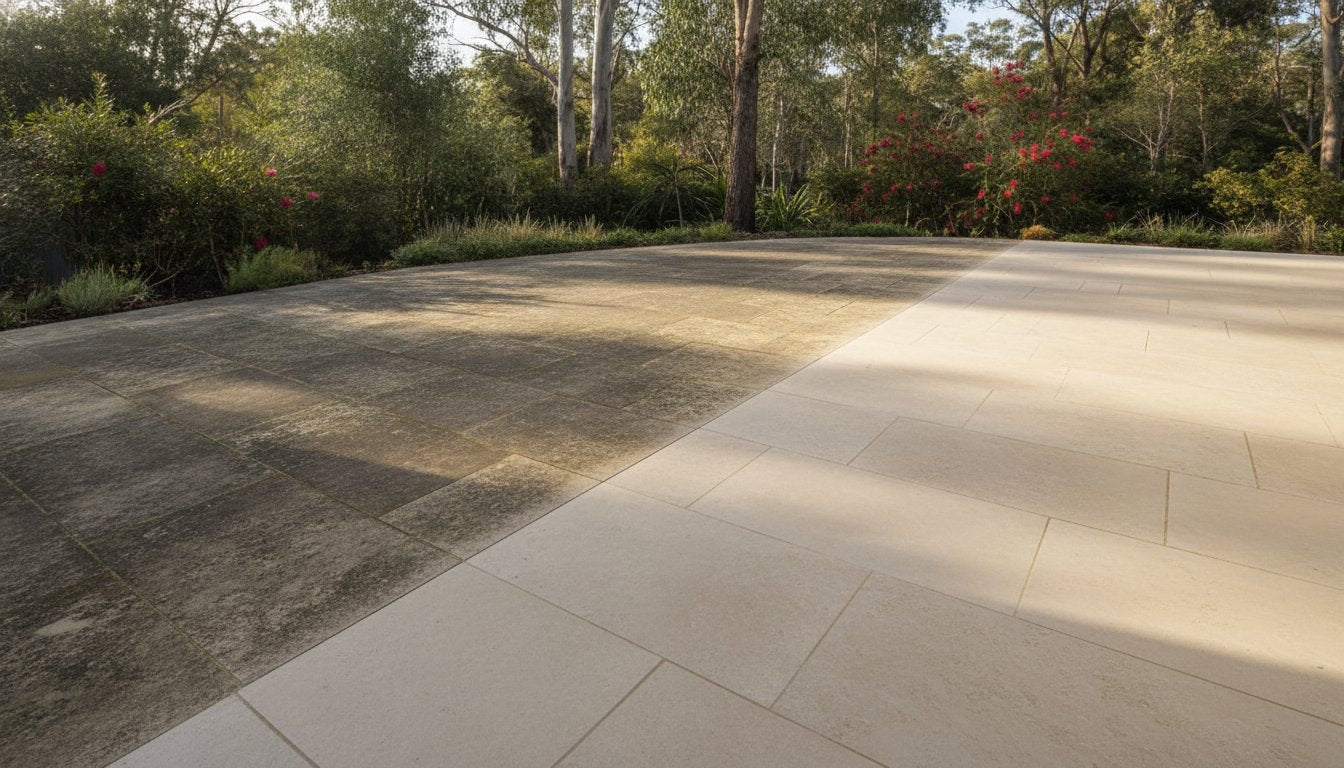
Applying acid to natural stone creates immediate, visible ruin that many homeowners mistake for "cleanliness." The most striking change is the loss of colour. Australian limestone is prized for its warm, organic earth tones, but acidic cleaners act as a bleach, stripping away these natural pigments and leaving the stone looking pale and chalky. This aesthetic destruction is a major reason why you should avoid using acidic based patio cleaners on limestone.
Beyond colour, the physical texture of your patio undergoes a drastic transformation. A once smooth or honed finish can quickly turn rough and sandy, or develop an "orange peel" texture. In coastal environments like Sydney, this damage is compounded. The etched surface allows salt air to penetrate deeper, leading to spalling and crumbling as the stone's structural integrity fails. You might think the patio looks better because it's bright white, but this is the "Clean but Damaged" paradox; the stone appears bright only because its protective top layer has been chemically dissolved.
If you're unsure if your stone has already suffered this type of damage, you can reach out for expert guidance on the best restoration path.
Increased Porosity and Future Staining
Acidic reactions open the microscopic "pores" of the limestone. While the stone looks clean initially, these enlarged cavities create the perfect sanctuary for organic growth. Black lichen and green algae can now root much deeper into the stone than before, making future infestations harder to treat and more frequent. Understanding why you should avoid using acidic based patio cleaners on limestone is essential for preventing this cycle of rapid re-soiling.
Irreversible Pitting
It's a common misconception that etching can be washed away. Because acid removes physical material, the resulting pits and dull spots are permanent. Restoring a smooth finish usually requires professional mechanical regrinding, which is a costly and invasive process compared to using the right chemicals from the start.
The Safe Alternative: Restoring Limestone Without Acid
Restoring the beauty of your patio doesn't require harsh chemicals. Using pH-neutral or specifically formulated alkaline cleaners is the only way to ensure you don't compromise the stone's structure. This is a primary reason why you should avoid using acidic based patio cleaners on limestone; these products treat the stone as a sacrificial layer. These biodegradable solutions are safe for your garden beds and local waterways.
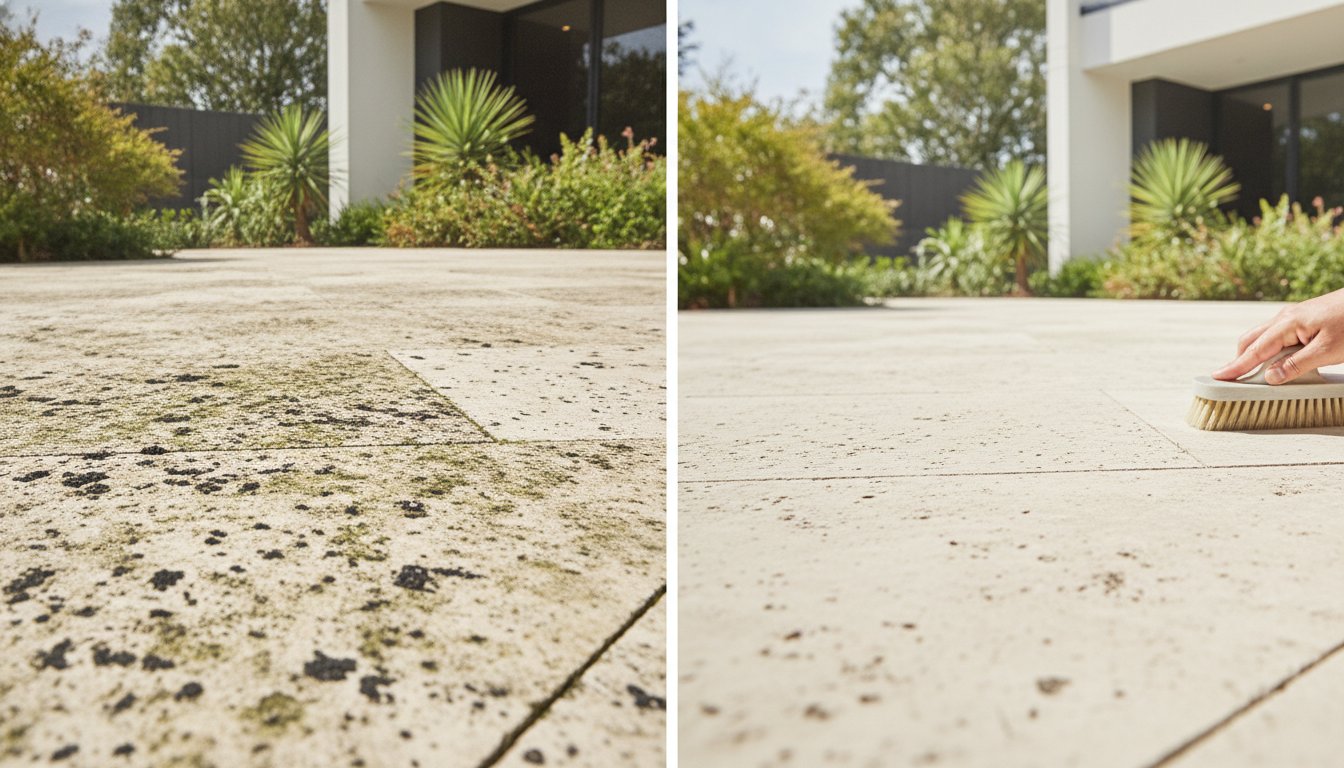
The Patio Black Spot Remover for Natural Stone offers a professional-grade alternative. This system targets the organic root of the lichen without eating into the stone itself. It effectively removes the black spots while leaving the calcium carbonate of the limestone untouched, allowing you to restore the original colour in under two hours.
How to Safely Remove Black Spots
Cleaning limestone safely requires a systematic approach. First, clear the patio of furniture and debris. Apply the acid-free remover directly to dry stone to ensure maximum absorption into the lichen. Second, allow the product to dwell for up to two hours. This gives the chemical time to penetrate the stubborn "anchor" of the lichen. Finally, keep the surface damp during this time. If the product dries out, the reaction stops, so a light misting of the product may be necessary on warmer days.
Soft Washing vs. High-Pressure Blasting
Many people reach for a pressure washer, but high-pressure blasting can be disastrous for limestone. If the stone has been previously weakened by acidic cleaners, intense pressure can blow out the surface, causing permanent scarring. A low-pressure rinse, or "soft wash," is far more effective when paired with the right restoration chemicals. It preserves the delicate face of the stone while washing away dead organic matter. If you're ready to restore your patio safely, view our products here.
Protecting Your Investment: Long-Term Maintenance for Australian Patios
Maintaining your limestone patio shouldn't be a cycle of destruction and repair. While many homeowners think they need a heavy-duty chemical fix every few years, the 'Preventer' model is significantly more cost-effective and safer for the stone. This proactive approach reinforces why you should avoid using acidic based patio cleaners on limestone; acid weakens the stone every time you use it, making it more susceptible to future organic growth. Instead, applying Patio Black Spot Preventer annually kills spores before they can take root.
For homes with limestone pool surrounds, managing salt and chlorine splashes is vital. These elements can crystallise within the stone's pores, leading to surface decay over time. A regular rinse with fresh water combined with an acid-free treatment protects the stone without the risk of etching. Long-term stone health is the primary reason why you should avoid using acidic based patio cleaners on limestone, as prevention is nearly impossible if the surface is already compromised by chemical burns. You can check the full guide on how it works to ensure your DIY maintenance fits the Australian climate.
The Annual Maintenance Schedule
In Sydney, the best times to apply preventative treatments are during Autumn and Spring. These seasons offer the moderate temperatures needed for the chemicals to work effectively without evaporating too quickly. Watch for the early signs of green algae, which often appears as a slippery film in shaded or damp areas. Treating this early prevents it from evolving into the stubborn black lichen that requires more intensive restoration.
Safe for Pets and Plants
Since these products are acid-free and biodegradable, they're perfectly suited for Australian backyards where kids and pets play. Unlike acidic cleaners that can poison soil and kill delicate garden borders, these formulas target organic growth on the stone surface only. Once the treated area is rinsed with water, it's completely safe for family use.
Protect the Natural Beauty of Your Limestone
Your patio is a significant investment that deserves care based on chemistry, not guesswork. We've explored how acidic reactions permanently etch the surface and why you should avoid using acidic based patio cleaners on limestone if you want to preserve its original colour and texture. By switching to pH-neutral, alkaline solutions, you can effectively digest stubborn black spots without sacrificing the stone's structural integrity. It's about working with the stone's natural properties rather than fighting against them.
Our products offer biodegradable & acid-free formulas that are safe for your family and garden. We provide nationwide delivery to ensure every Australian homeowner has access to professional-grade restoration tools. Don't let harsh chemicals ruin your outdoor space when a safer, more effective alternative is available. Shop the Acid-Free Patio Black Spot Remover for Natural Stone today and see the difference a specialized approach makes for your Mount Gambier limestone. Your beautiful, restored patio is closer than you think.
Frequently Asked Questions
Can I use white vinegar to clean my limestone patio?
No, you shouldn't use white vinegar on limestone. Vinegar is an acetic acid that reacts immediately with the calcium carbonate in the stone. This reaction causes irreversible etching and dull spots. This chemical vulnerability is exactly why you should avoid using acidic based patio cleaners on limestone, including household "green" cleaners that strip the finish and leave your Sydney patio looking bleached, porous, and permanently damaged.
What happens if I already used an acidic cleaner on my limestone?
If you've already used an acid, the damage is likely physical erosion known as etching. You'll notice the stone looks chalky, rough, or has white "burn" marks. Unlike a stain, etching can't be washed away because the surface material is actually gone. To fix this, you may need a professional mechanical regrinding process to smooth the stone back down, as chemical cleaners can't replace the dissolved calcium carbonate.
How can I tell if a patio cleaner contains acid before I buy it?
Always check the product label for ingredients like hydrochloric acid, phosphoric acid, or "brick acid." Many standard patio cleaners sold in Australian hardware stores are designed for clay bricks, not natural stone. Look for products clearly labelled as pH-neutral or specifically formulated for natural stone. This proactive checking is vital to understand why you should avoid using acidic based patio cleaners on limestone and prevents instant, expensive surface destruction.
Will an acid-free cleaner really remove stubborn black spots?
Yes, our specialized Patio Black Spot Remover is designed to digest the organic "anchor" of the lichen without affecting the stone's chemistry. While acids just burn the surface, this alkaline-based formula penetrates the pores to remove the entire growth. It restores the original earth tones of your Mount Gambier limestone in less than two hours, providing a deep clean that's far more effective and safer than damaging acidic alternatives.
Is it safe to use these chemicals near my garden and lawn?
Our products are biodegradable and specifically formulated to be safe for surrounding plants and pets. Because they're acid-free, they won't alter the soil pH or poison your garden beds like traditional brick acids often do. Avoid spraying the neat product onto surrounding plants or beds. However, any run off once rinsed is perfectly safe for your garden. This makes our system ideal for typical Australian backyards where landscaping and lawn health are a high priority.