Did you know that up to 80% of concrete sealer failures, including peeling and unsightly cloudiness, are caused by inadequate surface preparation? Before sealing a concrete driveway, it is important to make sure the surface is properly cleaned and prepared. Dirt, oil, organic growth and moisture can all affect how well a sealer bonds to the concrete. If you are learning how to clean concrete driveway before sealing, the aim is not simply to make the surface look clean. The concrete needs to be free from contaminants and completely dry before the sealer is applied.
This guide provides the professional steps to deep-clean your driveway for a bond that lasts. We'll explain why blasting with high pressure often fails to kill deep-rooted organic spores and how to use biodegradable, acid-free solutions. From moisture testing to choosing the right cleaning agents, you'll get the full blueprint for a successful DIY project that avoids the common issues of trapped moisture and premature peeling. You'll learn how to treat the concrete correctly so your driveway stays protected for years to come.
Key Takeaways
- Understand why professional preparation is the only way to prevent the 80% of sealer failures caused by trapped moisture and surface contaminants.
- Learn to identify the difference between standard grime and deep-rooted black lichen that requires more than just high pressure to remove.
- Follow a step-by-step guide on how to clean concrete driveway before sealing using biodegradable, Sydney-manufactured cleaners that are safe for your garden.
- Understand the critical final rinse process and how to select the right sealer type to protect your driveway for up to ten years.
Why Preparation Matters: Should I Seal My Concrete Driveway?
Sealing a concrete driveway can help protect the surface from things such as UV exposure, oil and water. However, the sealer needs a clean, suitable surface to bond to properly. Learning how to clean a concrete driveway before sealing is an important part of the process. If dirt, grease or organic growth is left behind, the sealer may not adhere properly and can eventually start to peel or become cloudy.
Concrete is naturally porous. To bond correctly, a sealer must penetrate these tiny "pores." If they're clogged with dust, grease, or organic growth, the sealer just sits on top. This leads to a weak bond that eventually fails because the concrete isn't "open" enough to accept the treatment.
The Consequences of Poor Cleaning
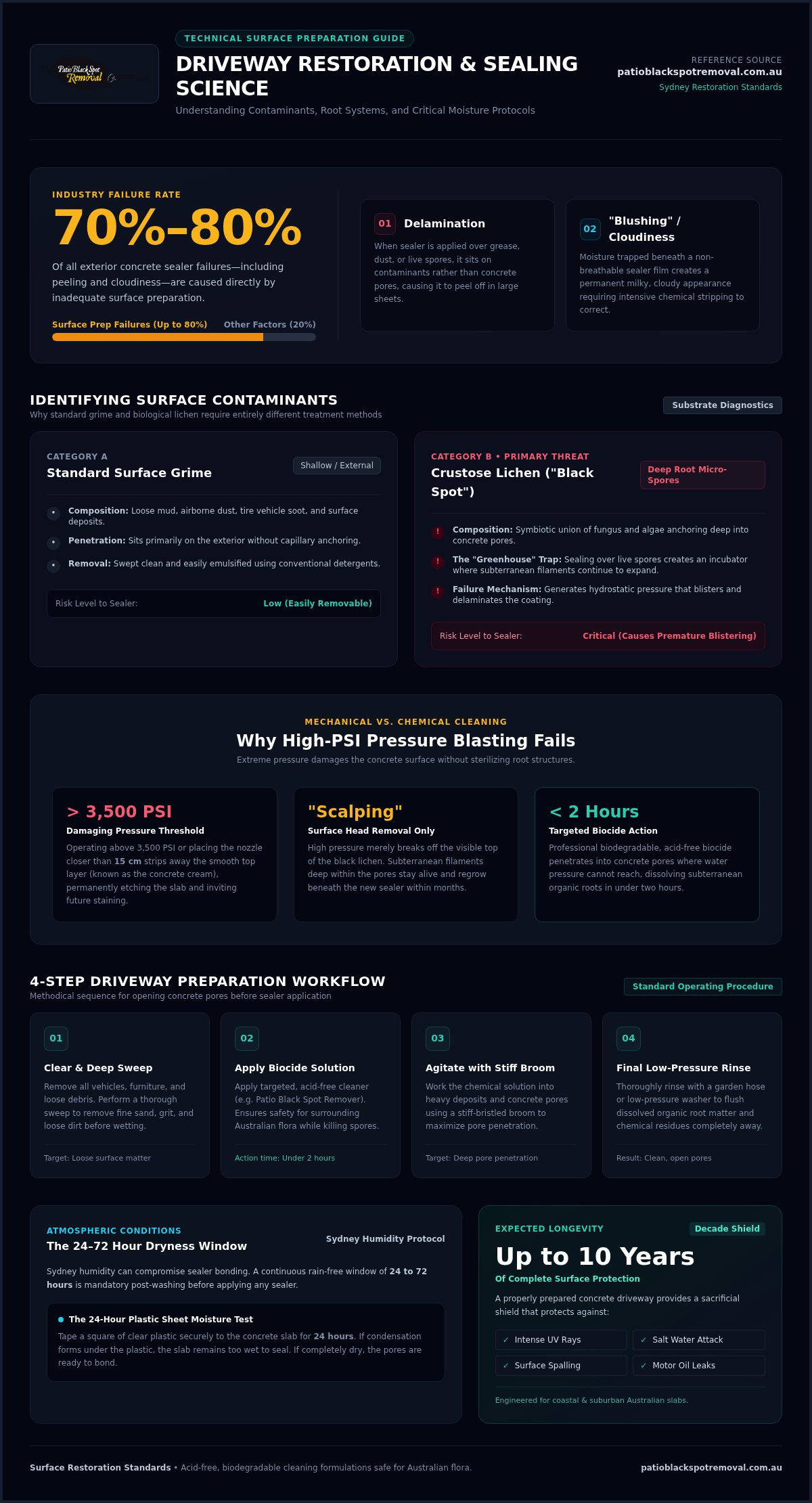
Industry data shows that roughly 70% to 80% of all exterior concrete sealer failures are caused by inadequate surface preparation. When you trap dirt or oils under a chemical film, you risk delamination, where the sealer literally peels off in sheets. You might also see "whitening" or blushing. This occurs when moisture is trapped beneath a non-breathable sealer, creating a milky, cloudy appearance that's incredibly difficult to fix without professional stripping.
When is the Best Time to Clean and Seal?
It is important to allow enough time for the concrete to dry after cleaning. In Sydney's humid conditions, this can take longer than expected. Allow at least 24 to 72 hours of dry weather after washing before applying the sealer, depending on the conditions and the surface. You can also use a simple dryness test by taping a piece of clear plastic to the concrete for around 24 hours. If condensation appears underneath, the slab may still contain too much moisture. Knowing how to clean concrete driveways before sealing also means knowing when the surface is ready to be sealed.
Identifying Contaminants: Dirt vs. Stubborn Black Lichen
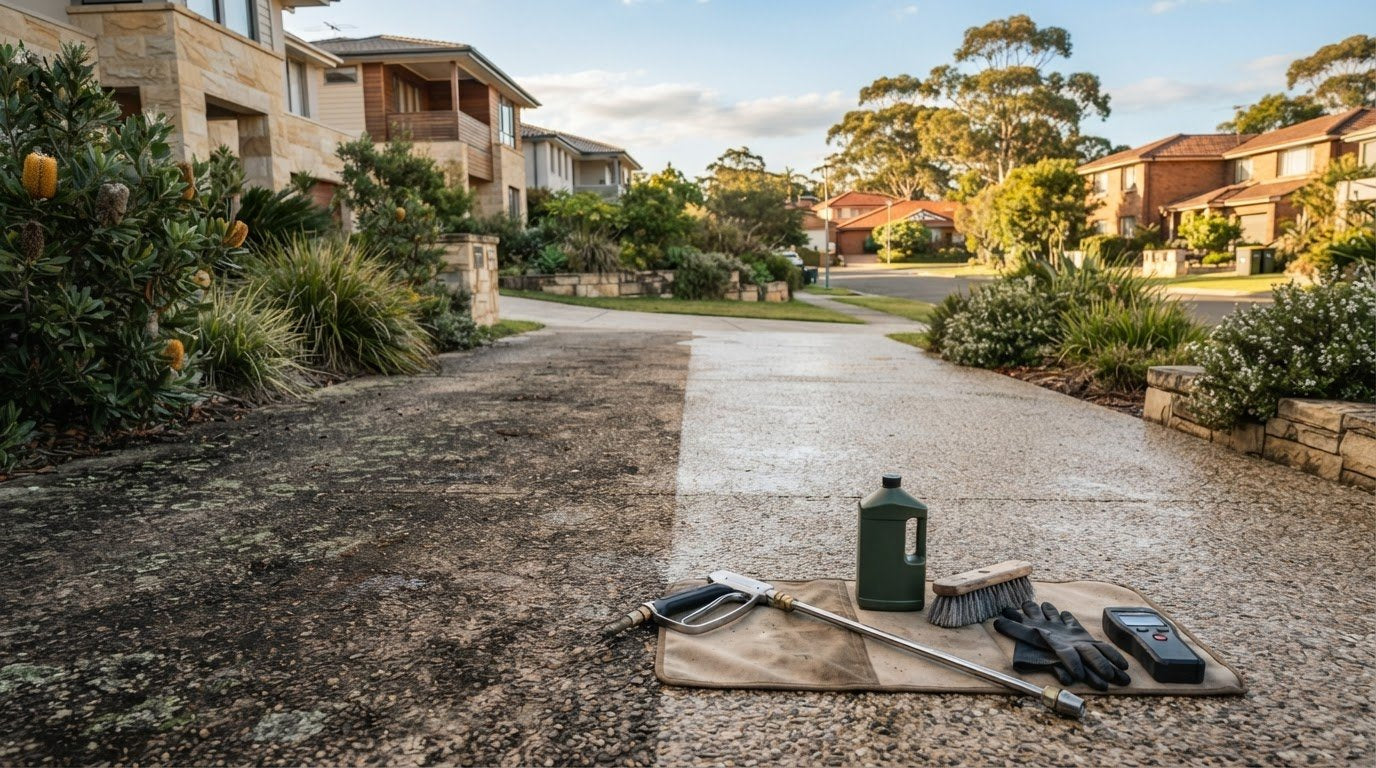
Surface grime like mud, dust, or vehicle soot is relatively easy to remove with a light pressure wash or suitable cleaner. However, those stubborn, circular black marks common on Sydney driveways aren't just dirt; they're lichen, often called "Black Spot." This symbiotic union of fungus and algae anchors itself deep into the concrete's capillaries. If you seal over these live spores, you're essentially creating a greenhouse. The lichen will continue to grow beneath the coating, creating hydrostatic pressure that eventually blisters and delaminates your new sealer.
While oil and grease stains are important secondary targets that require specialized degreasers, biological growth is the primary cause of premature sealer failure in coastal Australia. Mastering how to clean your concrete driveway before sealing means looking beyond the surface to ensure every microscopic root is eradicated before the first drop of sealer hits the ground.
Why Pressure Washing Isn’t Enough
Gentle pressure washing can be useful for removing loose dirt and surface contaminants, but it won't remove all organic growth. Black lichen can remain attached to the surface even after pressure washing, which means it will continue to grow and show up on the surface again just weeks later.
High pressure can also cause permanent damage to concrete. Holding the nozzle too close or using excessive pressure can remove the surface cream of the concrete and leave visible marks or etching.
For this reason, pressure washing should be used carefully and at a suitable pressure for the particular concrete finish.
The Role of Specialized Restoration Chemicals
To achieve a completely clean surface, you need a targeted chemical approach that travels where water cannot. A professional treatment like Patio Black Spot Remover dissolves organic roots within the pores, ensuring the concrete is truly lichen free. You can learn more about how professional-grade cleaners work to provide this deep-level restoration.
Guide to Cleaning Concrete for a Professional Seal
Achieving a professional finish starts with a methodical cleaning sequence. First, clear all vehicles, furniture and other items from the driveway, then sweep the area to remove loose leaves and grit. Once the surface is clear, apply a targeted cleaner like Patio Black Spot Remover. Understanding how to clean a concrete driveway before sealing involves more than simply rinsing the surface with water alone.
After application, allow the product to dwell on the surface for two hours, ensuring the area is well saturated with product throughout this time. Finish with a thorough rinse using a garden hose or a low-pressure washer. The goal isn't to blast the surface, but to flush away the dissolved contaminants. Following these steps is the most effective way to manage how to clean your concrete driveway before sealing without damaging the substrate.
Cleaning Different Concrete Finishes
Different concrete finishes may need slightly different cleaning methods. For exposed aggregate, take care when agitating the surface so that the decorative stones are not loosened. When dealing with stamped or coloured concrete, rely on acid-free restorers to maintain the vibrant finish while opening the pores for the sealer.
Safety and Environmental Precautions
Always use biodegradable, acid-free cleaners to ensure your project remains safe for surrounding Australian garden beds and pets.
The product should not be sprayed directly onto plants or grass. If this happens, it can cause the foliage to scorch, although it will not kill the plants. When the product is applied directly to the stone and then washed off over the lawn or into garden beds, it becomes diluted and breaks down easily, so it should not have a detrimental effect on surrounding foliage.
As a precaution, you can pre-soak nearby garden beds with fresh water before cleaning and rinse them again after you have finished.
Pets should also be kept off the treated surface while the product is in its neat form. We recommend keeping pets away from the area for around 2 hours while the product is working. Once the product has been thoroughly washed off and diluted, the area is safe for pets to walk on again.
As with any cleaning product, always follow the instructions for use and wear appropriate PPE, including chemical-resistant gloves, protective eyewear and suitable footwear.
If you're unsure which product suits your specific driveway finish, reach out to our expert team for guidance.
Final Prep and Choosing Your Sealer
Once the driveway has been cleaned, rinse it thoroughly to remove any remaining dirt and cleaning solution. The surface then needs to dry completely before sealing. Allow at least 24 to 72 hours of dry weather where possible, although the actual drying time will depend on the weather, concrete and surrounding conditions. A plastic sheet test can help you check whether moisture is still present. If condensation forms underneath the plastic, give the concrete more time to dry. Even if you have followed all the steps for how to clean concrete driveway before sealing, applying sealer while the concrete is still damp can affect the final result.
The type of sealer you choose will depend on the appearance and level of protection you want. Penetrating sealers soak into the concrete and generally maintain a more natural appearance. Topical sealers sit closer to the surface and can provide finishes ranging from natural to higher-gloss, depending on the product. Always follow the manufacturer's instructions for application and reapplication.
The Annual Maintenance Model
Sealing isn't the only option when it comes to keeping a concrete driveway looking clean. For homeowners who want to reduce black lichen and organic growth without applying a coating to the surface, Patio Black Spot Preventer can be used as part of an annual maintenance routine.
The Patio Black Spot Preventer is designed to prevent black lichen and other organic growth from taking hold on the surface. Applying this simple leave-on treatment annually keeps the driveway clear of black spot and avoids the need for intense treatments or harsh pressure washing.
One of the benefits of leaving the concrete unsealed is that there is no additional coating sitting over the surface. Some non-breathable sealers can make future cleaning more difficult, particularly if dirt, organic growth or moisture becomes trapped beneath the coating. Depending on the type of sealer used, problems such as peeling, clouding or flaking can also mean that the surface needs to be stripped and prepared again before it can be treated.
Using a preventative treatment instead means you can continue to clean and maintain the concrete surface directly. Rather than waiting for black spots to build up and then carrying out a major clean, an annual application of Patio Black Spot Preventer can keep organic growth under control from the start.
For homeowners who don't want to seal their driveway, this can be a straightforward alternative for keeping the concrete looking cleaner throughout the year.
Get Expert Advice for Your Project
Every driveway is unique, from the concrete mix to the local Sydney microclimate. If you're unsure about the best approach for your specific surface or finish, contact the Patio Black Spot Removal team today for expert guidance on your restoration project.
Protect Your Driveway for the Long Haul
Sealing your concrete is a smart investment, but it only works if the foundation is flawless. By focusing on deep-rooted organic removal rather than just surface-level rinsing, you prevent the common cycle of peeling and clouding. Mastering how to clean a concrete driveway before sealing ensures your home's entrance stays pristine for years. Remember to allow for proper drying times and choose the right sealer for your specific finish to guarantee a professional result.
Patio Black Spot Remover is a professional-grade solution that's safe for your garden, pets, and concrete. These biodegradable, acid-free formulas can restore your concrete's original colour in under two hours, providing the perfect surface for any sealer.
Get expert advice on your driveway restoration project and enjoy a beautiful, durable finish that stands up to the Australian elements.
Frequently Asked Questions
Can I seal my driveway immediately after cleaning it?
No, you shouldn't apply sealer to a damp surface. Concrete is highly porous and needs at least 24 to 72 hours of dry weather to ensure all internal moisture has evaporated. If you seal a wet slab, you'll likely face "blushing," where trapped moisture creates permanent white clouds under the finish. This is a vital part of learning how to clean concrete driveway before sealing properly.
Will pressure washing alone remove black spots from my concrete?
Pressure washing usually only "scalps" the surface of black lichen, leaving the microscopic roots alive within the concrete's pores. These spots will typically return within months if the roots aren't chemically treated. Using a specialized restoration treatment like Patio Black Spot Remover is the only way to kill these organic spores completely, providing a sterile surface that allows your chosen sealer to bond perfectly to the stone.
Is it safe to use driveway cleaners near my lawn and garden?
It is safe as long as you use professional-grade, biodegradable, and acid-free formulas and follow the instructions. These products should not be sprayed directly onto plants or grass, as this can cause the foliage to scorch. However, it will not kill the plants. When the product is applied to the stone and then washed off over the lawn or into garden beds, it becomes diluted and breaks down easily, so it should not have a detrimental effect on surrounding foliage. Pre-soaking nearby garden beds with fresh water and giving them a final rinse after cleaning can provide an additional precaution.
Pets should be kept off the treated surface while the product is neat, which we recommend for around 2 hours. Once the product has been washed off and diluted, it is instantly safe for pets to walk on the area again.
Always follow the product instructions and take appropriate precautions when using any cleaning product around plants and pets.
How long should I wait for new concrete to cure before cleaning and sealing?
You must wait at least 28 days for new concrete to finish its hydration process before you consider sealing. During this month, the concrete releases significant amounts of moisture and alkalis that can interfere with sealer adhesion. Once this curing period is complete, you can proceed with the professional steps for how to clean concrete driveway before sealing to ensure your new investment stays protected for years.
What happens if I seal my driveway without cleaning it properly?
Sealing over a dirty surface is the leading cause of sealer failure, often resulting in peeling, flaking, and delamination within a single season. The sealer bonds to the contaminants rather than the concrete, creating a weak layer that easily lifts. Any organic growth or stains will also be permanently trapped beneath the sealer, requiring a costly and difficult chemical stripping process to fix the appearance later.