Moss on patio paving can look untidy and become slippery when wet, but an aggressive clean may roughen the surface or disturb the joints. Before treating it, check whether the growth is moss, green algae or black lichen. The right approach depends on what’s growing and what your paving can tolerate.
This guide explains how to choose a surface-conscious removal method and reduce factors that may encourage regrowth, such as trapped debris and persistent dampness. It also covers when to check product directions carefully, since a treatment for algae or lichen isn’t automatically suitable for moss.
Key Takeaways
- Identify the growth and paving material before choosing a cleaning method.
- Moss on patio paving may return where shade, debris or poor drainage keep the surface damp, so look for conditions you can address.
- Clear loose debris first, and use manual cleaning only if the paving and joints can tolerate it.
- A cleaner intended for algae or lichen isn’t automatically a moss treatment.
Moss on patio paving: identify the growth before you clean
A green or dark patch on paving isn’t automatically moss. Identifying the growth first helps you avoid using a treatment intended for a different problem. Moss is a small, soft-looking plant that often forms a raised, cushiony or feathery layer on damp surfaces. For a biological overview, see What is moss?
How to tell moss, algae and lichen apart
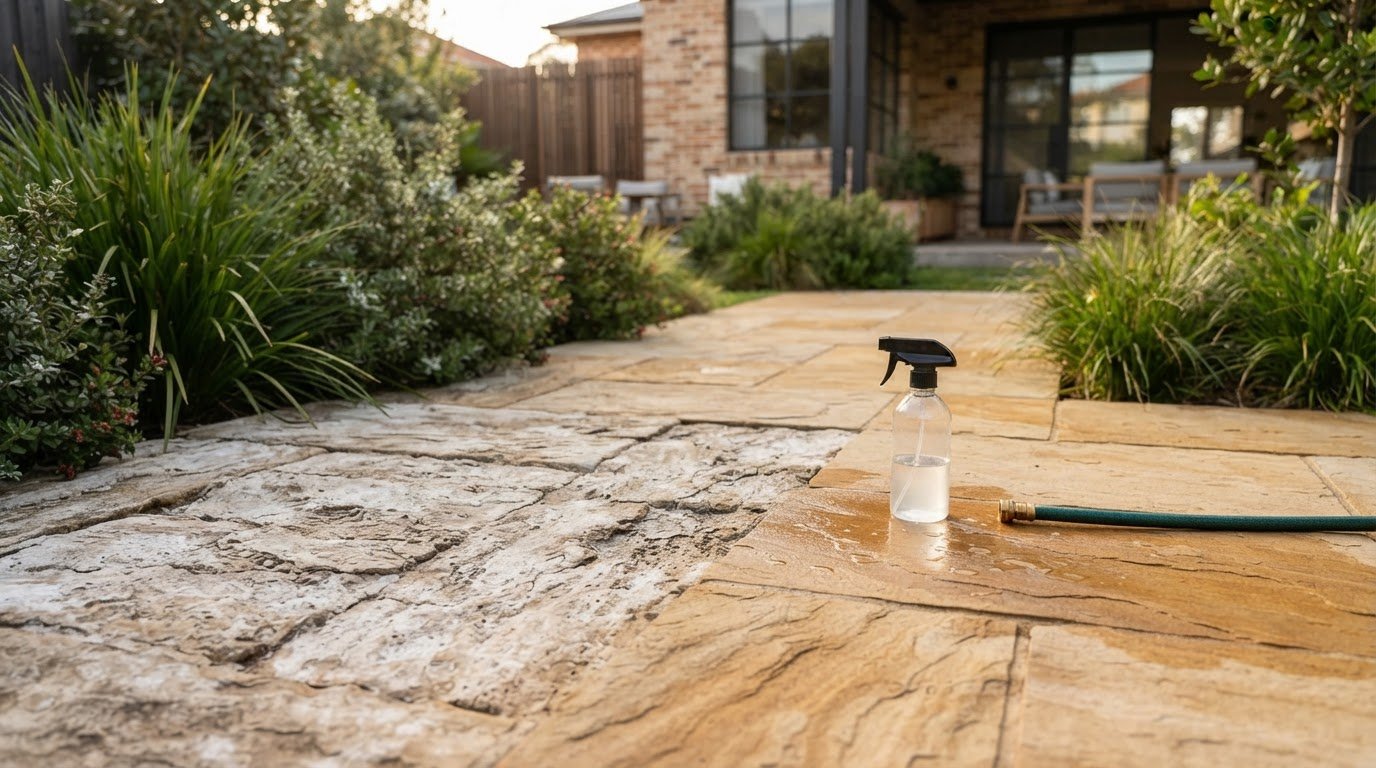
Inspect several patches in daylight, paying attention to their edges and texture. Moss may look raised and soft. Algae often appears as a flatter green film and can feel slippery when wet. Lichen tends to form distinct, firmly attached spots that may be dark or crust-like. These are clues rather than a certain diagnosis: growths can overlap, and their colour varies with the paving and conditions. If you’re unsure, check what a product is intended to treat before applying it.
Why moss grows on some patio areas
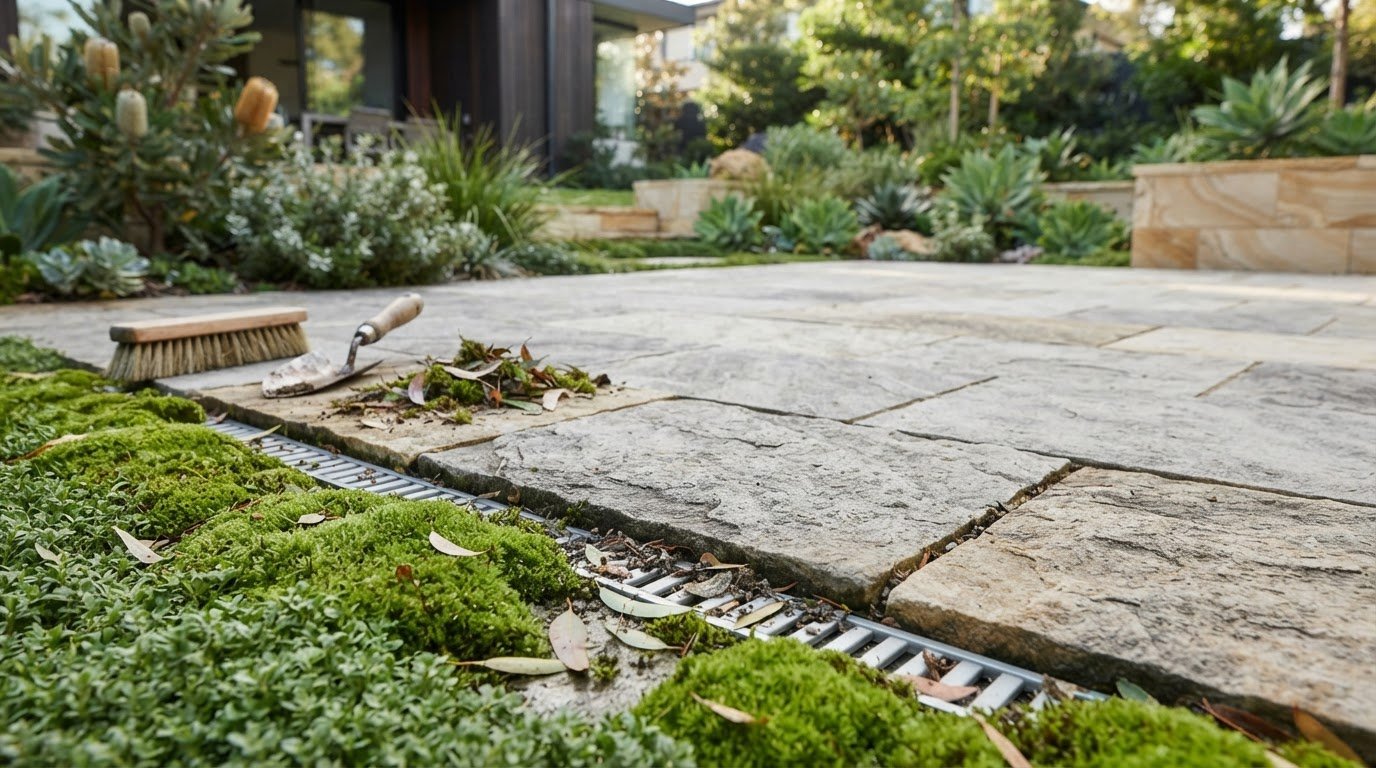
Shade, persistent moisture, poor drainage and trapped debris are all worth investigating. These conditions can leave paving damp for longer, though they don’t confirm what a patch is. On a Sydney patio, check shaded corners, areas beneath overhanging vegetation and spots that remain wet after rain. Look for leaves or dirt between pavers, and notice whether water drains away or lingers. Comparing a damp, shaded section with a sunnier, drier area can help you identify where conditions differ before deciding how to clean.
Why patio moss returns: moisture, shade and paving conditions
Cleaning removes visible growth, but it may not change the conditions that allow it to return. If paving stays damp and shaded, removing the moss you can see may not prevent regrowth. Leaves and other debris can also hold moisture against the surface. Treat these as clues to investigate, not proof of a single cause.
What to inspect on a Sydney patio
After rain, note which areas dry slowly, where runoff travels and whether water pools near joints or low spots. Check shaded sections beside walls or beneath nearby vegetation, as well as corners where leaves collect. The RHS moss control advice also discusses managing moss on hard surfaces. Use what you observe on your own patio rather than assuming a particular season or local weather pattern explains the growth.
Why stone type matters before treatment
Identify the paving material and check for worn surfaces, cracks or loose joints before cleaning. A method that suits one type of paving may be too harsh for another or may disturb the jointing.
Once you’ve checked the damp spots and paving condition, you can choose a removal approach with fewer surprises. If you have a question about a product’s stated use, contact the product supplier before applying it.
How to remove moss from a patio without damaging the paving
Start by assessing the surface, not by reaching for the strongest cleaner. Identify the paving material, check for cracks or loose joints, then clear leaves and other loose debris. Choose a method suited to both the surface and the growth, and inspect the result before repeating it. If you’re unsure what’s growing, pause rather than applying a product intended for a different problem.
Choose a removal method that suits the patio
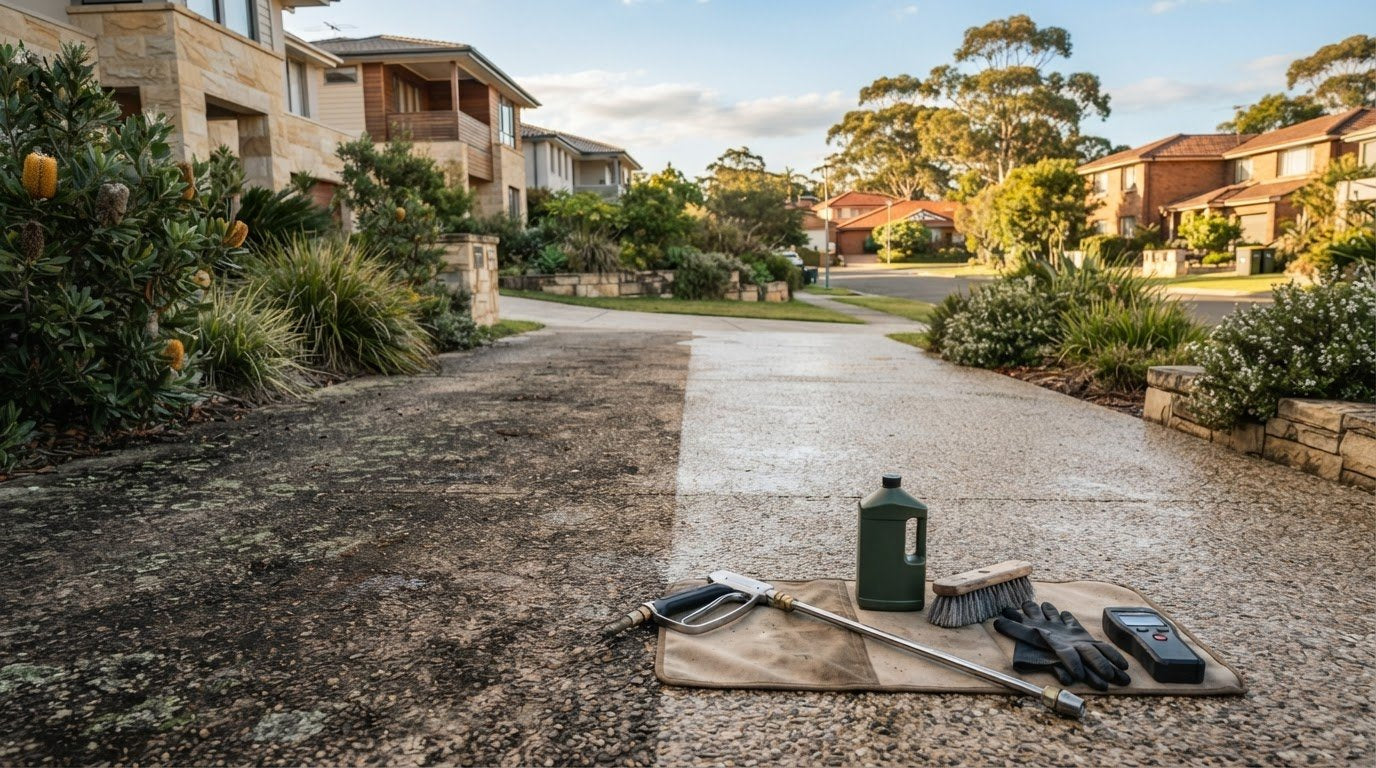
Careful brushing with a suitable stiff brush may help lift moss, but only if the paving finish and joints can tolerate it. Avoid aggressive scrubbing and wire brushes that could scratch the surface or loosen jointing material. Pressure washing and household chemicals aren’t suitable for every patio and may damage paving, affect joints or create other risks. The expert from Oregon State University offers context on why moss can establish where conditions suit it.
When moss appears alongside black spots or green algae
Identify each visible growth before choosing a treatment. Patio Black Spot Remover is used to treat black lichen staining, heavy organic staining and stubborn dirt, while Patio Black Spot Preventer should be used to deter ongoing organic staining and to remove green algae. For details about its stated use, see Patio Black Spot Remover for Natural Stone. The company’s How It Works page also provides product-use information.
If you’re unsure whether a product matches the growth or paving, ask the product supplier about its stated use before applying it.
Prevent moss returning and choose the right patio-care next step
No method can guarantee moss won’t return, but regular upkeep can make conditions less favourable. Clear leaves and debris before they build up, especially in joints and shaded corners. Where practical, investigate areas that stay damp: check whether water drains away, whether runoff collects there and whether nearby vegetation limits sunlight.
Build a simple patio maintenance routine
Check the paving and joints as you tidy the patio. Remove loose debris, then note whether particular areas stay damp or collect leaves again. If growth returns in the same spot, look for a persistent moisture or shade issue that routine cleaning alone may not address. Maintenance can reduce conditions that favour regrowth, but it can’t guarantee moss won’t come back. Use the Patio Black Spot Preventer annually to help to reduce the need to pressure washing organic staining away.
When a specialist stone-cleaning product may be relevant
Moss treatments and products for other organic growth aren’t interchangeable. Patio Black Spot Preventer is an annual treatment for organic growth stains and green algae. If you’ve identified green or red algae, use the Patio Black Spot Preventer. More information can be found here Patio Black Spot Preventer product information.
Keep your patio clearer with a surface-conscious plan
Moss on patio paving can be frustrating, but good care starts with identifying the growth and checking why that area stays damp. Choose a removal method that suits the paving and its joints, then clear debris and address shade or drainage issues where practical. These steps can reduce conditions that favour regrowth, though they can’t guarantee moss won’t return.
Patio Black Spot Removal Australia supplies specialist products from its Sydney manufacturing facility, with Australia-wide delivery. Patio Black Spot Remover is acid-free and biodegradable. For confirmed lichen or algae, contact the team about the right stone-care product for your paving. Careful identification and regular upkeep are practical first steps towards a cleaner, more comfortable patio.
Frequently Asked Questions
How do I remove moss from a patio?
First identify the paving material and check whether the growth looks like moss, algae or lichen. Clear loose debris, then use a gentle cleaning method suited to the surface and joints. Moss on patio paving can be stubborn, but pressure washing or household chemicals aren’t automatically suitable for every surface.
Why does moss keep growing on my patio?
Moss can return if the patio stays damp, shaded or covered with debris. Check for water that pools or drains slowly, overhanging vegetation, leaf build-up and corners that remain wet after rain. These conditions may favour regrowth, but they don’t prove moss is the only issue. For a Sydney patio, assess the specific spot rather than assuming local weather is the cause. Cleaning alone can’t guarantee it won’t return.
Can I use a pressure washer to remove moss from patio stones?
Possibly, but suitability depends on the paving material, its condition and the washing pressure. Forceful water may damage a delicate surface or disturb joints and pointing.
Does Patio Black Spot Remover remove moss?
Patio Black Spot Remover is a treatment for black lichen staining on all stone types. Whilst it will not remove moss, the mechanical action of brushing or lightly pressure washing will. The Remover will then help to restore the colour to your stonework, restoring those colours you thought were lost forever.
How can I stop moss returning to my patio?
Reduce debris and address damp conditions where practical. Clear leaves from the paving and joints, check whether water drains away, and consider trimming vegetation if it keeps an area heavily shaded. Inspect the patio after cleaning and respond to new growth with a method suited to the surface. Patio Black Spot Preventer should be used for annual treatment of organic growth and green algae.