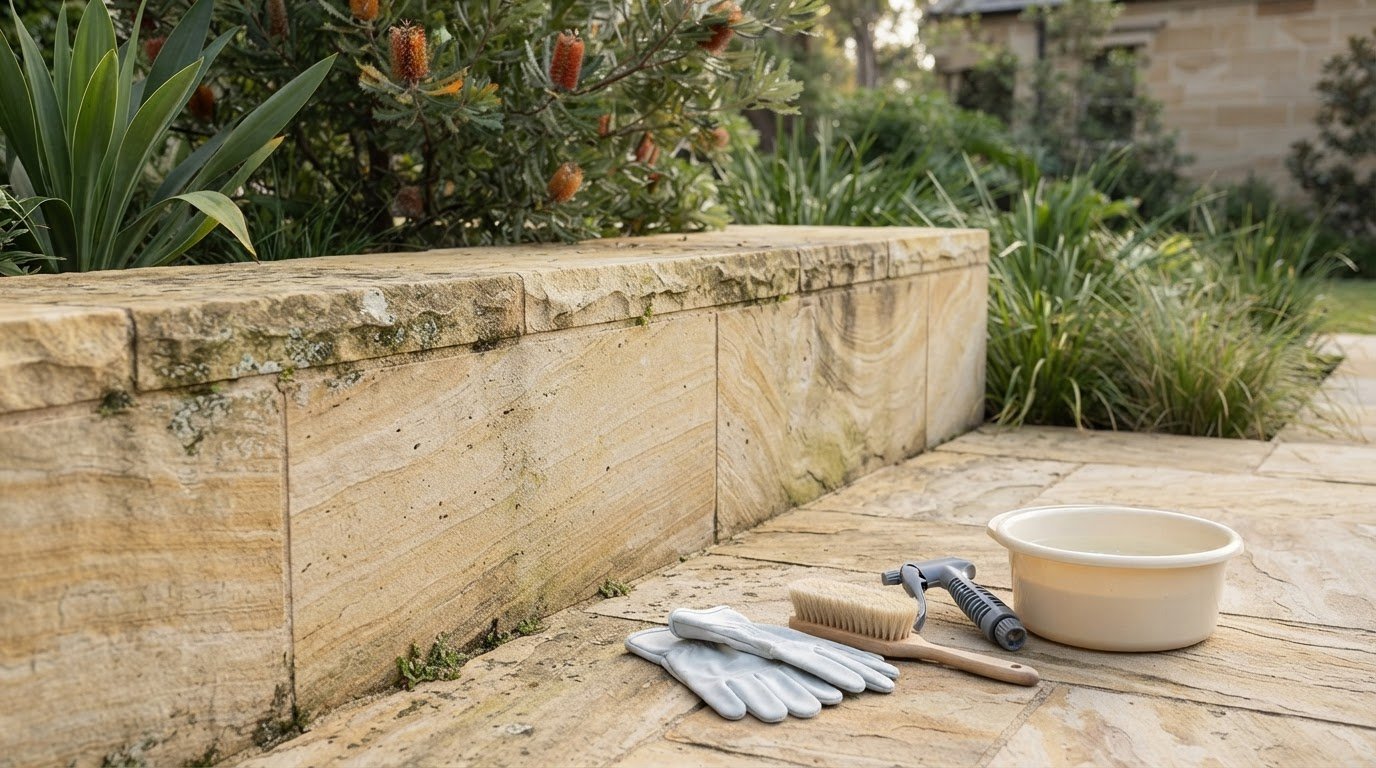
We understand the sheer frustration of watching stubborn black spots and slippery slime cling to your patio after hours of exhausting pressure washing. Gardening forums often offer conflicting advice, leaving you terrified of permanently etching expensive natural stone or poisoning nearby lawns.
In this guide, you'll discover exactly how bleach damages porous stone and to learn to use a product with three active ingredients and surfactants that’s safe to use in the garden and around pets and children.
Key Takeaways
- When asking "can you use bleach on sandstone", the answer is an emphatic no because chlorine degrades natural sedimentary binders and causes patchy discolouration.
-
You may find using bleach lightly restores the colour but it will not remove the stubborn lichen or stop it from returning.
- Household bleach drives subflorescence beneath the stone, triggering internal salt crystallization that shatters pores and causes paver surfaces to crumble.
- Our specialised, acid-free patio cleaners target deep biological growth at the root without threatening surrounding garden beds, turf, or household pets.
- Adopting a gentle chemical protocol combined with low-pressure rinsing eliminates stubborn black spots in under two hours without damaging delicate stone edges.
Can You Use Bleach on Sandstone? The Short Answer
The short answer is an unequivocal no. Never apply standard household bleach to natural sandstone paving. While bleach offers an instant visual bleaching effect, it creates severe long-term deterioration beneath the surface. Bleach functions as an aggressive oxidiser that dissolves natural mineral matrices, stripping away the stone's geological integrity while leaving stubborn biological roots completely unharmed.
Surface Whitening vs. Deep Biological Elimination
When you splash bleach or chlorine on outdoor paving, it oxidises the upper pigmentation of green algae, which tricks homeowners into believing the problem is solved. It isn't. Destructive black lichen spores develop intricate root systems known as hyphae. These microscopic filaments anchor millimetres deep into the stone's internal fissures, well beyond the reach of standard topical washes. Because the underlying organism survives, the discolouration quickly returns. This triggers a destructive cycle of repeated bleaching that systematically erodes your patio.
How Porous Sedimentary Rock Absorbs Chemicals
To understand the danger, you must consider the physical geology of your paving. Naturally formed Sandstone consists of mineral quartz grains bound together by silica, iron oxides, or delicate clay minerals. This structure makes the material exceptionally porous:
- Capillary action draws liquids downward: Instead of resting on top, chemical washes pull deep into the sedimentary network within seconds.
- Bleed-through stains appear: Trapped chemical residues react with atmospheric moisture, sparking unsightly yellow or chalky patches.
If you wonder, can you use bleach on sandstone safely by simply diluting it with tap water, the structural reality remains unchanged. Chemical solutions soak straight into the stone's internal capillary veins, initiating hidden decay that eventually crumbles the face of your pavers.
The 3 Hidden Dangers of Cleaning Sandstone with Bleach
Applying domestic bleach introduces destructive chemical mechanisms that irreversibly ruin outdoor paving. Rather than protecting your outdoor investment, chlorine triggers subflorescence, structural spalling, and toxic environmental runoff. Understanding these threats reveals why asking "can you use bleach on sandstone" requires looking well beyond surface-level results.
Salt Crystallisation and Spalling (Subflorescence)
When household bleach soaks into sedimentary rock, it deposits heavy concentrations of sodium salts directly into the microscopic cavity network. As moisture naturally evaporates under the Australian sun, subflorescence occurs: expanding salt crystals exert enormous hydraulic pressure within the stone's delicate pore structure, shattering internal quartz bonds from the inside out. Over multiple wetting and drying cycles, this subterranean pressure forces the top layer of stone to delaminate, flake, and turn into loose powder.
Mineral Staining and Garden Soil Contamination
Beyond structural decay, bleach creates immediate cosmetic and biological devastation:
- Permanent rust blotches: Bleach oxidises the latent iron minerals present in Australian sedimentary rock, creating unsightly, indelible orange rings and yellow blotches across pavers.
- Soil toxicity: Bleach runoff drastically alters the delicate pH of adjacent garden beds, scorching native turf varieties like Buffalo or Couch and killing earthworms.
- Pointing degradation: The harsh chemical attack weakens lime and cement mortar joins, leading to loose coping stones around pools and garden edges.
According to the National Park Service preservation guidelines, selecting cleaners that match a stone's unique mineral sensitivities is vital to prevent irreversible dissolution. If you are struggling with persistent stains and need guidance on safe chemical alternatives, reach out to our team via our product information guides to protect your delicate stonework.
Household Bleach vs. Professional Stone Restoration Solutions
Evaluating cleaning chemistry requires comparing generic oxidisers against dedicated stone restoration products. While domestic bleach is designed for non-porous surfaces like porcelain, natural stone demands a balanced approach that protects soft sedimentary minerals.
Why Bleach Cannot Eliminate Black Lichen
Black spot lichen produces a resilient, chitin-based upper shell that repels standard chlorinated washes. When gardeners blast this growth with pressure washers, the high force gouges vulnerable Sydney sandstone, creating pitted hollows where future colonies thrive. Rather than relying on abrasive physical force, learn how targeted removal works to dissolve hardened biological crusts safely. Gentle chemical action penetrates micro-crevices without scouring away delicate quartz face layers.
The Value of Acid-Free, Stone-Specific Formulations
Specialised restoration liquids offer clear advantages over corrosive domestic cleaners across three primary performance metrics:
- Targeted efficacy: Instead of scorching surface pigmentation, professional solutions break down microscopic biological roots within two hours.
- Substrate safety: Acid-free formulas maintain neutral contact with sedimentary binders, preventing erosion, etching, and subflorescence.
- Environmental profile: Biodegradable compounds break down naturally after application, keeping lawn borders and pets protected.
If you are still wondering can you use bleach on sandstone without causing irreversible pitting, the scientific evidence shows that purposeful chemistry yields far superior results. Using our dedicated Patio Black Spot Remover for natural stone ensures your pavers regain their vibrant quarried colours without eroding fragile pointing. If you have questions about restoring neglected flagstones, contact our stone restoration specialists for tailored technical guidance.
How to Safely Clean and Maintain Sandstone Paving
Reviving outdoor paving doesn't require harsh abrasives or corrosive store-bought chemicals. Homeowners frequently ask, can you use bleach on sandstone if you immediately rinse it away? Doing so still introduces sodium salts into the stone pores. The superior alternative is our acid-free, non-destructive restoration process designed specifically for delicate sedimentary slabs.
Step-by-Step Restoration Without Harsh Chemicals
Protecting delicate Sydney sandstone surfaces requires chemical dissolution rather than mechanical abrasion. Follow this reliable four-step protocol:
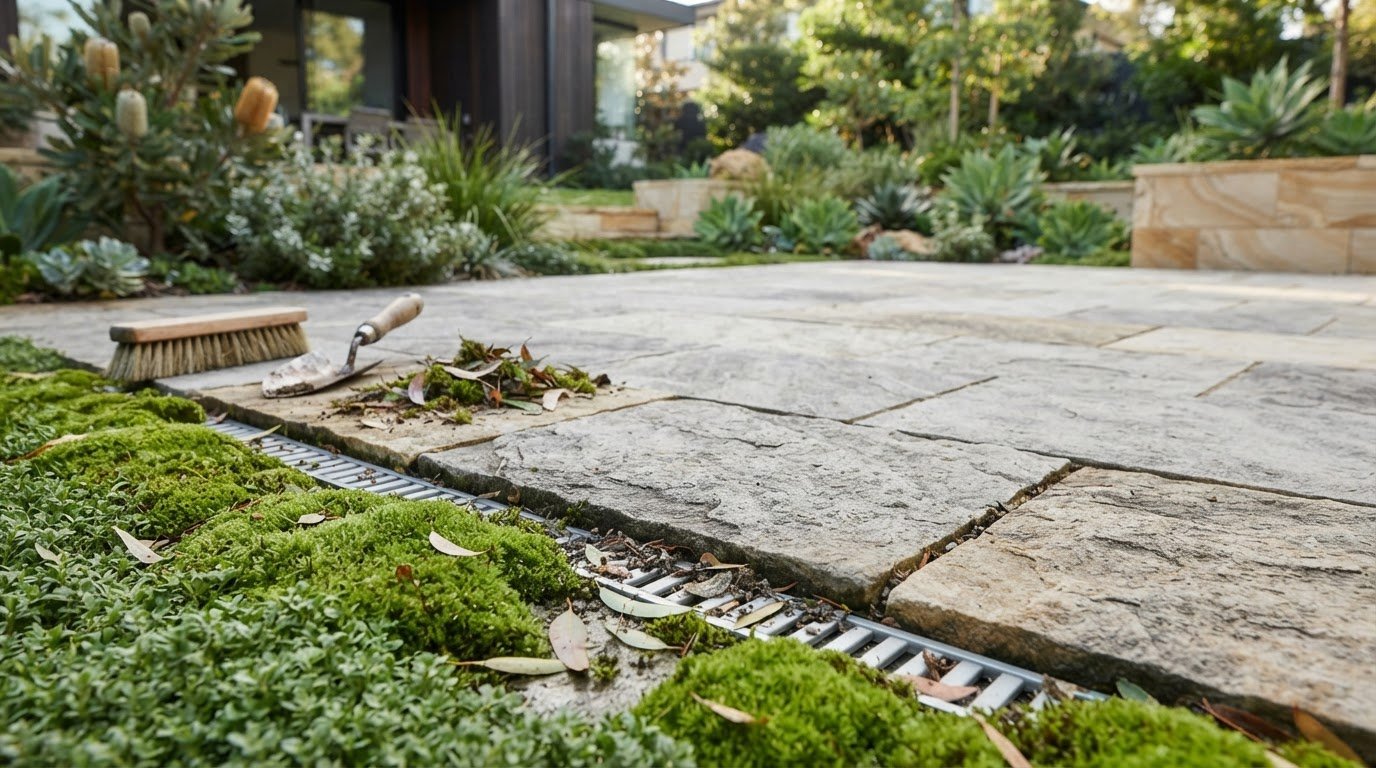
- Prepare the zone: Sweep away loose organic debris, leaves, and dirt.
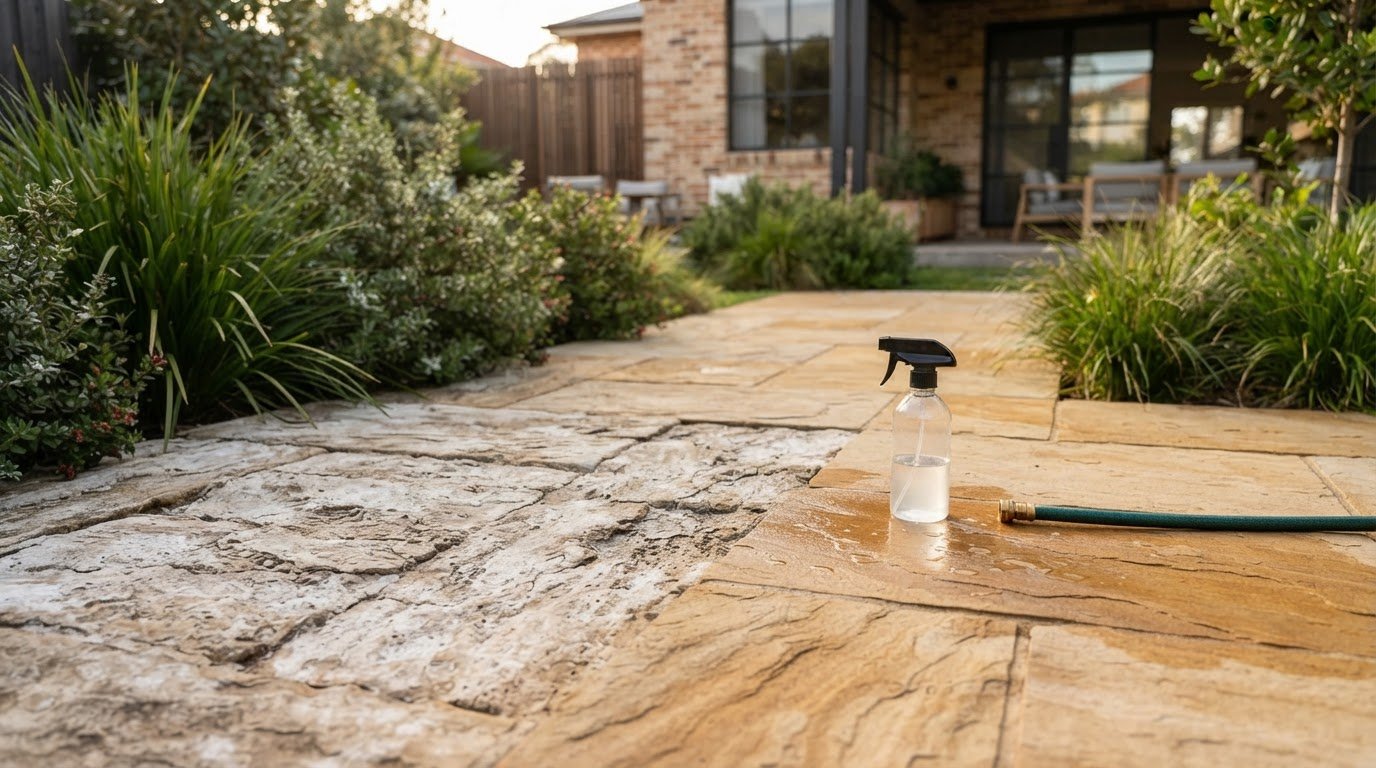
- Targeted application: Pour your specialised, biodegradable Patio Black Spot Remover into a standard pneumatic garden sprayer. Coat completely dry flagstones evenly on an overcast day.
- Allow contact dwell time: Let the gentle solution break down fungal encrustations. Quality formulations eliminate deep black lichen spores in less than two hours without manual scouring.
- Low-pressure rinse: Wash away dislodged contaminants by gently pressure washing the surface. You will find the Patio Black Spot Remover has already cleaned the stone, negating the need to abrasively clean the surface.
Preventing Recurrent Growth with Annual Maintenance
Once your stone is restored, you don't need to repeat intensive cleans every season. Applying Patio Black Spot Preventer for all stone types once every twelve months stops airborne spores from germinating inside moist micro-crevices. Keep drainage channels clear of fallen debris to prevent standing puddles where algae colonies start.
Preserving valuable natural pavers begins with choosing the correct chemistry over aggressive shortcuts. If you are dealing with severely neglected stonework and want tailored guidance before treating your pavers, review our detailed guides at how it works or consult our technical team directly.
Restore Your Sandstone the Safe, Proven Way
When faced with stubborn black spots, asking can you use bleach on sandstone reveals a dangerous shortcut that causes long-term structural spalling and unsightly mineral stains. Bleach simply masks surface discolouration while salt crystallization quietly fractures the porous rock underneath. True restoration doesn't rely on corrosive household chemicals or damaging high-pressure blasting.
Instead, choose our acid-free, biodegradable Patio Black Spot solutions manufactured locally in Sydney for harsh Australian conditions. Specialised formulas protect delicate garden flora and family pets while restoring your pavers' authentic quarried colour in under two hours. By coupling targeted organic stain removal with simple annual prevention, you keep your outdoor living spaces pristine year-round without risking the stone itself. Need advice on removing stubborn stains safely? Get in touch with our stone restoration specialists today, and bring your patio back to life with complete confidence.
Frequently Asked Questions
Can diluted bleach clean sandstone safely?
No, diluting household bleach with water does not make it safe for natural paving. Even at low concentrations, asking "can you use bleach on sandstone" ignores the mineral salts left behind. As moisture evaporates, those dissolved salts crystallize inside open capillaries, generating pressure that eventually causes flaking and spalling across delicate Sydney stonework.
Why does black lichen return so quickly after washing with bleach?
Bleach only removes the surface pigmentation of organic growth without killing the anchoring roots. Black spot lichen embeds deep micro-filaments into stone pores that resist household cleaners. Because the root structure remains intact and viable beneath the surface, the lichen rapidly regenerates as soon as damp weather or coastal humidity returns.
What is the best alternative to bleach for cleaning sandstone patios?
The safest alternative is an acid-free, biodegradable stone cleaner engineered specifically for natural rock. Rather than attacking mineral binders, specialized restoration liquids dissolve stubborn biological roots within two hours. Combining this targeted treatment with an annual preventer application stops new spores from germinating while keeping adjacent garden soil, turf, and family pets completely safe.
Can high-pressure water blasting replace chemical cleaners on sandstone?
No, high-pressure water blasting should never replace purposeful chemical restoration on soft sedimentary rock. Excessive water pressure gouges softer layers of Sydney sandstone, strips protective natural crusts, and blasts out pointing mortar between pavers. Instead of asking can you use bleach on sandstone or relying on abrasive force, use gentle restoration chemistry followed by a low-pressure garden hose rinse.