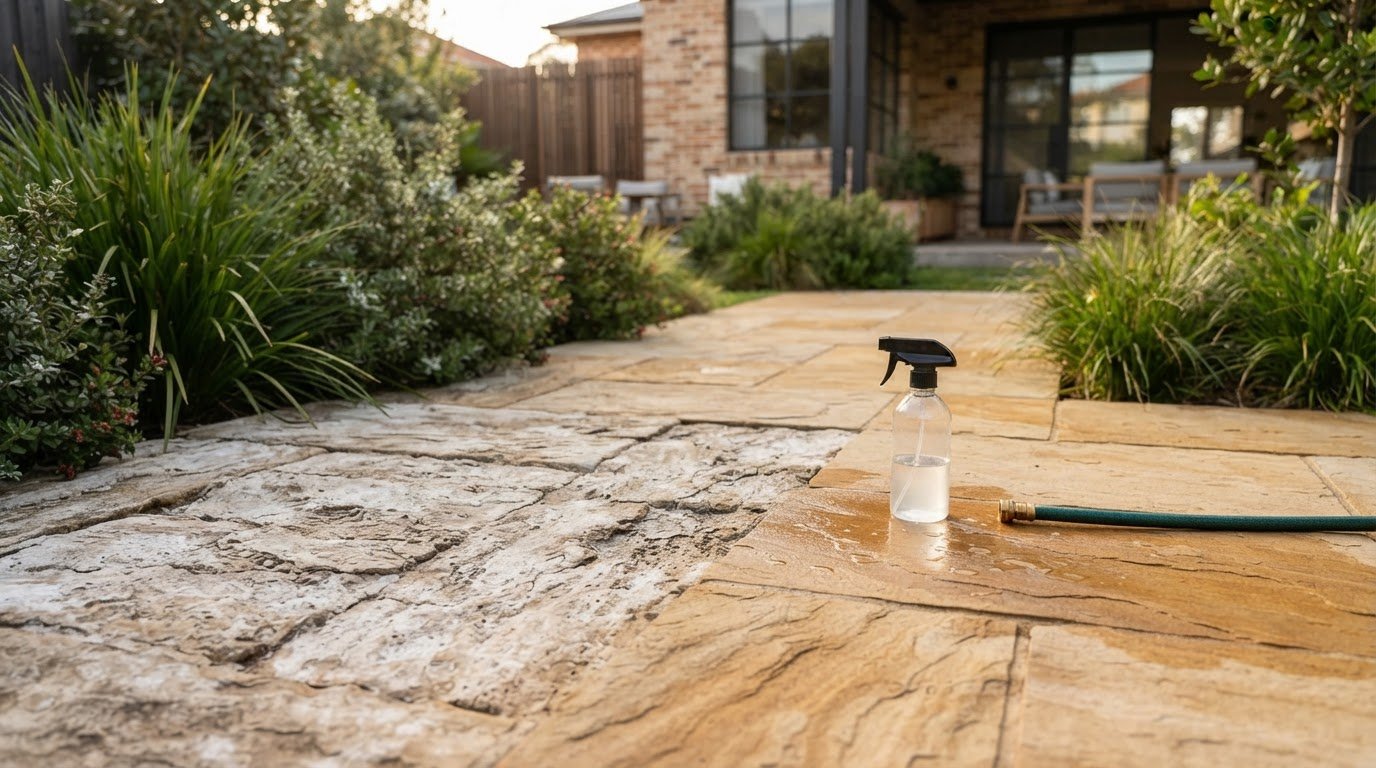
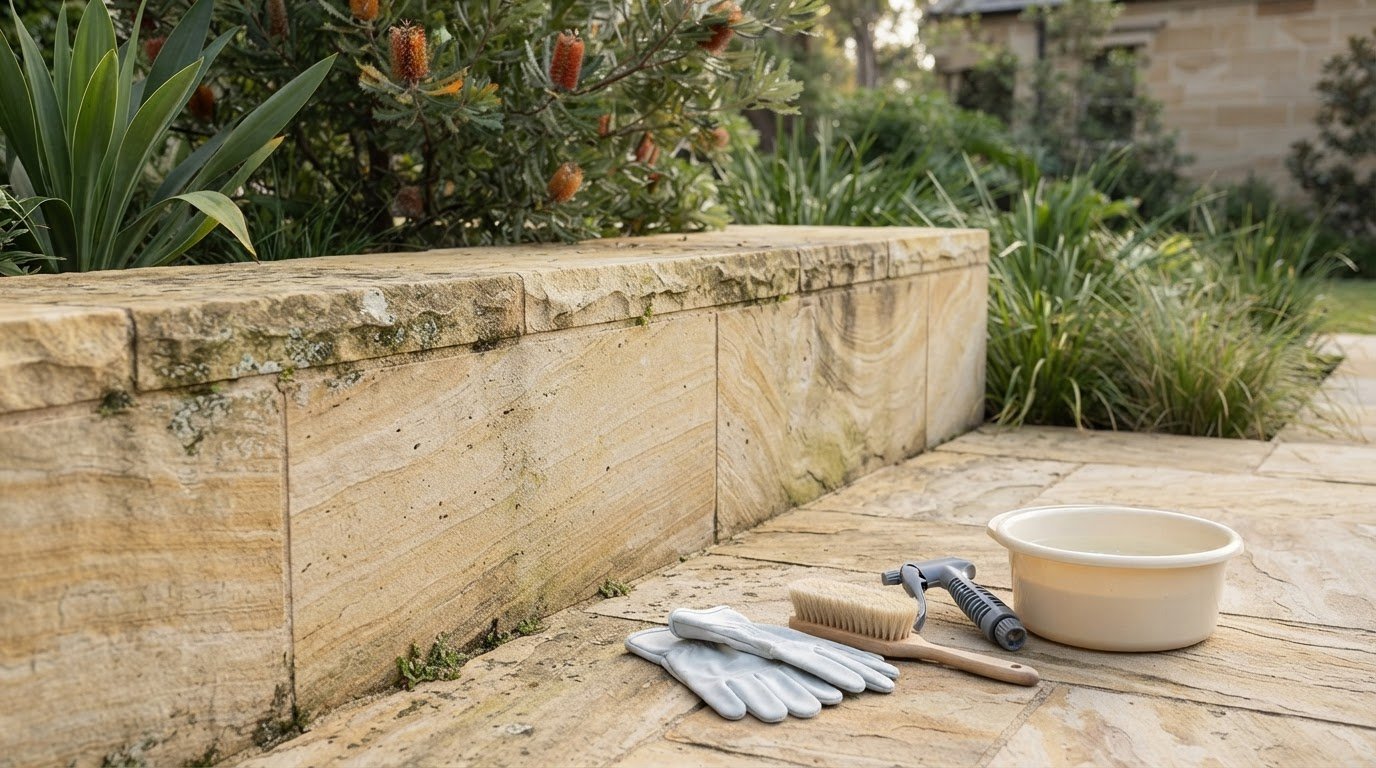
A more aggressive clean isn’t always a better clean. With Hawkesbury Sandstone, the golden, textured surface that gives Sydney buildings and gardens their local character can be affected by the wrong treatment. Black spots and green growth may also have different causes, so identifying the mark is an important first step.
If you’re unsure whether you’re seeing natural weathering, dirt or organic growth, you’re not alone. This quartz-rich sandstone from the Sydney Basin has a distinctive appearance and responds to the conditions around it. Start by understanding the surface rather than reaching for the harshest cleaner.
In this guide, you’ll learn what makes Hawkesbury Sandstone distinctive, how weathering and lichen or algae can affect its appearance, and how to clean and maintain it carefully. You’ll also find practical ways to tell natural variation from marks that may respond to a targeted DIY treatment.
Key Takeaways
- Learn how to recognise Hawkesbury Sandstone’s natural colour and texture, and why its appearance can vary.
- Distinguish ordinary surface weathering from visible organic growth before choosing a cleaning approach.
- Clean methodically: identify the mark, follow product directions and don’t assume high pressure or harsh chemicals are suitable.
- Check stone regularly and address recurring growth in a timely way. Prevention can help with maintenance but can’t guarantee a permanently mark-free surface.
What Is Hawkesbury Sandstone, and Where Do You See It Around Sydney?
Hawkesbury Sandstone is a quartz-rich sedimentary rock associated with the Sydney Basin, formed during the Middle Triassic. Its distinctive presence reflects both the region’s geology and the stone’s long use in construction. The Hawkesbury Sandstone overview describes its formation, spread around Sydney and history as a building material.
How Hawkesbury Sandstone became part of Sydney's landscape
The rock is part of the geological setting beneath and around Sydney. Exposed sandstone helps shape the region’s rugged scenery, including rock faces and sandstone formations around Sydney Harbour. It also appears in older buildings and other stonework across the city. Together, these natural and built features give sandstone a strong connection to Sydney’s landscape.
Where homeowners may encounter the stone
At home, natural sandstone may appear as exposed rock, garden features, paving or retaining walls. Colour and texture vary, so a golden tone or rough, layered surface alone can’t confirm that a piece is Hawkesbury Sandstone. Manufactured paving may imitate natural stone, and other sandstone may come from a different geological source.
If you’re identifying a surface, look for clues such as natural layers and variation between pieces, but treat these as indicators rather than proof. Installation records or reliable material information can help establish what was used. Identification matters before cleaning because natural stone and manufactured lookalikes may respond differently. Don’t assume one method suits both.
Hawkesbury Sandstone Characteristics: Weathering, Colour and Surface Growth
No two sandstone surfaces need to look exactly alike. Hawkesbury Sandstone can vary in colour, grain and texture. Age, exposure, previous finishes and nearby vegetation also affect how a particular surface looks. The geology of the Sydney Basin provides context for the region’s varied rock landscape, but appearance alone can’t establish a stone’s exact geological identity.
Why sandstone can look different from one surface to another
Sunlight, rain, shade and surrounding conditions influence how outdoor stone ages. A sheltered wall may look different from paving exposed to the weather and foot traffic. Changes in tone or texture can be part of the stone’s character, rather than a sign that it needs cleaning. Compare the area you’re concerned about with the rest of the surface, and note whether the difference follows a pattern such as shade, runoff or regular use.
Black spots, green algae and other surface marks
Some dark, well-defined spots on natural stone may be lichen, while green film or patches may be algae. Both are forms of organic growth, but not every black or green mark has the same cause. Dirt, runoff and other staining can look similar, so visual inspection provides clues rather than a certain diagnosis.
Natural weathering changes a stone’s surface over time; organic growth is material growing on the surface and may be treatable. The distinction matters: a treatment intended for lichen or algae won’t necessarily address a mark with another cause, and natural variation shouldn’t automatically be treated as a stain. For suspected organic spots or growth, a targeted option is black spot remover for natural stone. Follow the product directions for use.
How to Clean Hawkesbury Sandstone Carefully Without Rushing the Process
Start by identifying what you’re dealing with. A dark spot, green film, dirt and natural colour variation can look similar, but may need different responses. Before applying a cleaner, check that it is intended for natural stone and read its application and safety directions.
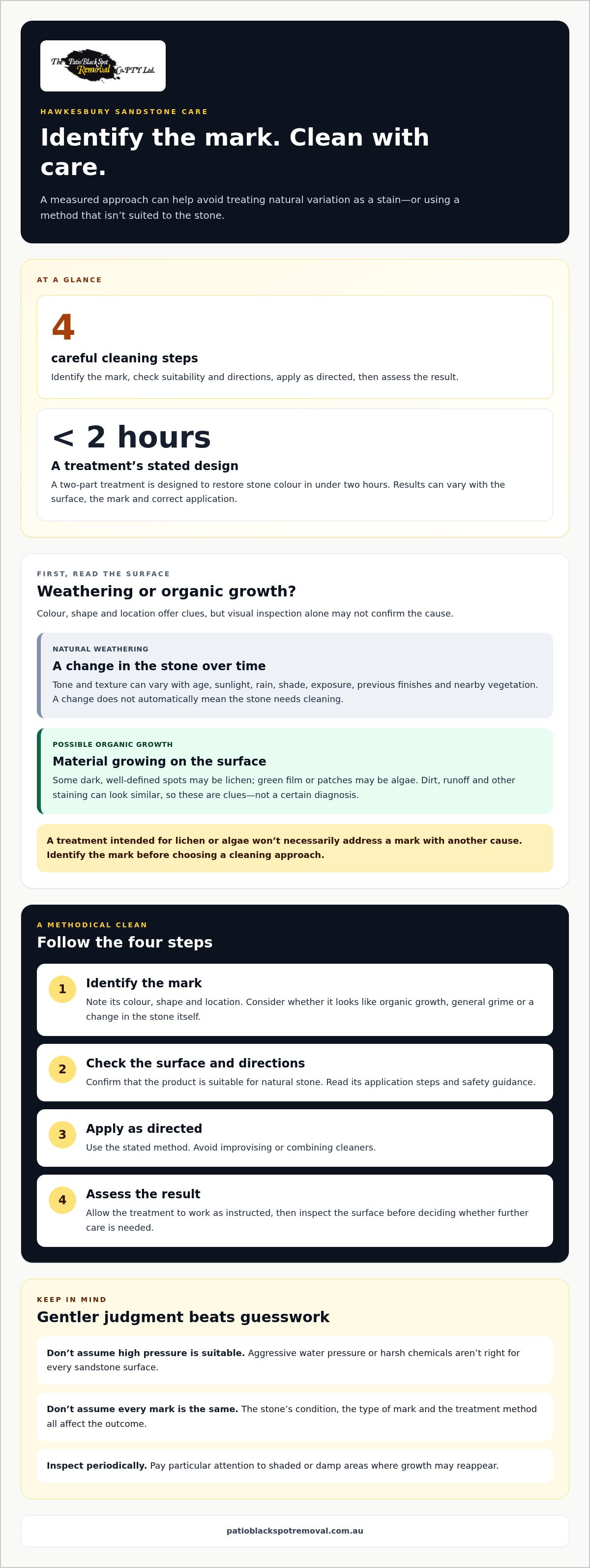
- Identify the mark: Note its colour, shape and location. Consider whether it looks like organic growth, general grime or a change in the stone itself.
- Check the surface and directions: Confirm the product is suitable for natural stone, then read its application steps and safety guidance.
- Apply as directed: Use the stated method and avoid improvising or combining cleaners.
- Assess the result: Allow the treatment to work as instructed, then inspect the surface before deciding whether further care is needed.
Don’t assume aggressive water pressure or a harsh chemical is right for every sandstone surface. The stone’s condition, the type of mark and the treatment method all affect the outcome. A measured approach helps avoid treating natural variation as a stain or applying a method that isn’t suited to the surface.
A careful approach to black lichen spots on natural stone
For suspected black lichen spots or green algae, a DIY natural-stone black spot remover offers a targeted option. Patio Black Spot Remover is a two-part treatment formulated for these organic marks. It is designed to restore stone colour in under two hours, although results can vary with the surface, the mark and correct application. Follow the product directions and assess the outcome on your stone.
Why treatment directions matter
Product directions explain how to apply a treatment and what precautions to take. Follow them, and don’t assume a cleaner suited to one surface or mark will work the same way on another. Patio Black Spot Removal Australia’s stone-care products are biodegradable and acid-free. For product guidance, contact us about natural-stone care.
Maintaining Hawkesbury Sandstone and Preventing Organic Growth
Outdoor stone is exposed to changing weather and surrounding conditions, so maintenance works best as a routine rather than a one-off clean. Visually inspect the surface from time to time, paying particular attention to shaded or damp areas where growth may reappear. If you notice recurring organic spots or green growth, identify the mark and address it before it spreads across a larger area.
When an annual stone preventer may be useful
If organic growth keeps returning, an annual treatment can be part of ongoing care. Patio Black Spot Preventer is designed for all stone types. It is applied annually to help stop organic growth returning and kill green algae without pressure washing. Prevention supports maintenance but doesn’t promise that stone will stay free of every mark or stain. Follow the product directions and keep checking the surface, especially where growth has appeared before.
A practical maintenance routine for Sydney stonework
Keep the routine simple: inspect outdoor stone, note changes in colour or surface growth, and choose a treatment suited to both the mark and the material. Avoid assuming every discolouration is organic or that a preventive product addresses all staining. Patio Black Spot Removal Australia sells stone-care products for DIY use, including a two-part remover for black lichen spots and green algae and an annual preventer.
Regular checks help you spot recurring growth without over-cleaning the stone. For Hawkesbury Sandstone in Sydney, match the treatment to the surface and the mark, then follow the product directions.
Care for Your Sandstone with Confidence
Good care for Hawkesbury Sandstone starts with recognising that natural colour and weathering aren’t automatically signs of dirt. Identify the mark before treating it, follow the product directions carefully, and watch for recurring organic growth. Prevention can support regular maintenance, but no treatment promises a permanently mark-free surface.
For black lichen spots or green algae on natural stone, Patio Black Spot Remover is a DIY treatment formulated for these types of growth. The product is biodegradable and acid-free, and the company manufactures its products in Sydney.
A measured approach helps preserve the stone’s natural character while addressing marks that need attention. To discuss which stone-care product suits your needs, contact Patio Black Spot Removal Australia. With regular checks and thoughtful treatment, you can care for your outdoor stone without rushing into harsh cleaning.
Frequently Asked Questions
What is Hawkesbury Sandstone?
Hawkesbury Sandstone is a sedimentary rock associated with the Sydney region and the Sydney Basin. Around Sydney, it appears in exposed rock formations and older outdoor stonework. Its colour and texture can vary, and a sandstone-like appearance alone doesn’t confirm its geological source. When identifying a surface, distinguish what you can observe from what’s verified about the stone’s origin.
Is Hawkesbury Sandstone suitable for outdoor paving?
Natural sandstone is used outdoors, including for paving, but suitability depends on the specific stone, its finish, installation and site conditions. There isn’t one performance outcome that applies to every Hawkesbury Sandstone surface. For existing paving, identify the material as best you can and use cleaning and care directions intended for natural stone rather than assuming all paving responds the same way.
How do you remove black spots from Hawkesbury Sandstone?
First consider whether the spots may be organic growth, such as lichen, because not every dark mark has the same cause. Use a treatment formulated for natural stone and follow its directions. Patio Black Spot Remover is a two-part DIY treatment formulated for black lichen spots and green algae on natural stone. Results depend on the surface, the mark and correct application.
Can pressure washing damage sandstone?
Pressure washing can be too aggressive for some sandstone surfaces, depending on the stone’s condition, finish and the equipment used. Don’t assume a pressure setting that suits one installation is safe for another, or default to maximum pressure. Choose a cautious cleaning approach that accounts for the surface and follow the directions for any product used. This is especially sensible for older or worn stonework around Sydney.
How can I help prevent algae returning on sandstone?
Check outdoor stone periodically, especially areas where green growth has appeared before, and treat recurring growth with a product suited to the surface. Patio Black Spot Preventer is designed as an annual product for all stone types and can be part of a maintenance routine. It doesn’t guarantee that all future growth or staining will be prevented, so follow its instructions and continue checking the stone.