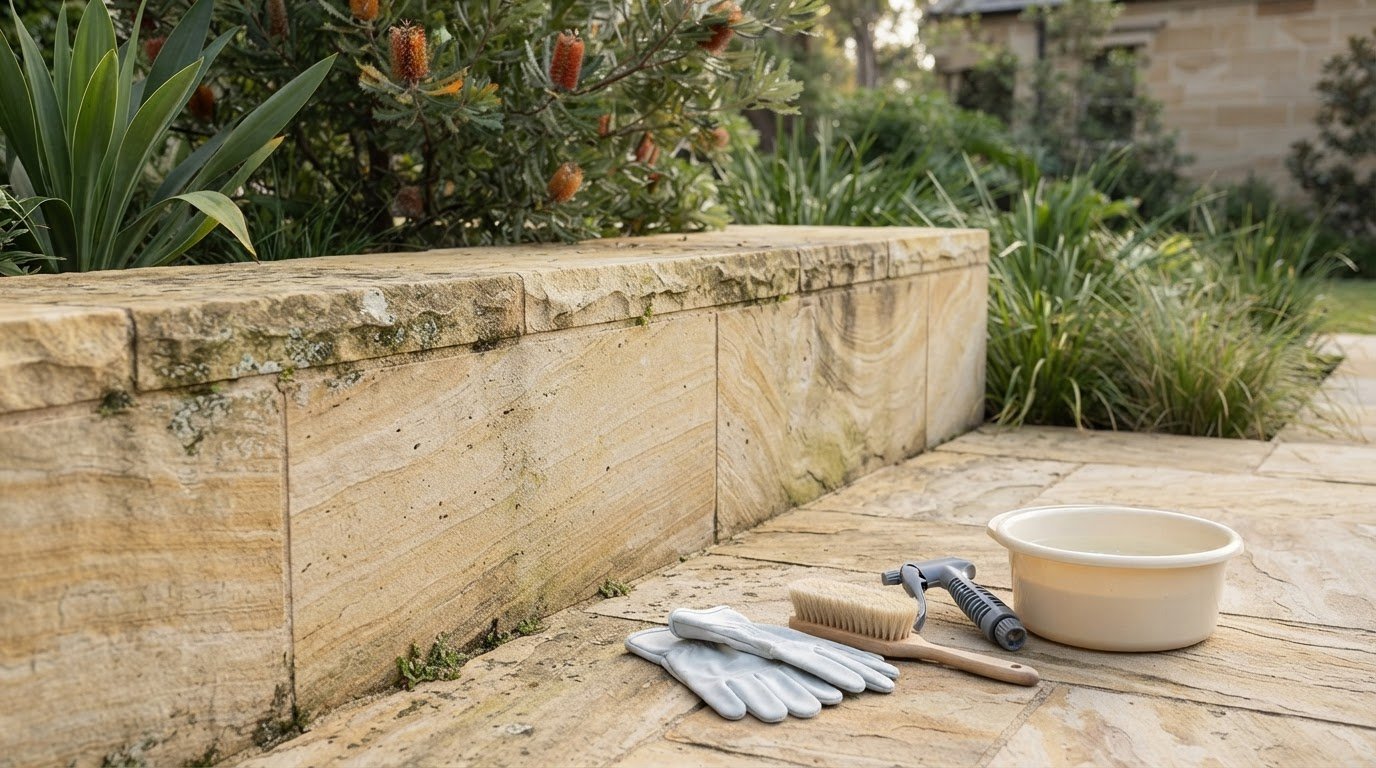

What’s the safest way to clean Queensland Sandstone? Start by identifying the stone and its finish, then consider what is on the surface. Sandstone paving can vary, and the right approach for loose dirt may not suit green algae or stubborn black lichen spots.
It’s tempting to reach for a quick fix, but an unsuitable method can affect the stone as well as the mark. Before cleaning, check the paving’s care guidance and look for signs of previous sealing or treatment. That small bit of preparation can help you choose a more suitable next step.
This guide explains what Queensland sandstone can mean, why outdoor paving develops organic growth and how to maintain it. It also covers when a targeted treatment may help, including options for black lichen spots and green algae on natural stone. Whether you’re caring for a patio in Sydney or elsewhere in Australia, match the method to the surface rather than treating every mark alike.
Key Takeaways
- Queensland Sandstone is a regional description, not a guarantee of one uniform stone. Identify the installed material and finish before choosing a cleaning approach.
- Shade, moisture, surface texture and nearby organic matter can encourage algae or lichen. Dark spots alone don’t prove the stone is damaged.
- For routine maintenance, inspect the paving, clear loose debris and follow care guidance for the specific stone.
- For black lichen spots and green algae on natural stone, Patio Black Spot Removal Australia’s acid-free, biodegradable two-part treatment is formulated for those marks. An annual Preventer is a separate maintenance option.
What Does Queensland Sandstone Mean? Understand the Material Before You Care for It
Sandstone is sedimentary rock formed when sand-sized grains accumulate, compact and become cemented together. This describes the rock type, but not the exact properties of a particular slab or paver. Grain size, binding material, finish and later treatments can vary, so appearance and cleaning needs aren’t identical across every installation.
“Queensland sandstone” is best understood as a regional description, not a single specification for paving. It may refer to stone associated with Queensland or sold for use in the state, but the label alone doesn’t identify the exact geological source or surface properties. A geological formation is a rock unit described by its origin and characteristics; paving is a product selected, cut and finished for installation. The terms aren’t interchangeable.
For geological context, Hutton Sandstone, a geological formation in Queensland, is one named example. That doesn’t mean pavers described as Queensland sandstone all come from that formation. Product labels and project records are more useful when identifying the material installed on your patio.
How to identify sandstone on a Sydney property
Examine exposed edges and the surface in good light. Visible grains, a granular feel, natural colour variation and a cleft, honed or sawn finish can offer clues, but none confirms the stone’s identity on its own. Sealer can deepen or even out the colour, while weathering and previous treatments can change how texture and marks appear.
Check invoices, product specifications or installation records for the stone name and finish. If those records aren’t available, arrange material identification before choosing a treatment. Knowing what the paving is made of gives you a better basis for deciding how to care for it.
Why Queensland Sandstone Paving Develops Weathering, Algae, and Black Spots
Outdoor stone changes according to its setting, not simply its postcode. A paved area beneath dense shade, beside garden beds or under dripping eaves may stay damp longer than an open, sunny path. Moisture, limited airflow and organic debris such as fallen leaves can create conditions that favour algae or lichen. A rough or textured finish may also hold water and debris more readily than a smoother one.
Conditions vary from one property to another, including across Sydney. Note how much sun the paving receives, where water collects after rain or washing, and whether nearby plants regularly drop leaves or sap. Geological references are location-specific too: the Queensland Government’s geological map of Queensland sandstone provides context for a particular area, not a universal description of every paving product.
Green algae and black lichen spots are organic staining concerns, but their presence alone doesn’t prove the sandstone is damaged. If a mark remains after surface growth is removed, it may have another cause. Cracks, loose pieces or flaking are signs of physical change and need a separate assessment.
Why sandstone surfaces respond differently to cleaning
Porosity, finish, sealers and past treatments all affect how water and cleaning products interact with a surface. A sealer may alter absorption or appearance, and residue from an earlier treatment can influence a new cleaning attempt. That’s why a method that works on one Queensland Sandstone patio may not suit another.
Excessive pressure may erode or roughen some stone, while unsuitable chemicals can affect the surface or its finish. That doesn’t mean every pressure-based method or cleaner is harmful; suitability depends on the stone and how the method is used. Identify the stone and the stain before choosing a cleaning approach. This helps distinguish removable surface growth from deeper discolouration or deterioration and gives you a clearer basis for the next step.
How to Maintain Queensland Sandstone Outdoors Without Guesswork
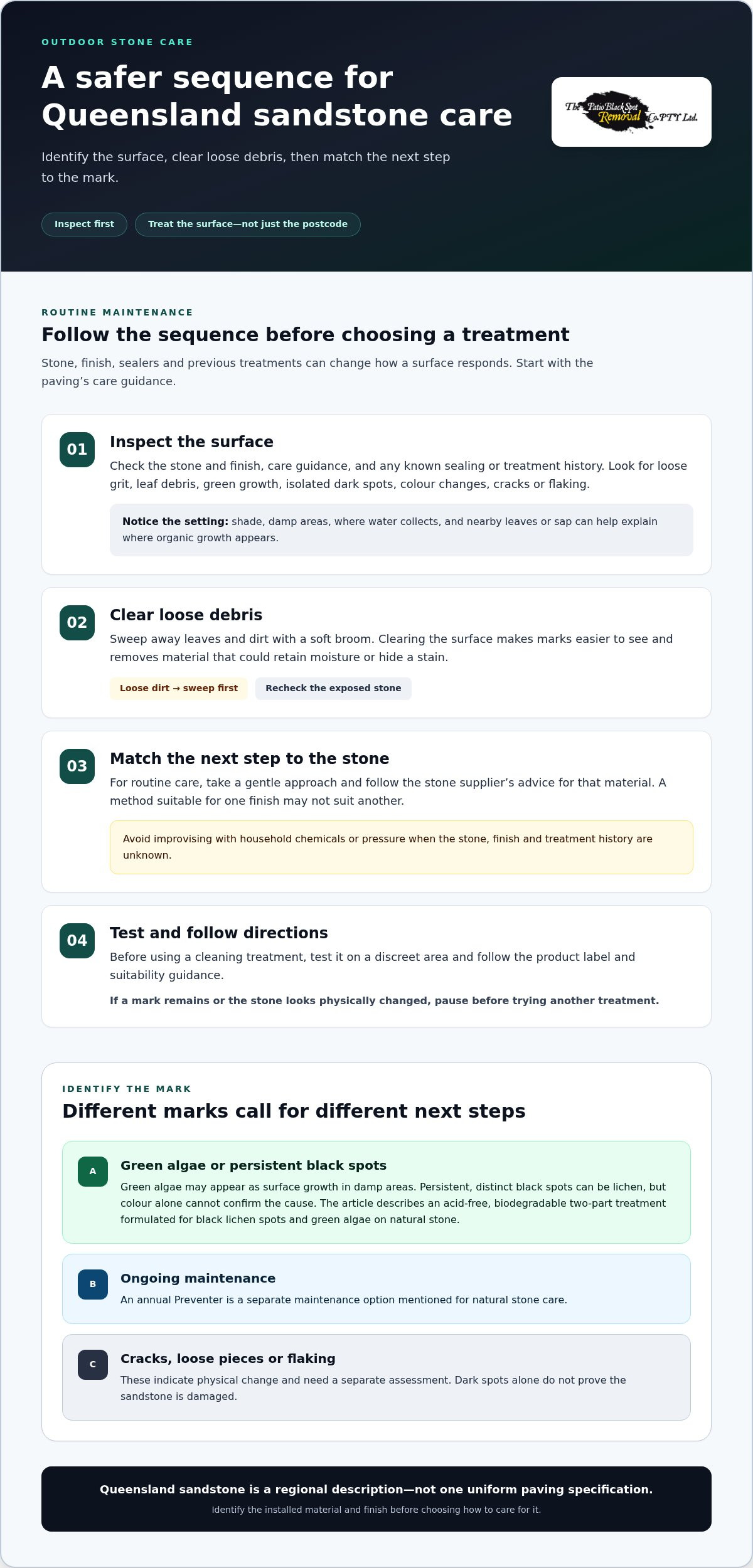
A straightforward routine helps you spot changes early and avoid treating every mark the same way. Start with the paving’s care guidance, especially if you know its finish or it has been sealed or treated before.
- Inspect the surface. Look for loose grit, leaf debris, green growth, isolated dark spots, colour changes, cracks or flaking. Note where marks appear and whether they return in damp or shaded areas.
- Clear loose debris. Sweep away leaves and dirt with a soft broom. This gives you a clearer view of the stone and removes material that could retain moisture or hide a stain.
- Choose a suitable next step. For routine care, use a gentle approach and follow the stone supplier’s advice for that material. Don’t assume a method suitable for one finish will also suit another.
Before using a cleaning treatment, test it on a discreet area and follow the product label. Avoid improvising with household chemicals or pressure. Without knowing the stone, finish and treatment history, it can be difficult to predict how the surface will respond.
When black spots need a targeted treatment
Loose dirt often shifts with sweeping, while green algae may appear as surface growth in damp areas. Persistent, distinct black spots can be lichen, but colour alone can’t confirm the cause. Patio Black Spot Removal Australia’s acid-free, biodegradable two-part system is formulated to remove black lichen spots and green algae from natural stone. For these organic marks, consider a natural stone black spot remover, and follow the label directions and suitability guidance.
If a mark remains or the stone looks physically changed, pause before trying another treatment. For product guidance, get in touch about your sandstone cleaning question.
Choosing a Queensland Sandstone Treatment for Stains and Long-Term Care
Choose a treatment only after considering both the surface and the mark. Dirt, organic growth, residue from earlier products and changes to the stone itself can look similar but need different responses. A product intended for lichen won’t necessarily address every dark patch, so don’t select a treatment based on colour alone.
For black lichen spots and green algae on natural stone, Patio Black Spot Removal Australia’s two-part system is acid-free and biodegradable. It is designed to restore natural stone colour in under two hours. Results can depend on the surface and the mark, so follow the product label and suitability guidance, particularly if the paving is sealed, weathered or previously treated. The guide to how the stone treatment works explains the process.
Preventing the return of organic growth
After cleaning, consider whether the conditions that encouraged growth are still present, such as persistent shade, dampness or leaf debris. Patio Black Spot Preventer is an annual maintenance product designed to stop organic growth returning and kill green algae without pressure washing. It is separate from the remover. Review its label and consider the paving’s condition and treatment history before use. Find details about annual stone protection.
For Queensland Sandstone, a considered choice starts with identifying the material, understanding the stain and following product directions rather than relying on a one-size-fits-all method. In Sydney, as elsewhere, checking shaded and damp areas during routine patio care can help you notice organic growth early.
Make Your Next Stone-Care Step a Thoughtful One
Your outdoor paving doesn’t need an aggressive cleaning routine to look cared for. A measured approach gives you time to understand how the surface responds and choose maintenance that suits its condition. With Queensland Sandstone, that attention can help you preserve the character of the paving while addressing the marks that matter.
If black lichen spots or green algae are the concern, Patio Black Spot Removal Australia’s acid-free, biodegradable two-part stone-cleaning system is formulated for those organic marks on natural stone. Follow the label directions and suitability guidance before use.
Choosing the right treatment starts with the surface and the stain. Use the product information and care guidance to match your next step to the paving.
Frequently Asked Questions
What is Queensland sandstone?
Queensland sandstone is a broad regional description, not a guarantee that every paving product has the same specification. Sandstone forms when sand-sized grains are compacted and cemented into rock, and its visible qualities can differ. For paving, product descriptions or installation records can help identify the stone supplied, which is useful when planning repairs or maintenance.
Is Queensland sandstone suitable for outdoor paving?
It can be used outdoors, but suitability depends on the particular stone and how it’s installed. For a Sydney patio, consider drainage, foot traffic and whether the surface has been sealed. A stone suitable for one location may not be right for another, so use the paving’s material information to guide decisions about its intended use and care.
How do you remove black spots from sandstone?
First consider whether the spots may be organic growth or a different stain, such as a mark from metal or a spill. Appearance alone can’t always identify the cause. Patio Black Spot Removal Australia’s two-part remover is formulated for black lichen spots and green algae on natural stone. Check the label for suitability, test a discreet area and follow the directions rather than assuming it treats every dark mark.
Can you pressure wash Queensland sandstone?
There isn’t one pressure setting that’s appropriate for every sandstone surface. The stone’s condition and finish affect how it responds, and forceful cleaning may be unsuitable for worn edges or a surface with existing damage. Check the supplier’s care guidance before using pressure, and don’t rely on it to resolve a stain whose cause is unknown. A Sydney paving surface may need a different approach from another installation.
For black lichen spots or green algae on natural stone, explore Patio Black Spot Remover and follow its label directions to choose a suitable next step.