What if the stubborn grime on your garden path isn't actually dirt, but a living organism that's slowly claiming your property? Many Australian homeowners find themselves trapped in a cycle of high-pressure washing that never quite clears those unsightly black spots, leaving brickwork looking tired and feeling dangerously slippery. Restoring brick paths and walls to their original glory requires more than just water; it demands a biological reset that targets the root of the problem.
It's frustrating to see your outdoor spaces look neglected despite your best efforts at maintenance. You likely want a solution that doesn't just look good for a week but actually preserves the integrity of your masonry for years to come. In this guide, you'll discover how to transform weathered, lichen-covered brickwork into a stunning garden feature using professional restoration techniques that go beyond the surface. We'll explore the most effective ways to eliminate black spots, navigate local Sydney council regulations for wall repairs, and implement low-maintenance strategies that keep your paths safe and vibrant without the constant need for heavy scrubbing.
Key Takeaways
- Learn why standard pressure washing often fails to remove stubborn "black spot" lichen and how high pressure can actually damage older masonry.
- Understand the vital difference between making structural repairs and restoring brick paths and walls to their original, vibrant appearance.
- Discover a professional step-by-step restoration process that targets organic spores at the root for a deeper, longer-lasting clean.
- Identify specialized chemical treatments that dissolve lichen safely, saving you hours of ineffective manual scrubbing.
- Get expert advice on seasonal maintenance specifically for the Sydney climate to keep your garden features lichen-free year-round.
Why Do Brick Paths and Walls Deteriorate Over Time?
Brickwork often feels like a permanent, indestructible feature of an Australian garden. However, masonry is surprisingly dynamic. Deterioration isn't just about age; it's a two-pronged attack involving structural shifting and biological colonization. When you're considering restoring brick paths and walls, you're usually fighting a battle against the very nature of the materials used. Clay bricks are naturally porous. Think of them as a very hard, dense sponge. This porosity allows bricks to "breathe," but it also means they trap moisture and microscopic organic spores deep within their structure.
In urban environments like Sydney, this process accelerates. Urban pollution and salt air from the coast settle on these porous surfaces. The salt reacts with the minerals in the brick and mortar, while pollution provides a "food source" for organic growth. Over time, what started as a clean red or cream path becomes a patchwork of grey, green, and black. This isn't just a surface stain. It's a complex ecosystem that has anchored itself into the brick's pores, making simple cleaning methods largely ineffective.
The Impact of Sydney’s Humidity on Masonry
Sydney’s climate is particularly harsh on brickwork. High humidity levels and relatively mild winters mean that biological growth never truly goes dormant. While a frost in Canberra might kill off surface algae, Sydney's dampness encourages a constant cycle of "greening." This is most evident on south-facing paths or walls shaded by heavy foliage. These areas rarely see enough direct sunlight to dry out completely. The persistent dampness allows moisture to sit in the brick, leading to a deep-seated colonization of mould and lichen. This cycle of water absorption and slow evaporation doesn't just look bad; it can eventually weaken the mortar joints, making understanding the repointing process a vital part of long-term maintenance.
Recognising the Signs of Structural vs. Surface Damage
Before restoring brick paths and walls, you must distinguish between aesthetic issues and structural failures. Surface damage often appears as "efflorescence," a white, powdery salt deposit that rises to the surface after rain. While unsightly, it’s usually harmless. More concerning is "spalling," where the face of the brick begins to pop or flake off. This happens when moisture trapped inside the brick expands or reacts with salt.
Structural damage is different. If you notice bricks that have physically shifted, or wide gaps appearing in the mortar, you're likely looking at soil subsidence or root intrusion from nearby gum trees. These are tripping hazards that require physical repair rather than just a deep clean. Identifying these signs early ensures you apply the right restoration technique before a small crack becomes a costly rebuilding project.
The "Black Spot" Problem: Why Pressure Washing Often Fails
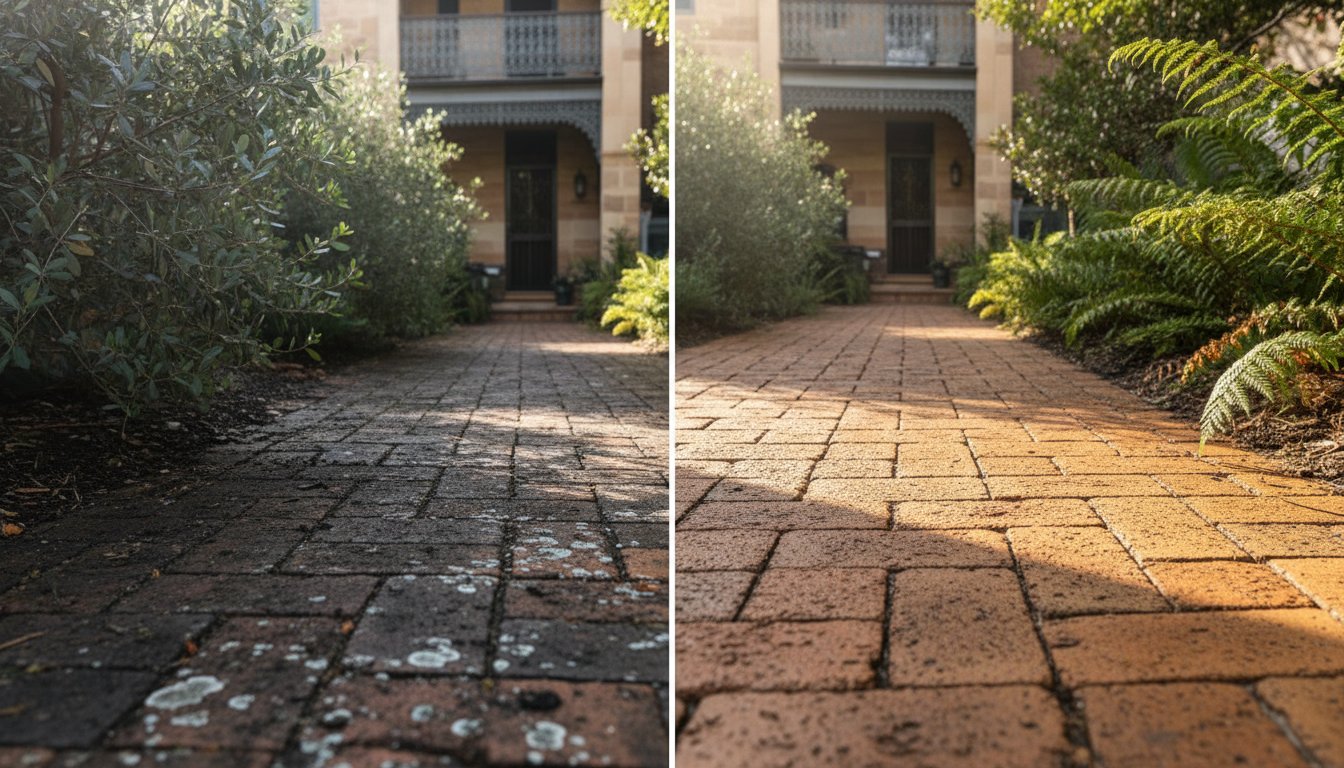
Most homeowners reach for a pressure washer the moment they see dark stains. It's a logical response. However, when restoring brick paths and walls, relying solely on mechanical force often does more harm than good. Those circular black stains aren't just dirt; they're a hardy lichen known as Aspicilia calcarea. This organism doesn't just sit on the surface. It anchors itself deep into the clay, using tiny filaments to grip the internal structure of the brick.
High-pressure water might strip the top layer of the lichen, making the path look clean for a few weeks. But this force comes at a cost. Aggressive pressure washing can pit the surface of old bricks, creating micro-fissures. These tiny cracks provide the perfect housing for leftover spores to thrive. Because the root of the lichen remains untouched, it returns faster and more aggressively than before. For those dealing with heritage masonry, following NPS guidelines for historic buildings is essential to avoid permanent damage caused by over-cleaning.
The Biology of Lichen on Clay Surfaces
Lichen is a complex organism, not a simple stain. It represents a symbiotic relationship between fungi and algae. The fungus provides the structure and anchors the colony, while the algae produce food through photosynthesis. Incredibly, these black spots actually feed on the minerals within your bricks. They thrive in the Sydney humidity mentioned earlier, slowly etching into the clay surface over years. Because they're alive, they require a biological solution rather than just a mechanical one.
Why Mechanical Cleaning is Only Half the Battle
Mechanical cleaning is only half the battle. Scrubbing or blasting only removes the visible "bloom." To truly succeed in restoring brick paths and walls, you must address the biological root. Professional-grade treatments are designed to penetrate the brick's pores and dissolve the lichen at a cellular level. You can see the science behind this process by reading about how it works. Unlike a pressure washer that just moves dirt around, a targeted chemical solution ensures the organism is dead, preventing the rapid regrowth that usually follows a weekend of DIY cleaning. If you're unsure which treatment is right for your specific brick type, feel free to reach out for expert advice.
Repair vs. Restore: Deciding the Best Path for Your Heritage Bricks
Choosing between a total overhaul and a targeted cleanup is the first major decision for any homeowner. Many assume that once a path looks grey and weathered, it's past its prime. However, restoring brick paths and walls is often a far more sustainable and cost-effective route than starting from scratch. In Sydney, new facing bricks can cost approximately A$900 per 1,000, and that's before you factor in professional bricklaying rates which range from A$52 to A$115 per hour. When you choose restoration over replacement, you're typically looking at a solution that is 70% cheaper while achieving a similar "as-new" aesthetic.
The distinction lies in the difference between structural repair and aesthetic restoration. Repair involves fixing physical failures; replacing a cracked brick, re-leveling a sunken section, or renewing the mortar. When structural integrity is compromised, following an NPS guide to repointing mortar joints ensures that you use the correct mortar mix to prevent further damage to aged bricks. Restoration, on the other hand, focuses on the health and appearance of the entire surface. It's about reversing the biological colonization discussed earlier and bringing back the deep, earthy reds and oranges that make Australian masonry so distinctive.
Preserving original Sydney "sandstock" or vintage bricks is also a matter of property value. These heritage materials possess a character and texture that modern, mass-produced bricks struggle to replicate. By restoring brick paths and walls instead of replacing them, you maintain the historical integrity of your home, which is a significant asset in the local real estate market.
When to Choose Minor Repairs
Minor repairs are appropriate when the damage is localized. If you have a few loose pavers, a simple re-sanding of the joints might be all that's required to stabilize the path. Individual bricks that have "spalled" or cracked can be cut out and replaced without disturbing the surrounding area. Tuckpointing is another vital repair; it's the process of renewing the external part of the mortar joint. If the mortar is crumbling but the bricks are still sound, a repair will prevent water from entering the wall and causing structural issues later.
When a Full Restoration is Necessary
Full restoration is the best path when the issues are widespread. If your entire patio is covered in "black spot" lichen, cleaning a single brick won't help. You need a comprehensive treatment like Patio Black Spot Remover to reset the entire surface. Restoration is also necessary when bricks have become dull and faded due to years of pollution and UV exposure. This process clears the pores of the brick, preparing the surface for long-term protection and ensuring your garden feature looks vibrant for years rather than just weeks.
Step-by-Step Guide to Professional-Grade Brick Restoration
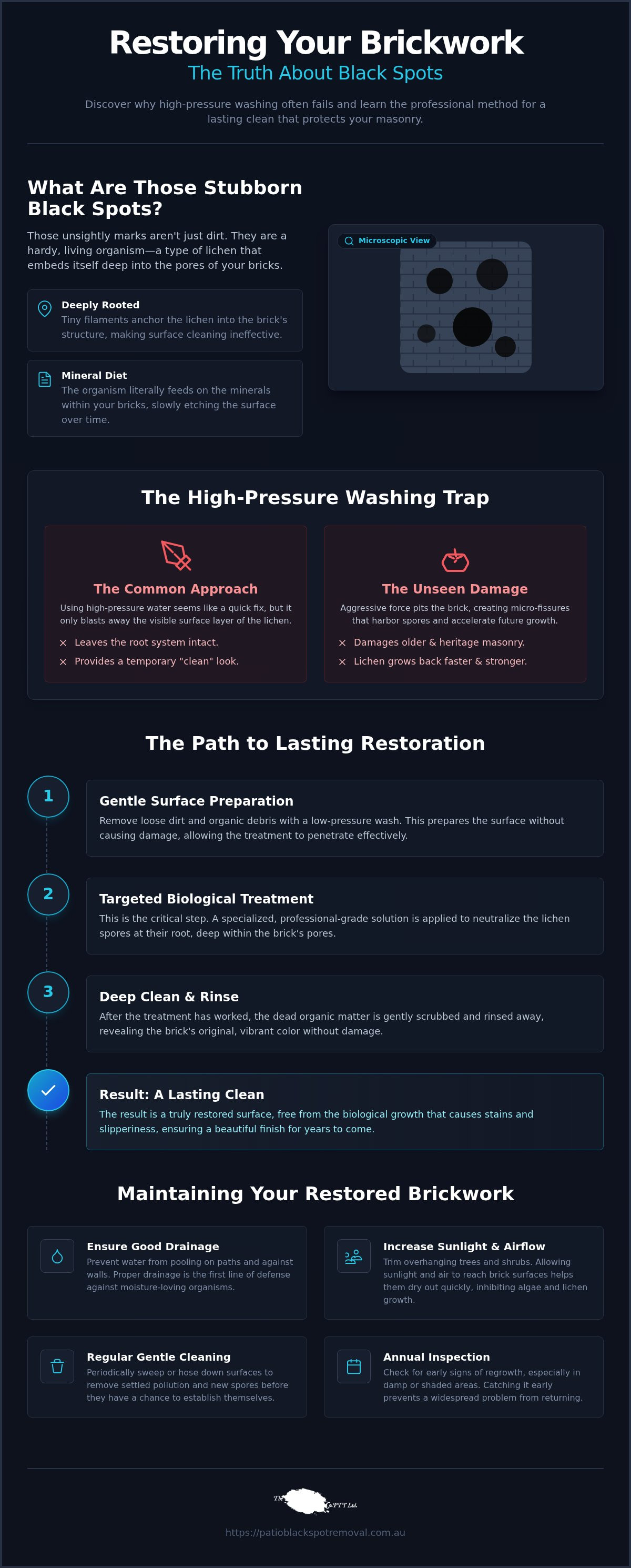
Achieving professional results when restoring brick paths and walls requires a methodical approach that prioritises the health of the masonry over raw power. The process begins with "clearing the canvas." Use a stiff broom to remove loose soil, leaves, and overgrown weeds from joints. While it's tempting to use a pressure washer here, keep the setting low. Your goal is simply to remove surface debris so the restoration treatments can reach the actual pores of the brick. Once the surface is clear and slightly damp, you're ready for the biological reset.
The core of the restoration involves applying a targeted treatment like Patio Black Spot Remover. Unlike generic soapy water or bleach, these formulas are engineered to break down the complex bond between the lichen and the clay. After the treatment has done its work, you'll move into the structural phase. This involves checking for sunken pavers or crumbling mortar joints that were previously hidden under layers of grime. The final step is a thorough rinse to remove any residual product and balance the pH of the brick surface, ensuring it's ready for future protection.
Applying the Restoration Treatment
Safety is paramount when working with professional-grade chemicals. Always wear appropriate PPE, including gloves and eye protection. Before you start, soak any surrounding garden beds or lawns with fresh water; this prevents the plants from absorbing any run-off. For even coverage on clay bricks, a plastic watering can is often more effective than a sprayer. Apply the solution generously and allow it to "dwell" on the surface. For most Sydney properties, a dwell time of two hours is sufficient to dissolve years of organic growth. Keep the area damp during this period to ensure the treatment stays active and continues to penetrate deep into the brickwork.
Structural Finishing Touches
Once the bricks are clean and the organic growth is gone, you can address the physical gaps. For brick paths, this usually means re-sanding the joints. Choose a fine, kiln-dried sand that matches the local Sydney aesthetic. Pour the sand over the dry path and sweep it into the joints, using a plate compactor or a rubber mallet to settle the grains. This compaction is vital as it leaves no room for wind-blown seeds to take root. It is essential to perform this final sanding phase during a window of guaranteed dry weather, as even a light drizzle can turn the sand into a sticky mess before it properly settles. If you're tackling a complex restoration and need guidance on the best products for your specific brick type, you can contact our experts for a professional recommendation.
Maintaining Your Restored Brickwork in the Sydney Climate
Once you've invested the time and effort into restoring brick paths and walls, the last thing you want is for the Sydney humidity to undo your hard work. Maintenance in our local climate isn't just about appearances; it's about managing the biological pressure that comes with salt air and damp winters. While the initial restoration resets the surface, a proactive approach ensures those "black spots" don't find a foothold again next season. Sydney's climate is relentless, and porous clay bricks are particularly vulnerable if left unprotected.
The secret to longevity lies in moving away from reactive cleaning. Instead of waiting for the grime to return, you should aim for a biological shield. This is especially important in shaded areas of your garden where moisture lingers long after the rain has stopped. Gentle, regular care is far more effective at preserving the integrity of your masonry than a yearly blast with a high-pressure hose, which can pit the surface of the brick and invite even more growth. By following a consistent maintenance schedule, you ensure your garden features remain a highlight of your property rather than a safety hazard.
Annual Prevention Strategies
A common mistake homeowners make is adopting a "set and forget" mentality after a successful restoration. Without a barrier, the porous nature of clay bricks remains an open invitation for airborne spores. Applying a product like Patio Black Spot Preventer once a year creates an invisible layer that stops lichen from anchoring. This isn't a thick, plastic-like sealer that traps moisture; instead, it's a breathable treatment that targets organic spores before they can germinate.
The best time for this application is during autumn. By treating your brickwork before the rainy Sydney winter sets in, you prevent the deep-seated dampness that fuels fungal growth. The preventer works by interacting with the brick's porosity, ensuring that even when the surface gets wet, the biological roots can't take hold. It's a simple step that can stop regrowth for up to 12 months, saving you from the need for another deep restoration project down the line.
Quick Tips for Everyday Maintenance
Maintaining the results of restoring brick paths and walls doesn't require hours of labour. Small, consistent actions make the biggest difference in how your masonry ages:
- Sweep away organic matter: Wet leaves and garden debris rot quickly in Sydney's heat, creating organic stains that feed lichen and mould.
- Check your drainage: Ensure that water isn't pooling on your paths. Standing water is the primary cause of "greening" on southern-facing brickwork.
- Use soft-wash methods: If you see surface dirt, a simple garden hose and a soft brush are all you need. Avoid the temptation to use harsh chemicals or high pressure for routine cleaning.
Ready to bring your bricks back to life? Contact our Sydney restoration experts today to find the right solution for your home.
Revitalise Your Sydney Garden Masonry Today
Your garden masonry is more than just a functional surface; it's a significant part of your home's character and value. Achieving a professional result requires moving beyond the surface-level blast of a pressure washer. By focusing on a biological reset that targets the root of the "black spot" lichen, you can bring back the vibrant, earthy tones of your original clay bricks without risking the structural damage often caused by aggressive mechanical cleaning. This process doesn't just clean; it preserves the very fabric of your property.
Whether you're dealing with heritage sandstock or modern pavers, the right approach combines deep cleaning with long-term prevention. Restoring brick paths and walls ensures your outdoor spaces are safe, slip-free, and visually stunning throughout the challenging Sydney seasons. Our specialized formulas are specifically designed for local conditions, making them safe for both heritage and modern bricks while guaranteeing long-term prevention against regrowth for up to 12 months. It's a sustainable, cost-effective way to protect your investment.
Don't let stubborn lichen and grime dictate the look of your garden. Take the first step toward a permanent, low-maintenance solution that lasts. Get a Professional Quote for Your Brick Restoration and see the difference a biological reset can make for your property. Your vibrant, clean garden feature is just a treatment away.
Frequently Asked Questions
How do I get stubborn black spots off my brick path?
You need a biological treatment that dissolves the lichen's root system rather than just scrubbing the surface. Standard detergents and water pressure won't reach the spores anchored deep inside the porous clay. A specialized remover breaks these bonds chemically, allowing you to rinse away the organisms without damaging the brick's surface or creating micro-fissures.
Is it better to repair or replace old brick walls in Sydney?
Restoring is usually the superior choice for preserving character and saving money. New facing bricks in Sydney often cost around A$900 per 1,000, while restoration avoids the high labor costs of complete demolition and rebuilding. Unless there's severe structural failure, restoring brick paths and walls maintains the historical sandstock aesthetic that defines many local properties.
Can I use a pressure washer on heritage bricks?
High-pressure washing is risky for heritage bricks because it can strip the protective "fire skin" and cause permanent pitting. If you must use a machine, keep the pressure very low and use a wide fan tip. It's much safer to use a chemical restoration process that relies on dwell time rather than mechanical force to lift deep-seated stains.
What is the white powder appearing on my brick walls?
That white powder is efflorescence, which occurs when soluble salts are carried to the brick's surface by evaporating moisture. It's common in the humid Sydney climate. While it's usually harmless to the structure, it indicates that water is moving through the masonry, so you should check for drainage issues or leaking gutters in that area.
How long does a professional brick restoration last?
A professional-grade restoration can keep your bricks looking vibrant for several years if you follow up with annual maintenance. Using a specialized preventer every 12 months stops new spores from germinating in the pores. Without this protection, the humid Australian environment will likely see lichen return within a single season.
Will restoration chemicals damage my garden or lawn?
Restoration chemicals won't harm your plants if you follow the correct safety protocols. You should thoroughly saturate nearby garden beds and lawns with fresh water before you begin. This ensures the plants' roots are "full" and won't absorb any of the treatment run-off, which can then be safely diluted and rinsed away.
How much does it typically cost to restore a brick walkway?
The total cost depends on the size of the area and the level of biological growth. While restoration is significantly more affordable than a total replacement, prices vary based on the products required. For context, professional bricklaying labor in Sydney can range from A$52 to A$115 per hour, making restoring brick paths and walls a much more budget-friendly option than rebuilding.
Can I restore my brick path myself or should I hire a pro?
You can certainly achieve professional results yourself using the right specialized chemicals and safety gear. DIY restoration is straightforward for aesthetic issues like black spots or algae. However, if you notice significant structural shifting or need extensive repointing, hiring a qualified mason is the best way to ensure the long-term safety of your walls.