That "extra-strength" acidic cleaner recommended by your local hardware store might be the fastest way to dissolve your investment rather than save it. You've likely spent thousands on premium Sydney sandstone or limestone to create a stunning outdoor space, only to find stubborn black spots ruining the look. It's completely understandable to feel frustrated when standard scrubbing fails and retail staff point you toward harsh chemicals as the only solution.
The truth is that these products often do more harm than good. Understanding why you should avoid using acidic based patio cleaners on natural stone is the first step in protecting your property's value. While acid might provide a temporary "bright" look, it's actually consuming the stone's surface, leading to permanent etching and structural ruin. This article reveals the hidden chemical dangers of common cleaners and explores how to safely restore your patio. You'll discover professional, biodegradable alternatives specifically designed for Sydney conditions that remove lichen and prevent regrowth for up to 12 months. We'll show you how to preserve your stone's integrity without the risk of chemical burns or long-term decay.
Key Takeaways
- Learn how acidic etching acts as a chemical burn, permanently altering the texture and appearance of your expensive pavers.
- Understand why you should avoid using acidic based patio cleaners on natural stone, as they create microscopic pits that actually trap dirt and grime faster over time.
- Discover the "Orange Bleed" effect where harsh acids react with iron minerals in your stone to cause unsightly, permanent rust stains.
- Identify why pH-neutral, biodegradable formulas are the gold standard for maintaining the structural integrity of Sydney sandstone and mortar joints.
- Find out how using a professional preventer can stop lichen and black spots from returning for up to 12 months, removing the need for aggressive scrubbing.
The Hidden Risk: Why Acidic Patio Cleaners Are a Danger to Natural Stone
Sydney's iconic architecture and outdoor living spaces often rely on the timeless beauty of natural stone. From the golden textures of local Sydney sandstone to the sleek finish of imported limestone, these materials are a significant investment in your property's value. However, many homeowners unknowingly put this investment at risk by choosing budget cleaning products from the local hardware store. These products often rely on aggressive chemicals like hydrochloric or muriatic acid to deliver "fast" results. This approach is fundamentally flawed because it treats natural stone like a piece of plastic rather than a complex mineral structure.
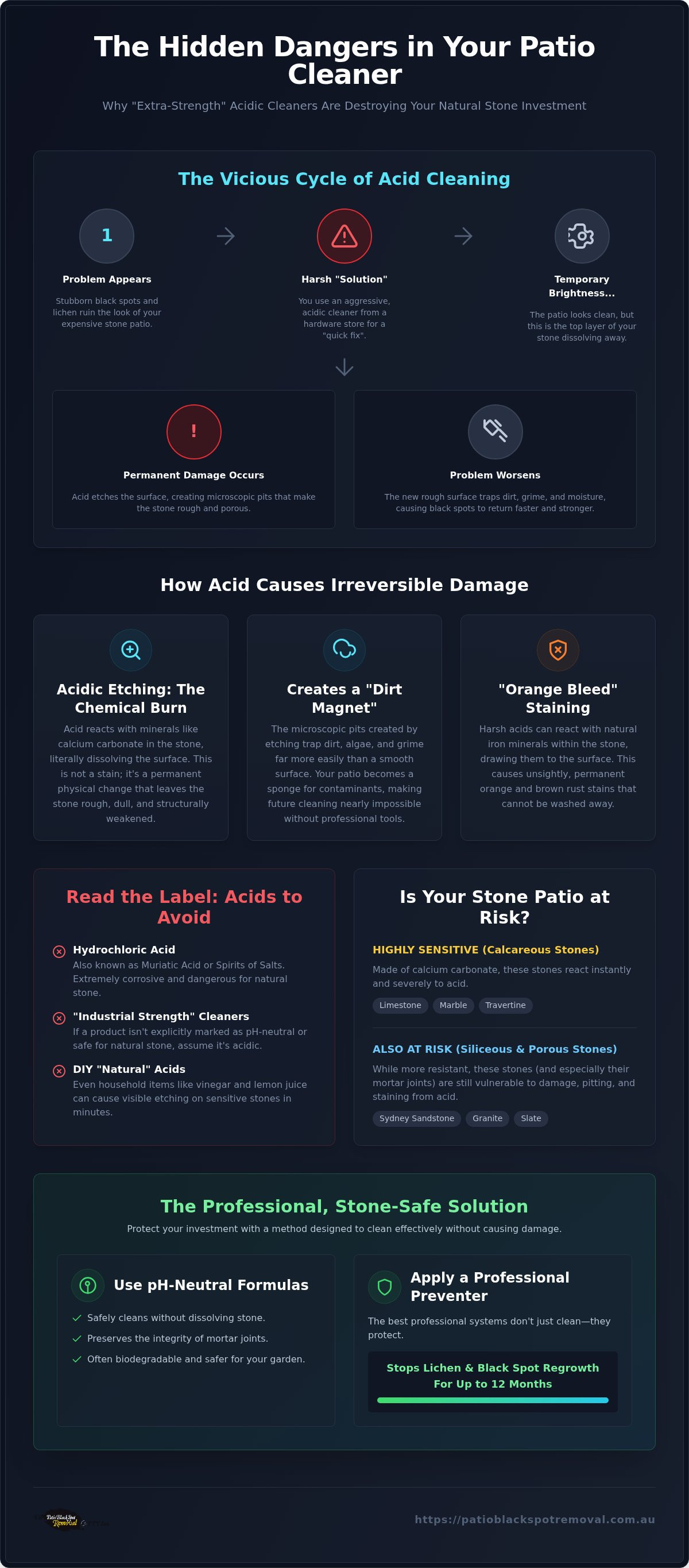
The core reason why you should avoid using acidic based patio cleaners on natural stone is a process called acidic etching. This isn't a surface stain that you can simply wipe away; it's a permanent chemical burn. When acid contacts porous stone, it triggers a reaction that dissolves the minerals holding the stone together. This effectively eats into the surface, leaving it rough, discoloured, and structurally weakened. In a city like Sydney, where salt air and high humidity already challenge outdoor surfaces, adding chemical damage to the mix is a recipe for a costly restoration job later on.
The "Brightening" Myth: What Is Actually Happening?
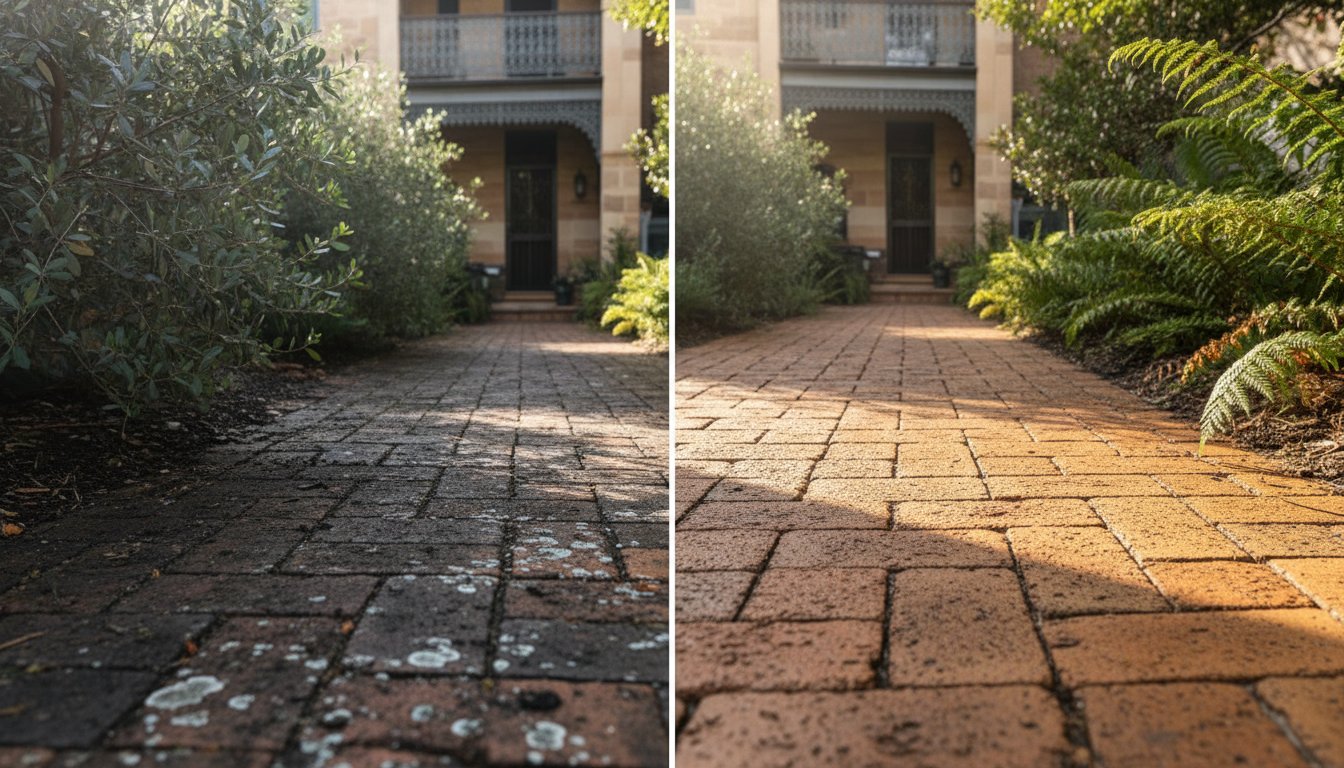
Hardware store acids are a deceptive trap because they offer an immediate "wow" factor. The patio looks instantly brighter, leading many to believe the product is working perfectly. In reality, that brightness is caused by the acid dissolving the top layer of the stone itself. You aren't just removing dirt; you're removing a sacrificial layer of your patio's surface. While the stone looks "new" for a few days, the process leaves the surface dull and raw. To understand the difference between surface destruction and professional restoration, you can see how it works when using a non-acidic specialized system instead.
Common Acidic Ingredients to Watch Out For
Identifying these dangers starts with reading the fine print on product labels. Many industrial-strength cleaners use "muriatic acid" or "spirits of salts," which are just different names for hydrochloric acid. These are far too aggressive for residential use. Even "natural" DIY solutions can be problematic. Because of Limestone's reaction to acid, even mild household items like vinegar or lemon juice can cause visible damage to limestone or marble pavers within minutes. If a product claims to be "extra strength" or "industrial grade" without specifying it's pH-neutral, it's likely a stone-destroying hazard for your Sydney patio.
The Chemistry of Damage: How Acid Etches Your Investment
When you pour a standard acidic cleaner onto a natural stone surface, you might notice a slight fizzing or bubbling reaction. While it looks like the product is "working" to lift stubborn grime, you're actually witnessing a destructive chemical event. This is the fundamental reason why you should avoid using acidic based patio cleaners on natural stone. Most common patio stones contain calcium carbonate, which reacts immediately when it comes into contact with acids. Unlike a surface stain, which sits on top of the stone like a layer of dust, etching is a physical change to the material's composition. It's essentially the stone dissolving in real-time.
This reaction creates microscopic pitting across the surface of your pavers. These tiny holes might be invisible to the naked eye at first, but they drastically change how your patio ages. By creating a rougher, more porous surface, acid cleaning effectively doubles the surface area where dirt, algae, and black spots can take root. Instead of a smooth finish that's easy to sweep, you're left with a mineral "sponge" that traps contaminants deeper than ever before. For porous varieties like Sydney Sandstone, this penetration can go several millimetres deep, making future cleaning almost impossible without professional help.
Calcareous vs. Siliceous Stones: Knowing Your Patio
Understanding your stone's mineral makeup is vital for its survival. According to professional stone care guidelines, stones are generally categorized as either calcareous or siliceous. Calcareous stones are composed primarily of calcium carbonate and are highly sensitive to even mild acids. This group includes:
- Limestone
- Travertine
- Marble
- Certain varieties of Sandstone
On these materials, acid acts like a solvent. It often leaves behind a "White Cloud" effect; permanent, pale patches where the acid has bleached the natural mineral pigments. Once these patches appear, they cannot be washed away because the colour itself has been chemically removed.
The Loss of Surface Texture and Slip Resistance
Beyond the visual ruin, acid cleaning creates a significant safety issue. Many outdoor pavers are chosen for their natural "grip" or textured finish, which provides vital slip resistance during Sydney's frequent rain showers. Acid etching can smooth out these natural textures, turning a safe walkway into a hazardous skating rink when wet. Conversely, if the acid is left on too long, it can create deep, jagged pits that make the stone brittle and prone to flaking. This chemical etching increases the stone's surface area, which ironically makes it far more susceptible to future staining from organic matter. If you're unsure if your patio has already suffered from chemical damage, it's worth speaking with a specialist for a professional assessment.
Beyond Etching: Secondary Effects of Acidic Cleaning on Patios
While the physical etching described previously is catastrophic, the damage often continues long after the acid has been rinsed away. Many homeowners are surprised to find their pristine grey or tan pavers developing strange orange blotches weeks after a "successful" clean. This is one of the most frustrating reasons why you should avoid using acidic based patio cleaners on natural stone. These secondary effects don't just ruin the look of your outdoor space; they can compromise the structural integrity of the entire installation.
The environmental impact is another factor that Sydney residents must consider. Our local gardens and coastal ecosystems are sensitive to chemical shifts. When you wash a patio with hydrochloric or muriatic acid, the runoff doesn't simply disappear. It leaches into the surrounding soil, drastically altering the pH level and potentially killing off prized plants or lawn areas. This toxic runoff eventually finds its way into storm drains and local waterways, causing damage far beyond your property line. Choosing a safe, biodegradable alternative like Patio Black Spot Remover for Natural Stone ensures your cleaning routine doesn't come at the expense of your garden or the environment.
Mineral Oxidation and Discoloration
Natural stone is a complex mix of minerals, including trace amounts of iron. When a strong acid penetrates the stone's pores, it reacts with these iron deposits, causing them to oxidize. This is what professionals call "Orange Bleed." It results in deep, rust-coloured stains that are virtually impossible to remove because they are baked into the stone's internal structure. Following Natural Stone Institute cleaning guidelines is the only way to ensure you don't trigger these permanent mineral changes. Over time, this oxidation can lead to spalling, where the stone becomes brittle and starts flaking off in thin, unsightly layers.
Mortar Erosion and Joint Failure
Your pavers don't sit in a vacuum; they are held in place by mortar or pointing sand. Most of these jointing materials are cement-based and highly alkaline. Acid is the natural enemy of cement. Even a single application of a harsh cleaner can eat away at the joints, causing them to crumble and wash out. This creates a domino effect of problems. Weakened joints allow water to seep beneath the pavers, leading to instability and "rocking" stones. Furthermore, these empty gaps become the perfect breeding ground for weeds and moss. The cost of professionally re-pointing a patio damaged by acid is significantly higher than the price of a safe, pH-neutral cleaning solution.
How to Safely Clean Patios Without Harsh Acids
Safe patio maintenance begins with understanding exactly what you're standing on. In Sydney, many homeowners assume their pavers are a standard concrete product when they are actually high-value Sydney Sandstone or imported Travertine. Applying any liquid without identifying the stone type is a gamble you don't need to take. While the dangers of etching and mineral oxidation are clear, the solution isn't to stop cleaning altogether. It's about switching to a pH-neutral or biodegradable approach that respects the mineral composition of the stone.
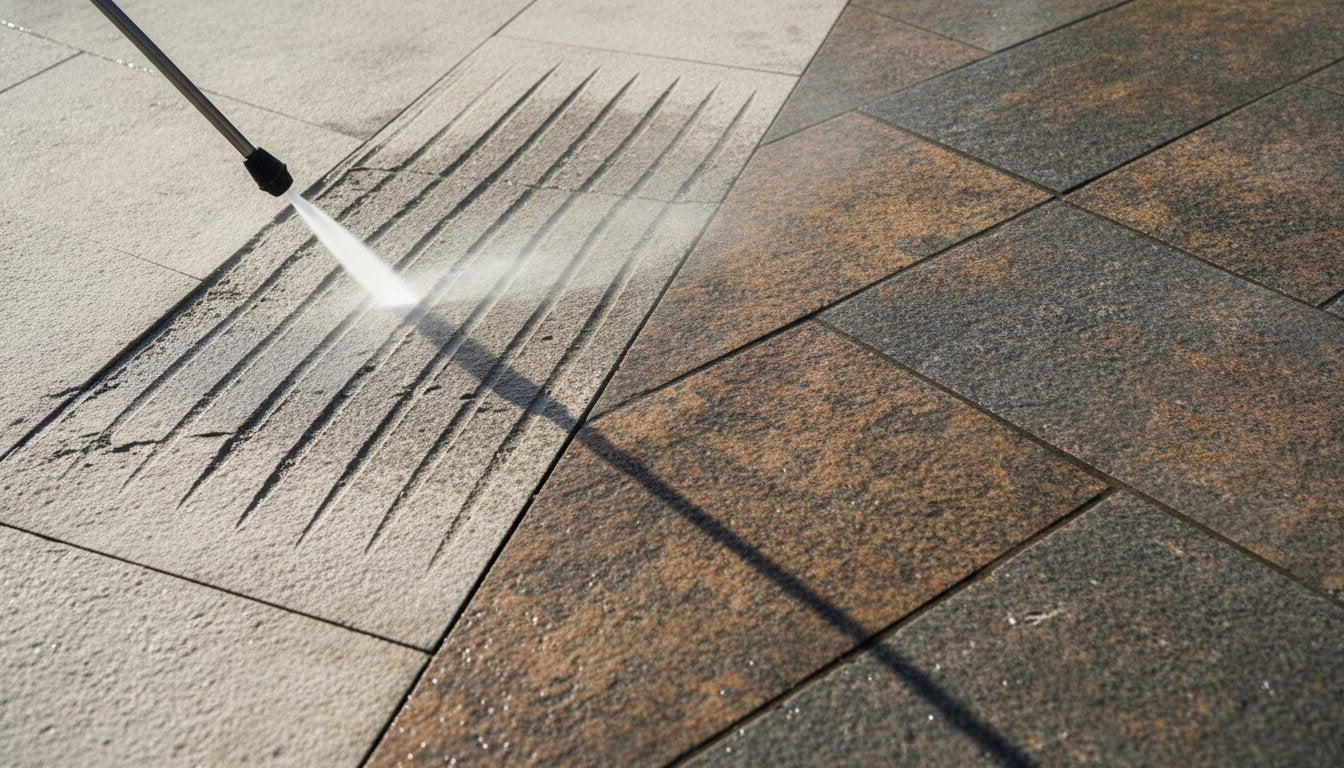
For routine maintenance, pH-neutral cleaners are the gold standard. These products lift surface oils and dust without triggering the destructive "fizz" reaction discussed earlier. However, for deep cleaning or removing organic growth, you'll need something more targeted than dish soap. Biodegradable, oxygenated formulas are designed to break down organic matter at the source. This is the primary reason why you should avoid using acidic based patio cleaners on natural stone; specialized non-acidic formulas can achieve better results by targeting the dirt, not the stone's surface. High-pressure washing is another tool to use with caution. While effective for removing loose debris, excessive pressure can strip away protective sealers or even gouge the surface of softer stones like limestone.
The Safe Cleaning Checklist for Natural Stone
- Step 1: Thoroughly sweep the area to remove loose leaves, twigs, and abrasive grit that could scratch the surface during washing.
- Step 2: Always test your chosen cleaner on an inconspicuous "spare" paver or a hidden corner first to ensure there's no unexpected mineral reaction.
- Step 3: Use a soft-bristle brush to work the cleaner into the pores. Avoid wire brushes or steel wool at all costs, as these will leave microscopic metal fragments that eventually turn into rust spots.
Dealing with Stubborn "Black Spot" Lichen Safely
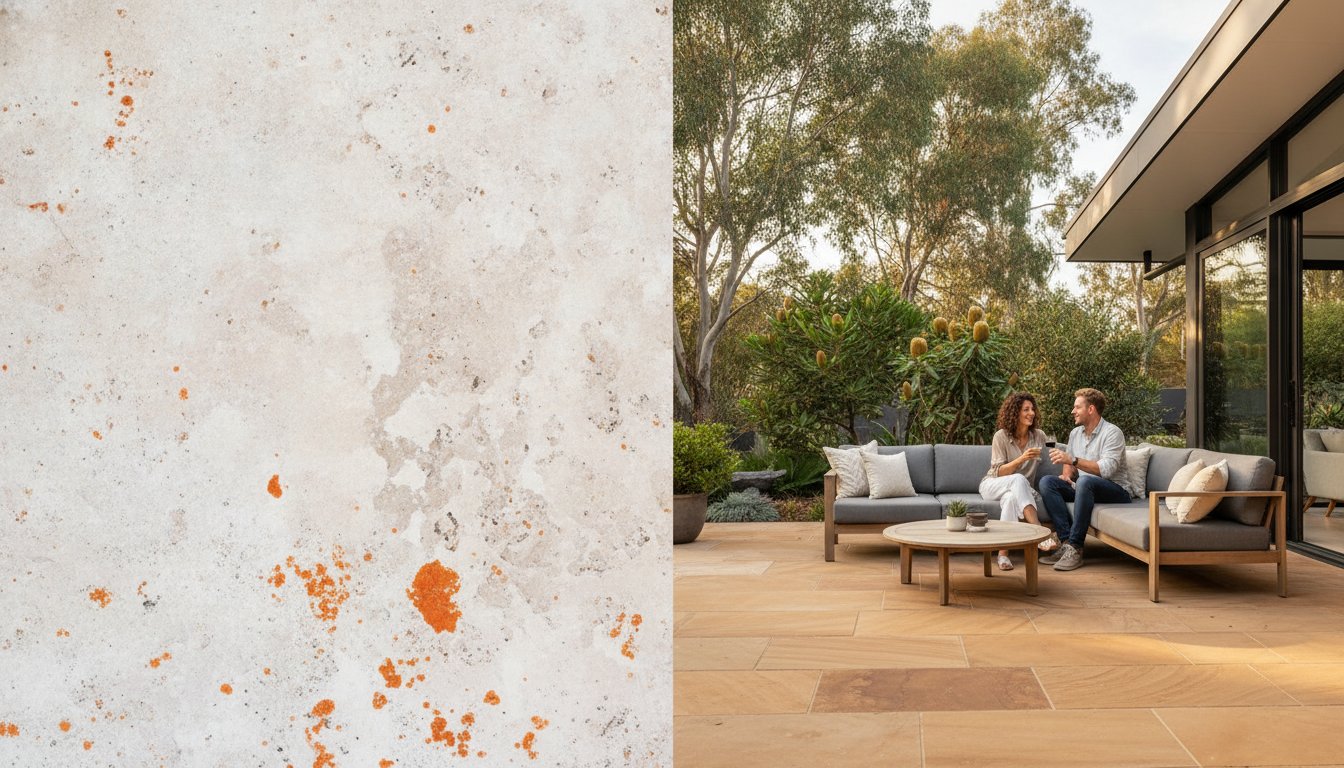
If your patio is covered in stubborn black spots, standard soap and water will almost certainly fail. These aren't just surface stains; they are living lichen with a complex "root" system that anchors itself deep within the stone's pores. Using acid to kill them is a mistake because it destroys the stone while trying to kill the plant. The professional alternative uses a non-acidic removal process that breaks down the organic structure of the lichen without harming the minerals. You can learn how the process works to see how we restore stone safely. If you're struggling with persistent growth and want to avoid chemical damage, contact our Sydney specialists for a professional assessment.
Professional Solutions for Sydney Patios: The Non-Acidic Alternative
Choosing the right product for your outdoor space shouldn't feel like a chemistry experiment where your property is the test subject. While previous sections detailed the structural and aesthetic risks of harsh chemicals, the solution isn't to settle for a stained or lichen-covered patio. The key is moving away from generic, "one-size-fits-all" hardware store products. Sydney homeowners need a specialist approach that treats stone with the care it deserves. Patio Black Spot Removal provides a professional, non-acidic alternative that restores the beauty of your investment without the risk of permanent chemical burns.
The core reason why you should avoid using acidic based patio cleaners on natural stone is that they prioritize speed over the long-term health of the material. Our Patio Black Spot Remover takes a different path. It uses a biodegradable, acid-free formula designed to target organic growth like lichen, algae, and moss specifically. Because it doesn't rely on a corrosive reaction to "clean," your stone's structural integrity remains perfectly intact. This is particularly vital for Sydney gardens, where runoff from acidic cleaners can devastate local flora and disrupt soil pH levels. By choosing a biodegradable solution, you're protecting your landscaping just as much as your stonework.
Restoring Your Stone with Patio Black Spot Remover
Unlike acids that dissolve the top layer of your pavers, this targeted formula focuses on breaking down the complex root systems of organic contaminants. It's exceptionally effective on the natural stone varieties commonly found across Australia, including Sydney sandstone, limestone, and slate. Instead of the dull, raw finish left by an acid wash, this professional-grade restorer brings back the stone's original vibrancy and natural colour. The "before and after" isn't just a surface-level change; it's a deep restoration that leaves the stone's natural grip and texture exactly as the manufacturer intended.
Preventing Future Growth the Smart Way
The most effective way to protect your patio is to stop the cycle of "clean and ruin" before it starts. Once your stone is restored to its original condition, applying the Patio Black Spot Preventer creates a protective environment that discourages new growth. This proactive maintenance keeps your stone clean for up to 12 months, drastically reducing the need for aggressive cleaning or high-pressure washing in the future. It's a smarter, safer way to manage your property that avoids the cumulative damage caused by repeated chemical exposure. Don't risk your patio with hardware store acids. Choose the stone-safe professional solution today.
Protect Your Investment with Stone-Safe Restoration
Your natural stone patio is a central part of your property's value and your outdoor lifestyle. Understanding why you should avoid using acidic based patio cleaners on natural stone is the difference between a successful restoration and permanent surface ruin. Acidic products don't just clean; they physically alter the stone's mineral structure, lead to unsightly rust stains, and weaken the mortar joints that hold your pavers in place. These chemical burns are often irreversible, turning a premium investment into a maintenance nightmare.
You don't have to choose between a dirty patio and a damaged one. By opting for professional-grade, biodegradable formulas, you can eliminate stubborn black spots while keeping your garden and your pavers safe. Our solutions are specifically developed for the toughest Sydney patio stains and are safe for all natural stone types. If you're ready to restore your patio's original vibrancy without the risk of chemical etching, Shop the Acid-Free Patio Black Spot Remover for Natural Stone today. Your stone deserves a cleaning process that is as enduring as the material itself.
Frequently Asked Questions
Can I use vinegar to clean my natural stone patio?
No, vinegar is highly acidic and will cause immediate etching on your pavers. This is a key reason why you should avoid using acidic based patio cleaners on natural stone, even if they seem like "natural" home remedies. Vinegar reacts with the calcium carbonate in stones like limestone or marble, creating permanent dull spots. It's a common DIY mistake that leads to expensive professional repairs later on.
How can I tell if my stone has been damaged by acid?
Acid damage usually appears as "etch marks" which look like dull, white, or cloudy patches on the stone surface. You might also notice a rough, sandpaper-like texture in areas where the stone was previously smooth. In Sydney sandstone, you might see "orange bleed" where internal iron minerals have oxidized. These physical changes indicate the stone's structure has been chemically altered and weakened by harsh cleaning agents.
Is pressure washing safer than using acidic cleaners?
Pressure washing is physically safer than acid, but it still carries risks for certain stone types. High-pressure streams can gouge soft sandstone or strip away protective sealers. It can also blast out mortar joints, leading to loose pavers and weed growth. Using a "soft wash" approach with a non-acidic cleaner is the most effective way to protect your investment while achieving a deep, professional clean.
What is the best way to remove black spots from sandstone without acid?
The most effective method is using a specialized, non-acidic formula like Patio Black Spot Remover. This is the primary reason why you should avoid using acidic based patio cleaners on natural stone; acids only clean the surface while professional formulas penetrate to kill the lichen's root system. This approach restores the stone's original colour without dissolving the minerals that provide its structural strength and beauty.
Will acidic cleaners hurt the plants around my patio?
Acidic cleaners are extremely hazardous to your garden. The runoff drastically lowers soil pH, which can wither root systems and kill sensitive Sydney plants within days. It also poses a threat to local aquatic life if it enters storm drains. Switching to a biodegradable, acid-free solution ensures your patio stays clean without turning your backyard into a dead zone for your lawn, flowers, and landscaping.
Can acid damage on stone be repaired or reversed?
Unfortunately, acid damage is usually permanent because it involves the physical removal of stone minerals. While some light etching can be masked with specific sealers, deep damage often requires professional mechanical honing or grinding to level the surface. This is a costly and dusty process. It's far better to prevent the damage entirely by choosing safe, stone-specific cleaning products from the very first wash.
How often should I clean my natural stone patio in Sydney’s climate?
Given Sydney's high humidity and salt air, a thorough clean every 12 months is recommended to prevent organic buildup. If your patio is in a heavily shaded area or near dense foliage, you might need to clean more frequently. Using a professional preventer after your initial clean can stop black spots from returning for up to a year, making your routine maintenance much faster.
Is bleach the same as an acidic cleaner?
Bleach and acid are chemical opposites. Bleach is an alkaline substance with a high pH, while cleaners containing muriatic or phosphoric acid have a low pH. While bleach won't etch calcium-based stones the way acid does, it can still damage certain sealers or cause discoloration if it's too concentrated. Neither should be used as a "guess-and-check" solution for high-value natural stone patios in your home.