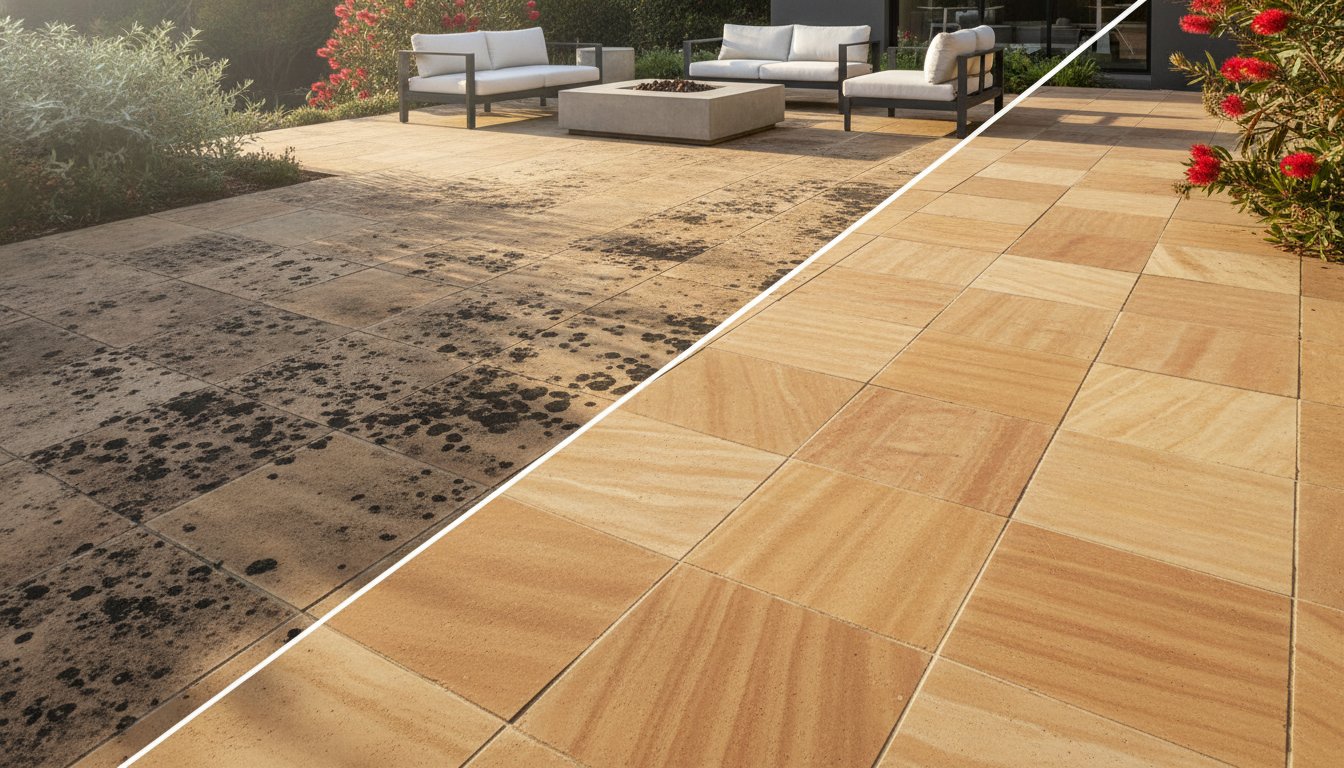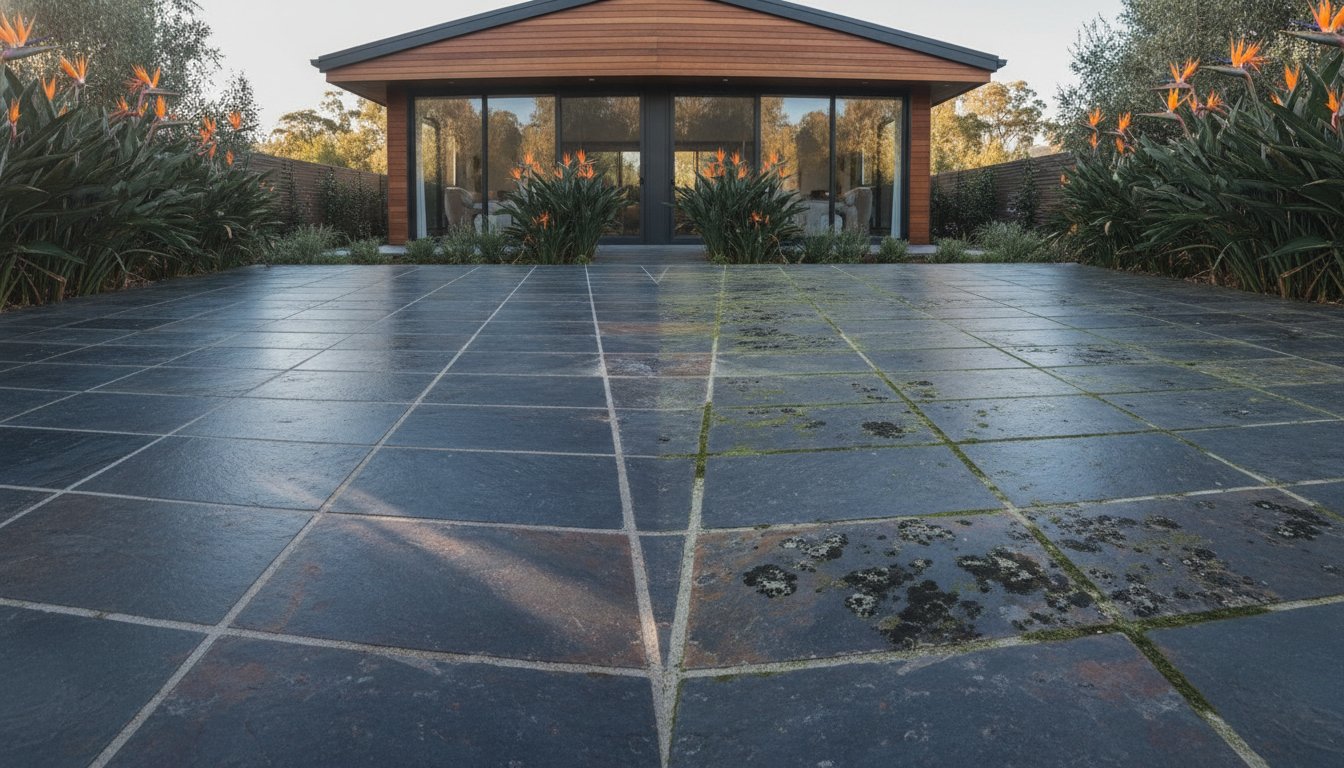
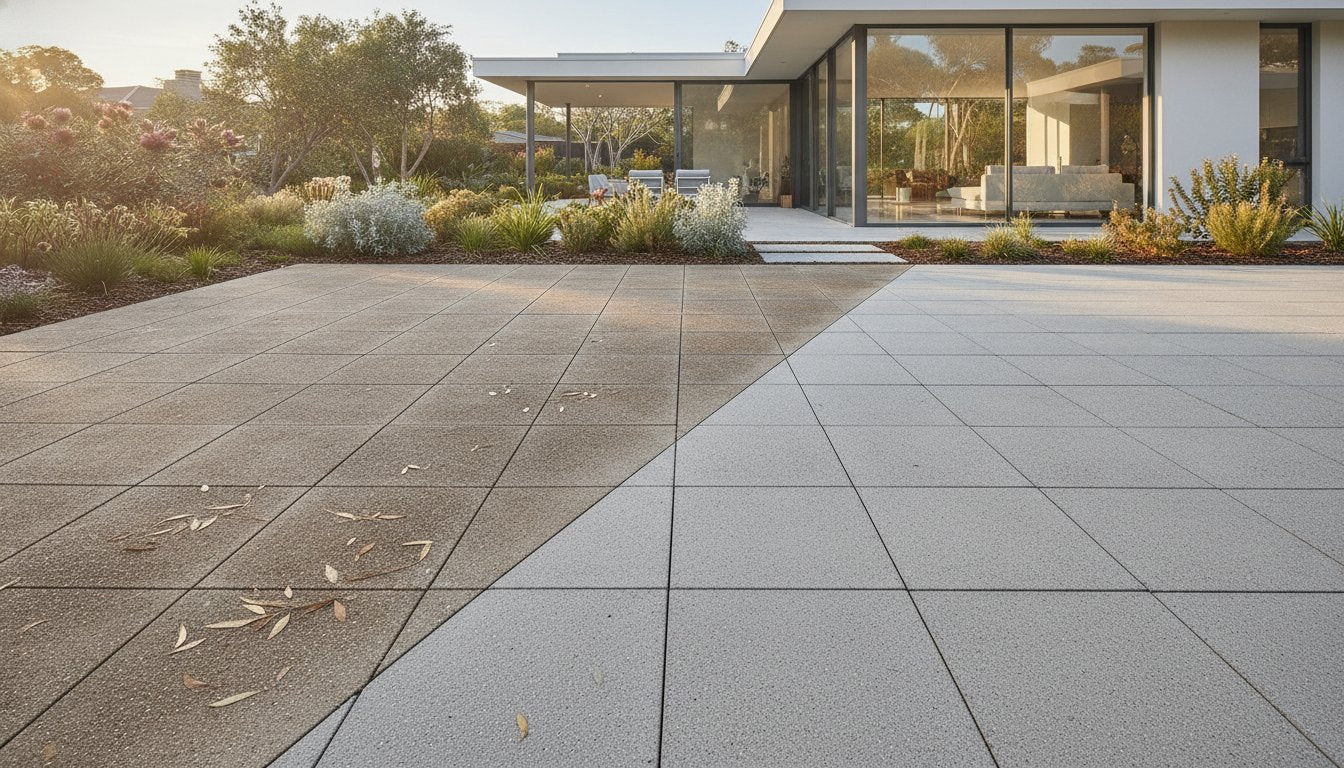
Why does a high-pressure blast often leave those ghostly brown outlines behind on your driveway? You've likely spent hours scrubbing only to find that the shadows of last autumn's leaves are still etched into your stone. It's frustrating to see expensive concrete pavers look weathered and dirty despite your best efforts. When removing leaf stains from concrete pavers, you aren't just dealing with surface debris; you're fighting a chemical bond where organic tannins have leached into the porous concrete.
This guide reveals the professional secrets to dissolving these marks using biodegradable, acid-free solutions like Patio Black Spot Remover, which shows results in less than two hours. You'll learn how to achieve a uniform, clean surface without risking chemical runoff into your garden or damaging your stone. We'll also cover how to use an annual preventer to stop these marks from coming back, keeping your patio pristine year-round. This approach is safe for your plants and pets, ensuring your outdoor space remains a beautiful sanctuary.
Key Takeaways
- Identify why concrete’s porous nature allows leaf tannins to create staining that require a chemical solution rather than just physical force.
- Learn why common DIY tactics like high-pressure washing or using hydrochloric acid often cause more harm than good to your pavers and garden.
- Master the process of removing leaf stains from concrete pavers using biodegradable treatments that restore the surface safely and efficiently.
- Implement a long-term maintenance plan using a dedicated preventer to stop organic stains from returning and eliminate the need for aggressive future cleaning.
Why Leaf Stains Bond to Concrete Pavers
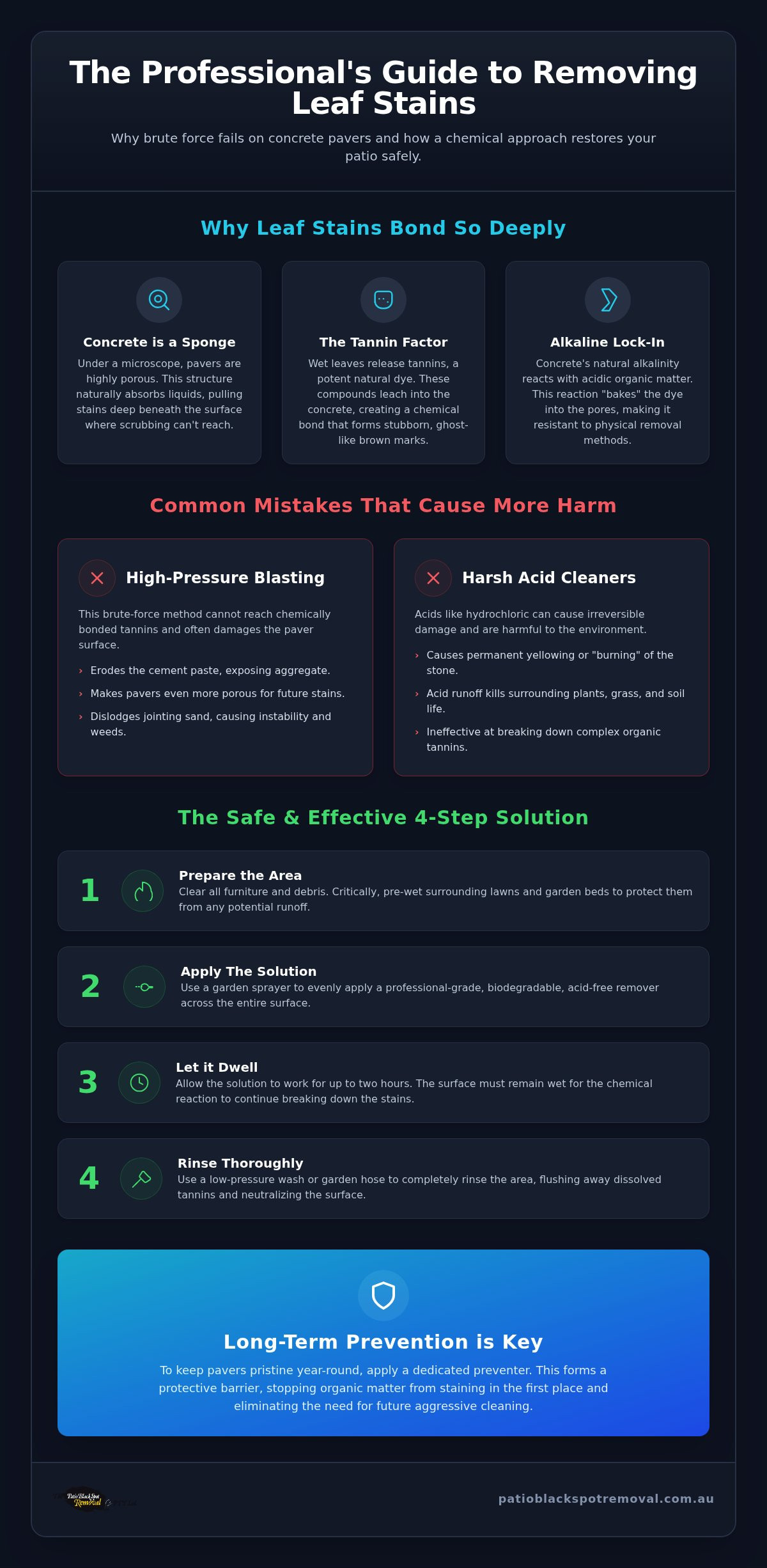
Concrete pavers might look solid, but under a microscope, they resemble a rigid sponge. This material is highly porous, meaning it's designed to suck in liquids, including organic compounds. When wet leaves sit on your patio, they release tannins. These are natural dyes found in bark, seeds, and foliage. Understanding the science of stain removal is key to realizing that these marks aren't just sitting on top; they've effectively dyed the concrete matrix.
The Tannin Factor: More Than Just Dirt
In Australia, we face unique challenges from native flora like Eucalyptus trees and Gumnuts. These species are rich in tannins that leach out during rain or heavy dew. You've probably noticed a "ghosting" effect where the physical leaf has blown away, but a stubborn brown shadow remains. This occurs because the tannins have chemically bonded with the stone. Removing leaf stains from concrete pavers requires breaking this bond rather than just scrubbing the surface.
Why Concrete is Particularly Vulnerable
Concrete is naturally alkaline. When acidic organic matter like decaying leaves rests on the surface, a chemical reaction occurs that can deepen the pigment's penetration. In Sydney, our high humidity acts as a catalyst, essentially "baking" these organic dyes into the pores. This is why a standard pressure washer often fails. Blasting the surface might move the dirt, but it won't reach the pigments trapped deep within the concrete's microscopic structure. If you only use water, you're just cleaning the surface while the staining stays locked inside. Effectively removing leaf stains from concrete pavers involves using restoration chemicals that can penetrate these pores and dissolve the organic matter from the inside out.
Common Mistakes When Removing Leaf Stains
Many homeowners reach for a pressure washer the moment they spot brown outlines on their patio. While it seems like a quick fix, this brute-force approach often does more harm than good. Removing leaf stains from concrete pavers effectively requires understanding the chemistry of the stain rather than relying on high-pressure water alone. Brute force simply cannot reach the pigments that have migrated deep into the stone's pores.
The Hidden Cost of High-Pressure Washing
Using high-pressure "blasting" on concrete pavers can permanently damage the surface. Concrete is held together by a cementitious bond that high-pressure water can easily erode, exposing the aggregate underneath. This process opens up even more pores, turning your patio into an even bigger "sponge" for next season's organic matter. Additionally, high pressure often dislodges the jointing sand between pavers. This compromises the structural stability of your entire driveway or walkway and creates gaps where weeds can flourish.
Why Acid-Based Cleaners Should Be Avoided
Hydrochloric acid is a common recommendation in online forums, but it's a risky choice for concrete. Acids can react with the minerals in the concrete, often leading to permanent yellowing or "burning" of the stone's surface. Beyond the aesthetic damage, acid runoff is devastating to Sydney's local garden ecosystems. It leaches into the soil, drastically altering the pH and killing nearby plants or lawn. General household detergents are similarly ineffective; they lack the strength to break down complex organic tannins, often leaving behind a patchy, ghosted finish. If you're struggling with removing leaf stains from concrete pavers, reaching for a harsh acid might result in damage that costs thousands to repair.
If you've already tried these methods without success, you might need a professional-grade alternative. You can always speak with an expert to find a safer, more effective solution for your specific stone type.
Step-by-Step Guide to Removing Stubborn Stains
Successfully removing leaf stains from concrete pavers requires a methodical approach. First, clear all furniture and debris from your patio. A critical step often overlooked is pre-wetting surrounding lawns and flower beds. This saturates the soil, preventing your garden from absorbing any runoff. Once the area is prepared, apply Patio Black Spot Remover evenly across the surface. This professional-grade solution is biodegradable and acid-free, making it safe for your home environment.
The secret to success when removing leaf stains from concrete pavers lies in the dwell time. You must keep the surface wet with the treatment while the chemical works; if it dries out, the chemical reaction stops. After letting it sit for up to two hours, rinse the area thoroughly with a garden hose or a low-pressure wash. This neutralises the surface and flushes away the dissolved tannins that were once trapped in the stone.
Essential Equipment for the Job
Consistency is vital for a uniform finish. Use a high-quality garden sprayer to ensure even coverage across the pavers. Don't forget your personal protective equipment. Wear chemical-resistant gloves, eye protection, and sturdy, non-slip footwear to stay safe throughout the process.
Tips for Maximum Stain Extraction
Timing matters. Avoid working in the direct Sydney midday sun, as the heat will evaporate the solution before it can penetrate the stone's pores. If you're dealing with decades of neglect, you might need a second application to fully extract the deepest pigments. You can learn more about the science behind this system by reading how it works. If you have specific questions about your patio's condition, contact our team for expert advice on your restoration project.
Long-Term Prevention: Keeping Pavers Stain-Free
Once you've finished removing leaf stains from concrete pavers, the goal shifts to ensuring they never return. In the harsh Australian climate, a "set and forget" mentality leads to recurring restoration costs. Adopting a prevention-first philosophy is the most cost-effective way to maintain your patio's aesthetic. While high-quality sealers provide a barrier, they aren't foolproof against the acidic nature of decaying organic matter that sits on the surface for extended periods.
The most effective defense is an annual application of Patio Black Spot Preventer. This professional-grade treatment stops organic matter from forming a chemical bond with the stone. When combined with regular sweeping to remove tannin-rich debris before it gets wet, you significantly reduce the risk of permanent "ghosting" marks returning to your stone.
The Annual Maintenance Routine
Timing is everything for Sydney homeowners. Schedule your preventative treatment just before the heavy leaf-drop seasons, typically in late autumn. Applying the preventer takes less than an hour and doesn't require specialized machinery or high-pressure equipment. It's a simple spray-and-leave process that maintains the uniform look achieved during the initial cleaning phase.
Managing Overhanging Vegetation
Australian natives like Eucalyptus and Bottlebrush are beautiful but are the primary culprits for stubborn stains. Their leaves and seed pods contain high concentrations of oils and tannins that bleed into concrete. Identifying these stain-heavy trees allows you to prioritize pruning. By thinning out branches that hang directly over your paved areas, you reduce the volume of debris landing on the surface. This proactive landscaping makes removing leaf stains from concrete pavers a much simpler task in the future and ensures your outdoor space remains a highlight of your home.
Restore Your Patio's Original Beauty
You now understand that leaf stains are essentially organic dyes that have migrated deep into the concrete's pores. Instead of risking the structural integrity of your stone with high-pressure blasting or corrosive acids, you can rely on a scientific approach to restoration. Successfully removing leaf stains from concrete pavers doesn't have to be a multi-day struggle that endangers your garden beds or nearby lawns.
Our Sydney-manufactured restoration system provides a biodegradable and acid-free solution that restores the original stone colour in under two hours. It's designed to be safe for your surrounding plants and pets while delivering professional-grade results that general detergents simply can't match. Restore your pavers today with our professional-grade solutions and enjoy a clean, uniform finish that lasts for years. Take pride in your outdoor space again and say goodbye to those stubborn brown shadows for good.
Frequently Asked Questions
Will these cleaners kill my lawn or garden plants?
Our Patio Black Spot Remover is biodegradable and acid-free, making it safe for your lawn and garden. Unlike harsh industrial acids that can ruin soil health, our Sydney-manufactured formula breaks down safely after the cleaning process. We recommend pre-wetting your grass and garden beds before you start. This ensures your plants are fully hydrated and protected while you are removing leaf stains from concrete pavers.
Can I use pool chlorine to remove leaf stains from concrete?
Pool chlorine is often too weak to reach the tannins buried deep inside a paver's pores. It lacks the specialized surfactants found in professional-grade removers that allow for deep penetration. While it might provide a temporary surface bleach, it won't permanently dissolve the chemical bond of the stain. Using a dedicated organic remover is a faster, more reliable way to restore your patio's original colour without the guesswork.
How long does it take for the stains to disappear after treatment?
Stubborn organic stains typically disappear in less than two hours after the treatment is applied. The chemical reaction begins immediately, breaking down the bond between the tannins and the concrete matrix. As long as you keep the surface wet with product during the dwell time, the solution continues to work. Once you rinse the area, the dissolved pigments are washed away, revealing a clean and uniform surface almost instantly.
Is it necessary to seal my concrete pavers after removing stains?
Sealing can help reduce liquid absorption, but it isn't a permanent "set and forget" fix for organic staining. Even on sealed stone, tannins from damp leaves can sit on the surface and create marks. A more effective approach is using an annual application of Patio Black Spot Preventer. This creates a specific barrier against organic growth and tannin bonding, providing better long-term protection than a standard sealer alone.
Why do the leaf stains keep coming back every year?
Stains return because concrete is highly porous and absorbs tannin-rich moisture like a sponge. Every autumn, falling leaves from trees like Eucalyptus leach natural dyes when they get wet from rain or dew. This cycle repeats annually unless you change the stone's chemistry. Applying a preventative treatment once a year stops these organic pigments from bonding, which eliminates the need for aggressive cleaning or removing leaf stains from concrete pavers.