The very thing you think is cleaning your slate patio might actually be destroying it from the inside out. When you're searching for how to clean slate patio tiles, it's easy to fall into the trap of using harsh acids or high-pressure washers that cause delicate layers to peel and flake. It's a common frustration; you want to get rid of dangerous, slippery algae and "permanent" black spots, but the fear of damaging your tiles often leads to doing nothing at all.
We understand that your outdoor space should be a safe haven for your family and pets, not a slip hazard or an eyesore. This guide reveals professional, acid-free restoration techniques that protect the stone's natural iron content while restoring its original beauty. You'll learn how to remove deep-seated lichen in just two hours and discover a maintenance routine that stops the endless cycle of scrubbing. We're moving away from aggressive force and toward gentle chemistry to ensure your patio looks brand new for years to come.
Key Takeaways
- Protect your investment by avoiding high-pressure washing and acidic cleaners, which cause permanent delamination and surface etching on slate.
- Discover how to clean slate patio tiles using acid-free, biodegradable formulas that restore original stone color in up to two hours without harming plants or pets.
- Learn why standard detergents fail against lichen and how specialized biocides effectively lift deep-seated black spots from the stone's pores.
- Break the annual cleaning cycle with a long-term prevention strategy that keeps your patio clear of organic growth without making the stone more porous or causing any damage.
The Unique Challenges of Cleaning Slate Patio Tiles
Slate is prized for its aesthetic, but its geological makeup creates unique maintenance hurdles. As a foliated metamorphic rock, the properties of slate include distinct layers that are susceptible to physical and chemical damage. Many homeowners searching for how to clean slate patio tiles mistakenly reach for household acids like vinegar, bleach or lemon juice. These substances permanently etch the surface, stripping away the natural sheen and leaving behind a dull, chalk-like finish that can't be buffed out.
Beyond chemical sensitivity, slate's riven texture makes it a magnet for organic debris. Mud and tannins from leaves settle into the stone's microscopic pores. While simple soap and water might remove surface dust, they won't touch deeply embedded biological growth. This is because organic matter doesn't just sit on top; it integrates with the stone's structure and thrives in the damp gaps between layers.
Why Pressure Washing is Slate's Worst Enemy
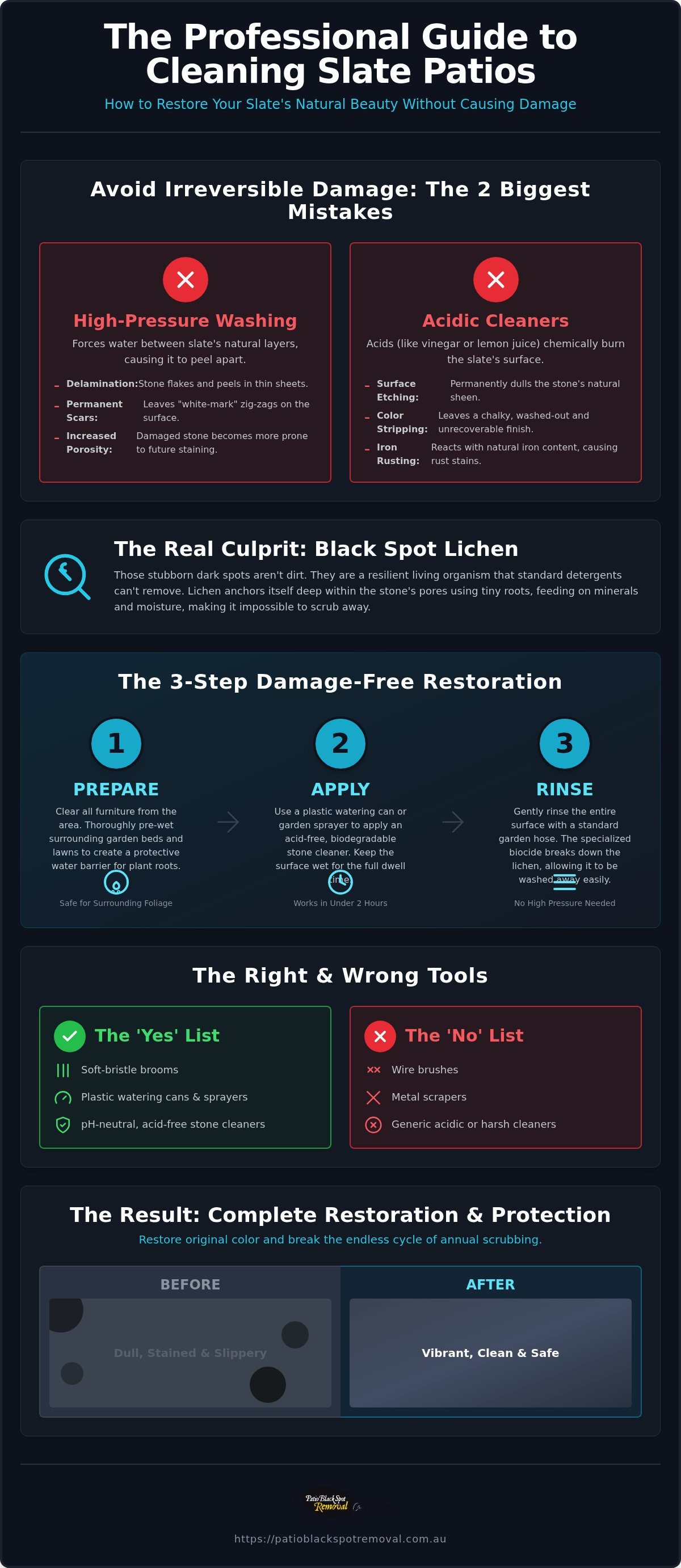
Using high-pressure water is a shortcut to disaster. When high-PSI streams hit the edge of a tile, water is forced between the layers. This results in "delamination," where the stone begins to flake and peel away in thin sheets. Even worse, the wand often leaves permanent "white-mark" zig-zags on the softer varieties of slate, effectively scarring the patio forever. Once these layers are compromised, the stone becomes more porous and even more prone to staining.
Identifying 'Black Spot' Lichen on Your Patio
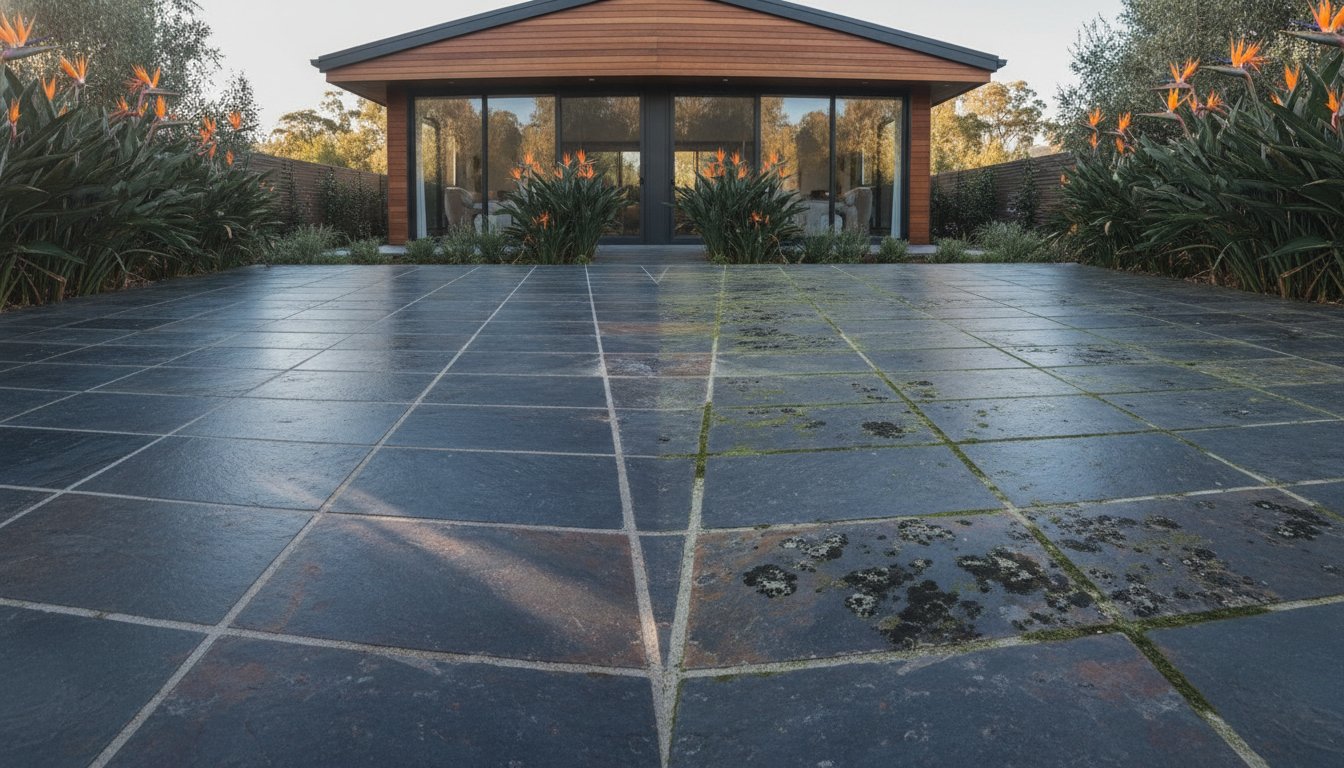
If your patio has dark spots that won't budge with a scrub brush, you aren't looking at dirt. These are black spot lichens. They are complex living organisms that use tiny "roots" to anchor themselves deep within the stone. Because they are biologically resilient, they require more than just force to remove. They thrive on the minerals in the stone and the moisture trapped in the riven surface, making them a permanent fixture unless treated with professional-grade chemistry that targets their DNA.
Step-by-Step Guide: How to Safely Clean Slate Without Damage
Learning how to clean slate patio tiles safely involves a chemical-first approach rather than a mechanical one. Start by clearing all furniture and pots from the area. Pre-wetting your garden beds is a vital first step. This creates a water barrier that prevents the stone cleaner from being absorbed by thirsty roots.
Apply the Natural Stone cleaner using a plastic watering can or a garden sprayer. This specific formula is acid-free, making it safe for the iron content in slate to prevent rusting. Ensure the surface stays wet for the full dwell time, which is typically under two hours. This allows the biodegradable chemistry to break down the organic matter within the pores. Finally, use a garden hose or light pressure washer for a gentle rinse to wash away the dissolved debris.
Tools You Will Need (and What to Avoid)
- The 'Yes' List: Pump-up garden sprayer, garden hose or light jet washer, and a pH-neutral cleaner specifically formulated for natural stone.
- The 'No' List: Wire brushes, metal scrapers, and acidic cleaners from hardware stores that will etch and dull the slate.
Protecting Your Garden and Pets During the Process
Avoid spraying the product directly onto plants or grass. However, any run off from rinsing is completely harmless to your surrounding foliage. Keep pets indoors until the surface is completely rinsed with water.
Eliminating Stubborn Black Spots and Organic Growth
Lichen isn't just a surface stain; it's a resilient living organism that anchors itself deep within the stone's riven texture. When homeowners research how to clean slate patio tiles, they often find that standard soaps and household detergents fail to move dark, circular marks. The Patio Black Spot Remover utilizes a professional-grade biocide that targets the DNA of the lichen, breaking its bond with the stone to lift it completely. By removing this heavy organic shadowing, the process reveals the vibrant oranges, deep greys, and earthy greens that define natural slate. This two-part system is engineered to remove black lichen and green algae to restore your stone's original colour in less than two hours.
The Difference Between Surface Algae and Deep Lichen
Green algae is a slippery, surface-level growth that often disappears with a simple light scrub. However, black lichen appears as permanent ink splatters that have seemingly dyed the stone. You can tell your slate is truly clean rather than just "cleared" of surface dirt when these stubborn dark spots vanish entirely, leaving no ghosting or residue behind.
Safe Chemical Application in the Australian Heat
Applying restoration chemicals in Sydney’s climate requires careful timing to ensure success. When you're figuring out how to clean slate patio tiles in high temperatures, avoid the direct midday sun. Intense heat causes the product to evaporate before it can penetrate the stone's pores. Keep the stone consistently wet during the dwell time by applying a light top-up of product if the surface begins to dry. This keeps the chemistry active, allowing it to dissolve deep-seated organic matter without baking onto the slate's surface.
Long-Term Protection: How to Stop Lichen Returning
Many homeowners fall into the "Maintenance Trap." They assume the best way how to clean slate patio tiles is an annual blast with a pressure washer. Unfortunately, high-pressure water increases the stone's porosity. It opens up the riven surface, creating more space for lichen spores to take root. This makes the next year's growth even more aggressive and harder to remove.
Instead of this destructive cycle, we recommend the Patio Black Spot Preventer. This professional-grade solution is a superior alternative to traditional sealing. By applying a quick annual top-up, you kill new spores before they can anchor into the slate. This preventative strategy is 70% cheaper than a full restoration, saving you significant effort and money over the life of your patio.
Why We Recommend Preventers Over Traditional Sealers for Slate
Traditional film-forming sealers often trap moisture rising from the ground. Since slate is a layered rock, it needs to breathe. Trapped moisture can lead to "spalling," where the surface layers pop or flake off due to internal pressure. The Preventer works invisibly and doesn't alter the stone's slip rating. It provides protection without the risk of delamination that often comes with non-breathable coatings.
The 12-Month Maintenance Schedule
Keeping your patio in "like-new" condition only requires a simple annual routine. This prevents organic growth from ever getting a foothold in the stone's pores. You can learn more about how the system works to protect your investment. By following this 12-month schedule, you'll avoid the labor-intensive scrubbing and chemical stripping required when slate is left to the elements for too long. It's the most efficient way how to clean slate patio tiles while ensuring they last for decades.
Ready to Restore Your Slate Patio?
Your slate patio is an investment that deserves better than aggressive pressure washing or damaging household acids. By choosing a chemical-first approach that respects the stone's delicate layers, you can eliminate dangerous algae and unsightly lichen without the risk of delamination. We've explored how to clean slate patio tiles using professional-grade, biodegradable formulas that remain safe for your garden and pets. This Patio Black Spot Remover is acid-free and specifically formulated to protect the natural iron content in slate, ensuring your tiles won't rust or dull over time.
With results visible in under two hours, you can transform a slippery, stained surface back into a vibrant outdoor space that looks brand new. Don't let stubborn black spots dictate the aesthetic of your home any longer. Restore your slate patio today with a specialized Natural Stone Remover and switch to a prevention-based routine that saves you time and money. Your stone will finally have the professional finish it deserves.
Frequently Asked Questions
Can I use bleach to clean my slate patio tiles?
While bleach might clear surface algae, it lacks the surfactants needed to penetrate slate's riven texture and won't kill lichen roots. Standard household bleach can also leave behind salt residues that may cause future efflorescence or dull the stone's finish. It's better to use a professional-grade, acid-free biocide that effectively targets the DNA of organic growth without damaging the stone's natural iron content.
Is it safe to use a pressure washer on slate if I use a low setting?
Even a low-PSI setting is risky because slate is a foliated rock with natural cleavage planes. Water can still find its way into microscopic gaps between layers, eventually leading to flaking or "spalling." Instead of relying on mechanical force, focus on chemical restoration. This approach ensures you don't compromise the structural integrity of the stone while searching for how to clean slate patio tiles effectively.
How do I remove white salt marks (efflorescence) from slate?
Efflorescence is caused by soluble salts migrating to the surface as moisture evaporates. You should never use acidic "efflorescence removers" on slate, as they will permanently etch the surface. Instead, use a stiff, non-metallic brush to dry-brush the salts away. If the marks persist, a pH-neutral cleaner can help lift the residue. Regular application of a preventer also reduces the moisture cycles that drive salt to the surface.
Will the slate cleaning chemicals kill my lawn or garden plants?
These professional-grade formulas are biodegradable and safe for surrounding foliage when used correctly. You must pre-wet your garden beds and lawn edges to create a water barrier before application. This prevents the roots from absorbing the cleaning solution. Once you've completed the restoration and rinsed the area thoroughly with fresh water, the diluted runoff won't harm your plants or your pets.
How often should I deep-clean my slate patio in Australia?
You should only need to perform a full restoration once if you follow a proper maintenance schedule. In the harsh Australian climate, organic growth can return quickly. Applying a preventer every 12 months kills new spores before they can anchor. This routine eliminates the need for aggressive annual scrubbing and is the most cost-effective way how to clean slate patio tiles while maintaining their original, vibrant colours for decades.