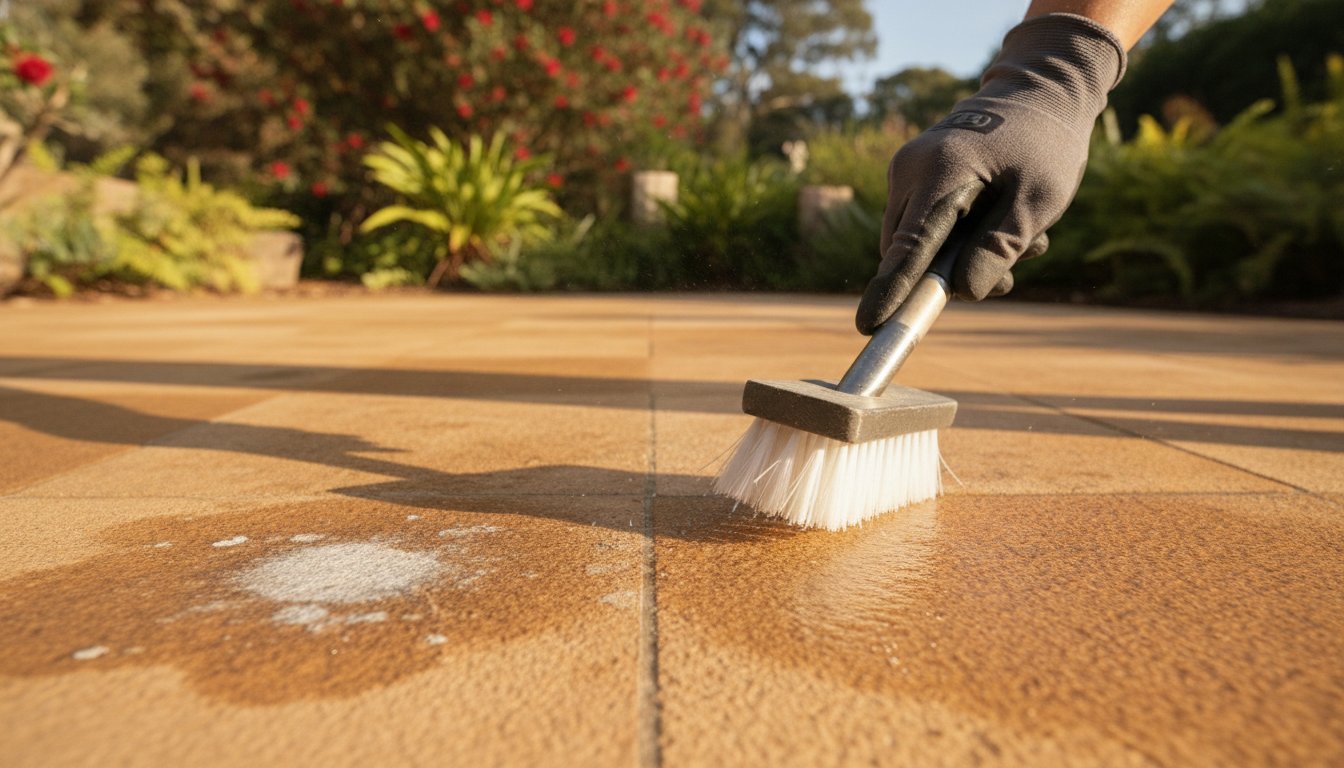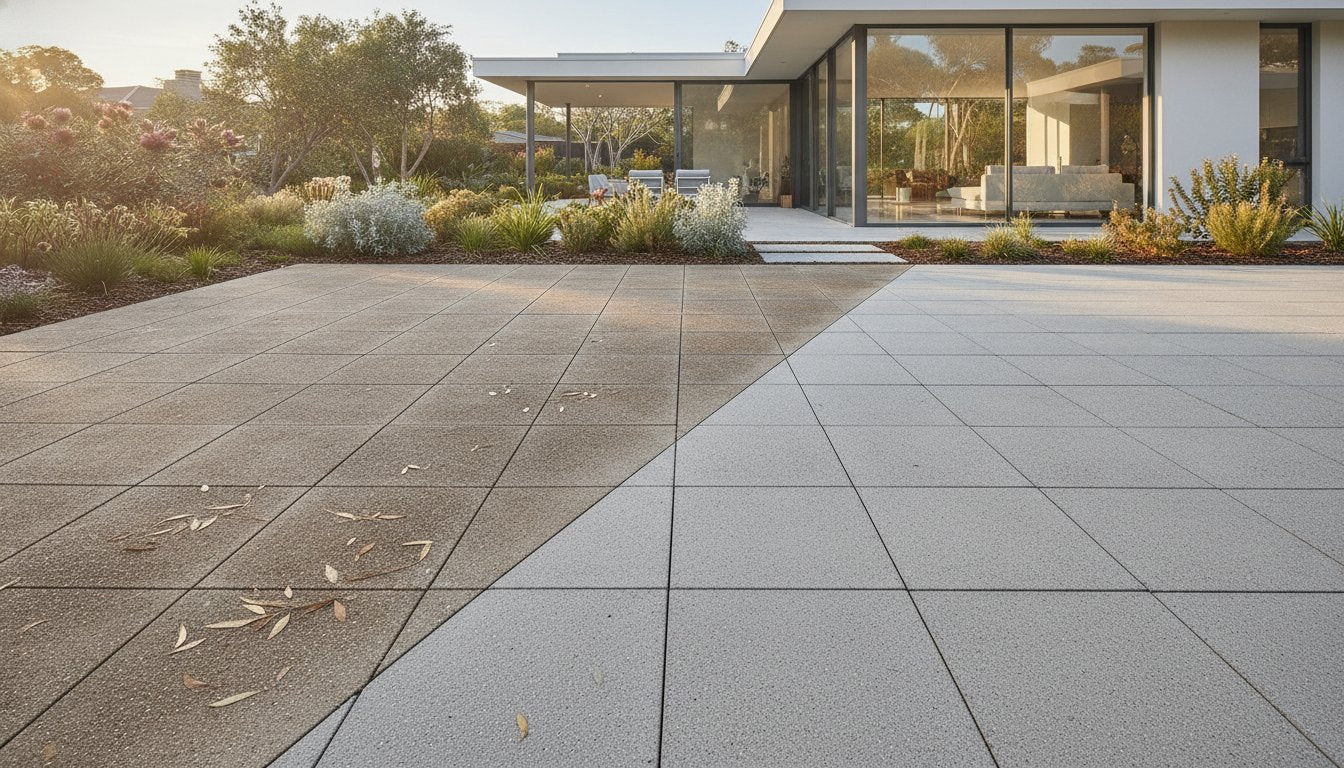
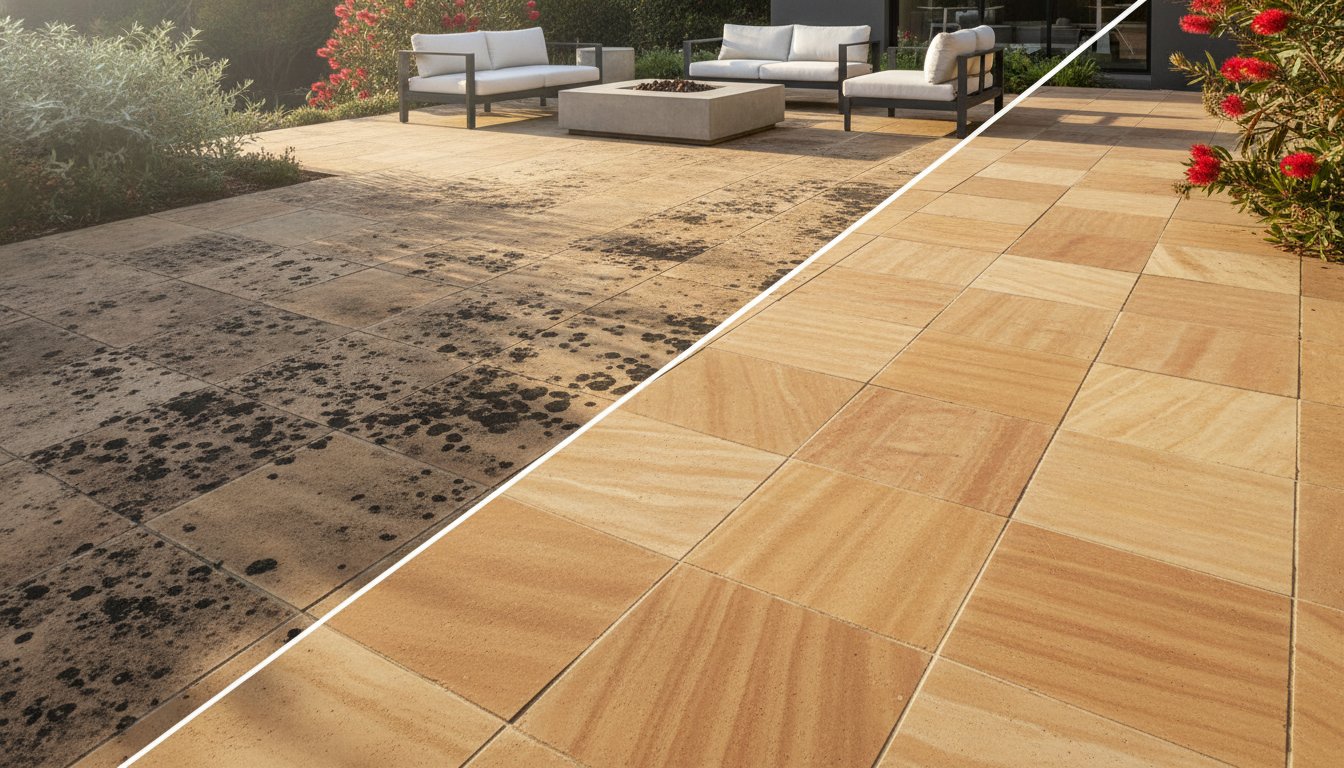
What if the high-pressure washer you've been lugging around is actually doing more harm than good to your Sydney sandstone? Most homeowners assume that a blast of water is the only way to tackle those stubborn, unsightly marks, yet they often find the results are short-lived. It's exhausting to spend your entire weekend scrubbing with no real progress, especially when you're worried about damaging expensive stone or harming your backyard's plants and lawn.
If you've been searching for how to remove black spots from pavers Australia wide, you've likely realized these spots aren't just dirt; they're a biological infestation of lichen. We'll show you how to safely and permanently dissolve these roots using professional-grade solutions that restore your stone's original colour in less than two hours. This guide covers everything you need to know about using a biodegradable, acid-free system that's safe for your pets and garden. You'll learn how to achieve a lasting finish that keeps your outdoor space looking pristine for more than just a few weeks.
Key Takeaways
- Identify black spots as living lichen organisms that use microscopic roots to anchor themselves deep within the pores of your natural stone.
- Learn why high-pressure washing can cause permanent damage and how it actually creates more space for new lichen spores to grow.
- Discover the most effective way for removing black spots from pavers using a biodegradable, acid-free solution that delivers results in just two hours.
- Establish a simple annual maintenance routine using a specialized preventer to stop new spores from anchoring and protect your garden's aesthetic.
What Are the Black Spots on Your Pavers? Understanding Lichen
Those dark, ink-like splatters on your patio aren't always just dirt or spilled BBQ grease. They are often actually a complex living organism known as Black Lichen. While surface dirt washes away and green algae often dies off in the heat, black lichen is a different beast entirely. It's especially prevalent on porous materials like Sydney sandstone and limestone, which have seen a massive rise in popularity across Australian backyards over the last 15 years.
The Biology of the Black Spot
A deeper look into Understanding Lichen reveals it's a symbiotic relationship between fungi and algae. Unlike surface mould, lichen uses microscopic roots called hyphae to anchor deep into the natural pores of your stone. It feeds on minerals within the pavers and organic dust particles carried by the wind. In Australia's local climate, lichen is remarkably resilient. It survives the harsh Australian sun by going dormant during droughts, only to "wake up" and spread the moment it rains or you turn on the garden hose.
Why They Won’t Just Wash Away
This biological anchor is why standard cleaning fails. When you use a hose or scrub the surface, you're only removing the "dust mask" or the top layer of the organism. The roots remain protected deep inside the stone. This explains why many homeowners searching for how to remove black spots from pavers find that the spots seem to multiply weeks after a wash. By removing the surface canopy but leaving the roots, you've essentially pruned the lichen. This allows it to grow back thicker and more stubborn than before, often appearing to cover more ground than it did originally.
Why Traditional Cleaning Methods Fail on Australian Patios
Many homeowners fall into the "Pressure Washer Trap." While it's satisfying to see instant results, high-PSI water often strips the protective "face" of natural stone. This creates microscopic pitting, which provides a larger, rougher surface area for new lichen spores to settle. Instead of solving the problem, you're actually building a better home for future infestations. If you are looking for a safer way to remove black spots from Australian pavers, understanding this cycle is vital. Instead of brute force, using a specialized remover for natural stone ensures the lichen is dissolved without harming the stone's integrity.
Beyond physical damage, many also turn to harsh hardware store acids. These can cause permanent etching or "burning" of sandstone and limestone, leading to yellowing that can't be reversed. There's also the environmental toll. Corrosive run-off can devastate Sydney gardens, poisoning sensitive Australian native plants and local soil.
The Local Climate Factor
Sydney's unique mix of high humidity and coastal salt air creates a perfect breeding ground for organic growth. In shaded areas or spots with poor drainage, your patio essentially becomes a lichen nursery. These damp conditions allow spores to anchor deep into the stone pores before you even notice them.
The Cost of Incorrect Cleaning
Improper cleaning methods don't just look bad; they can actively devalue your property’s outdoor living areas by ruining the finish of expensive natural stone. The long-term damage caused by "bleach-and-blast" DIY methods often leads to delamination, where the stone begins to flake away in layers. If you're unsure about your specific stone type, you can always reach out for expert advice on safe restoration. For those seeking a general Step-by-Step Guide on standard maintenance, industry resources highlight the importance of chemical balance over brute force.
How to Remove Black Spots from Pavers: A Step-by-Step Guide
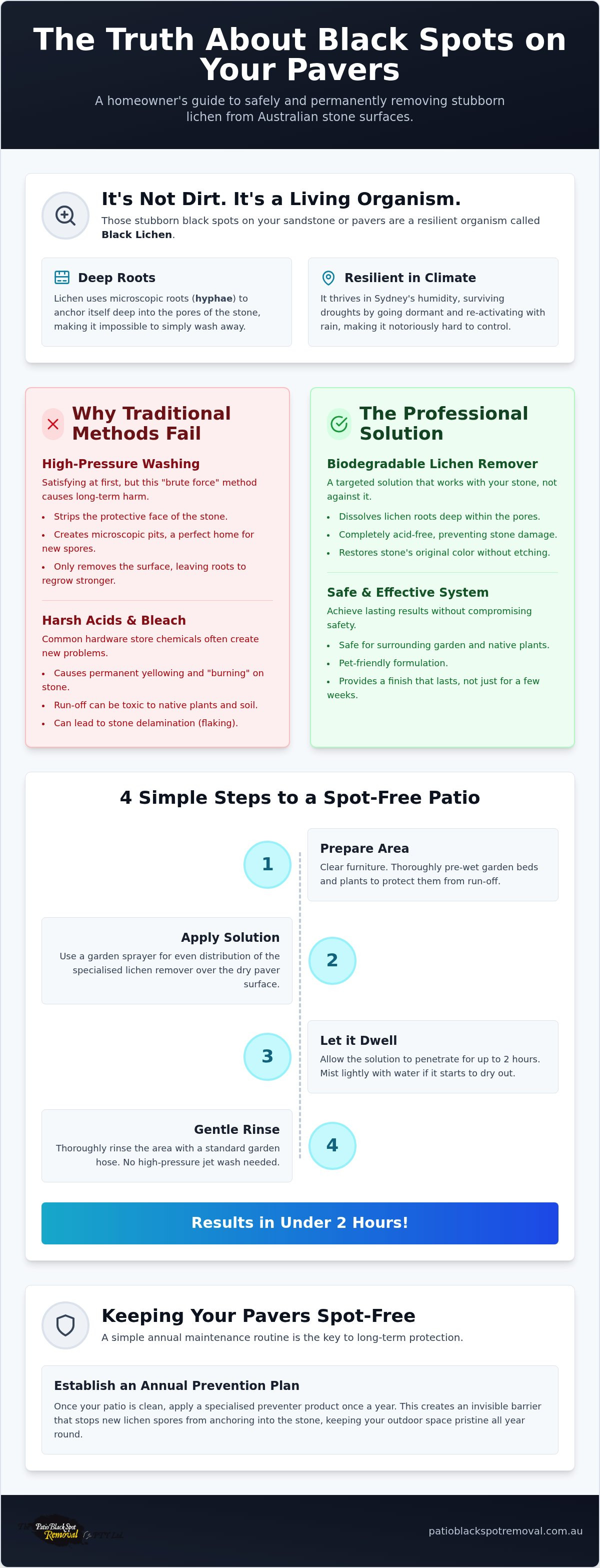
Restoring your outdoor space doesn't have to be an ordeal. When you're ready to tackle how to remove black spots from pavers, the process is streamlined into four manageable steps. First, clear all furniture and thoroughly pre-wet your garden beds. This saturates the soil and protects your native plants from any run-off. Next, apply the specialised lichen remover using a standard garden sprayer for even distribution. You must let the solution dwell for up to two hours to ensure it penetrates the stone. If the pavers start to dry out during this window, just reapply some product to keep the chemical active. Finally, a gentle rinse with a low pressure washer or garden hose will reveal the original stone colour that's been hidden for years.
The Two-Part Restoration System
It's vital to understand how it works; the formula targets the lichen's adhesive bond rather than just bleaching the surface. Because it's acid-free and biodegradable, it's safe for delicate Australian sandstone that would otherwise be ruined by harsh industrial cleaners. This targeted approach ensures a deep clean without the risk of surface delamination or pitting often caused by high-pressure equipment.
Application Tips for Professional Results
Timing is everything. You should avoid the scorching midday Australian sun, as it causes the product to evaporate before it can fully penetrate the stone's pores. Early morning or late afternoon applications work best to keep the surface cool. Achieving even coverage is essential for a uniform finish, so don't rush the spraying process. If you're dealing with a particularly large or complex area, you can contact our team for specific guidance on your restoration project.
Long-Term Prevention: Keeping Your Pavers Spot-Free
Restoring your pavers is a major win, but the real secret to a beautiful home lies in prevention. Sydney’s unique environmental factors, such as high humidity and coastal salt spray, mean that lichen spores are constantly looking for a new place to land. While you now know how to remove black spots from pavers Australia using professional restoration chemicals, an annual maintenance schedule prevents those spores from ever anchoring. Many homeowners assume sealing is the ultimate fix, but sealers can sometimes trap moisture or allow growth on the surface layer. Instead, a dedicated preventative treatment applied every 12 months creates an environment where lichen simply cannot survive.
The Annual Maintenance Routine
Keep a close eye on "pioneer" spots. These are the first tiny dots that appear in shaded or poorly drained areas of your garden. Improving sunlight and airflow by trimming back overhanging plants can make a world of difference. For busy households, the "Clear-and-Leave" method is a lifesaver. Simply apply the preventer once a year and let it do the work. This proactive approach ensures you never have to spend a full weekend scrubbing again.
Protecting the Integrity of the Stone
Regular maintenance is about more than just aesthetics. It protects the structural integrity of your Sydney sandstone or limestone by preventing the need for aggressive cleaning in the future. By stopping the lichen before its roots can penetrate the stone, you avoid the pitting and surface wear discussed in previous sections. This keeps your patio a safe, slip-free environment for your family and pets. Consistent care preserves the stone's natural grip. It ensures your outdoor investment continues to add value to your property for decades to come.
Restore Your Outdoor Oasis Today
Your patio should be a place for relaxation, not a source of frustration. We've explored how black lichen anchors deep into stone pores and why high-pressure washing often fails to solve the root of the problem. By choosing a professional-grade restoration system, you protect your stone's integrity while achieving a pristine finish. Now that you understand how to remove black spots from pavers Australia, you can stop the endless cycle of scrubbing and start enjoying your garden again.
Our solutions are manufactured specifically for Australian conditions. This biodegradable and acid-free formula is safe for your pets and native plants, delivering visible results in less than two hours. It's the most efficient way to bring your sandstone or limestone back to life without the risk of damage. If you're ready to transform your outdoor living space, get expert advice on restoring your pavers today. You'll be amazed at how easily your pavers can look brand new again.
Frequently Asked Questions
Is black lichen on pavers harmful to my pets or children?
Black lichen isn't toxic to touch, but it creates a significant slip hazard when wet. The organism's slimy surface can lead to nasty falls for children running around the pool or pets playing on the patio. By removing the growth, you restore the stone's natural grip. Our specialized cleaning system is biodegradable and acid-free, making the area safe for your family and four-legged friends as soon as the surface is dry.
Can I use pool chlorine or household bleach to remove black spots?
While pool chlorine or bleach might turn the spots grey temporarily, they won't solve the problem long-term. These household chemicals lack the surfactants needed to penetrate the stone's pores and reach the lichen's roots. You'll likely see the infestation return within weeks. Additionally, high concentrations of chlorine can damage the natural minerals in your pavers, leading to permanent discolouration or a washed-out appearance that ruins the stone's aesthetic.
Will removing black spots with chemicals kill my lawn or garden plants?
Your garden will remain safe if you follow a few simple precautions. When learning how to remove black spots from pavers australia, the most important step is pre-wetting your garden beds. This saturates the soil so it won't absorb the cleaning solution. Because our formula is biodegradable and specifically manufactured in Sydney for local conditions, it breaks down quickly. A thorough rinse after the treatment ensures your native plants and lawn stay healthy.
How often do I need to treat my pavers to stop the spots from returning?
We recommend applying a preventative treatment every 12 months to keep your pavers looking pristine. This annual schedule kills new spores before they can anchor their roots into the stone. It's much easier to spend twenty minutes once a year on maintenance than it is to perform a full restoration every few years. Consistent care is the only way to ensure your natural stone remains free from biological growth in Australia's humid climate.
Why did the black spots come back so quickly after I pressure washed them?
Pressure washing only removes the visible canopy of the lichen while leaving the microscopic roots intact. As we discussed earlier, the high-pressure water also pits the stone's surface. This creates new, protected crevices where spores can settle and grow even faster. It's why many people searching for how to remove black spots from pavers australia find that their patio looks worse just months after a heavy blast with a pressure washer.