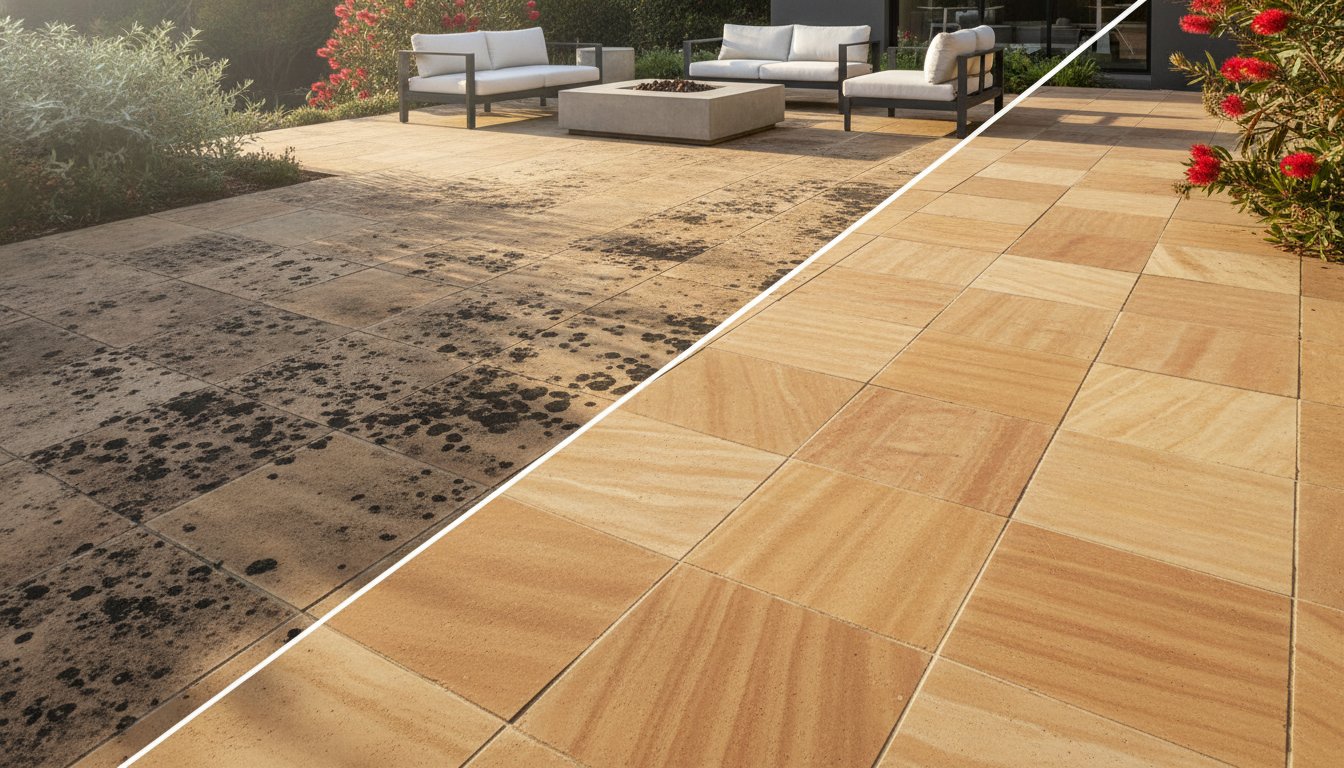
You've just finished a weekend of gardening, only to look down and see your beautiful sandstone pavers covered in unsightly white splotches. You grab a scrub brush and some soapy water, but the bird dropping stains on stone patio surfaces like yours often refuse to budge. After the stone dries, you're left with a faint, ghostly outline that seems permanently etched into the material. It's incredibly frustrating when standard cleaning fails, especially when you're worried that stronger chemicals might dissolve your expensive stone or kill your lawn. The intense Australian sun only makes things worse by baking these biological deposits deep into the pores of the patio.
This guide shows you how to safely lift these stubborn marks without using damaging acids or risking your garden's health. You'll discover why these stains are so persistent and learn about professional, biodegradable solutions that restore your patio's original colour in less than two hours. We'll also cover how to protect your outdoor space long-term using products that are completely safe for your pets and plants.
Key Takeaways
- Understand why the uric acid in bird droppings can chemically etch natural stone and why simple soap isn't enough to reach deep-seated pigmentation.
- Learn how to effectively lift bird dropping stains on stone patio areas using acid-free, biodegradable formulas that won't harm your pets or plants.
- Master a professional five-step application method that restores your stone’s original colour in less than two hours without the risks of high-pressure washing.
- Discover how to implement an annual maintenance routine with a specialised preventer to stop organic stains and biological growth from returning.
The Science of Staining: Why Bird Droppings Damage Stone
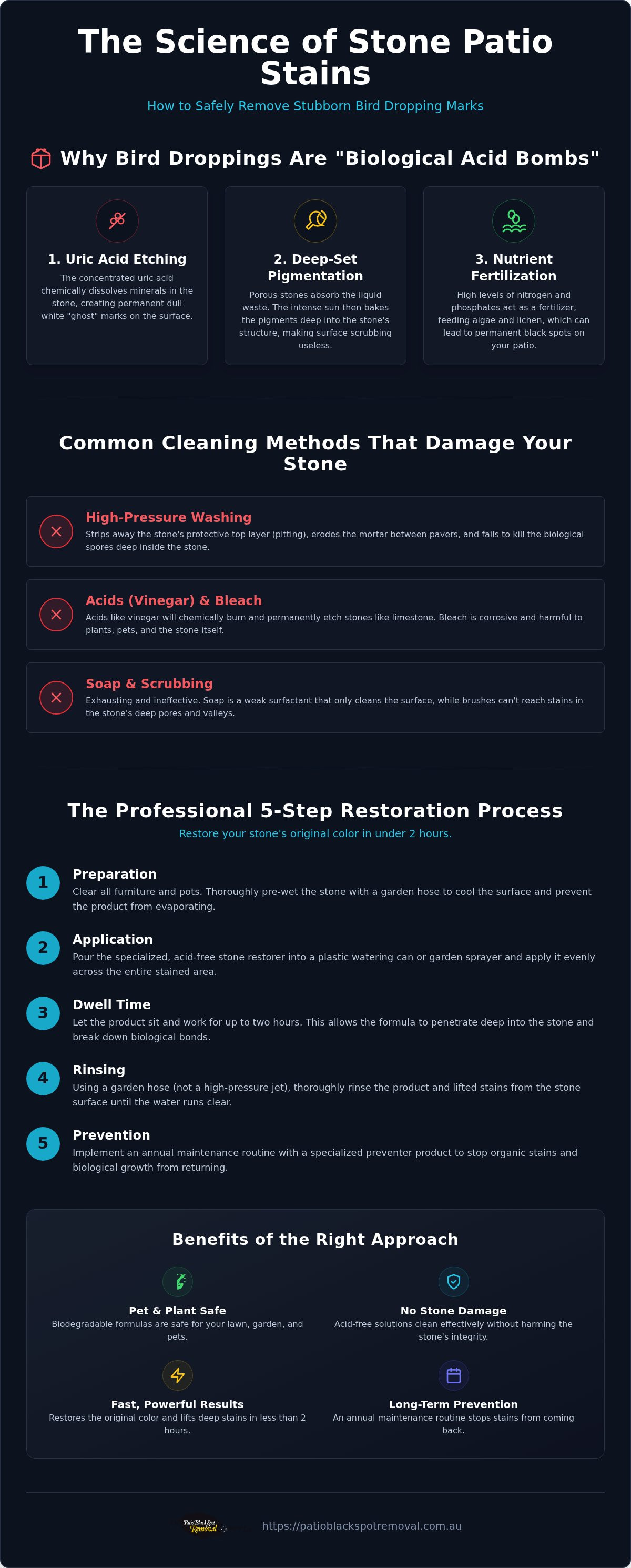
Understanding the science of bird droppings reveals high concentrations of uric acid, nitrogen, and phosphates. When these land on your patio, they don't just sit on top. Because natural stones like sandstone and travertine are highly porous, the liquid components of the waste are pulled deep into the stone's internal structure. In Australia, the intense UV levels and heat quickly dehydrate the waste, effectively "baking" the pigmentation into the pores and making traditional scrubbing ineffective.
Uric Acid and the Etching Process
Etching is a chemical reaction that occurs when the uric acid in the droppings dissolves the minerals in the stone. This creates a permanent change in the surface's reflectivity and texture, often appearing as a white or dull "ghosting" mark even after the debris is gone. It's essential to use acid-free restoration products during the cleaning process. Adding more acid to an etched stone can cause further dissolution of the stone's surface, leading to pitting and irreversible damage.
The Nutrient Link: Bird Poop and Black Spot Lichen
The high nutrient content in bird waste acts as a fertiliser for micro-organisms. This is why bird dropping stains on stone patio areas often turn into black spots or green algae colonies over time. Removing the surface matter is only half the battle. If the organic spores remain trapped within the stone's pores, they'll continue to grow, fueled by the residual nitrates. To achieve a truly clean finish, you need a solution like Patio Black Spot Remover. It targets the deep-seated biological roots that soap and water simply can't reach, restoring the stone's original colour in just two hours.
Why Traditional Cleaning Methods Often Fail on Stone
Many homeowners turn to household staples like dish soap when they first notice bird dropping stains on stone patio areas. While soap is excellent for surface grease, it's a weak surfactant that can't penetrate the dense, microscopic pores of natural stone. It cleans the surface but leaves the deep-set biological pigment untouched. This often results in a permanent "shadow" where the organic material has bonded with the minerals inside the stone.
Avoid the temptation to use high-pressure water. While it's a popular DIY choice, the force can cause significant damage:
- Surface Pitting: Blasting stone can strip away the top layer, leaving it rough and more susceptible to future staining.
- Mortar Erosion: High pressure quickly degrades the pointing between pavers, leading to loose stones.
- Ineffective Cleaning: Water alone doesn't kill the organic spores left behind by bird waste.
Using household bleach or vinegar is equally dangerous. Vinegar is highly acidic and will "burn" or etch stones containing calcium carbonate, such as limestone. Instead, you need a professional-grade natural stone restorer. These formulas are specifically engineered to target biological matter without compromising the stone's structural integrity.
The Limitations of Scrubbing
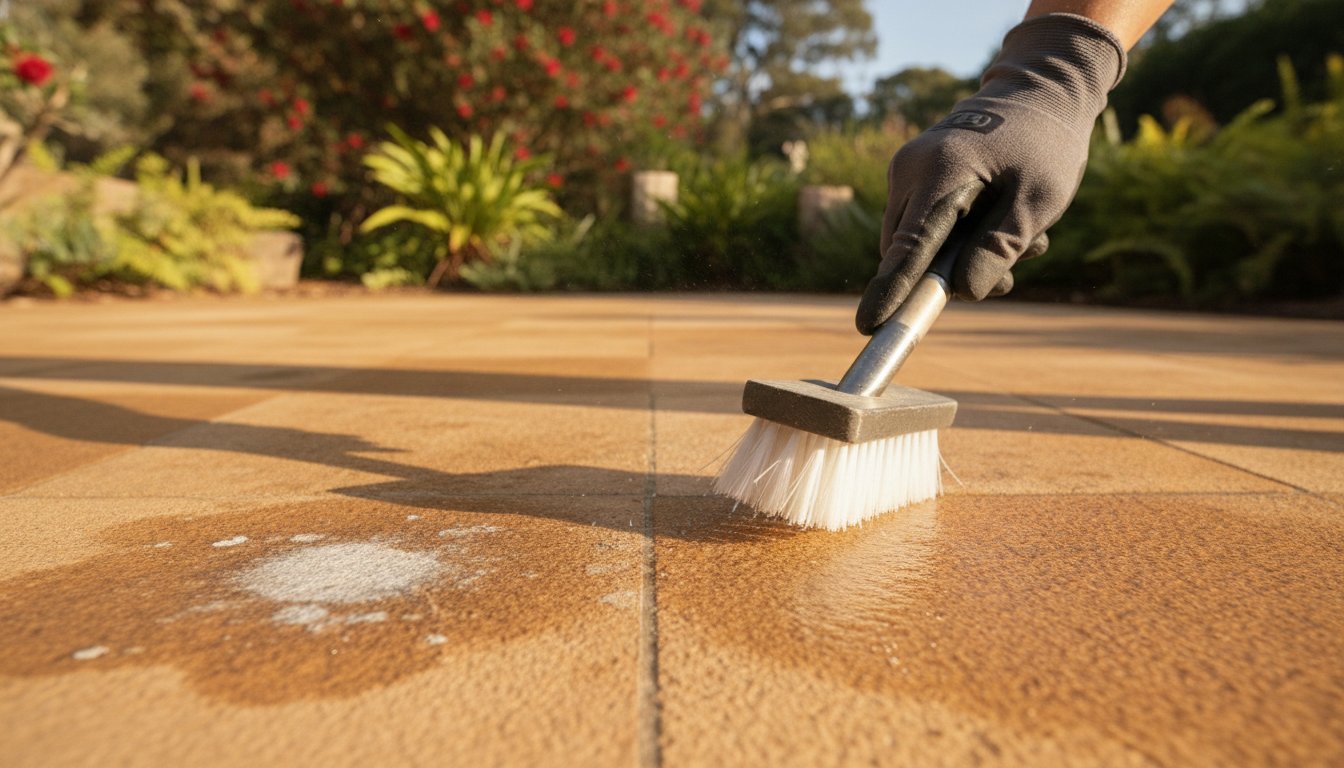
Physical scrubbing is an exhausting and often fruitless task. Brushes only reach the "peaks" of a stone's natural texture, while bird dropping stains on stone patio surfaces settle deep within the "valleys." Professional chemicals are designed to do the work for you. They flow into every crevice to dissolve organic matter chemically, removing the need for aggressive mechanical force. If you're unsure which product suits your specific pavers, you can get expert advice from our team to ensure a safe restoration.
How to Remove Bird Dropping Stains: A 5-Step Guide
Restoring your patio doesn't have to be a multi-day ordeal. By using an acid-free restorer, you can lift bird dropping stains on stone patio surfaces and return them to their original glory in under two hours. Follow these five steps for the best results.
- Preparation: Clear away all furniture and pots. Make sure the stone is dry and cool to the touch. If the stone is too warm, the product will dry during the dwell time and become ineffective.
- Application: Pour your specialised stone restorer into a garden sprayer. Apply it evenly across the affected area to ensure full coverage.
- Dwell Time: Let the product sit for two hours. This period allows the formula to break down the biological bonds of the guano deep within the pores.
- Rinse: Wash the area thoroughly with a light pressure wash or garden hose. You'll see the original stone colour emerge as the residue clears away.
Optimising for the Australian Climate
Heat is your biggest challenge when treating bird dropping stains on stone patio tiles. To avoid rapid evaporation, apply your cleaners in the early morning or late afternoon. If the stone begins to dry during the dwell time, apply a light layer of more product. Keeping the surface wet with product ensures the chemical reaction continues until the stain is fully dissolved.
Safety First: Protecting Your Garden
You don't need to worry about your lawn or flower beds during the rinse. Our biodegradable solutions are safe for plants when used as directed. Avoid spraying the product directly onto plants or lawns, but any run-off when rinsing the product is completely harmless. If you have specific questions about your stone type, contact our Sydney-based team for personalised guidance.
Preventing Future Stains and Maintaining Stone Health
Adopting a proactive approach to patio care is far more effective than the common "wait and see" cleaning strategy. Once bird dropping stains on stone patio pavers have baked in the sun, they've already begun the chemical etching process. By maintaining a clean surface, you also make the area less attractive to the insects that birds feed on, naturally reducing the frequency of new deposits.
Perform a quick monthly health check to keep your stone in top condition. Use this checklist to catch issues early:
- Inspect for Algae: Look for green or slippery patches in shaded, damp areas.
- Check for Lichen: Identify any small, circular black or white spots that don't wash away with a simple rinse.
- Spot Clean: Remove new droppings immediately with water to prevent uric acid from penetrating the stone's pores.
- Clear Debris: Sweep away organic matter like leaves or twigs that trap moisture against the stone.
The most reliable way to ensure long-term protection is using a stone preventer. This specialised formula kills organic spores on contact, stopping biological growth before it becomes visible to the naked eye.
The Annual Maintenance Model
Applying a preventer once every 11-12 months creates an environment where organic matter cannot thrive. This simple, acid-free application replaces the need for aggressive pressure washing every year. As explored in previous sections, high-pressure water can lead to surface pitting and mortar damage. An annual maintenance routine ensures your stone maintains its original colour and remains clear of lichen throughout the seasons. It's a sustainable way to protect your investment without relying on harsh chemicals or excessive force.
Revive Your Outdoor Space with Professional Stone Care
Managing bird dropping stains on stone patio surfaces doesn't have to be a constant struggle against the elements. You've learned that standard scrubbing often fails because bird waste is a complex biological acid that penetrates deep into porous stone. By choosing an acid-free and biodegradable restoration system, you can safely dissolve these stubborn marks without risking the health of your garden or the structural integrity of your pavers.
Our products are designed to restore your stone's original colour in under two hours, providing professional results with minimal effort. Whether you're dealing with baked-on splotches or the early signs of lichen growth, the right approach makes all the difference. We provide nationwide shipping to help you tackle these issues quickly and effectively. Restore your stone patio today with our professional-grade removal system and take pride in your outdoor living area once again. You now have the tools and knowledge to keep your stone looking beautiful for years to come.
Frequently Asked Questions
Will removing bird dropping stains damage my sandstone pavers?
No, provided you use an acid-free restorer. Sandstone is sensitive to acids which can cause iron oxidation or surface erosion. Using a pH-balanced, professional-grade remover ensures the biological matter is dissolved without compromising the stone's structural integrity. This approach protects the delicate face of the pavers while effectively lifting deep-seated bird dropping stains on stone patio surfaces that standard soap simply cannot reach.
Can I use a pressure washer to remove bird poop from stone?
You should avoid using high-pressure water on natural stone. While it might seem effective for surface debris, the intense force can pit the stone's surface and erode the mortar joints between pavers. This creates a rougher texture that traps more dirt and organic matter in the future. Instead, use a chemical restorer to dissolve the stain, followed by a gentle rinse with a standard garden hose.
How do I get rid of the white "ghosting" mark left after the poop is gone?
These "ghosting" marks are usually the result of chemical etching or deep-set biological pigment. To remove them, use Patio Black Spot Remover. This product penetrates the pores of the stone to break down the organic bonds that cause the shadow. Unlike general cleaners, this restoration system targets the specific chemistry of bird dropping stains on stone patio areas, returning the stone to its original uniform colour in under two hours.
Are stone cleaning chemicals safe for my dog and my plants?
Our professional restoration products are biodegradable and acid-free, making them safe for your pets and garden when used according to the instructions. Once the product has been rinsed away and the stone is dry, your dog can safely walk on the surface. Because the formula breaks down into harmless natural elements, it won't damage surrounding lawns or flower beds, ensuring your entire outdoor space remains healthy and beautiful.
How often should I treat my patio to prevent organic staining?
We recommend an annual maintenance application to keep your patio free from organic growth. Using a Patio Black Spot Preventer once every 12 months kills spores before they can develop into visible lichen or algae. This proactive approach is much more effective than waiting for stains to appear. It keeps your stone protected year-round and eliminates the need for aggressive cleaning or high-pressure washing in the future.