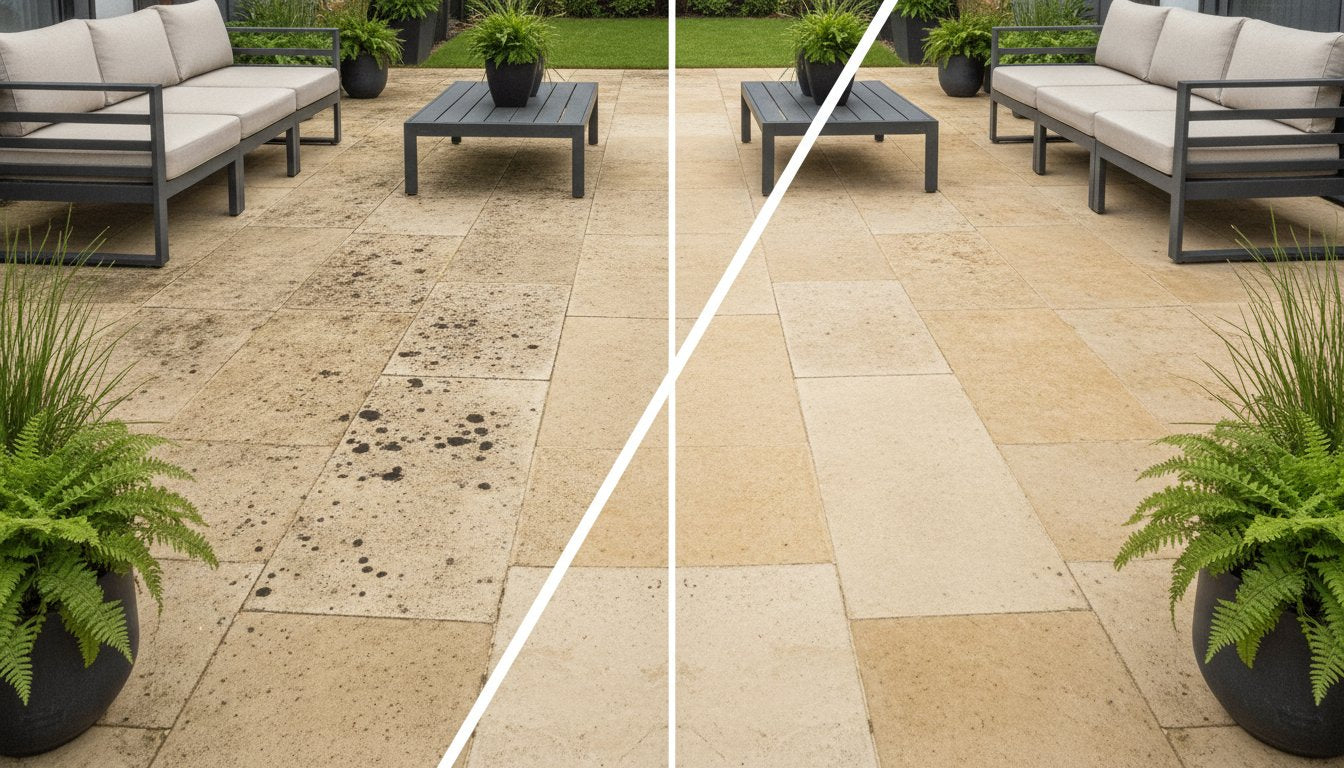
Why is it that the harder you blast your stone with a high-pressure hose, the faster those stubborn black stains on your patio seem to return? You aren't alone in your frustration. Many homeowners spend entire weekends scrubbing until their backs ache, only to find that those unsightly marks haven't moved an inch. It's natural to fear that your expensive sandstone or limestone is permanently ruined, or to worry that the heavy-duty cleaners required might pose a threat to your pets and garden beds.
The truth is that these spots aren't just dirt; they are living organisms known as black lichen that anchor themselves deep within the pores of the stone. In this article, you'll discover why traditional cleaning methods fail and learn the professional "search-and-destroy" approach to restore your patio to its original beauty without damaging the surface. We'll provide a clear, safe, and easy-to-follow process that not only removes existing stains but also prevents them from returning next season. By understanding the biology of the lichen, you can stop the endless cycle of scrubbing and finally enjoy a clean, like-new outdoor space.
Key Takeaways
- Learn how to use the "Ink-Spot" test to identify whether your marks are simple garden dirt or stubborn biological lichen.
- Understand why high-pressure washing often fails to clear black stains on patio surfaces and how it might inadvertently damage your stone.
- Discover the role of specialized surfactants in reaching the "root" of the lichen to ensure a complete and lasting removal.
- Master safe application techniques using standard garden tools to restore your outdoor space without harming your lawn or pets.
- Identify the best strategies for long-term prevention to stop new spores from anchoring before the next season begins.
What Are the Black Stains on Your Patio? Identifying Black Lichen
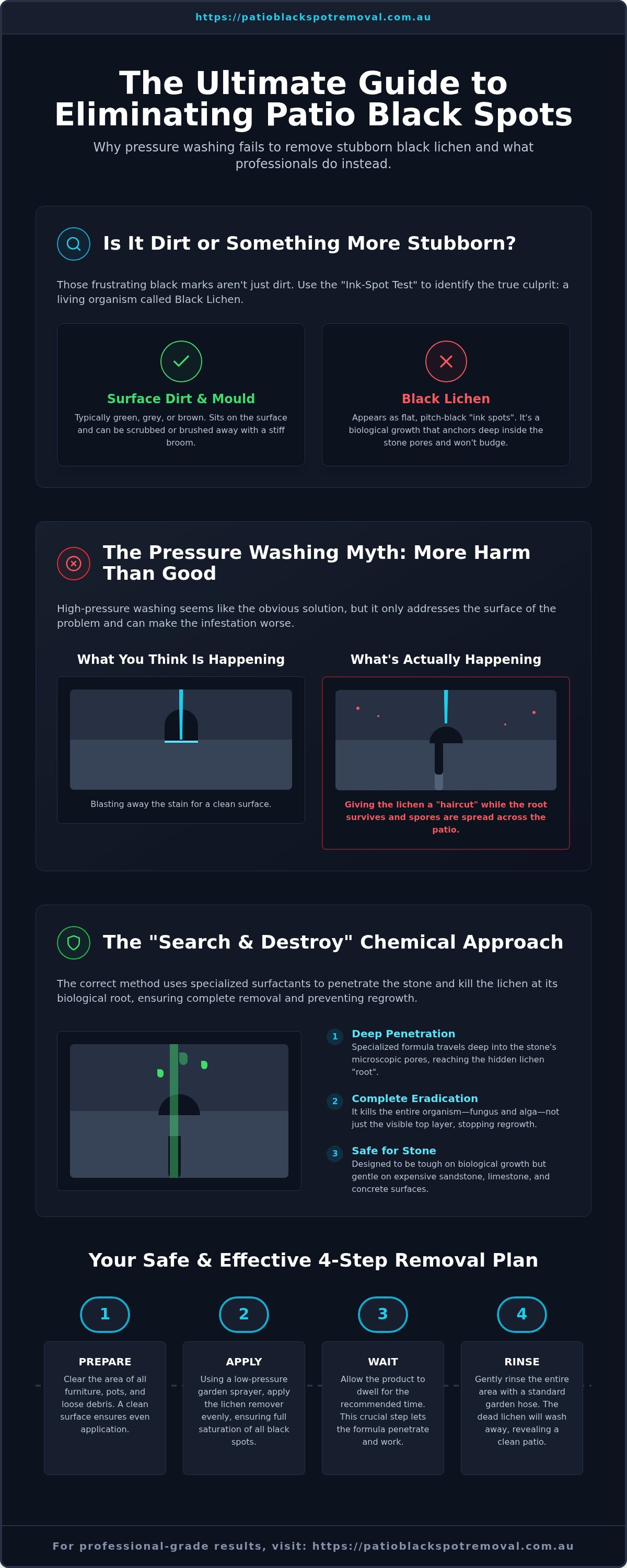
Those dark, stubborn marks on your paving often look like someone has flicked a fountain pen across the surface. This is the "Ink-Spot" test: if the mark is flat, pitch black, and doesn't brush off with a stiff broom, you aren't looking at dirt or grease. You're looking at black lichen. Unlike surface dirt, black stains on patio surfaces are biological organisms that have fused with the stone itself. They won't budge with a standard garden hose because they aren't sitting on the stone; they're living in it.
To understand why they are so hard to remove, we have to look at their biology. What is lichen? It's a complex, symbiotic partnership between a fungus and an alga. The fungus provides the structure and protection, while the alga produces food through photosynthesis. This teamwork allows the organism to survive in harsh environments where other plants would wither, such as the exposed, sun-baked surface of your driveway or pool surround. This biological anchor is what makes them so resilient against physical force.
These spots appear to grow over time because they are alive and active. They don't wash away with rain; in fact, they thrive on it. In Australia, our cycles of heavy rain followed by high humidity create the perfect incubator for lichen growth. The moisture feeds the alga, while the heat accelerates the biological processes, causing those tiny initial specks to expand into large, unsightly blotches. This growth is why black stains on patio areas seem to worsen every year regardless of how often you sweep.
Lichen vs. Mould: Know Your Enemy
It's easy to confuse these stains with common garden mould, but the differences are vital for effective treatment. Mould is typically fuzzy, green or grey, and sits on top of the moisture film on your stone. It's relatively easy to kill because it hasn't "anchored" itself. Black lichen, however, produces an acid that dissolves a tiny amount of the stone's minerals, allowing it to root itself deep within the pores. This is why you can't just scrub it off; the base of the organism is actually inside the stone, protected from surface-level cleaning.
The 12-Month Spore Cycle
Lichen reproduces through microscopic spores that travel on the wind, often landing in the porous surface of your patio during the wetter months. Once they settle, they enter a dormant phase where they are virtually invisible to the naked eye. You might think your patio is clean after a quick winter wash, but the spores are simply waiting for the right temperature and light to begin their growth. Lichen spores typically follow a 12-month lifecycle, maturing and releasing new spores annually to continue the infestation.
Why Pressure Washing Fails to Remove Black Spot Stains
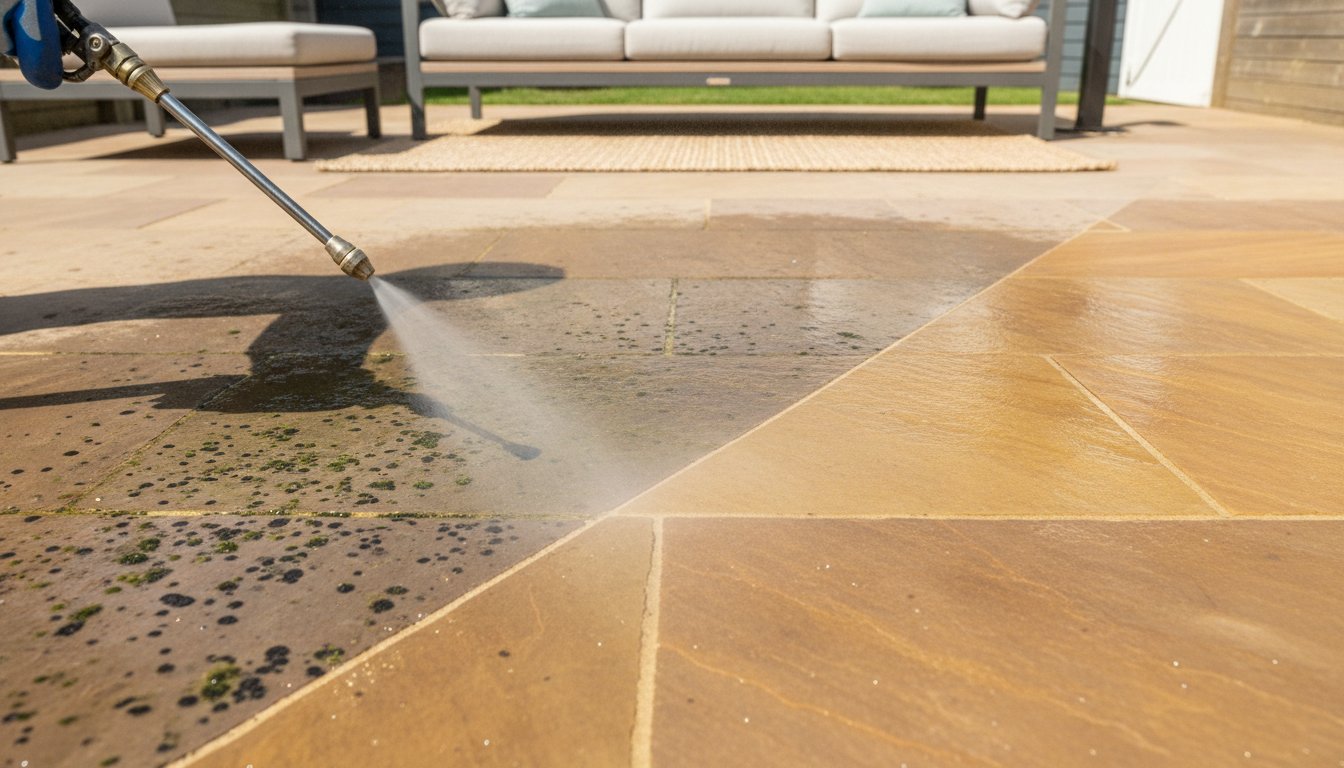
It's the first instinct for any homeowner: see a dirty patio, hire a pressure washer. While a high-pressure jet is excellent for stripping away loose mud or autumn leaves, it's remarkably ineffective against black stains on patio surfaces. You might see the surface turn a shade lighter as the grime disappears, but those ink-like spots remain stubbornly fused to the stone. This happens because pressure washing only addresses the symptoms of the problem, not the biological cause. You're effectively giving the lichen a "haircut" rather than pulling it out by the roots.
The primary reason for this failure is the lichen's sophisticated attachment method. According to university research on lichen, these organisms anchor themselves firmly to the substrate using fungal filaments. These filaments penetrate the microscopic pores of natural stone and concrete. When you hit these spots with 3,000 PSI of water, you might blast away the top layer of the lichen, but the "root" remains safely tucked inside the stone's pores. Once the water dries, the surviving organism simply begins to regrow, often appearing more vibrant than before because you've provided it with a fresh supply of moisture.
There is also a significant "spread effect" that most people don't consider. High-pressure water acts as a dispersal mechanism for microscopic spores. As you blast the visible spots, you're inadvertently launching thousands of dormant spores into the air and across your garden. These spores land on previously clean areas of your patio, leading to new outbreaks just a few months later. Instead of solving the issue, aggressive mechanical cleaning often expands the territory of the infestation.
Mechanical Force vs. Biological Anchors
The fungal "cup" that forms the base of the lichen is incredibly resilient. It's designed to withstand harsh weather, including torrential rain and scorching sun. Blasting this cup with water pressure often results in surface degradation before the lichen actually releases its grip. For softer stones like sandstone, the force required to physically move the lichen is often high enough to strip away the stone's natural finish. This leaves the patio looking "fuzzy" or worn, permanently damaging the stone's integrity in a desperate attempt to clean it.
The Rebound Effect: Why Spots Return Faster
The most frustrating part of the pressure washing cycle is how quickly the spots return. When you use high pressure, you create "pitting" in the stone. These tiny, microscopic craters increase the surface area of your patio and provide even more nooks and crannies for new spores to hide in. These micro-cracks hold onto moisture for longer periods, creating a damp, protected nursery for the next generation of lichen. This is why many homeowners find themselves in a cycle of washing every three months, only to find the black stains on patio stone getting worse each time. To break this cycle, you need to move away from physical force and toward professional-grade lichen removal solutions that kill the organism at its source.
The Science of Chemical Removal: How to Kill Lichen for Good
When physical force fails to move black stains on patio surfaces, targeted chemistry becomes the only viable solution. Many homeowners reach for household bleach or pool chlorine, but these often provide a temporary "bleaching" effect rather than a total kill. Specialized professional removers succeed because they are formulated to break down the biological "glue" that lichen uses to bond with the stone. While an expert patio cleaning guide might offer various general maintenance tips, removing deep-seated lichen requires a product that can navigate the complex structure of the organism itself.
The choice often comes down to oxygen-based versus chlorine-based treatments. Oxygen-based cleaners are excellent for general organic growth and are often gentler on surrounding vegetation. However, for the specific problem of black lichen, high-grade chlorine-based solutions are typically required to dissolve the resilient fungal anchors. These professional formulas are balanced with buffers to protect the integrity of your stone while aggressively attacking the lichen's cellular structure. This chemical reaction effectively "digests" the organism, turning it into a liquid that can be safely rinsed away without the need for destructive pressure.
Deep Pore Penetration
The most significant challenge in stone care is reaching the "root" of the infestation. Natural stone is porous; it acts like a hard sponge that sucks up moisture and microscopic spores. Professional removers use a wicking action to follow the lichen into these pores, ensuring the treatment reaches the very base of the fungal cup. A bio-film is a resilient layer of microorganisms that coats the stone surface, acting as a protective shield for the lichen against standard cleaning agents and environmental stress. By breaking through this bio-film, specialized chemicals can address the 12-month spore cycle and kill dormant organisms before they have a chance to mature and spread.
Surfactants and Wetting Agents
If you've ever noticed water beading on your patio, you're seeing surface tension in action. Most DIY or water-based solutions simply sit on top of the stone, never making contact with the lichen's anchor. Professional-grade formulas include surfactants and wetting agents that lower the surface tension of the liquid. This allows the cleaner to spread evenly and stay "wet" for longer. This extended dwell time is critical; the chemical needs time to work its way through the layers of the organism. Without these agents, the cleaner evaporates or runs off before it can achieve a 100% kill rate, leading to the rapid return of black stains on patio areas just a few months later.
Step-by-Step Guide: Treating Your Patio Safely in Australia
Cleaning your outdoor space requires more than just a bucket of soapy water. To effectively remove black stains on patio surfaces, you must follow a methodical process that respects both the material and the harsh Australian climate. Start by clearing all furniture and sweeping away loose leaves, dirt, and organic debris. This ensures the treatment makes direct contact with the lichen rather than being absorbed by surface dust. For application, a plastic watering can is often superior to a sprayer because it delivers the volume needed to saturate the stone's pores completely.
In the Australian heat, managing dwell time is your biggest challenge. If the product dries out too quickly, the chemical reaction stops before the lichen is dead. Avoid working in the midday sun; instead, choose a cool, overcast day or work in the early morning. If the stone starts to dry during the treatment, lightly mist it with water to keep the surface active. Once the required time has passed, rinse the area thoroughly with a garden hose. You don't need high pressure here; volume is more important to flush the dissolved lichen and chemical residue away.
Stone-Specific Considerations (Sandstone, Limestone, Concrete)
Australian gardens frequently feature sandstone, which is incredibly porous. This stone acts like a sponge, often requiring a second application to reach the deepest roots of the lichen. Conversely, when dealing with limestone or travertine, you must use pH-balanced formulas to avoid etching the delicate surface. Concrete and block paving, while tougher, have deep-set pores that trap moisture, making them prone to rapid re-infestation if not treated thoroughly. You can find specialized formulas for different stone types that protect your investment while delivering a deep clean.
Environmental and Pet Safety
Protecting your landscape is just as important as cleaning the stone. Before you begin, soak the surrounding lawn and garden beds with fresh water. This creates a barrier in the soil, preventing the roots of your plants from absorbing any run-off. Keep pets and children indoors until the patio is completely dry and rinsed. To protect local waterways, ensure any run-off is diluted with plenty of water, which neutralizes the active ingredients as they leave the stone surface. This careful approach ensures your black stains on patio stone disappear without leaving a negative impact on your home's ecosystem.
Preventing the Return of Black Stains: A 2026 Strategy
Once you've successfully removed the black stains on patio surfaces, the goal is to never have to do that heavy lifting again. Adopting a "prevention is better than cure" mindset is essential for long-term stone maintenance. In Australia, the most strategic time for preventative treatment is autumn. By applying a specialized preventer before the wet winter months begin, you kill off any newly landed spores before they have the chance to anchor into the stone's pores. This proactive step breaks the 12-month biological cycle discussed earlier, ensuring your patio remains clear and bright year-round.
Environmental factors also play a massive role in how quickly lichen returns. Areas that stay damp, such as those under heavy shade or with poor drainage, are high-risk zones. If water pools in certain corners of your paving, it creates a perfect nursery for spores. Improving sunlight exposure by trimming overhanging branches or ensuring your patio has a slight fall for water runoff can significantly reduce the habitat for new lichen. A dry, sunlit stone surface is the best natural defense against biological growth.
The Annual Maintenance Routine
A simple annual maintenance spray takes roughly five minutes but can save you five hours of intensive deep cleaning later. It's much easier to kill a surface-level spore than an anchored lichen colony. Focus your attention on "hot spots" near garden beds, overhanging foliage, or areas that receive little direct sun. You can identify re-infection early by looking for tiny, microscopic black specks that look like dust but won't wash away with a garden hose. Catching these in the first few months of their growth makes them much easier to neutralize than established colonies that have already begun to pit the stone.
Why Choose Patio Black Spot Removal Australia?
We specialize in the specific science of black lichen, positioning ourselves as the authority on this particular biological challenge. Our formulas are designed to protect the integrity of your stone while targeting the deep-set roots that pressure washers simply cannot reach. We provide expert support for both DIY enthusiasts looking to restore their own backyards and professional contractors seeking reliable results across Australia. Shop the full range of Patio Black Spot Removers to find the right solution for your specific stone type and keep your black stains on patio areas from ever returning.
Enjoy a Spotless Outdoor Space Again
Reclaiming your garden from stubborn biological growth doesn't have to be a losing battle. By shifting your focus from aggressive mechanical force to targeted chemical removal, you can eliminate black stains on patio surfaces without risking the integrity of your stone. Understanding that these spots are living organisms rather than simple dirt is the first step toward a permanent solution. Once you've removed the existing lichen and established an annual preventative routine, your patio will remain a beautiful extension of your home rather than a source of frustration.
As an Australian-owned and operated specialist, we provide professional-grade formulas that are safe for all natural stone types. Our solutions target the roots of the lichen to ensure they don't return next season. Restore your patio today with Australia's leading Black Spot Remover and get back to enjoying your outdoor lifestyle. You've invested a lot in your stone; now it's time to let its original beauty shine through again.
Frequently Asked Questions
Will black spot remover kill my grass or plants?
The active ingredients in professional removers can damage or kill foliage if they come into direct contact with your garden. To prevent this, you should thoroughly saturate your lawn and garden beds with fresh water before you begin the application. This creates a "water barrier" in the soil and on the leaves, ensuring any accidental run-off is diluted and doesn't soak into the plant's root system.
How long does it take for the black spots to disappear after treatment?
Most black stains on patio surfaces will begin to dissolve within two to four hours after the initial application. While the chemical reaction starts almost immediately, the full restoration of the stone's original colour happens once the residue is rinsed away. For extremely old or dense lichen colonies, a second application might be necessary to reach the deepest part of the biological anchor.
Can I use black spot remover on natural sandstone?
Yes, professional-grade removers are specifically formulated to be safe for natural sandstone. Because sandstone is highly porous, it's actually one of the stones that benefits most from chemical cleaning compared to pressure washing. The solution sinks into the pores to kill the lichen without stripping away the stone's delicate top layer or changing its natural texture.
Is it safe for my dogs to walk on the patio after cleaning?
Your patio is perfectly safe for pets once it has been thoroughly rinsed with water and allowed to dry completely. Until that point, keep dogs and cats away from the wet solution to prevent them from licking their paws or getting the product on their skin. Once dry, the active ingredients have been neutralized and pose no further risk to your animals.
Why do the black spots come back even after I've cleaned them?
Re-infection usually occurs because microscopic spores from nearby trees or shaded areas land on the stone and begin a new cycle. If you don't use a preventative treatment, these invisible spores will anchor themselves within 12 months. Maintaining a clean surface requires breaking this cycle by applying a preventer annually, especially in damp or shaded parts of your garden.
What is the best time of year to treat my patio for black lichen?
You can remove existing spots at any time of year, but a cool, overcast day is best to prevent the product from drying too quickly in the sun. For preventative maintenance, autumn is the ideal season in Australia. Applying a treatment before the winter rains begin ensures that any spores landing during the wet season are killed before they can establish a firm grip.
Do I need to scrub the patio after applying the remover?
In most cases, the chemical reaction does all the heavy lifting, so intensive scrubbing isn't required. For particularly heavy infestations, you might find that a light agitation with a stiff broom helps the product penetrate the thickest parts of the lichen. However, you should never need to use aggressive mechanical force or wire brushes, which can permanently scratch or pit your stone.
How much product do I need for a standard-sized patio?
Coverage depends heavily on the porosity of your stone rather than just the square meterage. Porous materials like Australian sandstone require more product because they absorb the liquid deeply, while concrete or block paving usually requires less. It's best to calculate your area and check the specific coverage rates for your stone type to ensure you have enough to saturate the surface completely.