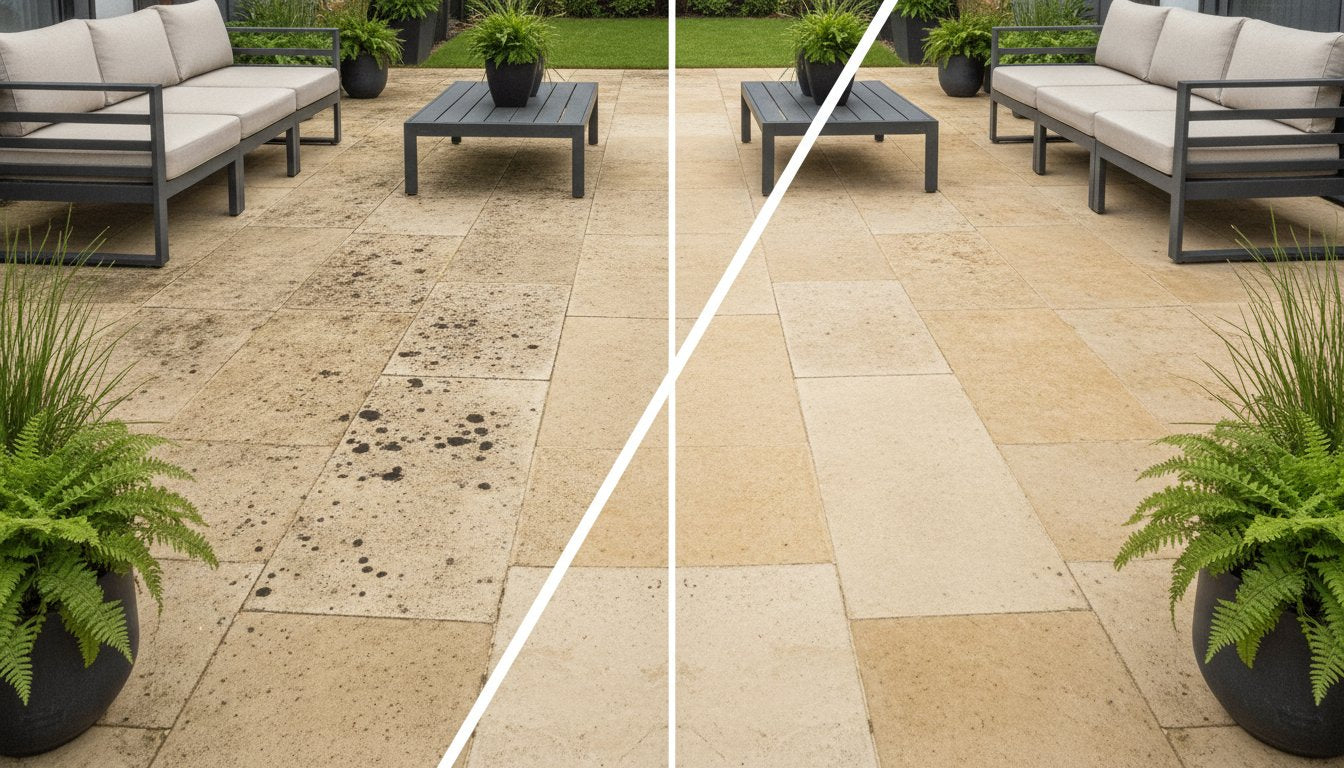
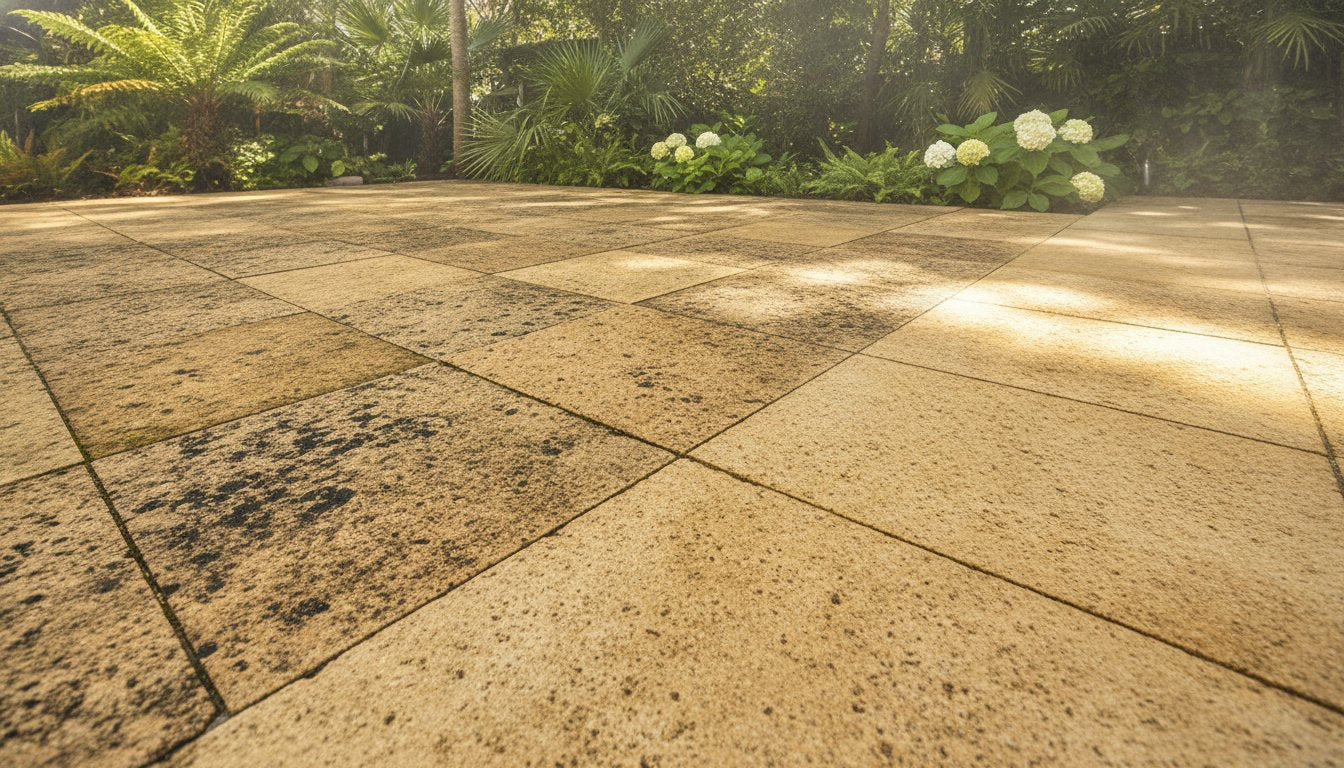
Many homeowners find that Sydney Sandstone patio cleaning is a unique challenge because the stone’s porous nature traps lichen and algae deep within its surface. High pressure washing and aggressive cleaning can lead to pitting or spalling, effectively destroying the natural texture you fell in love with. If you've spent weekends scrubbing stubborn black spots only to see them return, you aren't alone.
The good news is, you can safely dissolve those persistent black spots and restore your patio to its original, bright glory without risking permanent damage. This guide explains how a "low pressure" approach protects your investment while providing long-term protection against regrowth. You'll learn the secrets to reviving the natural brilliance of your stone and keeping your outdoor living space safe and slip-free, even in Sydney’s humid weather.
Key Takeaways
- Understand why Sydney sandstone’s unique porosity makes it a magnet for organic growth in local humid conditions.
- Learn why high-pressure washing can permanently damage your stone's surface and actually accelerate future staining.
- Discover how specialised treatments for Sydney Sandstone patio cleaning treat deep-seated lichen without the need for aggressive scrubbing.
- Identify the specific maintenance habits that help prevent black spots from returning to your patio.
- Evaluate the DIY methods to ensure your stone stays pristine for years to come.
Why Sydney Sandstone Requires a Specialised Cleaning Approach
Sydney sandstone, including the iconic varieties from Gosford or Bundanoon, is a sedimentary rock prized for its warmth and texture. It defines the aesthetic of many New South Wales homes, yet its beauty comes with a high maintenance requirement. With house prices increasing in 85% of Sydney suburbs over the 12 months to June 2026, preserving these architectural features isn't just about aesthetics; it's a strategic move to protect your property's market value. Effective Sydney Sandstone patio cleaning requires more than a quick rinse because the stone acts like a hard, mineral sponge.
Traditional cleaning methods often fail because they only address what's visible on the surface. While a standard wash might remove loose dust, it leaves the microscopic "roots" of organic growth untouched. This leads to a frustrating cycle where the patio looks clean for a short time, only for dark patches to reappear the moment the humidity rises. To truly restore the stone, it's important to remove all
The Porosity Factor: Why Dirt Sinks Deep
The porous nature of sandstone is its most significant vulnerability. Porosity is the measure of void spaces within the rock, and in Sydney varieties, these microscopic gaps allow water, salt, and organic spores to penetrate deep beneath the visible surface. This means that stains aren't just sitting on top; they're often embedded several millimetres into the stone.
Chemical composition also plays a role. Many local stones contain iron oxides, which give them those beautiful gold and tan hues. If you use the wrong cleaning agents, such as acidic solutions, you risk triggering a chemical reaction that causes permanent orange rust-staining or structural "spalling."
Sydney’s Climate and the "Black Spot" Epidemic
Sydney’s unique coastal climate creates a perfect storm for patio degradation. The combination of high humidity and salt air accelerates the expansion of lichen and mould. You'll likely notice that different areas of your garden age at different speeds:
- South-facing patios: These areas receive less direct sunlight and stay damp for longer periods, making them prime real estate for moss and thick green algae.
- North-facing patios: While they dry faster, the intense sun can "bake" organic matter and bird droppings into the pores, making them incredibly difficult to shift.
- Coastal properties: Salt spray can crystallise inside the stone's pores, putting pressure on the delicate sedimentary layers from the inside out.
This seasonal cycle of staining means that Sydney Sandstone patio cleaning shouldn't be a reactive chore you do once a year. It requires a preventative mindset that accounts for the relentless biological pressure of the Australian outdoors.
The Pressure Washing Myth: Why High Pressure Can Ruin Your Sandstone
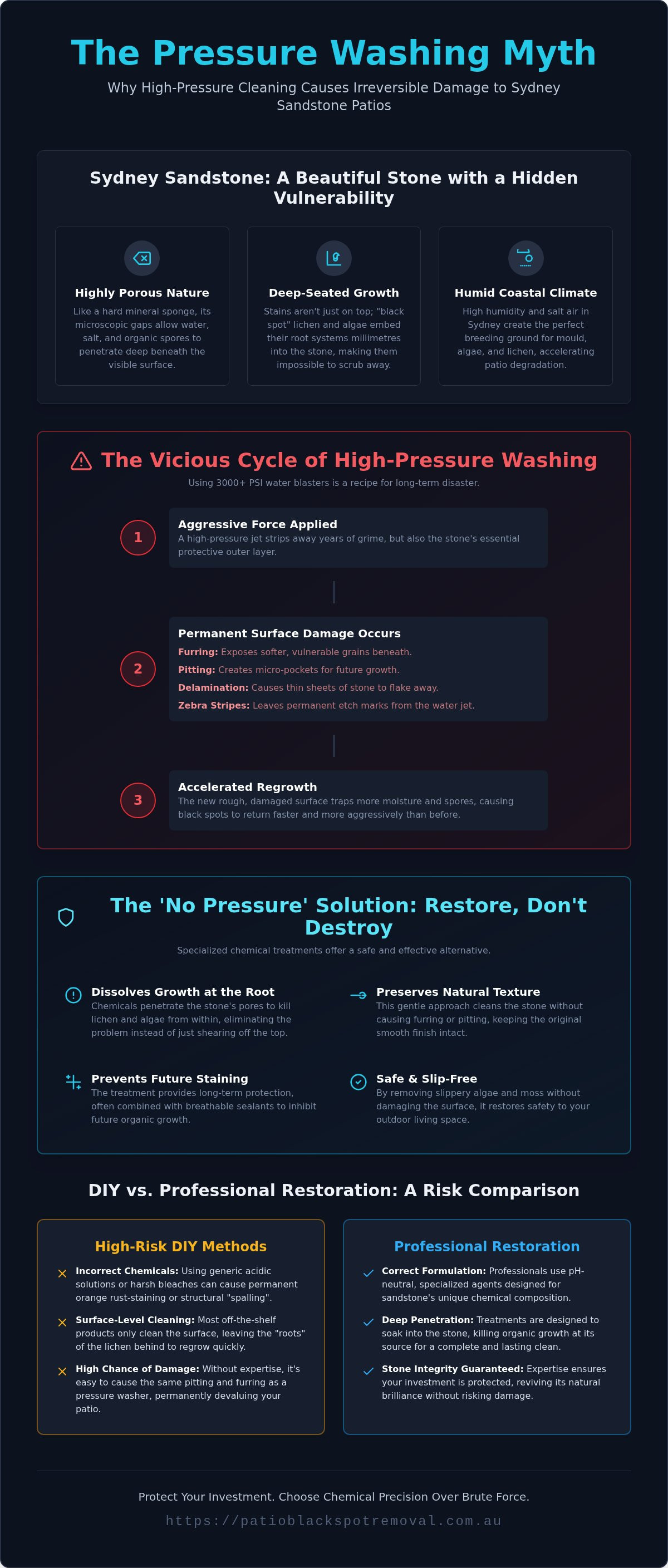
You’ve likely seen those satisfying videos of pressure washers stripping away years of grime in seconds. While they look effective, using a high-pressure water blaster for Sydney Sandstone patio cleaning is often a recipe for long-term damage. Sandstone is a sedimentary rock held together by natural mineral binders. When you hit it with thousands of pounds of pressure, you aren't just removing dirt; you're literally stripping the "face" off the stone, opening the pores and making it more susceptible to ingrained dirt, frost damage and organic staining.
This leads to a phenomenon known as "furring." By blasting away the smooth upper layer, you expose the softer, more vulnerable grains beneath. This creates a rougher surface that actually makes the stone get dirty faster next time. Instead of a smooth patio, you're left with a jagged landscape that traps organic spores, dust, and moisture more effectively than ever before. It’s a vicious cycle that eventually forces homeowners into expensive repairs or total stone replacement.
The Science of Delamination and Pitting
When you subject sandstone to 3000+ PSI, the force is often greater than the internal strength of the stone's layers. This can cause delamination, where thin sheets of the stone begin to flake or peel away. You might also notice "zebra stripes," which are permanent etch marks left by the concentrated stream of water. These aren't just cosmetic issues. Experts warn about the dangers of abrasive cleaning because once the surface is etched, those micro-pockets become permanent homes for lichen and mould. Mechanical force simply can't match the precision of a dedicated chemical restoration treatment that leaves the stone's structure intact.
Safer Alternatives for Surface Debris
If you just need to clear away loose dust or autumn leaves, stick to "low and slow" methods. A stiff-bristled broom and a standard garden hose with a trigger nozzle are often the safest tools in your shed. For general grime, a soft-wash technique using low water flow and a gentle, non-acidic cleaner is far superior to a power tool. This protects the natural texture of the stone and prevents the pitting that increases the severity of slippery, moss-covered surfaces during Sydney's humid months. Keeping your Sydney Sandstone patio cleaning routine gentle ensures the stone retains its natural brilliance without the risk of structural failure.
Identifying and Treating "Black Spot" (Lichen) on Sydney Patios
What homeowners commonly call "black spot" is actually a hardy form of lichen. This is a symbiotic relationship between algae and fungi. The algae provide the food through photosynthesis, while the fungi create a protective structure that anchors itself deep into the stone’s pores. Because these organisms are physically rooted into the sandstone, Sydney Sandstone patio cleaning requires a strategy that goes beyond surface-level scrubbing.
The infestation usually follows a predictable and destructive path. It starts as a faint grey haze that many mistake for general dust. Over time, these develop into distinct, ink-black spots that resemble splattered paint. If left untreated, the lichen continues to grow, eventually creating "craters" in the stone as the roots expand and contract, physically breaking apart the sedimentary layers. Many people try to blast these spots away with pool chlorine, but this often fails. While chlorine might bleach the surface, it rarely penetrates deep enough to kill the "root" of the lichen, leading to a quick regrowth within weeks.
How to Spot the Difference: Dirt vs. Lichen
If you aren't sure whether you're dealing with simple grime or a biological infestation, try the "Wet Test." Splash a bucket of water over a dry patch of your patio. Simple dirt often looks lighter or "cleaner" when wet, as the water rinses away loose particles. In contrast, lichen black spots will appear darker and more defined against the wet stone. You should also look for circular growth patterns, known as *Lichen thallus*. These distinct rings are a clear sign that a biological colony is actively expanding across your sandstone surface.
The Chemical Solution: Treating the Root Issue.
To truly restore your patio, you must break the biological bond between the lichen and the stone. Specialised treatments are designed to penetrate the stone's surface and dissolve the organism from the inside out. This process requires a "dwell time," allowing the solution to stay in contact with the lichen long enough to neutralise it completely. Chemical surfactants are necessary for deep cleaning because they lower the surface tension of the liquid, allowing the active ingredients to sink into the microscopic pores where the lichen's roots are anchored. This "no pressure" approach ensures the stone remains intact while the black spots are safely eliminated. By choosing a treatment tailored for Australian conditions, you ensure your Sydney Sandstone patio cleaning results in a long-lasting, brilliant finish rather than a temporary fix.
DIY Cleaning vs. Professional Restoration: Finding the Balance
Deciding whether to clean your patio yourself or hire a professional largely depends on the condition of your stone. If your patio only has a light build-up of seasonal dirt, dust or loose debris, a garden hose and a soft-bristled brush are usually all that's needed to freshen it up. For patios affected by stubborn black spot lichen, a specialist patio cleaner is the most effective way to remove deep-set staining. In most cases, patios that have been treated or laid within the last six years will only require a single application to restore the stone, making it a straightforward DIY job. However, if your patio is much older or has heavy black spot staining that has built up over many years, multiple treatments may be needed to achieve the best results. While this can still be done yourself, it is more time-consuming and labour-intensive, so you may prefer to hire a professional to apply the treatment. Even in these cases, using a specialist patio cleaner yourself is often far more cost-effective than paying for professional cleaning and considerably easier than spending hours scrubbing or pressure washing the stone with limited success.
In the competitive Sydney real estate market, where house prices rose in 85% of suburbs over the 12 months to June 2026, curb appeal is a vital asset. Using specially formulated patio black spot removers and preventers is an investment in your property’s auction potential. A clean, bright outdoor space suggests a well-maintained home, whereas a stained, slippery patio can be a major red flag for buyers.
The Risks of "Off-the-Shelf" Acid Cleaners
One of the most dangerous mistakes a homeowner can make is using hydrochloric acid or "brick acid" on their patio. You should never use these aggressive chemicals on sandstone. Because Sydney stone often contains iron oxides, the acid triggers a chemical reaction that can create permanent, unsightly orange rust stains. These stains are often impossible to remove without grinding down the stone. Safe chemical handling requires an understanding of stone mineralogy that most off-the-shelf products simply don't provide.
The Patio Black Spot Removal Advantage
By using a formula specifically designed to target only organic growth, we can treat the lichen at the root without affecting the stone's structural integrity. This "Low Pressure" method is also much safer for your Sydney patio. Because our treatment kills the spores deep within the pores, the results last significantly longer than a standard DIY wash. If you want to restore your stone's natural brilliance safely, it's time to place an order and see the difference our product makes.
Long-Term Maintenance: Keeping Your Sandstone Pristine
Restoring your stone is only half the battle. Because Sydney’s coastal environment is so conducive to organic growth, maintaining your results requires a proactive approach. You don't want to wait until the black spots return to think about your patio's health. Effective Sydney Sandstone patio cleaning involves frequent habits and seasonal interventions that prevent lichen from ever getting a foothold. By managing moisture and organic debris, you can extend the time between professional deep cleans significantly.
The Sealing Debate: To Seal or Not to Seal?
Choosing the right sealant is critical for maintaining the longevity and appearance of your stone. Topical sealers, which create a film over the surface, are generally best avoided on porous stones such as Sydney Sandstone. They can restrict the stone's natural ability to breathe and potentially trap moisture, which may contribute to issues such as discolouration, flaking and delamination.
If you do choose to seal your Sydney stone, a high-quality breathable penetrating sealer is generally the preferred option. However, sealers are primarily designed to protect against water and staining; they don't specifically prevent the return of organic growth such as algae, moss, lichen and black spot. They can also alter the appearance of the stone and require periodic reapplication.
For this reason, we recommend a non-sealing preventer treatment as an alternative for customers whose priority is preventing organic staining. Our preventer is designed to help stop stubborn black staining and organic discolouration from returning after your patio has been cleaned. Unlike a traditional sealer, it doesn't simply create a coating over the stone. Instead, it is specifically formulated to provide ongoing protection against organic staining.
Applied as part of an annual maintenance programme, the Preventer helps keep patios looking cleaner for longer and can also clear green and red algae discolouration within a few days of treatment. It is suitable for all types of stone, including Sydney Sandstone.
We recommend applying the Preventer approximately 11–12 months after your initial Patio Black Spot Remover treatment, and annually thereafter. This gives your patio continued protection without the need for a traditional sealer.
A Seasonal Maintenance Checklist
Staying ahead of the "black spot" cycle means adjusting your care routine as the seasons change in New South Wales. Follow this simple guide to keep your stone in top condition:
- Autumn: Sweep away fallen leaves daily. Decomposing organic matter releases tannins that leave stubborn brown stains on light-coloured stone.
- Winter: Monitor damp, south-facing corners for the first signs of green algae. A quick rinse with a garden hose can disrupt growth before it anchors into the stone.
- Spring: Perform a gentle "soft wash" to clear away winter grime and prepare the space for outdoor entertaining.
- Summer: Check for any high-traffic wear and tear, ensuring the stone remains slip-resistant and bright during the peak of the Sydney heat.
Consistent care is the secret to a patio that looks as good as the day it was laid. If your stone has already been overtaken by lichen and standard scrubbing isn't working, it’s time for an intervention. To restore your outdoor space to its original glory and start your maintenance journey on a fresh canvas, discover our products here.
Revive Your Outdoor Sanctuary
Your Sydney Sandstone patio is more than just a surface; it's the heart of your outdoor living space. Protecting its natural beauty requires moving away from destructive high-pressure methods that cause permanent pitting and etching. By understanding the biological nature of lichen and the unique porosity of local stone, you can choose a restoration path that preserves your investment for decades. You've worked hard to create a beautiful home, and your stone surfaces should reflect that standard.
Effective Sydney Sandstone patio cleaning doesn't have to be a constant battle against stubborn stains. Our expert products, which are available here, use a specialist formula designed specifically for Australian Sandstone. This safe, low pressure cleaning method treats organic growth at the root while restoring your stone's natural brilliance without the risk of structural damage. You don't have to settle for a slippery, stained patio when a professional, long-lasting solution is readily available.
Restore Your Sydney Sandstone Today and reclaim the bright, pristine finish your home deserves. It's time to stop scrubbing and start enjoying your beautiful outdoor retreat again with total peace of mind.
Frequently Asked Questions
Will cleaning my sandstone patio remove the natural colour?
Using our treatments actually restore the natural colour by removing the dark biological film and dirt masking it. Unlike acidic cleaners that can bleach or burn the stone, specialised non-acidic treatments protect the iron oxides that give Sydney sandstone its unique gold and tan hues. You'll find that once the organic growth is gone, the stone’s original brilliance returns without any loss of pigment.
Is it safe to use a pressure washer on Australian sandstone?
High-pressure washing is generally unsafe for Australian sandstone because it's a soft, sedimentary rock. The intense force can cause delamination, pitting, and a "furring" effect that creates a rougher surface. This damage is irreversible and actually makes the stone more prone to trapping dirt in the future. A "low pressure" chemical restoration is a much safer alternative.
How long does it take to remove black spots from a patio?
Removing black spots typically takes a few hours of treatment time depending on the size of the area and the severity of the infestation. Because the specialised formula needs "dwell time" to work down into the lichen's roots deep within the stone, the process isn't as instant as a water blaster. However, this patience results in a much deeper and more permanent clean.
Are the cleaning chemicals safe for my pets and plants?
Our specialised professional formulas are designed to be safe for your garden when used according to expert guidelines. While the active ingredients are powerful enough to dissolve hardy lichen, they are safe to be washed away over your lawn and landscaping. Once the product is washed away, your pets are safe to traffic the areas.
Why do black spots keep coming back on my Sydney patio?
Black spots return because standard cleaning methods often leave the microscopic roots of the lichen alive within the stone's pores. In Sydney's humid and coastal climate, these organisms thrive on moisture and salt air. Without a deep chemical treatment for Sydney Sandstone patio cleaning, the spores stay dormant until the next rain, leading to a frustrating cycle of regrowth. Using our Preventer will help maintain areas and prevent stubborn organic staining returning.
Can I clean my sandstone patio myself with household bleach?
You shouldn't rely on household bleach because it lacks the specific surfactants needed to penetrate deep into the stone’s pores. Bleach might turn the spots white or grey temporarily, but it rarely kills the underlying organism. This often leads to a quick return of the infestation and can leave a slippery residue on your patio surface that makes it unsafe.
What is the best time of year to clean a sandstone patio in Sydney?
Late winter or early spring is the ideal time for Sydney Sandstone patio cleaning so your outdoor space is ready for the peak entertaining season. Cleaning during these months helps remove the mould and algae that typically accumulate during the wetter, cooler months in New South Wales. It ensures your patio is slip-free and pristine before the summer heat arrives.