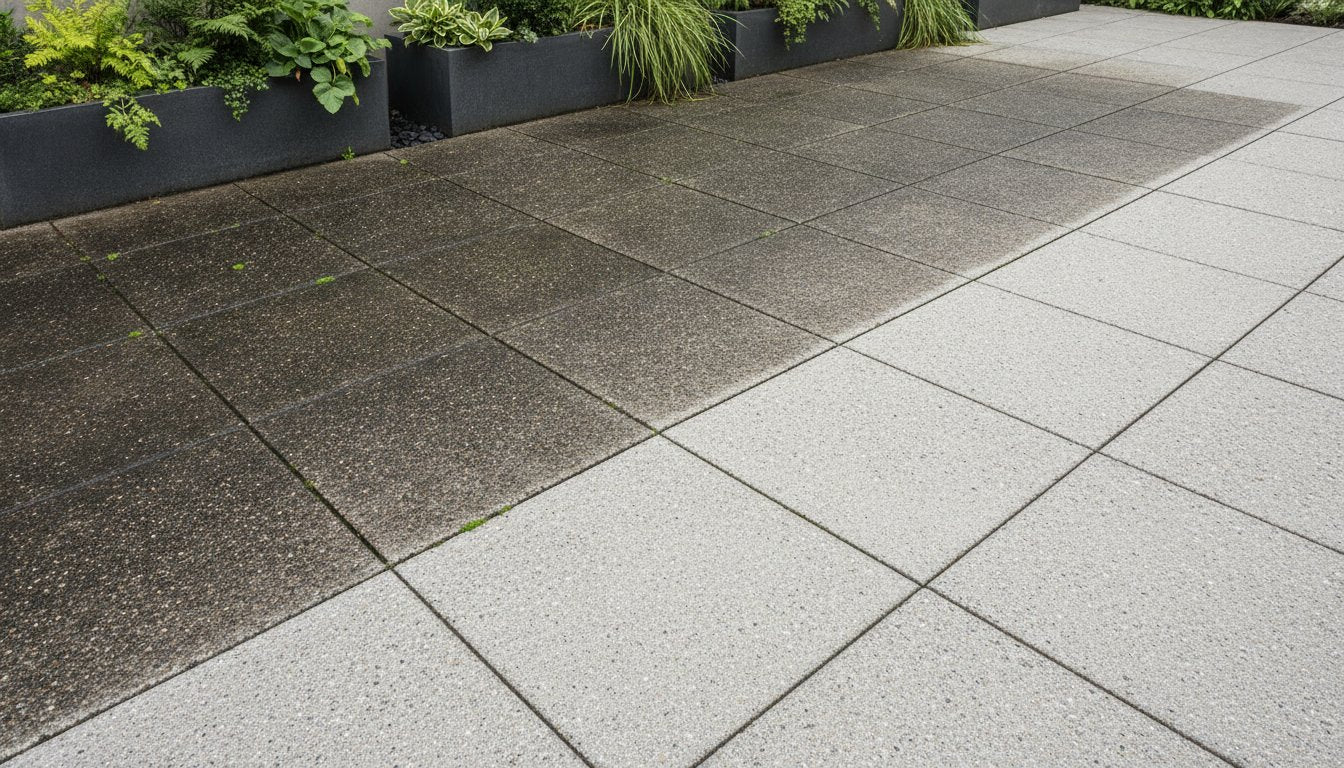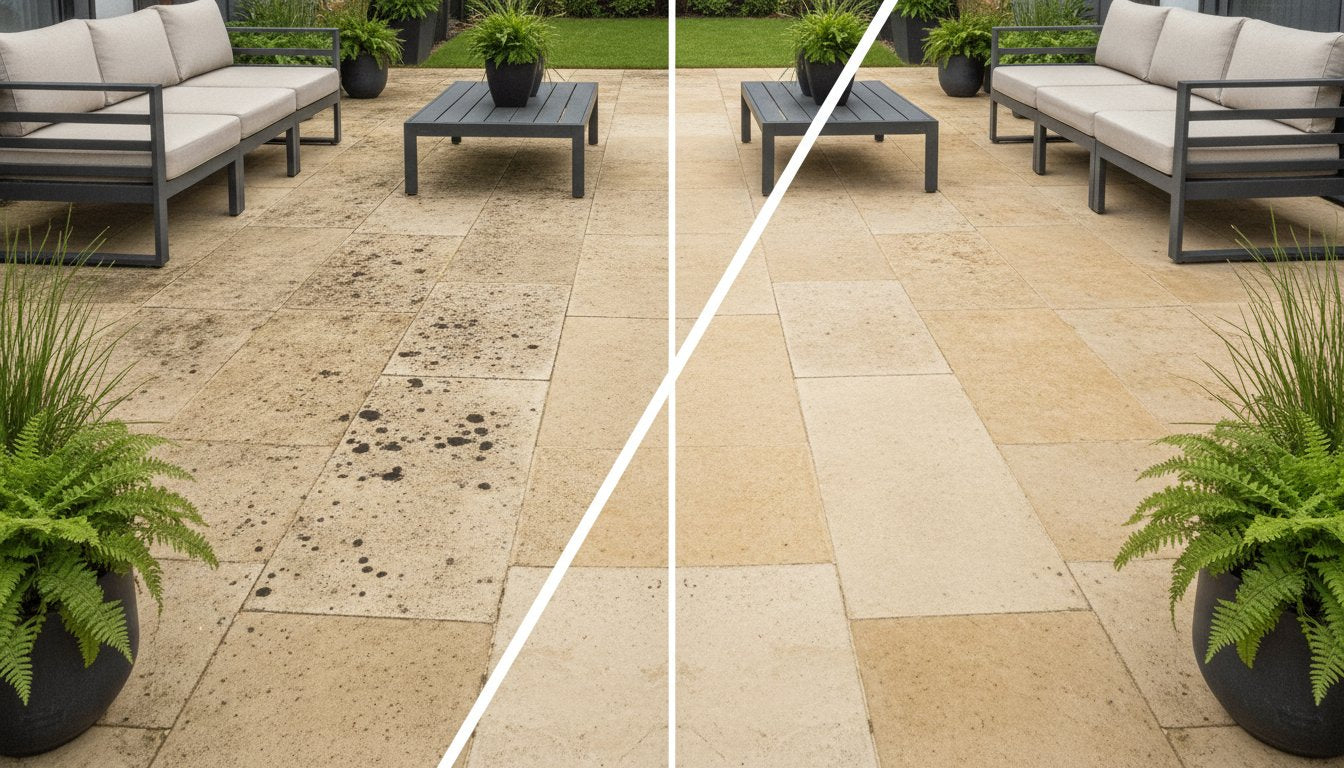
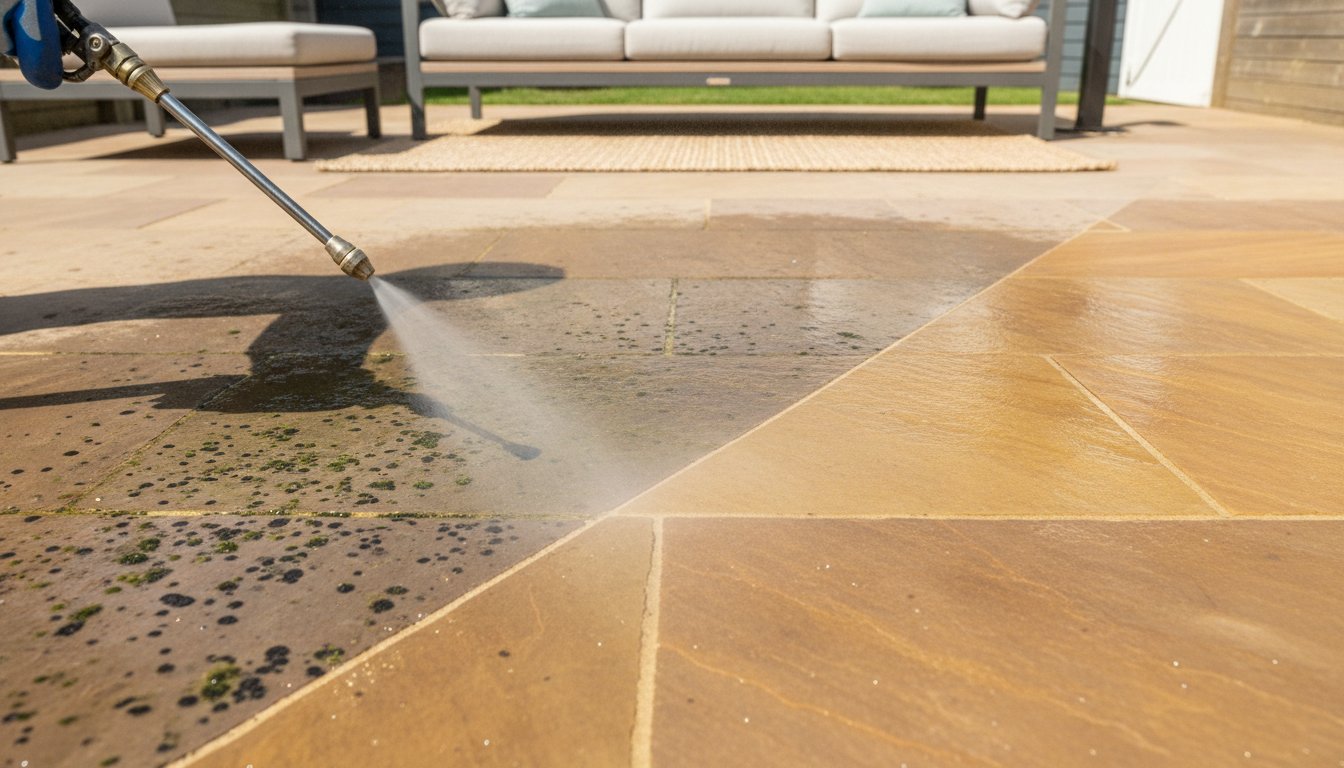
If you think a pressure washer is the ultimate weapon against a dirty garden, you might actually be making the problem worse. While high pressure blasts away surface grime, it often leaves the microscopic roots of algae and lichen deep within the stone's pores, leading to rapid regrowth. To truly restore your outdoor space, you need a professional grade algae remover for patio surfaces that targets the source of the infestation rather than just the surface.
It's incredibly frustrating to spend hours scrubbing your stone only to see those slippery green films and stubborn black spots return just a few weeks later. You want a beautiful, safe outdoor area for your family, but you shouldn't have to risk damaging expensive sandstone or limestone with harsh, generic hardware store chemicals. This guide will show you how to permanently eliminate these biological growths and provide long lasting protection without compromising the integrity of your stone or the safety of your pets and plants. We'll explore the science of biocidal eradication, navigate the current 2026 water restrictions affecting many regions, and review the top professional solutions that keep your patio looking brand new for years.
Key Takeaways
- Understand why surface cleaning isn't enough by learning how algae and lichen root themselves deep within the pores of your stone.
- Discover how to select the right professional-grade algae remover for patio surfaces by matching active ingredients to your specific stone type.
- Learn why high-pressure washing often accelerates regrowth and how to avoid the common mistakes that make stone more susceptible to future infestations.
- Master the professional application process using low-pressure tools to ensure even coverage and maximum penetration into the stone.
- Explore long-term maintenance strategies, including the use of specialized sealers, to stop moisture absorption and keep your surfaces clean for years.
What is Algae and Why is it Ruining Your Patio?
Many homeowners assume that the green film on their pavers is just a layer of dirt. It isn't. To understand how to treat it, we first need to look at What is Algae. Essentially, these are simple, non-flowering organisms that thrive in damp, shaded environments. Your outdoor entertainment area provides a perfect breeding ground, especially in areas where water tends to pool or where shadows linger throughout the day. When moisture sits on a surface, these biological spores settle and begin to multiply rapidly.
This growth is much more than an aesthetic issue; it's a significant safety hazard for Australian homes. When wet, algae becomes incredibly slippery, turning a simple walk across the backyard into a potential fall. Because the Australian climate often swings between heavy rain and high humidity, these organisms can take over a surface in a matter of days. If you've ever wondered why a standard hose doesn't do the job, it's because you need a specialized algae remover for patio stone to break down the organic matter at a cellular level.
Green Algae vs. Black Spot Lichen
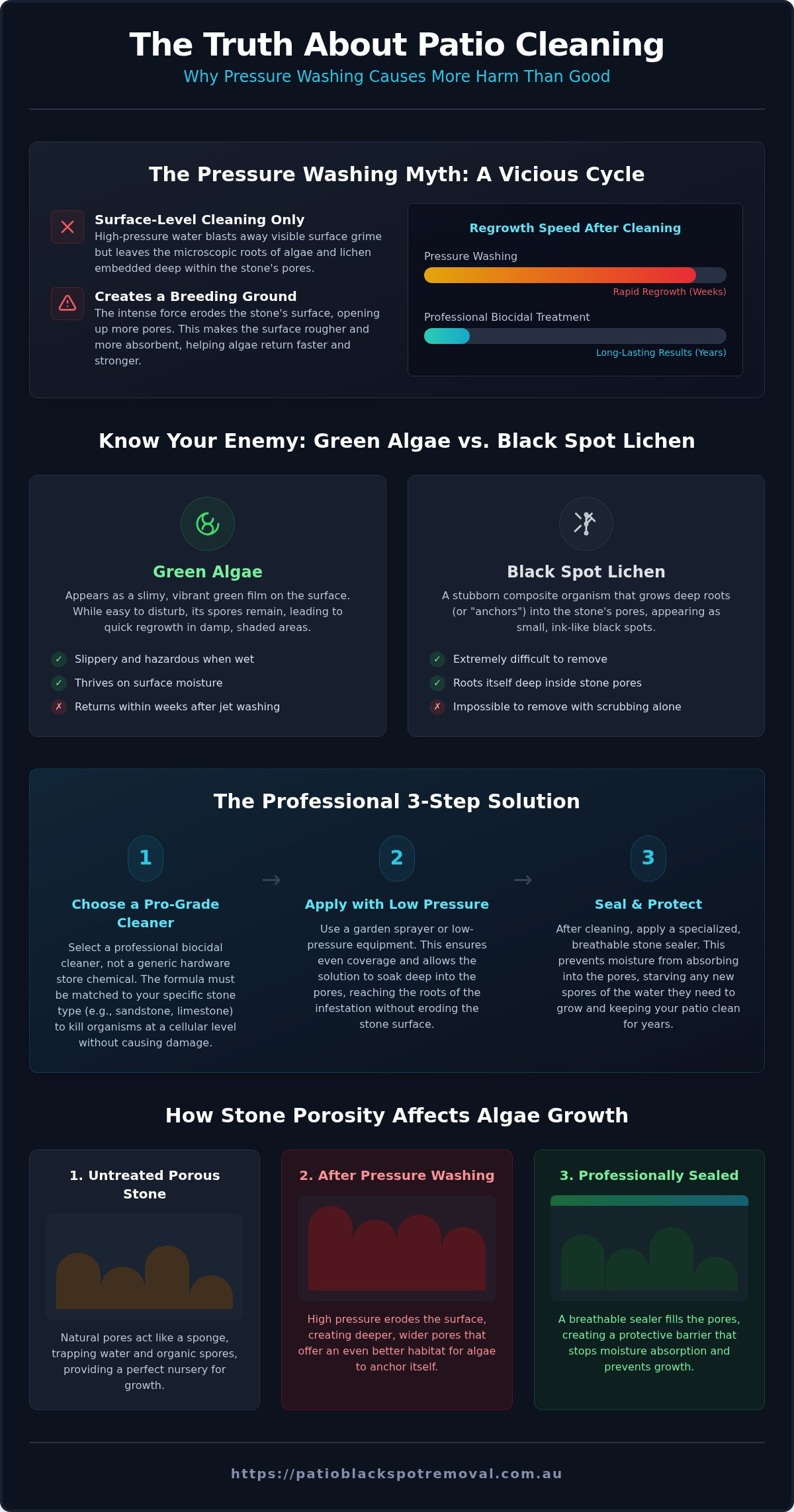
Green algae usually appears as a slimy, vibrant film that sits on the surface of the stone. It's relatively easy to disturb, though it returns quickly if the spores aren't killed. Black spot lichen is a different beast entirely. These small, black, ink-like spots are often mistaken for dirt or the natural aging of the stone. Unlike green algae, black spot lichen is a composite organism that uses a biological "anchor" to root itself deep into the microscopic pores of your paving. You can't simply scrub it away because those roots stay behind, protected from surface cleaning, waiting for the next rain to bloom again.
The Role of Porosity in Algae Growth
The type of stone you've installed determines how much you'll struggle with biological growth. Natural stones like sandstone and limestone are highly porous. Think of them like a very hard sponge. These pores trap water, organic debris, and spores, providing a protected nursery for algae to grow from the inside out. While granite or slate are denser and less susceptible, they aren't immune to the "creeping green" that takes over shaded corners.
Micro-cracks in older pavers also provide a perfect habitat. In the Australian sun, these cracks can expand and contract, allowing even more moisture to seep deep into the substrate. Without a professional-grade algae remover for patio surfaces, these organisms will continue to expand these cracks, eventually compromising the structural integrity of your paving. Understanding this biological process is the first step toward reclaiming your outdoor space and ensuring it stays clean for the long term.
Why DIY Methods and Pressure Washing Often Fail
Blasting your pavers with a high-pressure hose feels satisfying, but it's often the start of a destructive cycle. While many general guides on How to Clean a Patio suggest mechanical cleaning, they rarely mention the "Pore Problem." High-pressure water physically erodes the surface of natural stone, stripping away the smooth finish and exposing deep, microscopic pores. These newly opened cavities act as a sanctuary for biological spores. Instead of solving the issue, you're creating a more hospitable environment for the next colony. This is why a targeted algae remover for patio stone is far more effective than brute force.
Household chemicals like standard bleach or vinegar also fall short. Most supermarket bleaches have low concentrations of active sodium hypochlorite, which might clear surface green but won't touch deep-rooted lichen anchors. Even worse, using acidic cleaners like vinegar on calciferous stones such as travertine or limestone can cause irreversible etching, essentially dissolving the stone's surface. To get professional results without the risk, it's better to use a specialized patio cleaning solution tailored to your material.
The Hidden Cost of Pressure Washing
- Surface erosion: Every high-pressure wash removes a thin layer of stone, making it rougher and more porous over time.
- The vicious cycle: Algae thrives on rough surfaces; because pressure washing increases surface area, the infestation returns faster after every session.
- Water wastage: Mechanical cleaning uses hundreds of liters of water. This is increasingly problematic as global water regulations tighten, such as the 2026 hosepipe bans in parts of the UK where violations carry fines of up to £1,000.
The Myth of Natural Remedies
Vinegar and baking soda are popular suggestions in DIY forums, but they lack the biocidal strength to penetrate the heart of a lichen infestation. At best, they provide a temporary cosmetic fix that lasts only a few weeks. At worst, improper chemical mixtures can lead to unsightly staining that's harder to remove than the algae itself. Professional biocides are necessary for long-term results because they chemically eradicate the root system of the organism rather than just disturbing the surface.
How to Choose the Best Algae Remover for Your Patio
Selecting the correct algae remover for patio stone isn't a one-size-fits-all process. Because different stones react differently to chemicals, using a product designed for concrete on a delicate sandstone surface can lead to permanent discoloration. You must look for professional-grade formulas that prioritize stone safety while maintaining high biocidal efficacy. When evaluating your options, consider these four primary criteria:
- Stone Compatibility: Natural stones like sandstone and limestone are chemically sensitive. Your cleaner must be pH-balanced or specifically formulated to avoid etching.
- Active Ingredients: Look for stabilized Sodium Hypochlorite at professional concentrations or advanced surfactants. These are more effective than the diluted versions found in hardware stores.
- Application Method: Decide if you need a "spray and leave" maintenance product or an "instant" restorer for heavy infestations.
- Safety Standards: With global regulations tightening, such as the 2026 ban on PFAS chemicals in cleaning products in California, choosing eco-conscious and pet-safe formulas is increasingly important for responsible home maintenance.
Matching the Chemical to the Stone Type
Sandstone is highly porous and requires a solution that can penetrate deep into its layers to reach the biological roots. For these surfaces, a professional-grade algae remover for patio restoration is essential to ensure the lichen doesn't simply grow back from the inside out. Travertine and limestone are even more sensitive; they are calciferous stones that will dissolve if they come into contact with acidic DIY cleaners like vinegar. For these materials, you must use non-acidic, alkaline-based professional formulas. Concrete pavers and brickwork are generally more robust, but they still benefit from specialized biocides that prevent the "shadowing" effect often left behind by generic cleaners.
Understanding 'Non-Rinse' vs. 'Instant' Cleaners
Slow-acting, non-rinse biocides are excellent for maintenance. They work over several days or weeks, using natural rainfall to wash away dead organic matter. However, they often struggle with established black spot lichen. If your patio is heavily infested, you need an "instant" professional remover. These products have a specific "kill-time" usually ranging from 30 minutes to two hours. During this window, the chemical aggressively breaks down the biological bond between the lichen and the stone. This instant action is the premium alternative to generic cleaners, providing a deep clean that restores the stone to its original color while ensuring every spore is neutralized.
Step-by-Step: How to Apply Algae Remover Like a Pro
Applying a professional algae remover for patio stone isn't just about pouring liquid on the ground. It's a strategic process that ensures the biocide reaches the roots deep within the stone. If you skip the preparation, the chemical will likely react with surface dirt rather than the living organisms you're trying to kill. To get the best results, you need to follow a disciplined workflow that prioritizes penetration and safety.
Begin by sweeping away all loose leaves, dirt, and organic debris. This simple step ensures the chemical makes direct contact with the stone surface. Once the area is clear, you must pre-wet any adjacent garden beds or lawn edges. Saturating the soil with fresh water prevents your plants from drinking in the cleaning solution, acting as a natural shield.
A low-pressure garden sprayer is the best tool for the job. Unlike a brush or a bucket, a sprayer provides even coverage and prevents the product from pooling in low spots. This method also forces the liquid into the micro-pores where lichen and algae hide. Dwell time is the most critical part of the process; you must let the chemical work for the duration specified on the label. This allows the biocide to break down the biological "glue" that holds black spots to your stone.
Thorough rinsing is the final stage. You want to wash away the dead organic matter and neutralize any remaining active ingredients. To ensure you have the right tools and formulas for the job, you can browse professional stone cleaning supplies specifically designed for Australian conditions.
Safety First: Protecting Plants and Pets
Protecting your landscape is paramount when using professional chemicals. By flooding your garden beds with water before and during the process, you create a barrier of dilution that protects delicate roots. Always manage your runoff by directing it toward drainage points rather than letting it sit in flower beds. Keep pets and children away from the area until the stone is completely dry. Once the surface is dry, the active ingredients have finished their work and the area is safe for the whole family to enjoy.
Optimizing Weather Conditions
In Australia, the sun is your biggest challenge. You should never apply an algae remover for patio surfaces in direct, hot midday sun. High temperatures cause the liquid to evaporate before it can penetrate the stone's pores, which wastes the product and leaves the roots alive. An overcast day is the gold standard for patio cleaning because it keeps the surface cool and the chemical active for longer. If the forecast predicts rain within four hours of application, wait for a clearer window. Unexpected rain will dilute the formula before it has finished its "kill-time," leading to patchy results.
Long-Term Prevention: Keeping Your Patio Algae-Free
Once you've restored your stone using a professional algae remover for patio surfaces, the goal shifts to preservation. You don't want to repeat a deep clean every six months. Success lies in managing the environment that allowed the infestation to bloom in the first place. This means addressing standing water and ensuring your patio has adequate airflow. If your garden furniture or large pots stay in one place for years, they create damp, dark micro-climates where spores thrive. Moving these items occasionally and sweeping away organic debris prevents the nursery effect that restarts the cycle.
Adopting a "little and often" maintenance schedule is much easier than tackling a major infestation. Applying a diluted maintenance biocide once or twice a year keeps the stone's pores clear of new spores. This proactive approach ensures that any stray algae or lichen is neutralized before it can establish a root system. It's a small investment of time that protects the long-term value and safety of your natural stone investment, keeping surfaces slip-free even during the wettest Australian months.
To Seal or Not to Seal?
Sealing your stone is a highly effective way to prevent algae from anchoring, but the type of sealer matters. You must use a breathable, impregnating sealer rather than a film-forming gloss finish. Film-forming sealers create a plastic-like layer that can trap moisture underneath the stone. When moisture is trapped, it can lead to spalling or white efflorescence. A breathable sealer sits inside the pores, allowing water vapor to escape while preventing liquid water from soaking in. You should wait at least 24 to 48 hours after a deep clean to ensure the stone is completely dry before application.
The Patio Black Spot Advantage
The Patio Black Spot Remover range for 2026 represents the pinnacle of stone restoration technology. While generic products often struggle with the complex biological structure of lichen, our formula is specifically designed to target and kill the microscopic roots that cause those stubborn black circular spots. Whether you are dealing with delicate sandstone or robust concrete, our specialized formulas provide the deep penetration needed for a permanent fix. You can find the right product for your stone type here to ensure your patio remains a clean, safe, and beautiful space for your family. By choosing a professional-grade algae remover for patio maintenance, you aren't just cleaning your stone; you're protecting it for the future.
Reclaim Your Outdoor Space Today
Maintaining a pristine outdoor area doesn't have to be a constant struggle against the elements. You now understand that successful restoration depends on killing the biological roots of an infestation, not just blasting away surface grime. By choosing a specialized algae remover for patio surfaces and following professional application techniques, you can stop the cycle of regrowth and protect your stone's integrity for years to come.
Investing in the right chemistry means you won't risk etching your natural stone with acidic DIY mixtures or damaging it with high-pressure water. It's about achieving a deep, professional clean that brings back the beauty of your garden. Our professional-grade range restores stone to its original colour and kills lichen spores to prevent regrowth. With expert Australian support to guide you, you can achieve a brand-new look without the hassle.
Shop Professional Algae & Black Spot Removers
Your patio is an extension of your home. Give it the care it deserves and enjoy a safe, clean space all year round.
Frequently Asked Questions
Is patio algae remover safe for my grass and plants?
Professional cleaners are safe for your landscape if you follow the correct pre-wetting procedure. By saturating your lawn and garden beds with fresh water before you begin, you create a natural barrier that prevents plants from absorbing the cleaning solution. If any runoff reaches the soil, the existing moisture dilutes the chemical to a harmless level. Always rinse the area thoroughly after the dwell time is complete to ensure your garden stays healthy.
How long does algae remover take to work?
The timeline depends on whether you're using an instant restorer or a slow-acting maintenance biocide. Professional-grade instant removers typically complete their work within 30 minutes to two hours. In contrast, non-rinse maintenance products can take several days or even weeks to show full results, as they rely on natural weathering and rainfall to wash away the dead organic matter. Always check the specific kill-time on your product label for the best results.
Can I use algae remover on natural stone like sandstone?
Yes, but you must select a formula specifically designed for porous natural stone. Sandstone and limestone are chemically sensitive and can be damaged by generic, acid-based cleaners. A professional algae remover for patio stone will penetrate the deep pores of sandstone to eradicate the root system without causing surface etching or discoloration. Using the right chemical ensures your expensive stone remains structurally sound while looking brand new.
What is the difference between green algae and black spots?
Green algae is a simple surface film that is relatively easy to disturb, while black spots are actually a resilient type of lichen. These black spots are composite organisms that anchor themselves deep into the stone's microscopic cavities using biological "roots." Because they are so well-protected, they require specialized professional chemicals that can break the biological bond and dissolve the organism from the inside out, which standard pressure washing cannot achieve.
Will algae remover prevent the growth from coming back?
A professional treatment kills the existing infestation and its spores, but it doesn't provide a permanent shield against new airborne spores. Because microorganisms are constantly traveling through the air, they will eventually find their way back to your stone. Long-term prevention requires a "little and often" maintenance approach. Applying a diluted biocide once or twice a year prevents these new spores from anchoring and establishing a new colony on your pavers.
Is it better to pressure wash or use a chemical algae remover?
Chemical removal is significantly better for the long-term health of your stone. Pressure washing uses mechanical force that can erode the surface and open up pores, which actually invites more algae to grow back faster. A professional algae remover for patio surfaces uses chemistry to kill the organism at the root. This method provides a deeper clean that lasts much longer than jet washing and doesn't risk the structural damage associated with high-pressure water.
Can I use household bleach instead of a professional patio cleaner?
Household bleach is generally ineffective for deep-rooted infestations because it lacks the necessary concentration and surfactants. Supermarket bleach is designed for non-porous indoor surfaces and doesn't have the "wetting agents" required to penetrate deep into stone pores. It might clear some surface green, but it won't kill the anchors of black spot lichen. Professional cleaners are stabilized and formulated specifically to reach the biological roots that household products simply can't touch.
How often should I treat my patio for algae in Australia?
Most Australian patios require a maintenance treatment every 6 to 12 months to stay completely clear. Our climate's mix of high humidity and intense UV levels creates a perfect breeding ground for biological spores. By performing a quick maintenance spray once a year, you can prevent slippery films and stubborn black spots from ever taking hold. This regular schedule is much easier and more cost-effective than waiting for a heavy infestation to develop before taking action.