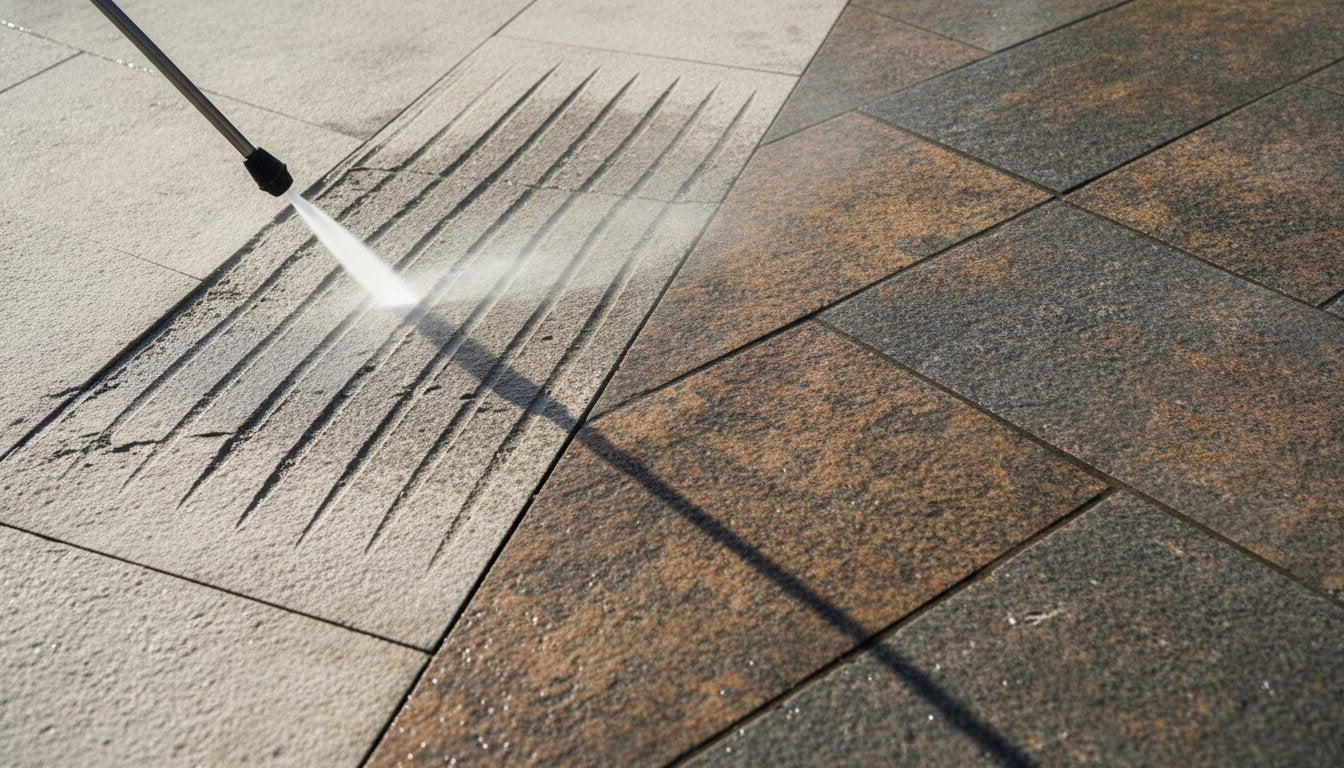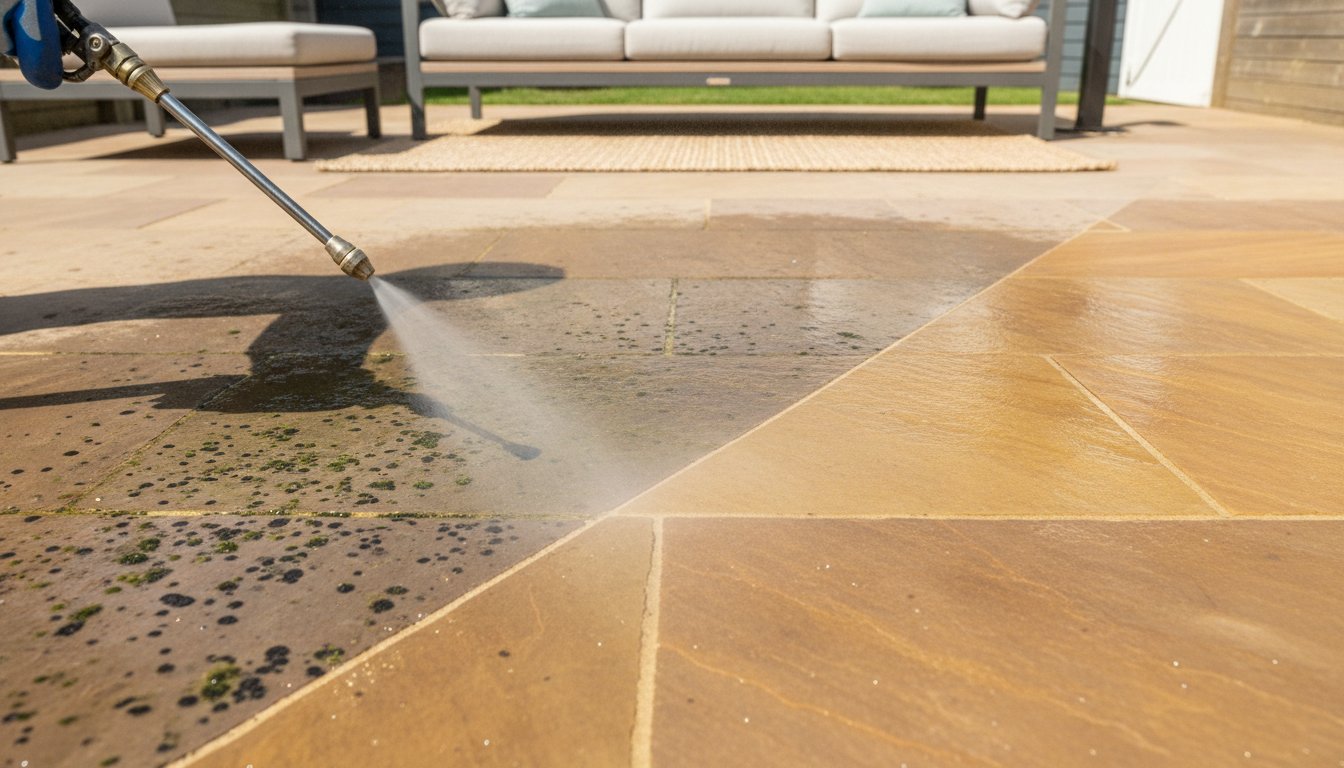
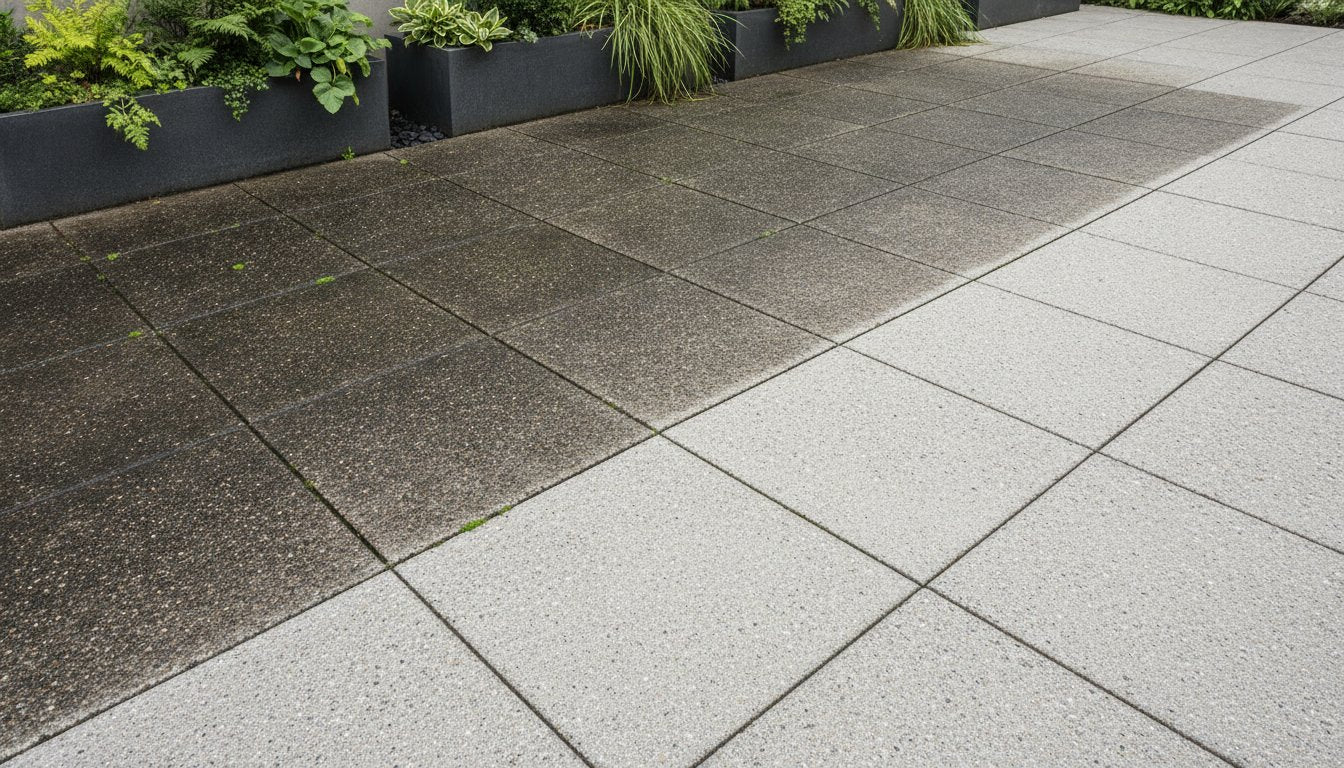
Your pressure washer might be the very thing ruining your patio's finish. While it's tempting to blast away dirt, high pressure often strips the surface of your stone while leaving deep-seated spores behind. If you've spent your weekend fighting "black spot" lichen only to see it reappear a month later, you're likely using the wrong tools for the job. Learning how to clean concrete paving slabs effectively requires more than just water; it requires a professional approach that targets organic growth at its source.
You've probably tried every home remedy under the sun, only to find that stubborn stains won't budge. It's frustrating to waste time and money on solutions that don't deliver that "as-new" finish you crave. This guide will show you the professional techniques used to remove even the most persistent black spots and grime without damaging your concrete. We'll look at how to restore your patio's original quarry colour and implement a low-maintenance strategy that keeps it looking pristine for years to come.
Key Takeaways
- Understand why traditional pressure washing fails to kill "black spot" lichen and how to identify deep-seated organic growth within the concrete's pores.
- Discover the professional "soft wash" approach for how to clean concrete paving slabs to avoid the permanent etching and striping caused by high-pressure equipment.
- Identify the essential non-metal tools and gentle techniques required to restore your patio's original quarry colour without damaging the surface.
- Learn the critical reason why you must ensure your patio is biologically sterile before applying any sealant for a long-term, low-maintenance finish.
Understanding Your Concrete Paving Slabs and Common Stains
Concrete pavers are the backbone of many Australian outdoor spaces, prized for their durability and clean lines. However, many homeowners are surprised when their once-bright patio turns a dull, mottled grey within just a few seasons. This happens because concrete is not a solid, impenetrable block. It's a highly porous material filled with microscopic voids that act like a hard sponge. When you start looking into how to clean concrete paving slabs, you're not just fighting surface dust; you're battling a complex ecosystem hidden within the stone's matrix.
Surface Dirt vs. Biological Growth
Identifying the type of stain on your patio is the first step toward a successful restoration. Common patio contaminants include:
- Surface Debris: Mud, dust, and loose sand that sit on the top layer.
- Organic Stains: Tannins from fallen leaves, bird droppings, and food grease from BBQs.
- Biological Growth: Moss, algae, and the notorious "black spot" lichen.
While moss and green algae are visible and slippery, they're often just the surface layer of a deeper problem. The "black spots" you see are actually lichen, a complex organism that anchors itself into the concrete's pores. These spots aren't just "dirty"; they are living organisms that feed on the minerals in your slabs. Knowing how to clean concrete paving slabs effectively starts with distinguishing between a simple spill and a biological invasion that has taken root.
Concrete Porosity: The Hidden Trap
The Australian climate plays a massive role in how quickly concrete degrades. High humidity levels provide the perfect breeding ground for spores, while intense UV radiation can bake organic matter into the surface, making it even harder to remove. Because concrete is so porous, water carries these spores deep into the stone. This creates a hidden reservoir of growth that standard pressure washing simply cannot reach. This internal moisture is also why your concrete often looks dark and "wet" even on a dry day. If you don't treat the pores, you aren't truly cleaning the stone; you're just giving the lichen a haircut. To achieve a professional result, you must address the biological roots buried deep inside the concrete matrix rather than just blasting the surface.
Essential Tools and Gentle Cleaning Methods
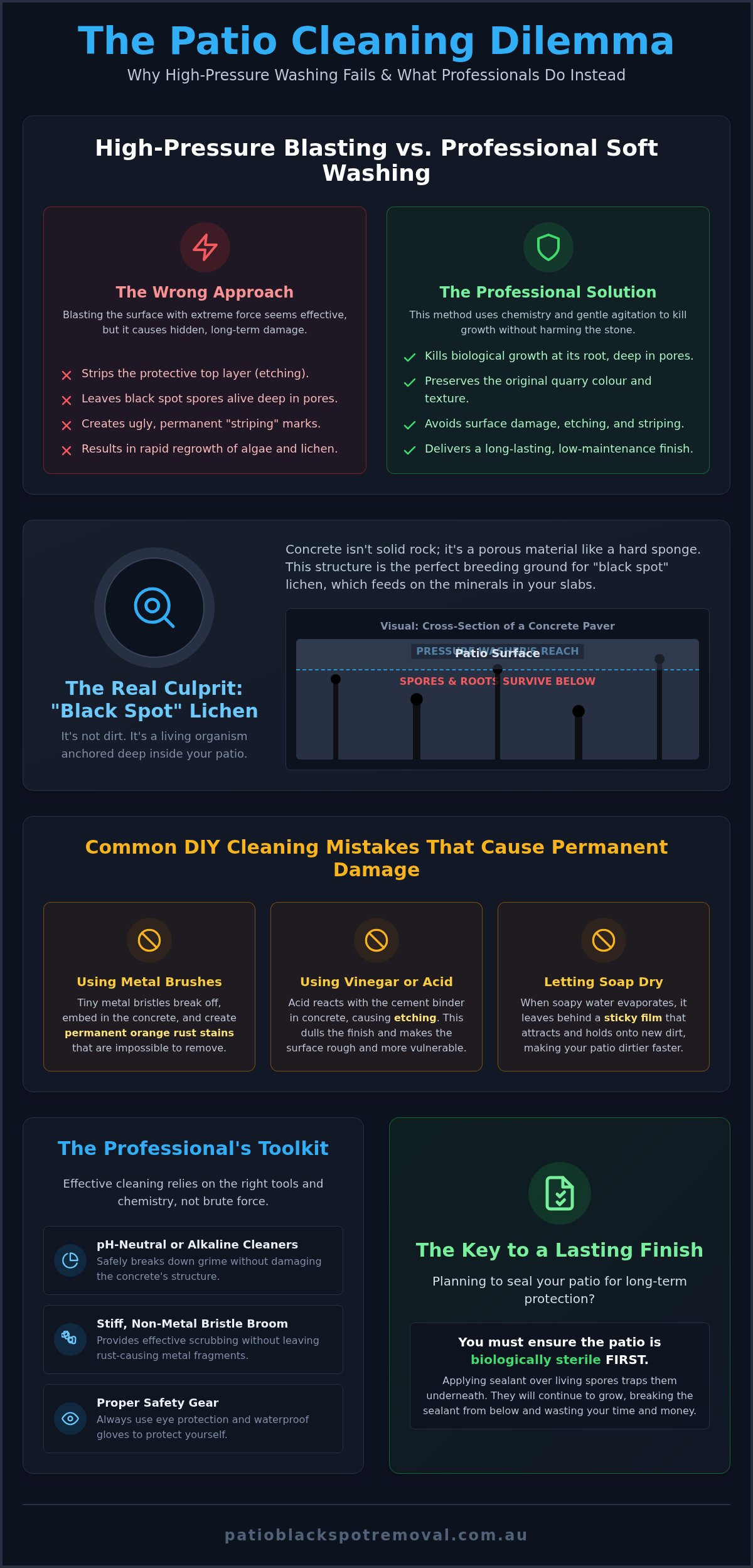
Taking a professional approach to your patio doesn't always mean reaching for the most powerful machinery. In fact, the "Soft Wash" philosophy is the industry standard for preserving the integrity of your stone. This method relies on the right chemistry and gentle agitation rather than brute force. When you are learning how to clean concrete paving slabs, your primary goal is to lift dirt without stripping the protective surface of the concrete. Brute force might provide a quick win, but it often leaves the stone more vulnerable to future staining and erosion.
Before you begin, gather the correct equipment. You'll need a high-quality, stiff-bristled broom. Ensure the bristles are synthetic or natural fiber rather than metal. Metal bristles can snap off and leave tiny fragments embedded in the concrete, which eventually rust and create permanent orange streaks. You also need a large bucket for mixing solutions and a garden hose for rinsing. Safety is paramount; always wear sturdy, non-slip footwear, waterproof gloves, and eye protection to shield yourself from splashes while scrubbing.
One common mistake is using acidic household cleaners like white vinegar. While some online guides suggest vinegar for its "natural" cleaning power, it is actually destructive to concrete. Concrete is alkaline by nature, and acid reacts with the cement binder that holds the slab together. This process, known as etching, can make the surface feel rough and look dull. Stick to pH-neutral or alkaline solutions to keep your slabs structurally sound.
The Soapy Water Method for Light Dirt
For regular maintenance and removing surface mud or dust, a simple soapy water solution works wonders. Mix a pH-neutral detergent with warm water until you have a thick foam. Pour the solution over a small section of the patio and use your stiff broom to scrub in circular motions. This mechanical action helps the soap penetrate the upper layer of grime. Always rinse the area thoroughly with a garden hose before the soap dries. If you allow the soapy water to evaporate on the stone, it leaves a sticky film that actually attracts more dirt over time.
Eco-Friendly DIY Alternatives
If you're dealing with mild algae or green slime, soda crystals or oxygen bleach are effective, eco-friendly alternatives. These substances are generally safer for Australian native plants compared to harsh chlorine-based products. They work by breaking down the organic matter through oxidation. However, while these methods are great for surface-level freshening, they often struggle to remove tough stains like deep-seated lichen or oil. DIY methods have their limits, especially on older, neglected paving where biological growth has moved deep into the pores. If your patio requires more than a basic refresh, you might need professional-grade restoration solutions to bring back the original quarry colour.
The Pressure Washer Dilemma: Risks and Rewards
Most homeowners assume a pressure washer is the ultimate solution for how to clean concrete paving slabs. While these machines are excellent for removing loose mud or surface dust, they're often a double-edged sword. High-pressure water acts as a powerful abrasive. If you use too much power, you can permanently "etch" or pit the surface of your concrete. This process destroys the smooth, factory-pressed finish and exposes the rough aggregate underneath. Once this surface layer is gone, the damage is irreversible, leaving your patio looking weathered and uneven.
There's also a significant biological risk that many people overlook. High-pressure blasting rarely kills organic growth; it simply displaces it. When you hit "black spot" lichen with a high-PSI stream, you atomise the spores. These microscopic particles are sent into the air and onto nearby garden furniture, fences, and untreated sections of the patio. Instead of solving the problem, you're inadvertently seeding a future outbreak across your entire garden. To get a professional result, you need to treat the biology rather than just trying to blast it into submission.
Avoiding Surface Damage
To use a pressure washer safely, you must control the variables. For concrete pavers, keep your machine set between 1500 and 2000 PSI. Anything higher risks gouging the stone. Always use a fan nozzle, typically the 25 or 40-degree tip, rather than a narrow "pencil jet" or "turbo" nozzle. A pencil jet concentrates all the force into a tiny point, which is how permanent "striping" or wand marks occur. These lines aren't dirt; they're physical scars on the concrete surface. Keep the nozzle at a consistent 45-degree angle and about 30cm away from the slab to ensure an even finish.
Why the Dirt Comes Back Faster After Blasting
One of the biggest frustrations with high-pressure cleaning is that the results don't last. As we discussed regarding concrete porosity, these slabs are naturally absorbent. High pressure "opens" the pores further, stripping away the stone's natural surface tension and increasing its surface area. This makes the concrete far more receptive to water, dirt, and new lichen spores. You're effectively creating a fresh, deep-pored canvas for the next colony of black spots to inhabit.
Beyond the aesthetic issues, there's the structural risk. Blasting water directly into the gaps between your slabs washes away jointing sand. Without this sand to provide lateral stability, slabs can shift, wobble, or even crack under weight. If you choose to use a pressure washer, it should be used primarily as a low-pressure rinsing tool. True restoration requires a professional approach that kills the lichen at the root without compromising the structural integrity of your outdoor space.
How to Remove Stubborn Black Spots and Lichen
If you've noticed dark, ink-like splatters on your patio that refuse to budge, you're likely dealing with "black spot" lichen. This isn't just surface dirt. Lichen is a complex organism that forms a symbiotic relationship between fungi and algae. Unlike surface moss, lichen anchors itself deep into the concrete's pores using microscopic filaments called hyphae. This is why standard advice on how to clean concrete paving slabs often falls short. Scrubbing or pressure washing might remove the top layer, but the biological "root" remains protected inside the stone, ready to regrow as soon as conditions are right.
Traditional detergents and pressure washers fail because they lack the chemical ability to kill the lichen's root system. When researching how to clean concrete paving slabs, homeowners often mistake these spots for simple dirt, leading to hours of wasted effort with ineffective home remedies. To truly clear these spots, you need a professional chemical approach. Specialized liquid restorers are designed to penetrate the stone and dissolve the lichen from the inside out. This method ensures the stone is biologically sterile, which is the only way to prevent the rapid return of growth that usually follows a simple pressure wash.
The Lichen Removal Process
Restoring your patio requires a systematic approach to ensure every spore is neutralized. Follow these steps for a professional finish:
- Step 1: Apply to a dry surface. For maximum absorption, always apply your restorer when the slabs are bone dry. If the concrete is already saturated with water, the pores won't be able to "drink" the cleaning solution effectively.
- Step 2: Allow dwell time. The solution needs time to work its way into the matrix of the stone. This dwell time, often between 30 to 60 minutes depending on the product, allows the chemicals to break the bond between the lichen and the concrete.
- Step 3: Agitation and rinsing. Use a stiff-bristled broom to work the solution into the surface. You'll often see the black spots literally disappear as the organism dissolves. Finish with a thorough low-pressure rinse to wash away the residue.
Restoring the Original Colour
There is a fundamental difference between a "clean" slab and a "restored" one. A clean slab might be free of mud, but it often still looks aged, dull, and grey. Restoration goes deeper, stripping away years of carbon buildup and organic staining to reveal the original quarry pigments. This process brings back the vibrant tones your patio had the day it was installed. If you want to see the transformation with Patio Black Spot Removal, you'll notice how the stone shifts from a dreary, mottled grey back to its intended hue. For those facing seemingly impossible stains, using professional-grade restoration solutions is the only way to achieve a permanent, as-new result without damaging the concrete's delicate surface.
Long-Term Maintenance: Keeping Your Concrete Slabs Spotless
Once you've mastered the professional techniques for how to clean concrete paving slabs, the focus shifts to preservation. The most critical rule in patio maintenance is simple: never apply a sealer until the stone is biologically sterile. If you seal a patio while microscopic lichen spores are still living in the pores, you're essentially "shrink-wrapping" the problem. The growth will continue to thrive beneath the surface, feeding on moisture trapped within the concrete. This leads to unsightly dark patches that are impossible to clean without stripping the entire layer of sealer first.
The Australian climate presents unique challenges for long-term care. High UV levels can break down inferior sealers, while intense humidity encourages rapid moss and algae growth. Proper drainage is your best defence against these issues. Standing water is the primary catalyst for organic growth; even a slight dip in a slab can become a breeding ground for green slime. Ensure your patio has a sufficient fall to shed water, and keep drainage channels clear of silt and debris. Spot-treating new stains from oil or bird droppings immediately prevents them from migrating deep into the concrete's porous matrix.
To Seal or Not to Seal?
Choosing the right protection for your slabs depends on the look you want and the health of the stone. Topical sealers create a visible film on the surface, providing a "wet look" but often making the area slippery when wet. Penetrating sealers, however, soak into the pores to provide invisible protection without changing the stone's texture. It's vital to use a breathable sealer that allows water vapour to escape. In humid coastal regions, sealing a damp slab often results in a trapped "milky" residue. This cloudy finish happens when moisture gets stuck under the sealer, so always wait for a window of dry, low-humidity weather before application.
Preventative Care Tips
Consistent, low-effort care is far more effective than a once-a-year blast with a pressure washer. Keep your patio clear of organic matter like grass clippings and fallen leaves. As these decompose, they release tannins that can leave permanent brown tea-stains on light-coloured concrete. A quick sweep once a week and an annual "health check" wash with a pH-neutral detergent will keep surface grime from building up. If your patio has already succumbed to heavy lichen infestation, a basic wash won't be enough to restore the original colour. In these cases, it's best to book a professional restoration for your patio today to ensure the surface is completely sterile before you begin a new maintenance routine.
Enjoy a Pristine Patio All Year Round
Restoring your outdoor space doesn't have to be a losing battle against nature. By moving away from high-pressure blasting and focusing on the biological health of your stone, you can achieve results that last. Remember that concrete's porous nature requires a gentle touch and specialized treatments to reach the roots of stubborn lichen. Understanding how to clean concrete paving slabs correctly means choosing restoration over simple surface cleaning, ensuring your slabs remain structurally sound for years.
If you're tired of seeing those "impossible" black spots return every season, it's time for a professional solution. Specialists in lichen and black spot eradication focus on restoring the original quarry colour of your stone while remaining safe for your garden environment. You don't have to settle for a dull, grey patio when the original beauty of the stone is just beneath the surface.
Restore your patio's original beauty with Patio Black Spot Removal and transform your garden into the welcoming retreat it was meant to be.
Frequently Asked Questions
Can I use bleach to clean my concrete paving slabs?
Household bleach might freshen the surface, but it rarely kills the root of lichen. It's often too diluted to be effective on "black spot" infestations. If you're looking into how to clean concrete paving slabs, professional-grade solutions are a better choice. They are specifically formulated to be safe for the stone while being strong enough to eradicate biological growth. Always rinse the area well to protect nearby foliage.
Why do black spots appear on my patio after it rains?
Rain doesn't create black spots instantly; it just highlights the lichen already living in your slabs. When the concrete gets wet, the dark lichen absorbs water and becomes more prominent against the damp stone. This is often the moment homeowners realize they have a biological issue. Regular moisture from rain also provides the hydration these organisms need to expand their colony across your patio.
Is it possible to over-clean concrete pavers?
It's definitely possible to damage your pavers through aggressive cleaning. Blasting concrete with high-pressure water too frequently strips away the smooth top layer. This exposes the aggregate and makes the surface more porous. Once the pores are "opened" by excessive pressure, the slabs catch dirt and spores more easily. Using a gentle chemical restoration method is much safer for the long-term health of the concrete.
How often should I clean my concrete patio in Australia?
In the Australian climate, a thorough deep clean every two to three years is usually sufficient for most properties. However, you should perform a light maintenance wash every twelve months to remove surface dust and organic debris. If your patio is heavily shaded or located in a high-humidity coastal region, you might need to treat biological growth more often to prevent black spots from taking hold.
Will cleaning products for concrete damage my lawn or garden?
Harsh chemicals like acids or undiluted industrial cleaners can certainly harm your lawn. However, professional-grade lichen removers are designed to be safe for the surrounding environment when you follow the instructions. A good tip is to soak your grass and garden beds with fresh water before and after cleaning. This dilutes any accidental runoff and protects the root systems of your plants from concentrated solutions.
Can I use a wire brush to remove stubborn stains from concrete?
You should avoid wire brushes entirely. Metal bristles can snap off and become embedded in the concrete's surface. These tiny fragments will eventually rust, leaving permanent orange specks that are almost impossible to remove. When considering how to clean concrete paving slabs, always reach for a stiff-bristled synthetic broom. This provides enough agitation to lift grime without scratching the stone or introducing rust-prone metal particles.
What is the best time of year to deep clean paving slabs?
Spring and autumn are the best times for a deep clean. These seasons offer moderate temperatures that prevent your cleaning solutions from drying out too quickly. If you apply a restorer in the middle of a hot Australian summer day, the liquid evaporates before it can penetrate the pores. Aim for a dry day with overcast skies to give the product plenty of time to work effectively.
How do I remove oil or grease stains from my driveway slabs?
For fresh oil spills, use an absorbent material like sand or cat litter to soak up the excess liquid. Once you've removed the surface oil, apply a pH-neutral degreaser and scrub with warm water. Deep-set grease that has migrated into the pores of the concrete is much harder to shift. In these cases, a professional restoration treatment is often required to lift the pigment without damaging the slab.