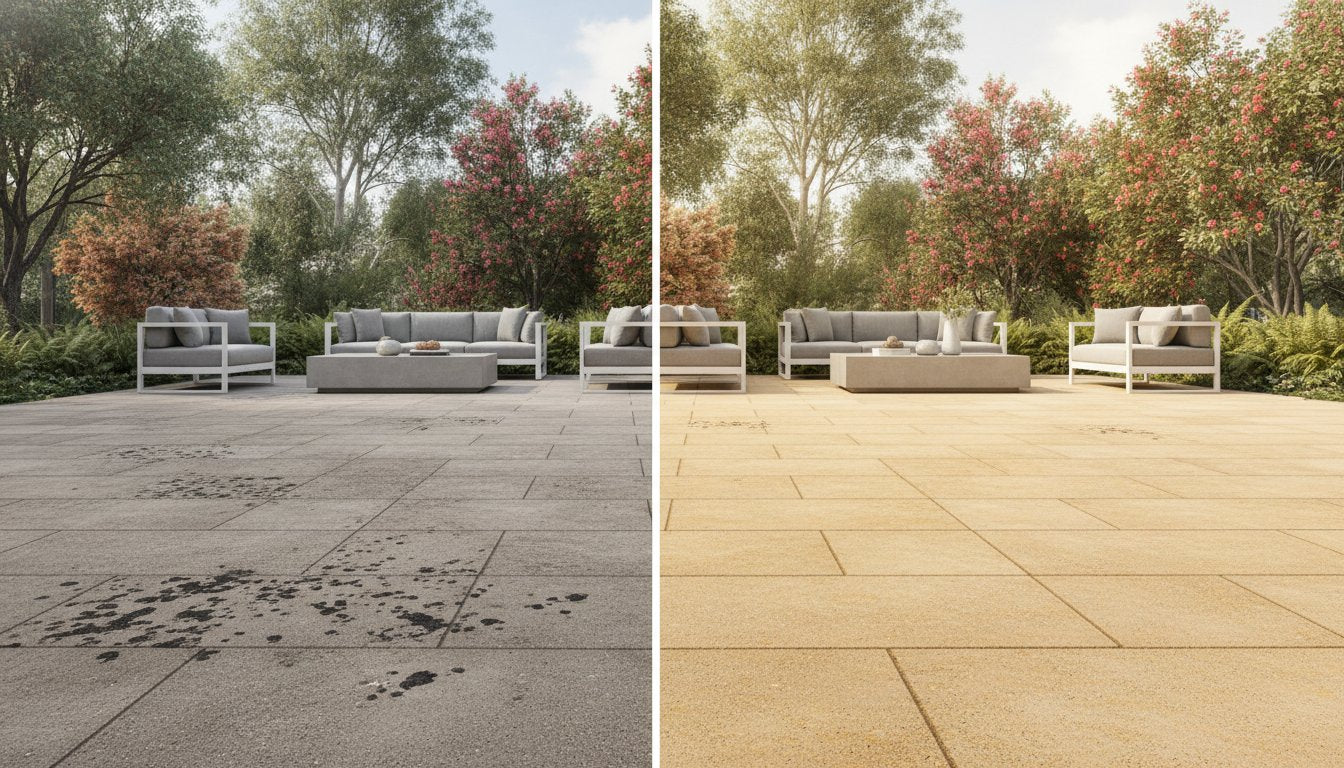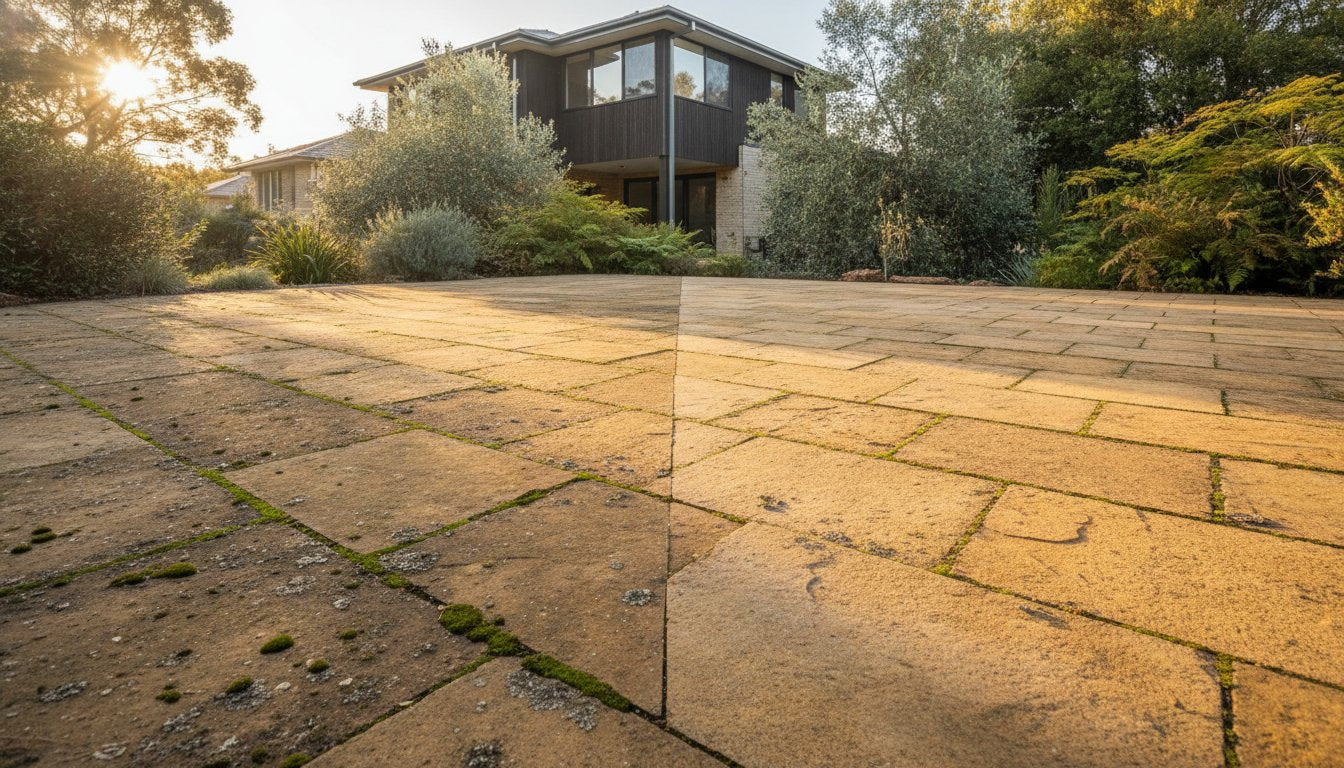
That high-pressure blast you think is saving your patio might actually be the very thing stripping away its character. Many homeowners believe the only way to shift stubborn black lichen from Victoria Bluestone is with aggressive water pressure or harsh acid; however, these tactics often cause irreversible damage. Acid cleaners can "burn" the natural basalt, drawing out iron minerals and leaving behind permanent, rust-coloured stains that ruin the stone's iconic aesthetic.
It's frustrating to watch your premium investment disappear under a layer of slippery green algae and those impossible-to-scrub black spots. You want a clean outdoor space, but you don't want to kill your lawn or etch the stone's surface in the process. We'll show you how to restore that original deep blue-grey colour using safe, acid-free methods that work in under two hours. You'll discover how to use biodegradable removers to eliminate biological growth and apply preventers that stop the annual cycle of mould. This guide provides the professional steps to keep your stone looking pristine for years.
Key Takeaways
- Understand why Victoria Bluestone requires specialized care due to its volcanic basalt composition and cultural heritage in Australian architecture.
- Learn why typical acidic cleaners cause permanent orange discolouration and how to protect your stone's deep blue-grey finish.
- Master a five-step application process using acid-free cleaners that are safe for your family, pets, and surrounding garden beds.
- Discover the difference between sealing and preventing to ensure your patio remains free of stubborn black lichen and slippery algae for years.
What is Victoria Bluestone? Understanding the 'Soul' of Melbourne
Victoria Bluestone is more than just a paving material; it's a piece of Australian history carved from the earth. Formed from volcanic basalt millions of years ago, this stone defines the aesthetic of Melbourne’s iconic laneways and grand heritage buildings. In 2026, it remains the premier choice for outdoor tiles because of its timeless look and incredible longevity. However, there's a distinct quality difference between local Victorian basalt and cheaper imports. Local stone offers a higher density and specific mineral composition that handles the Australian climate better than porous alternatives.
The Geology of Australian Basalt
The stone's strength comes from its micro-porous structure. This makes it durable and "breathable," allowing it to withstand heavy foot traffic and temperature shifts. Paradoxically, these tiny pores are also its greatest weakness. They act like microscopic pockets that trap moisture and organic spores. Over time, these trapped elements lead to deep-seated staining that standard cleaning can't reach, as the stone's natural texture provides a perfect anchor for biological growth.
Why Bluestone is Prone to Organic Staining
Melbourne’s variable climate provides a perfect breeding ground for algae and lichen. Because the stone is dark, it often masks general dirt, but this actually makes the appearance of "black spots" or bright green algae much more prominent. These organisms don't just sit on the surface; they root themselves into the stone's pores. High-pressure washing often fails because it only shears off the top layer, leaving the roots to regrow within weeks. You need a solution that penetrates the basalt to kill the spores at the source.
The Danger of Acid: Why Typical Cleaners Fail Bluestone
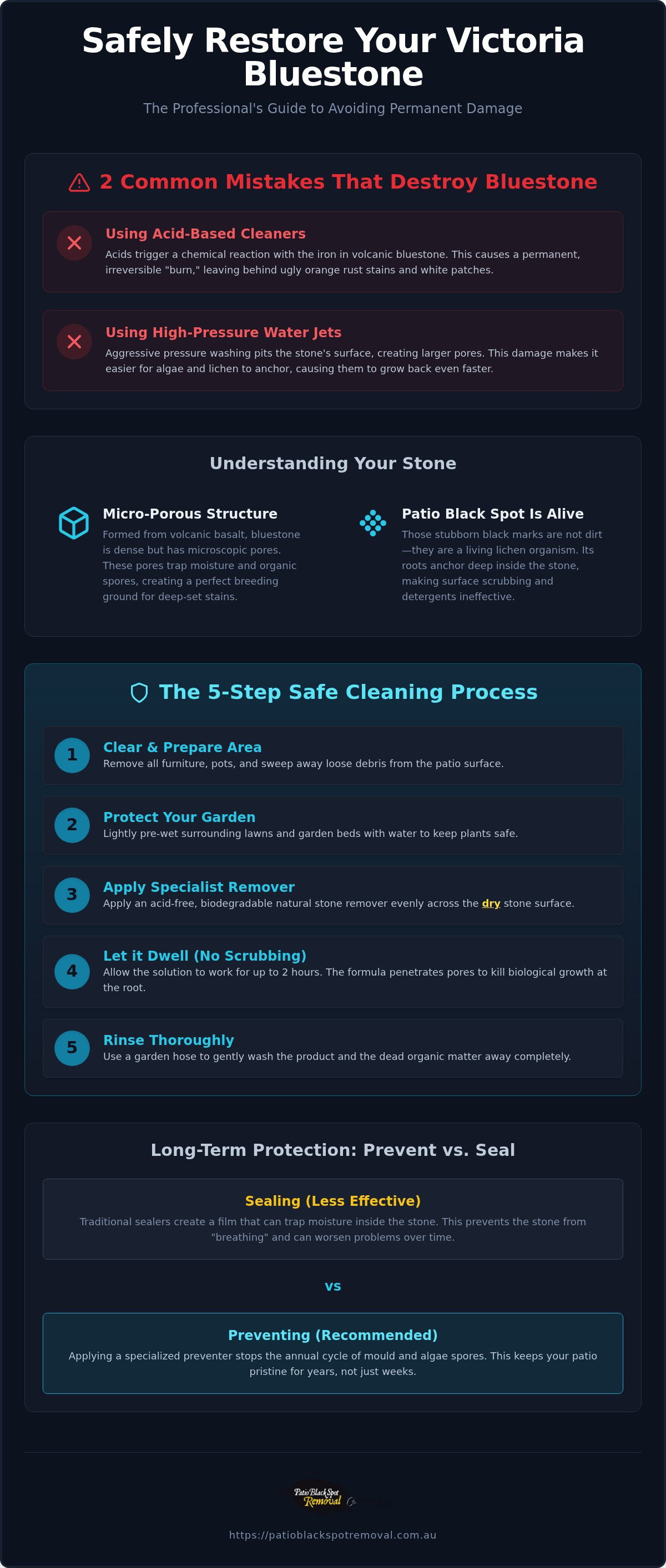
Using acid-based cleaners on Victoria Bluestone is a recipe for heartbreak. Because this stone is a volcanic basalt, it contains high concentrations of iron. When you apply hydrochloric or phosphoric acids, they trigger a chemical reaction that "burns" the stone. This results in permanent orange rust-coloured stains or ghostly white patches that no amount of scrubbing can fix. Following professional natural stone cleaning guidelines is essential to avoid these chemical scars. You must use pH-neutral or specialized acid-free formulas to preserve the integrity of the basalt.
Identifying 'Patio Black Spot' on Bluestone
Those stubborn black marks that look like ink splats are actually a living organism known as Black Spot. This lichen thrives in the micro-pores of Victoria Bluestone, anchoring itself deep within the surface. Standard soapy water or domestic detergents simply glide over the top of these spots without affecting the root system. Even if you manage to scrub some away, the biological spores remain dormant in the stone, waiting for the next rain to bloom again.
The Hidden Risks of High-Pressure Water
Many homeowners turn to high-pressure washing as a quick fix, but this often does more harm than good. Excessive pressure can pit the surface of the stone, physically opening up the pores and creating even larger pockets for moisture and organic matter to settle. This effectively "prepares the bed" for faster algae regrowth. Beyond the mechanical damage, pressure washing is incredibly water-intensive. Transitioning to targeted, non-toxic treatments is a more sustainable way to restore your patio. If you aren't sure which method is right for your specific stone type, you can always speak with an expert for tailored advice.
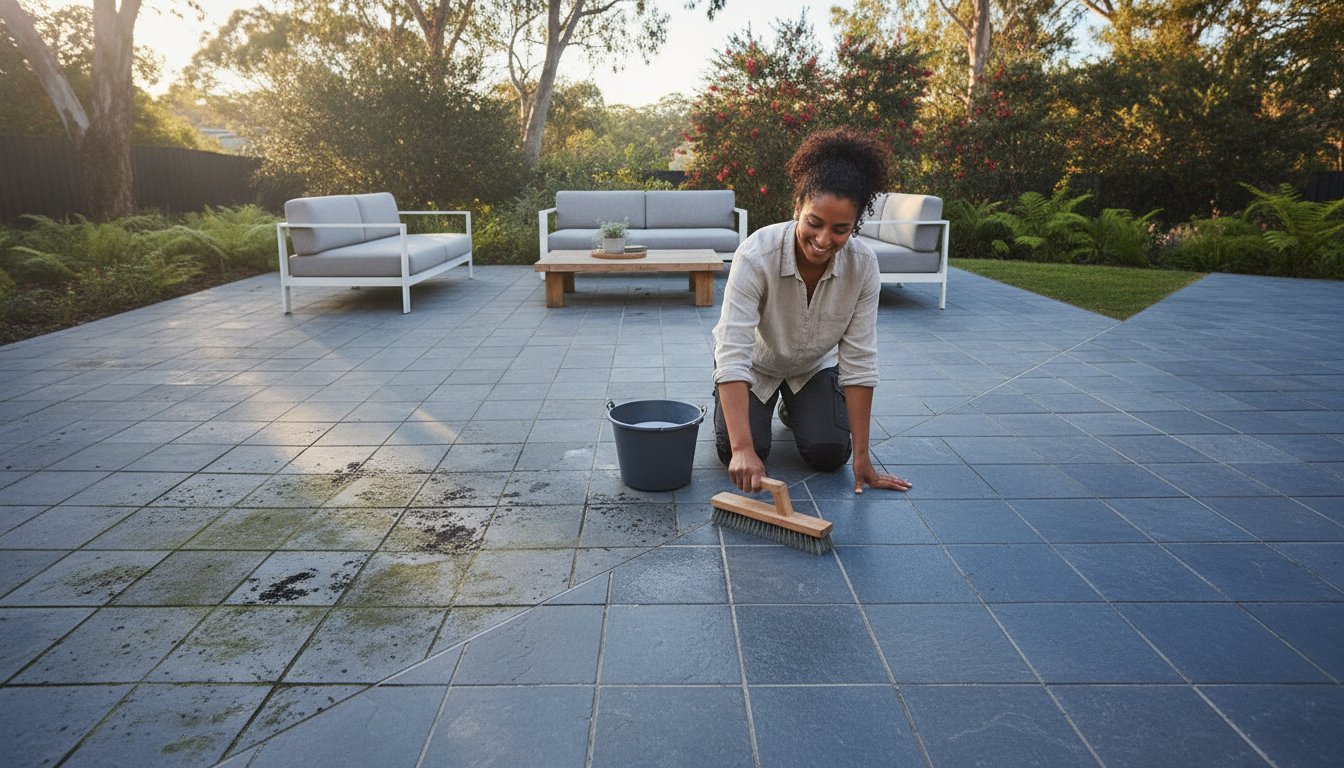
How to Clean Victoria Bluestone Safely: A 5-Step Guide
Restoring the original luster of your patio doesn't require brute force. Because of the unique heritage of Victorian bluestone, you must treat the surface with respect to avoid damaging its volcanic structure. Follow these five steps to achieve professional results without the risks of acid or high pressure.
First, clear the area of furniture and debris. Second, pre-wet any surrounding garden beds and lawn. This ensures that your plants remain hydrated and protected during the process. Third, apply a specialized natural stone remover evenly across the dry stone. Unlike generic cleaners, this formula targets the biological roots of lichen without "burning" the basalt. Fourth, allow the solution to dwell for up to two hours. You don't need to scrub; the chemical does the heavy lifting for you. Finally, rinse the area thoroughly with a garden hose to wash away the dissolved organic matter and reveal the stone's deep blue-grey finish.
Choosing a Non-Toxic Mould Remover
When selecting a cleaner for your Victoria Bluestone, check labels for "Acid-Free" and "Biodegradable" certifications. Australian backyards are often home to sensitive native plants and curious pets. Using a non-toxic formula means you can clean your patio without worrying about chemical runoff damaging your lawn or harming your family. Our Sydney-manufactured products are specifically designed for these local conditions.
Why 'How It Works' Matters
Understanding how it works is key to a long-lasting clean. The remover creates a specific "boiling" action within the stone's pores that physically lifts the lichen. It breaks down the tough biofilm of black spots, dissolving the root system that pressure washing simply ignores. If you're ready to start your restoration project, contact our team for expert guidance on application.
Long-Term Protection: Preventing the Return of Mould and Algae
Many homeowners believe that sealing Victoria Bluestone is a one-time solution for all maintenance woes. However, traditional sealers can sometimes trap moisture within the stone's micro-pores, leading to internal pressure or a plastic-like finish that masks the stone's natural texture. A preventative maintenance treatment is a far more effective approach for breathable volcanic basalt. Applying an annual stone preventer ensures that organic spores are neutralized before they have the chance to bloom into unsightly black spots. This proactive strategy is significantly more cost-effective than undergoing a full chemical restoration every few years.
The Annual Maintenance Schedule
Timing your maintenance is crucial for the best results. In the variable climates of Victoria, autumn and spring are the ideal windows for application. Treating your patio during these seasons prepares the stone for the upcoming peaks in moisture and humidity that trigger algae growth. These "spray and leave" methods are designed for simplicity; they require zero scrubbing and can be completed in minutes. This simple habit preserves the iconic deep grey hue of your basalt without the need for heavy equipment.
Environmental Stewardship in Your Garden
Using biodegradable, acid-free products does more than just protect your stone; it safeguards the local waterways in Melbourne and Sydney. Because our formulas don't rely on harsh toxins, you can maintain your outdoor space without worrying about chemical runoff damaging your lawn or garden beds. Adopting a "clean once, maintain forever" mindset is the most sustainable way to manage your landscaping. It reduces long-term water waste and eliminates the recurring need for aggressive industrial cleaning agents, keeping your home's ecosystem healthy and vibrant.
Revitalise Your Outdoor Heritage Today
Your Victoria Bluestone patio is a significant investment that deserves better than the permanent "burn" of harsh acids or the erosion caused by high-pressure water. By choosing a targeted, two-part system, you can effectively dissolve stubborn black spots and prevent them from returning each season. This approach respects the volcanic chemistry of the stone while ensuring your surrounding garden beds and lawn remain healthy. It's about moving away from brute force and adopting a maintenance schedule that works with the basalt's natural properties.
Our solutions are biodegradable and acid-free, specifically developed for Australian stone to provide visible results in under two hours. Because these products are manufactured in Sydney, they are perfectly suited to our local environmental conditions and are completely safe for your pets and plants. You don't have to settle for a slippery, stained surface anymore. Restore your patio with our Acid-Free Remover today! We're here to help you keep your stone looking pristine for years to come.
Frequently Asked Questions
Is Victoria bluestone the same as basalt?
Victoria Bluestone is indeed a type of volcanic basalt formed millions of years ago. In Australia, this stone's prized for its durability and distinctive deep grey colour. While the terms are often used interchangeably, bluestone specifically refers to the material's appearance and local heritage. Our products are manufactured in Sydney to treat this specific density of basalt, ensuring the porous surface is cleaned without causing damage.
Can I use bleach to remove black spots from my bluestone patio?
You shouldn't rely on household bleach to treat your patio. While it might kill surface algae, it lacks the chemistry to penetrate the stone's pores and dissolve the root system of black lichen. Bleach can also leave behind a chalky residue or react poorly with minerals in basalt. Instead, use a specialized Patio Black Spot Remover that's acid-free and designed to break down the biological biofilm safely.
Will non-toxic mould removers kill my garden plants or lawn?
Our biodegradable and acid-free formulas are specifically designed to be safe for surrounding lawn and garden beds when used as directed. We recommend pre-wetting your plants before application to provide a protective layer of hydration. Because the solution breaks down into harmless components after use, you can restore your Victoria Bluestone without fear of toxic runoff damaging your Sydney garden's ecosystem or harming your family pets.
How often should I clean my bluestone to prevent algae buildup?
We recommend a two-part approach to keep your stone pristine. You should perform a deep clean with a remover once to clear existing growth, followed by an annual application of a Patio Black Spot Preventer. This yearly treatment kills spores before they bloom, stopping the cycle of green algae and black spots. It's the most cost-effective way to maintain your patio's appearance without needing aggressive, high-pressure scrubbing.
Why do black spots keep coming back after I pressure wash my stone?
Pressure washing only removes the visible "head" of the lichen, leaving the microscopic root system alive within the stone's pores. Because basalt's micro-porous, these roots are protected from the water blast. The moisture from the washing often encourages the remaining spores to regrow within weeks. To stop this cycle, you need a chemical treatment that dissolves roots rather than just shearing off surface growth.