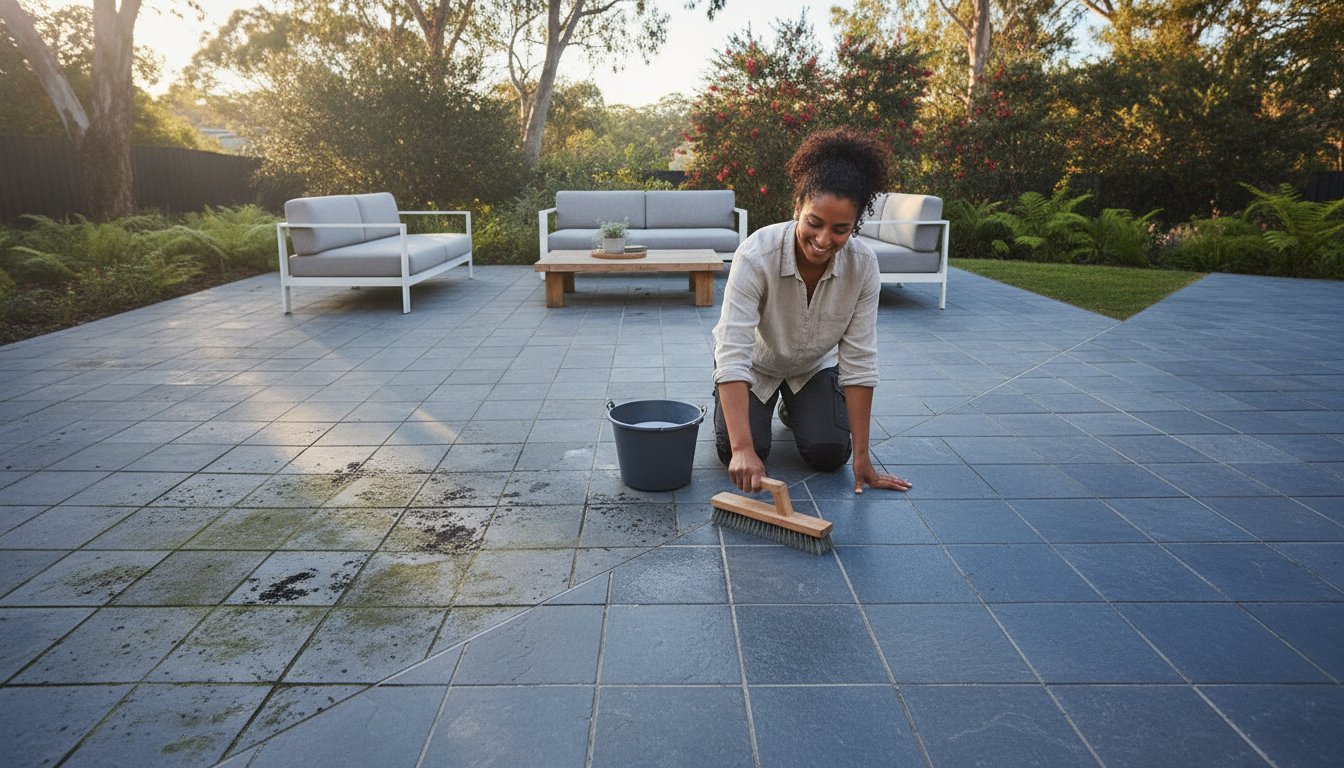
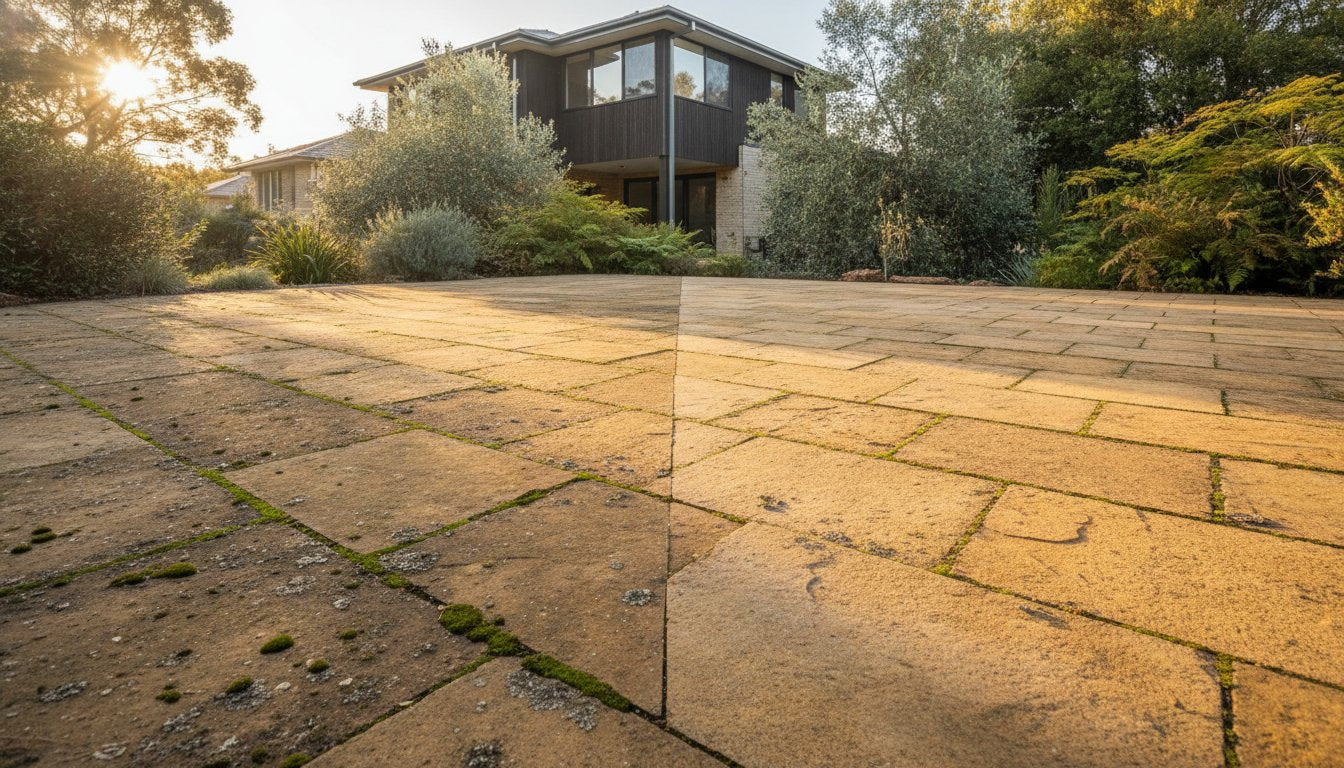
Your high-pressure washer might be the biggest threat to your Sydney sandstone, not the moss itself. It's frustrating to watch your beautiful golden pavers turn into a slippery, green hazard every winter, especially when you've tried scrubbing or blasting the surface only to see those stubborn black spots return weeks later. Removing moss from pavers shouldn't involve eroding your stone's surface or risking your garden's health with harsh acids.
This guide shows you how to safely eliminate organic growth and restore that iconic golden hue using professional-grade, biodegradable solutions. We'll explore why traditional scrubbing fails to kill the microscopic roots of black lichen and how you can achieve long-term protection while staying compliant with the 2026 Water Wise Guidelines. You'll learn a garden-safe method that delivers results in under two hours without damaging your expensive stonework or endangering your pets.
Key Takeaways
- Identify the difference between simple green moss and stubborn black lichen to ensure you use the right treatment for Sydney's humid coastal climate.
- Discover how to remove moss from pavers using acid-free solutions that protect the integrity of porous sandstone instead of damaging it with high-pressure water.
- Restore the natural golden beauty of your outdoor spaces in just two hours with a biodegradable formula that is safe for your garden and pets.
- Shift from reactive cleaning to proactive protection with a maintenance strategy that stops moss and algae from returning year after year.
Why Does Moss and Black Lichen Infest Sydney Pavers?
Sydney's humid, coastal air makes our backyards a "super-breeder" environment for organic growth. Whether it's the slippery green algae on a shaded path or the dark patches on a driveway, these organisms thrive on the high porosity of local stone. When homeowners search for how to remove moss from pavers, they often mistake these biological stains for simple dirt or grime. In reality, you're dealing with a complex ecosystem that's adapted perfectly to the Australian climate.
The Difference Between Moss and Black Lichen
Scientifically, mosses are non-vascular plants that use small hair-like structures called rhizoids to grip surfaces. While moss is a surface-level nuisance that's easy to spot, Black Spot Lichen is a far more resilient coloniser. It doesn't just sit on top; it anchors itself deep into the microscopic pores of Australian sandstone. This is why black spots remain even after a heavy scrub or jet wash, as the "roots" stay protected within the stone's structure, ready to regrow as soon as it rains.
How the Sydney Climate Accelerates Staining
Australias local climate accelerates this staining through high rainfall and consistent salt spray, which keeps stone surfaces damp for longer periods. Garden shadows and poor drainage create microclimates where algae and moss can double in size in just a few weeks. Beyond the obvious slip hazard, this growth masks the natural iron-oxide "golden" hues that make Sydney sandstone so desirable. Without a biological solution to kill the spores, the "Sydney scrub" becomes an exhausting chore. Learning how to remove moss from pavers effectively requires addressing these environmental factors before the organisms permanently pit and damage the stone surface.
Why Traditional Cleaning Methods Often Damage Sandstone Pavers
Many Sydney homeowners reach for a high-pressure jet washer when they first research how to remove moss from pavers. While the instant results look satisfying, mechanical force is often the worst choice for porous sandstone. High-PSI water jets can permanently etch and pit the stone surface, creating a "fuzzy" texture. This damage destroys the natural finish and actually provides a more porous surface for spores to colonise in the future.
Why Pressure Washing Fails on Lichen
Mechanical force simply cannot reach the microscopic pores where lichen roots hide. You might blast away the green surface growth, but the biological "anchor" remains deep within the stone. Over-cleaning with a pressure washer leads to pitting, which ruins the smooth, honed look of modern Sydney landscaping. Once the stone is etched, it becomes a magnet for dirt and organic stains, making the next cleaning cycle even more difficult.
The Hidden Risks of Generic Bleach and Pool Chlorine
A common myth in Sydney is that pool chlorine is a cheap, effective fix. However, the high sodium levels in generic bleach lead to long-term efflorescence. This is a white, powdery residue that forms as salt crystals push through the stone's pores. Household cleaners also lack the specific surfactants required for deep penetration. They might kill surface algae, but they won't discourage further growths of deep-seated lichen.
Acidic cleaners, such as hydrochloric acid, are even more dangerous. They react with the iron-oxide in Sydney sandstone, "burning" the stone and turning it an unsightly, permanent orange. Beyond the aesthetic damage, the chemical run-off from these harsh DIY mixes can devastate your garden's native flora and contaminate local soil. If you've already seen signs of orange staining or white powder, you can speak with our team to discuss safe restoration options before further damage occurs.
How to Safely Remove Moss and Lichen: The 2-Step Restoration
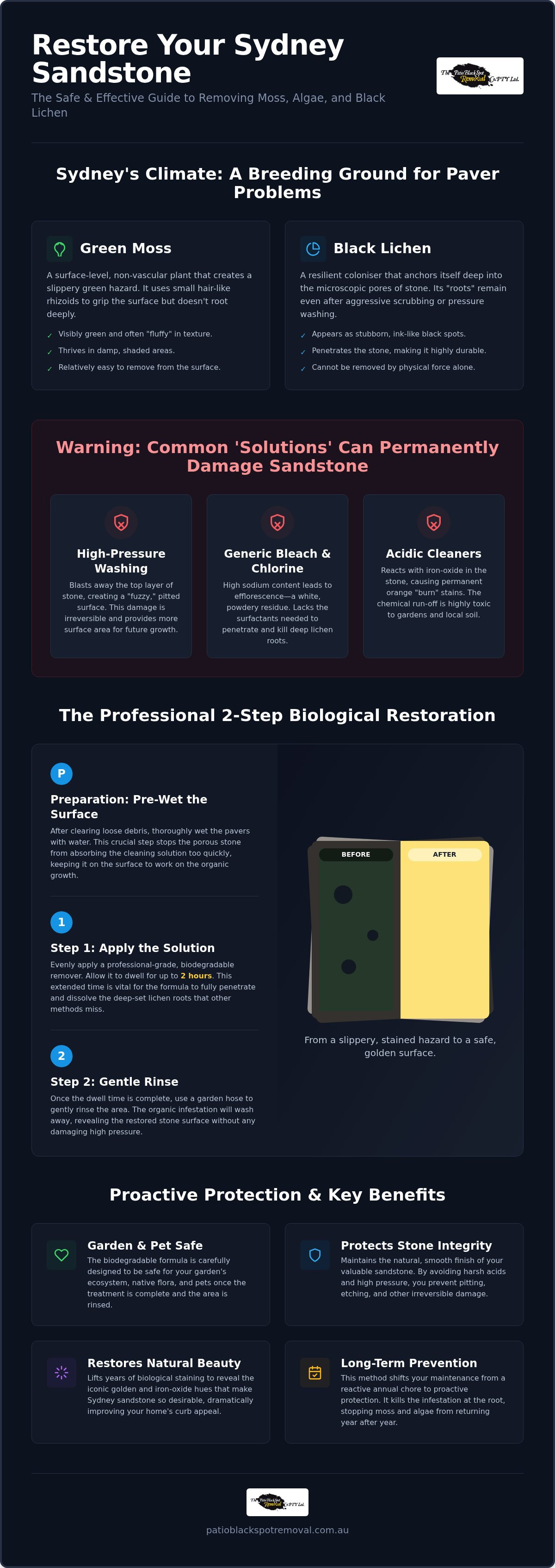
Restoring Sydney sandstone requires a shift from mechanical force to biological science. To safely remove moss and lichen, you must first clear all loose debris and ensure the stone is dry. Also avoid the midday Australian sun, to avoid the product drying before the 2 hour dwell period is over.
Step 1: Removing the Organic Infestation
Apply the Patio Black Spot Remover evenly across the pavers using a pump-up garden sprayer. The chemical reaction targets the lichen’s "holdfasts" without harming the stone structure. Unlike generic cleaners that suggest a 10-minute dwell time, this professional-grade formula needs up to two hours to fully dissolve the deep-set roots. For decades-old infestations where the stone is heavily pitted, a second application might be necessary to lift the most stubborn stains. This process ensures you don't just clean the surface but actually learn how to remove moss from pavers at the source.
Step 2: Neutralising and Rinsing
Once the dwell time is complete, rinse the area thoroughly with a garden hose. The goal is to flush the dissolved organic matter out of the stone's pores. Because our formula is biodegradable and acid-free, it's safe for surrounding lawns and pets once diluted with water. For a visual guide on the application process, you can view our how it works page. This method restores the original golden hue in just two hours, providing a professional finish without the risk of "burning" the sandstone. If you have questions about the application process, contact our team for expert advice.
Preventing Moss Regrowth in Sydney’s Humid Climate
Once you've mastered how to remove moss from pavers, the challenge shifts to keeping those results year-round. Sydney's unique combination of high humidity and coastal salt spray creates a persistent breeding ground for spores. While some competitors suggest sealing sandstone, this often traps moisture inside the stone, leading to internal decay. A more effective approach involves a dedicated maintenance cycle that targets new spores before they can anchor into the porous surface.
Why Prevention is Better Than Cure
Annual maintenance is significantly more cost-effective than performing a heavy-duty restoration every five years. By applying Patio Black Spot Preventer every 12 months, you kill green algae and lichen spores on contact. This prevents the "Sydney scrub" from becoming an exhausting weekend task. The preventer works without the need for aggressive scrubbing, maintaining the integrity of your stone's surface while keeping it slip-free. It's the most reliable way to ensure you don't have to relearn how to remove moss from pavers from scratch every winter.
Environmental Tips for Sydney Gardens
Small landscaping tweaks can make a massive difference in your patio's health. Pruning overhanging branches increases sunlight, which naturally dries out the sandstone and discourages organic growth. You should also check your drainage to ensure water doesn't pool on the surface after a summer storm. Managing tannins is another priority; fallen leaf litter from native trees can cause stubborn brown staining if left to rot on damp stone. Swap out heavy organic mulches for inorganic alternatives like river pebbles to reduce nutrient run-off onto your pavers. These simple steps, combined with a professional preventer, ensure your Sydney sandstone remains as golden as the day it was laid. Keeping the stone dry and bright is the best natural defence against the return of slippery algae and black spots.
Restore Your Sydney Sandstone Today
Successful restoration kills the microscopic roots of black lichen rather than just blasting the surface. By choosing a professional system, you can safely eliminate organic growth in under two hours while preserving the stone's natural beauty. Mastering how to remove moss from pavers is only the first step; maintaining that golden glow requires a proactive prevention strategy.
Our products are manufactured specifically for the local climate. With over 40 years of expertise in natural stone restoration, we provide acid-free and biodegradable formulas that are safe for your family, pets, and garden. Don't let slippery algae or stubborn black spots devalue your outdoor space. Restore your Sydney pavers today with professional-grade solutions and enjoy a beautiful, safe patio all year round.
Frequently Asked Questions
Can I use a pressure washer to remove moss from my sandstone pavers?
You can use a pressure washer, but it's often the primary cause of long-term damage to soft Sydney sandstone. High-PSI water jets can permanently etch the surface, creating pits that actually encourage more organic growth. Instead of mechanical force, a biological restoration targets the roots within the stone's pores. This chemical approach protects the natural finish of your pavers while delivering a much deeper clean than water alone can provide.
Will sandstone cleaning chemicals kill my lawn or garden plants?
Our professional-grade restoration products are biodegradable and acid-free, making them safe for surrounding flora when used as directed. It's best practice to pre-wet adjacent plants and grass before you begin. Once the solution is diluted during the final rinsing phase, it won't harm your lawn, garden beds, or pets. This allows you to focus on how to remove moss from pavers without destroying your local Sydney landscape.
How long does it take to remove stubborn black lichen spots?
The restoration process typically takes less than two hours from the initial application to the final rinse. While green algae may clear almost instantly, stubborn black lichen requires a specific dwell time to completely break down its complex anchor system. For older, deep-set infestations on porous sandstone, you might occasionally need a second coat. Our Sydney-manufactured formula is designed to deliver professional restoration results within this short timeframe.
Is it necessary to seal my pavers after removing the moss and lichen?
Sealing is not strictly necessary and can often trap moisture inside the stone, leading to internal decay or efflorescence. A more effective alternative for the humid Sydney climate is using a dedicated preventer. Applying a preventative treatment annually kills new spores on contact and stops organic growth from anchoring. This maintenance-led approach is much safer for the stone's long-term health than applying a permanent, non-breathable surface seal.
Why do the black spots on my patio keep coming back every year?
Black spots return because traditional cleaning only removes the surface growth, leaving microscopic roots alive in the stone's pores. Sydney’s high humidity and consistent rainfall create the perfect environment for these spores to flourish again. To break the cycle of how to remove moss from pavers every single winter, you must use a solution that kills the lichen's anchor system and follow up with a regular annual preventative treatment.